WSJ : Suspected Russian Agent in Germany Had Access to Western Intelligence Abou

Suspected Russian Agent in Germany Had Access to Western Intelligence About Ukraine War
U.S., U.K. investigate whether signals intelligence officer shared material with Moscow, officials say

BERLIN—A senior German intelligence officer arrested on suspicion of spying for Russia had access to a trove of highly sensitive, top-secret information about the war in Ukraine as well as knowledge of how it was collected by the U.S. and its allies, Western officials say.

Prosecutors are trying to determine whether the material was shared with Moscow. If so, it could have alerted Russia to its own vulnerabilities and given away Western intelligence-gathering methods and capabilities.

American and British officials said they were trying to determine the scope of potential damage in Ukraine and elsewhere. One U.S. official said there was “grave concern” about the case.

The suspected spy, identified as Carsten L. by German prosecutors, worked for the signals intelligence branch of the country’s Federal Intelligence Service, which conducts electronic surveillance and works with the U.S. National Security Agency and Britain’s Government Communications Headquarters.

Prosecutors said the man was being held on suspicion of committing treason as their investigation continues.

The German intelligence service, known as the BND, confirmed the arrest but has declined to comment further, citing national security risks. The NSA and GCHQ declined to comment.

Neither the Kremlin nor Russia’s Foreign Intelligence Service, the SVR, immediately responded to requests for comment.

Germany isn’t a member of the so-called Five Eyes intelligence community made up of the U.S., Canada, the U.K., Australia and New Zealand, but Berlin does receive sensitive information from those countries, especially in relation to the war in Ukraine, officials from three countries said.

Carsten L. had worked on intelligence related to Russia’s war in Ukraine, including material gathered by German military satellites, German officials said.

His department also processed classified intelligence from Russia and Ukraine obtained by other Western spy agencies by tapping electronic devices, intercepting telecommunications and satellite imagery.

The BND, which has a staff of 6,500 and is based in a highly protected campus in the center of Berlin, has been focusing its intelligence-gathering and analysis on Russia and Ukraine since the start of the war, and is traditionally also active in the Balkans, the Middle East and Africa.

The Kremlin’s suspected penetration of Germany’s most secretive security agency is the latest evidence of Moscow’s aggressive tactics in Europe, where Russia has been accused of killing political opponents, sabotaging infrastructure and trying to steal industrial secrets.

The BND received a tipoff about the suspected spy from an allied intelligence service earlier this year, German officials said. After an internal investigation, the case was passed to the federal prosecutor, who then ordered the man’s arrest last week.

The case could be the worst example of Russian penetration of Germany’s intelligence services since 1961, when a senior BND employee who was spying for the Soviet Union exposed a network of 100 CIA spies, said Erich Schmidt-Eenboom, who has written several books on the BND.

Roderich Kiesewetter, an opposition lawmaker and deputy chairman of the parliamentary oversight panel that oversees Germany’s intelligence agencies, said the case could be a potentially severe blow to European security.

He has called for Germany to set up a commission of inquiry to explore how many politicians and senior civil servants might have been compromised by Russia and China and look at how to reduce Germany’s dependence on both countries.

Germany scaled down counterespionage efforts in the early 2000s, becoming vulnerable to Russian operations, according to Mr. Kiesewetter and other experts.

However, senior German intelligence officials said the Ukraine war had marked a “paradigm shift” in German politics.

Berlin started cracking down on Russian espionage this year after Moscow attacked Ukraine. The heads of Europe’s domestic securities agencies met in early April in Paris to forge a common strategy on fighting Russian espionage. After the meeting, European governments expelled around 600 Russian officials from their countries, including 40 by Germany.

The decision was “the most significant strategic blow against the Russian intelligence services in recent European history,” Ken McCallum, the head of Britain’s MI5 agency, said in November.

Russia has since sought to offset the loss by activating so-called deep cover agents, and using informal collaborators as well as recruiting civil servants, business people, academics and others as spies, according to several Western officials.

The probe into Carsten L. hasn’t found evidence that he had received payments from his handlers. Investigators are trying to determine whether he was blackmailed or whether he was motivated by ideological convictions, people familiar with the probe said.

Russian groups, including criminal gangs hired by the Kremlin, have been using cyberattacks to target German critical infrastructure this year, attempting to hack into utilities, airports, and medical facilities, according to several German officials.

Moscow has also shifted to industrial espionage as it attempts to compensate for the loss of access to Western technology due to sanctions, especially in the fields of aerospace, control electronics, semiconductors and basic research, according to counterespionage officials.

German officials suspect Russia is behind several sophisticated acts of sabotage such as the destruction of the Nord Stream natural gas pipelines and an October attack on the railroad that temporarily halted all rail traffic in the north of the country.

Russia has denied involvement.

The railway attackers crippled both the railway’s main communication network and its backup by almost simultaneously severing two data cables located more than 300 miles apart, investigators say.

The cables were inside a special manhole, one of which was covered with a heavy concrete lid, and whoever performed the sabotage had detailed knowledge of the network, investigators said.

“A temporally coordinated assault on two key points far away from each other that cut off exactly the right segments in a bundle of cables without leaving any traces was the work of experienced professionals,” one of the investigators said.

In a previously unreported incident, the homes of several CIA officers in Germany were broken into in 2020, in what some officials think was an intimidation attempt by Russian secret services.

The break-ins took place simultaneously, and nothing was stolen, according to U.S. and German officials. The investigation concluded that it was likely the work of a criminal gang, although no suspects were apprehended, U.S. Embassy officials said.

FT : Banks are cutting loans to UK oil and gas producers, says energy industry

Banks are cutting loans to UK oil and gas producers, says energy industry
Trade bodies warn lenders are curbing credit after the government increased its windfall tax on the sector

Banks are reducing loans to smaller North Sea oil and gas producers after the UK government raised and extended its windfall tax on fossil fuel companies in November, the energy industry has warned.

Banks are reassessing the amounts they are prepared to lend to UK North Sea producers under credit facilities that are linked to the value of their oil and gas reserves, according to trade bodies.

Brindex, which represents companies such as London-listed groups Harbour Energy and Ithaca Energy, estimates that small and medium-sized oil and gas producers in the UK currently rely on about £14bn of borrowing under so-called reserves-based lending facilities.

“Almost all” companies that rely on reserves-based lending, both for working capital and to fund new investments, were likely to be “very negatively affected” by changes to the UK energy profits levy on oil and gas producers that were outlined in the government’s Autumn Statement, said Brindex chair Robin Allan.

Chancellor Jeremy Hunt provoked uproar among North Sea oil and gas groups after he increased the energy profits levy from 25 per cent to 35 per cent, and also extended it to the end of March 2028. Previously the levy had been due to be withdrawn at the end of 2025.

It was originally unveiled in May by Rishi Sunak, while he was chancellor, to target the windfall profits many oil and gas producers were making from the surge in commodity prices following Russia’s invasion of Ukraine. Proceeds from the levy will help fund state support for households and businesses with their energy bills.

Allan said the problem with reserves-based lending facilities had been caused in particular by the “unnecessary” withdrawal by the government of a promise made in May that the levy would be phased out before 2025 if oil and gas prices fell toward “historically more normal levels”.

“While normal level was never defined, that wording allowed banks to imagine what a normal level would be,” added Allan.

Deirdre Michie, the outgoing chief executive of OEUK, a trade body for North Sea oil and gas companies, said some groups were facing up to a 50 per cent cut in their reserves-based lending facilities, which are regularly reviewed by banks.

Michie, who departs OEUK at the end of December following eight years at the helm, said the increase in the energy profits levy was a “tax too far” and it had “really undermined investor confidence to a level I haven’t seen during my time here”.

Energy groups have been pushing for a fresh commitment from the government to remove the levy — which raised their headline aggregate tax rate from 65 per cent to 75 per cent — if oil and gas prices do fall significantly.

The problem with shrinking bank lending was raised with Hunt during a meeting with oil and gas industry executives in Edinburgh earlier this month, said people briefed on the talks.

The Treasury declined to comment on the issues relating to bank lending. It said the energy profits levy “strikes a balance between funding cost of living support for families and businesses, while encouraging investment to bolster energy security”.

It added that it has also introduced a new investment allowance, which would allow companies to reduce their tax bill against the levy if they plough more funds into oil and gas projects in UK waters.

WSJ : What Is Fentanyl and Why Is It So Dangerous?

What Is Fentanyl and Why Is It So Dangerous?
What to know about the opioid drug responsible for a surge in overdoses

The opioid crisis has only intensified as more illicit drugs have entered the market. Drug overdose deaths reached a record high in 2021, with more than 100,000 people lost to the continuing epidemic, fueled by the potent synthetic opioid fentanyl. The drug, according to the Centers for Disease Control and Prevention, can be up to 50 times more potent than heroin and 100 times that of morphine. Illicit forms of fentanyl are mainly manufactured by drug cartels in Mexico and spreading in the U.S.

Here’s what to know about fentanyl:

What is fentanyl?
Fentanyl is a heavily regulated legal medication, prescribed largely for pain relief in cancer patients, postsurgery and for people with chronic pain who have developed tolerance for other opioids.

When prescribed by a doctor, fentanyl can be given as a shot, a patch that is placed on a person’s skin, as lozenges that are sucked like cough drops or film that sits between the cheek and gum, according to the American Society of Health-System Pharmacists Inc. It also can be sprayed in the nose or under the tongue.

The illicit form of fentanyl, a powder that is often mixed into other drugs, has overtaken the drug market in the U.S. Fentanyl is made in clandestine labs in Mexico, from easily sourced chemicals.

Which drugs are typically laced with fentanyl?
Fentanyl is often found mixed into heroin, cocaine and methamphetamine, according to the CDC. The drug is also made into fabricated pills that are often indiscernible from commonly prescribed medications such as Percocet (the narcotic oxycodone), Xanax (the sedative alprazolam) or even Adderall (an amphetamine).

Chinese chemical companies are making more ingredients for illegal fentanyl than ever including N-Phenyl-4-piperidinamine, which Mexican cartels purchase to make into fentanyl.

Drug manufacturers in Mexico also mix illicit fentanyl with other materials, such as baking soda, starch and sugar, to create a powder that can be smoked or dissolved into liquid and injected, a process called “cooking,” or fabricated pills purchased on the illicit market.

Fentanyl is so powerful that in pure form the amount in roughly two sugar packets can provide a year’s supply for a user. When drug suppliers mix fentanyl into drugs or press it into illicit pills, a few grains too many can be enough to trigger a fatal overdose. It is unclear why fentanyl is showing up in such a large array of drugs. Evidence that fentanyl is showing up in more places comes from laboratory tests of drug seizures, toxicology testing and death certifications that take months to complete, according to the National Institute on Drug Abuse. Law-enforcement officials believe that in some cases, the drug is mixed in accidentally by drug manufacturers working with multiple white powders in the same lab, while at other times, drug manufacturers are experimenting in the attempt to create new psychoactive substances.

How often are illicit drugs laced with fentanyl?
Fentanyl has infiltrated virtually every channel of the illicit drug supply, according to U.S. law officials. The proportion of seized counterfeit pills in the U.S. containing a potentially lethal dose of fentanyl increased to 44% in 2021 from 10% in 2017, according to samples analyzed by the Drug Enforcement Administration.

Tainted drugs are so common in cities across the country, including Columbus, Ohio, that the city offers a program for distribution of fentanyl testing strips to users so they can determine whether substances are contaminated with the drug.

In New York City, authorities have been warning of the risks of unknowingly taking fentanyl in cocaine and of its increased presence in cocaine seized by police. Of 980 cocaine deaths in 2020, 81% involved fentanyl, according to recent New York City health department data.

People who use methamphetamine are also sometimes accidentally exposed to fentanyl. But many users are intentionally using meth and opioids simultaneously or in sequence in search of balancing or offsetting effects, researchers say. The drug combination is becoming an emerging driver of U.S. overdoses.

What is fentanyl’s effect on the human body?
Fentanyl works by binding to the body’s opioid receptors—found in the areas of the brain that control pain and emotions, according to the National Institute on Drug Abuse. Some of the effects of fentanyl include euphoria, relaxation, pain relief, drowsiness and sedation, among others, according to the U.S. Drug Enforcement Administration. With repeated use, the brain adapts to the drug, making it hard to feel pleasure without it. Stopping the use of fentanyl leads to withdrawal, or “dope sickness,” which can include extreme anxiety, vomiting, muscle pain, chills, racing heartbeat and profuse sweating. Many chronic users have long since stopped feeling the euphoric effects of fentanyl and use it to avoid feeling sick.

Drug users who are accustomed to using heroin or prescription pain pills say illicit fentanyl’s effect can be more dramatic and shorter lasting than other opioids, making it more difficult to hold down a job as they seek out drugs every few hours.

What are some of the signs and symptoms of someone overdosing on fentanyl?
Fentanyl slows the body down and reduces respiration but becomes deadly when it suppresses breathing to such slow shallow breaths that a person can’t sustain life and their heart stops. If someone is unconscious, awake but unable to talk, or their breathing slows sharply, that could be an early sign of an overdose. According to the New York State Department of Health, that person’s skin may soon turn bluish purple or ashen. In some cases, a person overdosing will have a faint heartbeat. An overdose can also lead to hypoxia, the decrease in oxygen to the brain, according to neuropsychopharmacologists.

Still, it can be difficult to tell if a person is just very high or experiencing an overdose, according to the National Harm Reduction Coalition. People who are high may display slurred speech or seem dazed, but still be able to respond to a loud noise or someone lightly shaking them, the group says.

How do you treat an overdose?
Naloxone is an antidote to opioids that can reverse the effects of an overdose within two to three minutes, according to the Mayo Clinic. Naloxone has virtually no effect in people who haven’t taken opioids, according to the World Health Organization.

The overdose-reversal drug binds to opioid receptors and reverses or blocks the effects of opioids. It comes in two forms: nasal sprays and injectables. Nasal sprays such as Narcan are often stocked by first responders and at healthcare facilities. Groups working with drug users typically have an injectable version of the drug on hand that can be injected into the muscle of an arm or leg to reverse an overdose. The Substance Abuse and Mental Health Services Administration recommends performing cardiopulmonary resuscitation, also known as CPR, if the person isn’t breathing on their own and said it can save a person’s life regardless of whether naloxone is present. The agency says it is important to stay with the person until medical personnel arrive, reassure them and explain what is happening, as they may reawaken agitated, confused or could overdose again if the naloxone wears off before the opioid.

Recently, the U.S. Food and Drug Administration encouraged pharmaceutical companies to apply for approval for over-the-counter versions of overdose-reversal medications such as Narcan to help address a swelling overdose crisis from bootleg versions of the powerful opioid fentanyl.

The pharmaceutical nonprofit Harm Reduction Therapeutics Inc. has already received priority review from the agency to make an inexpensive naloxone nasal spray for use without a prescription. The company said that the FDA gave it a target approval date of April 28.

Emergent BioSolutions Inc., maker of the Narcan brand of naloxone nasal spray, said its application for over-the-counter status received an expected approval date of March 29.

What is harm reduction?
Harm reduction is a public-health strategy aimed at reducing as much harm as possible to people while they are using drugs, rather than stopping them from taking substances altogether.

Groups that practice harm reduction for drug users teach about using clean needles to prevent infection and the spread of disease. Some groups provide fentanyl test strips so that users can test drugs for fentanyl and hand out naloxone to prevent deaths from overdose. An increasing number of groups supervise drug consumption. The Biden administration is the first to name harm reduction as a priority for drug policy.

Who is affected by overdose rates?
Disparities in access to treatment are driving up overdose rates among Black and Native American people, the CDC has said. Overdose deaths per 100,000 people increased 44% for Black people and 39% for Native Americans in 2020 from a year earlier, compared with a 22% increase among white people, according to a study in which the CDC analyzed 25 states and Washington, D.C.

Deaths from fentanyl have affected every age group, but particularly the 25-34-year-old and 35-44-year-old populations. These two groups combined made up more than half of all synthetic opioid overdose deaths in 2021, according to preliminary CDC data.

Overdose rates were higher in areas with more opioid-treatment programs than average, a finding that the study’s authors said demonstrated other barriers to access for some people. Overdose rates were also higher in counties with higher income inequality, according to the study. The findings show how the escalating overdose crisis is exacting a mounting toll on minority groups that are in some cases marginalized by the healthcare system, CDC researchers said.

Some prisons and jails have programs that dispense antiaddiction medications to help put inmates who are addicted to opioids on a path to sobriety and curb overdose rates. The Biden administration has said it wants medication available for drug users in federal custody and at half of state prisons and jails by 2025.

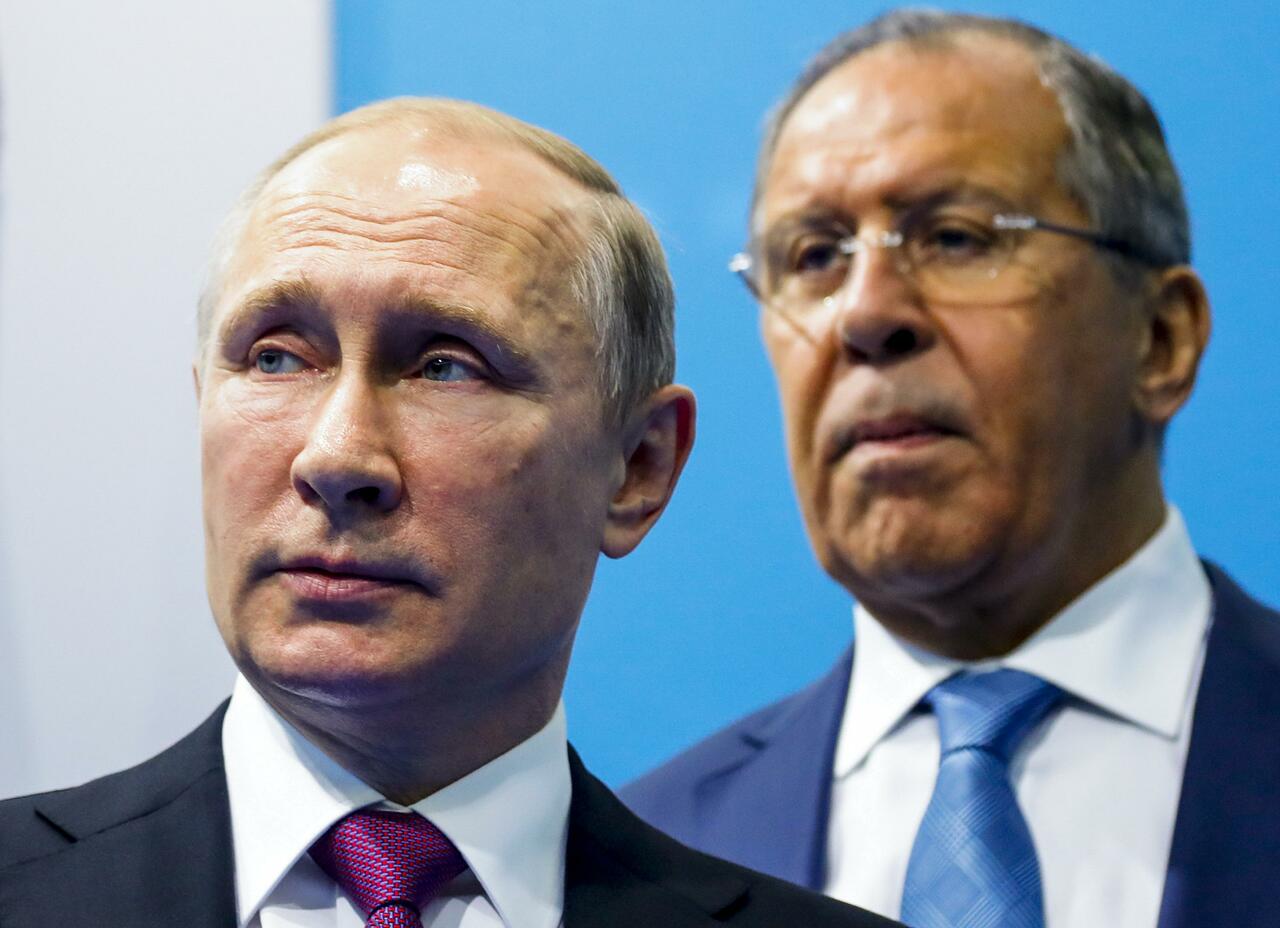
(ZH) Lavrov Says Pentagon Threatening To Assassinate Putin

Lavrov Says Pentagon Threatening To Assassinate Putin

Russian Foreign Minister Sergey Lavrov on Tuesday lashed out at what he described as threats coming out of the US to assassinate President Vladimir Putin, apparently in response to a slew of anonymously sourced reports.
"There are some 'anonymous officials' from the Pentagon who have actually enunciated threats to deliver a 'decapitating strike' on the Kremlin, which is in fact an assassination threat against the Russian president," Lavrov said, according to TASS.

"If someone really has such ideas, then this someone should think long and hard about the possible consequences of such plans," the top Russian diplomat warned.
The condemnation also came less than a week after Senator Lindsey Graham called for someone to "take out" the Russian president for the war in Ukraine to end.
But it appears Lavrov specifically had in mind a September report published in Newsweek which relied on anonymous US defense officials describing that the Biden administration was mulling plans for a "decapitation strike to kill Putin in the heart of the Kremlin."
Below is the relevant section from that September 29 Newsweek article:
Details about what "decisively" means have not been publicly revealed. The military sources tell Newsweek that there are subtle moves being made with regard to nuclear threats, including moving submarines and aircraft and drilling B-52 bombers. But they stress that non-nuclear military options—the use of conventional weapons and special operations, as well as cyber and space attack—are front and center, to include a decapitation strike to kill Putin in the heart of the Kremlin.
Continuing his Tuesday response to this and more recent threats emanating from the West, Lavrov said that "It seems that they have shed all vestiges of respectability."
He added: "The notorious [ex-British PM] Liz Truss is a vivid example given that she directly and publicly said during her pre-election campaign that she was ready to order a nuclear strike," he recalled.
Lavrov also addressed a growing atmosphere of dangerous nuclear rhetoric and confrontation. "It is no secret to anyone that the strategic goal of the United States and its NATO allies is to defeat Russia on the battlefield as a mechanism for significantly weakening or even destroying our country," he said.
Related to this, he explained further, "[Ukrainian President] Vladimir Zelensky had gone as far as urging NATO states to deliver preventive nuclear strikes against Russia. This crosses the line of what is acceptable. However, we heard far worse statements from figures within the [Kiev] regime." He said all of this was part of a US-NATO plan to weaken and divide Russia.

CoinTelegraph : Alameda wallets become active days after SBF bail, community mul

Alameda wallets become active days after SBF bail, community mulls foul play
The recent movement of funds from Alameda wallets just days after Sam Bankman Fried was released on bail raised many eyebrows about the timing.

The crypto wallets associated with now-bankrupt trading firm Alameda Research, the sister company of FTX, were seen transferring out funds just days after the former CEO Sam Bankman Fried was released on a $250 million bond.
The transfer of funds from Alameda wallets raised community curiosity, but more than that, the way in which these funds were transferred grabbed the community’s attention. The Alameda wallet was found to be swapping bits of ERC-20s for Ether and then the ETH and USDT were funneled through instant exchangers and mixers.

For example, a wallet address that starts with 0x64e9 received over 600 ETH from wallets that belong to Alameda, part of it was swapped to USDT while the other part of the transaction was sent to ChangeNow.
On-chain analyst ZachXBT noted that the Alameda wallet was eventually swapping the funds for Bitcoin using decentralized exchanges such as FixedFloat and ChangeNow. These platforms are often used by hackers and exploiters to hide their transaction routes.

The never-ending FTX saga sees a new twist every day, and the latest transfer of funds to scoop out whatever is left in those crypto wallets is worrying for the community.
Many speculated that the pattern in which these funds are being swapped looks like an exploiter, but given Bankman-Fried’s known criminal past now, many speculated it could be an insider job to take out whatever is left in those wallets.
Others questioned the bail conditions and asked why was he given access to the internet. One user wrote that the former CEO was “desperately trying to funnel money out,” adding, “why did his bail condition include no computer/internet access?”
The ongoing fund movements from Alameda wallets coincided with Bankman Fried’s bail because right after FTX filed for bankruptcy on Nov. 11, the exchange wallets were hacked for millions of dollars. The United States Department of Justice is currently investigating the $352 million FTX exploit right after its bankruptcy filing as well.

FT : US charges crypto trader with fraud in Mango Markets case

US charges crypto trader with fraud in Mango Markets case
Avraham Eisenberg charged with commodities fraud and manipulation by New York prosecutors

US prosecutors have filed criminal charges against a cryptocurrency trader accused of attempting to steal more than $100mn from the Mango Markets exchange, as authorities step up their clampdown on digital asset markets.

Late on Tuesday authorities for the Southern District of New York said they had filed charges of commodities fraud and commodities manipulation against Avraham Eisenberg for allegedly helping to artificially inflate futures prices linked to Mango’s own token in October.

Eisenberg was arrested in Puerto Rico on December 26, according to a separate court filing made by US lawyer Damian Williams.

The charges round off a year of unprecedented controversy for crypto markets. The collapse in prices of popular tokens such as bitcoin has wiped more than $2tn of value from the market and forced many big names into bankruptcy. In November, the industry was rocked to the core when FTX — a former marquee crypto brand — went bankrupt. Sam Bankman-Fried’s top associates pleaded guilty to criminal charges in the US.

Eisenberg’s charges represent a step up by US authorities in the world of decentralised finance, in which networks have no central decision-making authority. Instead, many networks rely on a consensus among members and automate the network’s rules in computer code.

In October Mango, a decentralised marketplace, said it had been hacked for more than $100mn and the incident had drained all of its available equity.

US authorities alleged Eisenberg used two accounts on Mango to artificially inflate the price of Mango perpetual swaps, a type of futures contract. In about 20 minutes Eisenberg inflated the price of MNGO perpetuals by 1,300 per cent, the complaint alleged. Eisenberg did not immediately respond to a request for comment.

“Because Mango Markets allows investors to borrow and withdraw cryptocurrency based on the value of their assets on the platform, the increase in the value of the MNGO perpetuals Eisenberg had purchased allowed Eisenberg to borrow, then withdraw, approximately $110mn worth of various cryptocurrencies . . . which came from deposits of other investors,” said Brandon Racz, an agent at the Federal Bureau of Investigation, in the filing.

Shortly after the incident, Eisenberg wrote on Twitter that he was involved with a team that operated a “highly profitable trading strategy”. He added that he believed “all our actions are legal open market actions, using the protocol as designed, even if the development team did not fully anticipate all the consequences of setting parameters the way they are”.

Eisenberg also said he had negotiated a settlement with Mango’s insurance fund to help refund users and recapitalise the exchange. Mango received $67mn in return, US prosecutors alleged.

Racz alleged that Eisenberg flew from the US to Israel the day after his trading. “Based on the timing of the flight, the travel appears to have been an effort to avoid apprehension by law enforcement in the immediate aftermath of the market manipulation scheme,” he said

FT : Quarter of Russian crude oil shipments in December have used western insura

Quarter of Russian crude oil shipments in December have used western insurance
Underwriting of shipments to India, China and Turkey a sign Vladimir Putin has yet to block sales under G7 price cap

Western insurers have been underwriting Russian crude shipments to India, China and Turkey throughout December, in a sign that President Vladimir Putin has yet to keep his promise to block oil sales under a G7-imposed price cap.

About a quarter of Russian seaborne crude shipments since December 5, when restrictions started, were insured by western companies, according to a Financial Times analysis of shipping and insurance records.

Under the cap introduced this month, buyers of Russian crude oil can access western services such as insurance and broking, which are the bedrock of the global seaborne trade in oil, only if they attest that they have paid less than $60 a barrel.

Moscow has repeatedly vowed to block sales under the price cap and on Tuesday Putin signed a decree formally banning the sale of crude and crude-related products under contracts that “directly or indirectly imply a price cap mechanism” from February 1.

The price cap has yet to have a financial impact on the Kremlin, as its flagship Urals blend, which has sold at a discount to Brent crude since Russia’s full-scale invasion of Ukraine began in February, is currently trading well below $60.

The new decree will remain effective for five months. However, it also says Putin “may grant special permission” in certain circumstances for some purchases under the cap to continue — a wording that potentially paves the way for Russia to continue to sell crude to producers in markets such as India and China.

At least 18 Russian crude oil cargoes have been loaded on to western-insured tankers since the price cap started on December 5, according to the FT’s analysis of data from Kpler, a freight data and analytics company.

That represents about a quarter of the 63 vessels, identified by Kpler, carrying Russian crude between December 5 and December 25.

At least nine of the vessels were destined for India, six were headed for China and one to Turkey, the data showed. The FT verified that each vessel had current insurance coverage from a western insurer.

Four further vessels carrying Russian crude insured by western companies were destined for Bulgaria. It is exempt from the EU’s ban on importing Russian oil until the end 2024, due to the dependence of its refineries on Russian crude.

In the first three full weeks of December, Russia exported approximately 50mn barrels of its own crude via the sea, compared with 67mn barrels in the same period in November.

Matthew Wright, an analyst at Kpler, said the decline was due to “a fall in exports from eastern Siberia due to weather conditions, and an increase in refinery activity in Russia, which has diverted crude away from exports”.

Although the price-cap mechanism allows western companies to continue to underwrite such cargos, it has become harder for shippers to get some types of insurance.

Global protection and indemnity insurers issued amendments on December 23 for certain policies, including charterers’ liability cover, excluding losses coming from the conflict “or any expansion” of it.

Insurers including the American Club cited a move from their own reinsurers to curb their exposure to the Ukraine conflict, by no longer offering certain covers that are due to renew on January 1.

The London market’s year-end renewals are rapidly approaching their deadline, with market participants reporting very low appetite for reinsurers to extend so-called war risks insurance for the region.

One senior person in the market, speaking on condition of anonymity, said broadly written Ukraine exclusions demanded by reinsurers were causing “huge problems” for firms trying to insure assets in the region, many of whom will have to underwrite “net”, meaning without reinsurance cover.

This could also cause complications for shipping Kazakh oil — most significantly, the Caspian Pipeline Consortium. The CPC moves oil from landlocked Kazakhstan to the Russian port of Novorossiysk for shipment across the Black Sea. Since December 5, Kpler data show the CPC terminal has loaded 38 vessels, all of which held western insurance.

APEN notice to convertible holders elected "forced conversion"


On December 28, 2022, Apollo Endosurgery, Inc. (the “Company” or “Apollo”) notified the holders of its outstanding 6.0% Convertible Debentures due 2026 (the “Debentures”) that it elected to cause the eligible portion of the aggregate principal amount of the Debentures outstanding to be converted into shares of the Company’s common stock at the fixed conversion price of $3.25 per share and to issue shares of the Company’s common stock to satisfy accrued but unpaid interest on the principal amount to be converted through December 28, 2022 (together, the “Forced Conversion”). The conditions under the Debentures to permit the Forced Conversion were satisfied on December 27, 2022. Pursuant to the terms of the Debentures, the Company expects to issue the shares of the Company’s common stock for the Forced Conversion on or about January 3, 2022. Each share of the Company’s common stock issued in the Forced Conversion will be converted into the right to receive $10 in cash, without interest, at the effective time of the Merger (as defined below) pursuant to, and subject to, the Agreement and Plan of Merger (the “Merger Agreement”, and the transactions contemplated thereby, the “Contemplated Transactions”) by and among the Company, Boston Scientific Corporation, a Delaware corporation (“Parent”), and Textile Merger Sub, Inc., a Delaware corporation and an indirect wholly owned subsidiary of Parent (“Merger Sub”), providing for the merger of Merger Sub with and into the Company (the “Merger”), with the Company surviving the Merger as an indirect wholly owned subsidiary of Parent.
As of December 28, 2022, $20,445,500 aggregate principal amount of the Debentures remains outstanding. Certain of the Debentures prohibit any conversions that would result in the applicable holder beneficially owning over a pre-specified percentage of the Company’s common stock outstanding following such conversion. The Company currently expects that approximately 5.6 million shares of the Company’s common stock, representing approximately 88% of outstanding principal amount of the Debentures and including accrued but unpaid interest on such principal amount to be converted, may be issued in the Forced Conversion despite these beneficial ownership limitations. The Company intends to file a subsequent Current Report on Form 8-K with the Securities and Exchange Commission (the “SEC”) once it has confirmed the final number of shares that may be issued in the Forced Conversion, which the Company expects to occur on or about December 30, 2022.NI MNA