FT : Property mogul René Benko cleared in bribery case

Property mogul René Benko cleared in bribery case
High-profile proceeding alleged scheme to corrupt politician responsible for Vienna planning permissions

The Austrian property and retail billionaire René Benko has been acquitted of bribery charges in a closely watched court case.

Benko and nine other defendants were declared innocent by a jury on Monday evening in a high-profile proceeding that alleged a scheme to corrupt a Green politician, Christoph Chorherr, who was responsible for planning permissions in Vienna.

Prosecutors said the accused, who also included wealthy property developers Michael Tojner and Erwin Soravia, had donated more than €1.6mn to a charity run by Chorherr in order for him to grant favourable dispensations for lucrative developments in Austria’s capital. Benko’s Signa Group was the single largest donor in the case.

“The clear and complete acquittal speaks for itself,” Benko said. “As we stated all along, the charges had no substance whatsoever, the accusations [were] groundless and completely false from the very start.

“The court reached this conclusion after conducting a thorough and fair procedure which clarified all the facts. For me, this matter is now closed.”

Lawyers for the defendants argued that charitable donations were regularly made by companies and that the amounts granted to Chorherr’s charity in particular were only a small part of the overall sums being given away to a broad range of organisations.

Austrian prosecutors said they intended to appeal against the verdict.

For Benko — the co-owner of well-known European department stores Selfridges and KaDeWe, as well as New York’s Chrysler building — the case was significant.

The developer has already once been found guilty of bribery in a 2013 case, and questions over the manner in which he has run his sprawling business empire — much of which is held through a series of opaque trusts and shell companies based in Switzerland and Liechtenstein — have clung to his affairs ever since. A second conviction might have complicated Benko’s ability to finance his operations.

The 45-year-old is currently a named suspect in a second, separate corruption probe by Austrian prosecutors, which saw Signa’s headquarters in Innsbruck raided in October. It also involves a clutch of Austria’s most powerful politicians, including the former chancellor Sebastian Kurz. No charges in the case have yet been made.

Benko is under pressure in Germany, too, where his Galeria Kaufhof department store chain — the country’s largest — was put into bankruptcy protection in November.

The Austrian court’s decision in the Chorherr case is a blow for the WKStA — the state prosecutor for economic crime and corruption — that has had Benko in its sights, and will raise fresh questions about its credibility.

The WKStA has so far had extremely limited success in achieving actual convictions, despite having made public a series of salacious allegations against high-profile and politically connected individuals such as Benko.

Many among Austria’s conservative rightwing establishment, particularly those close to former chancellor Kurz, believe the WKStA is pursuing a nakedly political agenda.

A spokesperson for the WKStA said they did not comment on the outcome of court cases.

FT : Eurostar boss says peak trains are left a third empty because of post-Brexi

Eurostar boss says peak trains are left a third empty because of post-Brexit passport delays
Doubts over expansion despite return of profits and passengers after lifting of travel restrictions

Eurostar is being forced to run trains more than a third empty during its morning peak because of delays caused by post-Brexit border arrangements, the rail service’s new chief executive has revealed.

Gwendoline Cazenave told the Financial Times that demand had rebounded strongly from the pandemic but stations in London, Paris and Brussels could not handle more passengers owing to stringent passport checks that were introduced in 2021.

“Customers [came] back overnight, but the system does not work anymore,” said Cazenave, a former senior executive in the French state railway who took over at Eurostar in October.

The first trains leaving London and Paris every morning carry a maximum of 550 passengers in their 894 seats to prevent bottlenecks at a time when several trains are leaving in quick succession.

“If I uncapped it, we would sell all of the seats,” Cazenave said.

The service regularly runs 14 daily trains between Paris and London compared with 18 or more in 2019. Eurostar has managed to operate more trains during some particularly busy periods, but said there are not enough resources at the border to return permanently to its pre-pandemic schedules.

Despite these constraints, Cazenave said passenger numbers returned to about 80 per cent of their pre-pandemic levels by the second half of last year.

While the service struggles with constraints, airlines are capitalising on surging demand. Europe’s largest carrier Ryanair plans to run a record number of flights this summer.

“We cannot talk about growth if we are not able to cross the border in the right way. It should be solved, it has to be,” said Cazenave.

Cazenave’s predecessor Jacques Damas ended his tenure with a blistering letter to UK MPs in which he warned the company was “locked into” charging higher prices to a smaller number of customers.

Cazenave takes a more emollient tone and is confident she can find solutions, including adding more of her own staff at borders and persuading border authorities to add more staff.

“We will find a way because everyone is very motivated, and is aware of the key role Eurostar plays in the mobility between the UK and mainland Europe,” she said.

The company has trialled face identification to help streamline the process, while a new EU biometric scheme, which the travel industry feared could lead to even longer border checks, has been delayed.

Having too many passengers to handle represents a notable recovery for Eurostar, which last year completed a merger with Thalys, a high-speed train company servicing France, Belgium and Holland, to form Eurostar Group,

Eurostar was forced to turn to shareholders including French state railway SNCF, Canadian institutional fund manager Caisse de dépôt et placement du Québec, Hermes Infrastructure and the Belgian state rail operator for £250mn in financial support during the pandemic — double the amount ever taken out in dividends, according to the company. It also raised £500mn in commercial debt.

The high cost of servicing this debt is weighing on the company, as is the rising price of electricity and track access charges, which taken together with other inflationary costs have added £130mn to annual outgoings.

Eurostar was consistently profitable in the decade before the pandemic, but lost more than £650mn in 2020 and 2021. The company has not yet disclosed figures for 2022 but Cazenave said it returned to an operating profit in the second half of 2022 and expects to report an annual profit this year.

Cazenave hopes to double passenger numbers across the Eurostar group from 15mn in 2022 to 30mn by 2030, and focus cross-Channel trains on routes linking four major European cities for growth: London, Paris, Brussels and Amsterdam.

Amsterdam is a particularly attractive market, and Cazenave said she would prioritise adding an extra daily connection to London to try to win market share from airlines.


She said adding new direct routes between London and cities on the continent was not a priority. Drawing an analogy with the “hub and spoke” model used by big airlines to funnel passengers through large airports, she said travellers from the UK should see Eurostar services as the first leg on longer rail trips deep into the continent.

She said business travellers were increasingly willing to swap short-haul flights for the train, adding that previous assumptions that train trips must only be three hours or less to compete with planes had changed.

>>> US Gapping down

Gapping down
In reaction to earnings/guidance
:

  • MGA -4.5%, MMM -4.3%, ZION -2.8%, CR -2.6%, DHR -2.2%, UMPQ -1.8%, VZ -1.7%, ALB -1.6%

Other news:

  • PFLT -6.2% (prices offering of 4.25 mln shares of common stock at $11.20 per share)
  • ENTG -1.3% (CFO to retire)
  • INTC -0.5% (new independent chair)
  • LUV -0.5% (dispatchers to vote on new contract)

Analyst comments:

  • AMD -2.4% (downgraded to Mkt Perform from Outperform at Bernstein)
  • LULU -2.2% (downgraded to Underperform from Mkt Perform at Bernstein)
  • CAKE -1.9% (downgraded to Mkt Perform from Outperform at Raymond James)
  • OVV -1.2% (downgraded to Equal-Weight from Overweight at Morgan Stanley)

>>> US Gapping up

Gapping up
In reaction to earnings/guidance
:

  • AUB +3.4%, DHI +1.6%, GE +1.4%, LMT +1.3%, FNB +1.2%, IPAR +1.1%, RTX +0.9%, JNJ +0.7%, HAL +0.5%

Other news:

  • HPK +14% (announces strategic alternative review including possible sale; also provides operational guidance)
  • CBAY +10.4% (announces the pricing of its previously announced underwritten public offering of common stock and pre-funded warrants)
  • YEXT +6.7% (announces cost cut plan includes 8% workforce reduction) SSL +5.4% (reports H1 production and sales metrics)
  • AMLI +4.9% (announces royalty buyback at its TLC lithium project in Nevada)
  • DKL +4.3% (raises distribution by 3% to to $1.02 per common unit)
  • PLRX +2.4% ($175 mln stock offering)
  • GATO +2.3% (Extends South-East Deeps Zone at Cerro Los Gatos)
  • CDLX +1.8% (names new COO)
  • HESM +1.1% (increases dividend)

Analyst comments:

  • ALLO +5.1% (upgraded to Overweight from Neutral at JP Morgan)
  • LYFT +3.5% (upgraded to Overweight from Sector Weight at KeyBanc Capital Markets)
  • BX +1% (upgraded to Overweight from Neutral at JP Morgan)

Fwd:Briefing; SCANX; Early premarket gappers

Early premarket gappers

  • Gapping up:
    • HPK +15.2%, CBAY +4.7%, YEXT +4.5%, PLRX +4.4%, SSL +4.1%, GATO +2.3%, CDLX +1.8%, DHR +1.8%, HESM +1.2%, FNB +1.2%, IPAR +1.1%
  • Gapping down:
    • MGA -14%, PFLT -7%, ZION -2.7%, UMPQ -1.8%, ENTG -1.3%, ENVX -1%, ALB -0.8%, BRO -0.7%, INTC -0.6%, CR -0.5%, IBTX -0.5%

FT : Swatch expects bumper sales as China emerges from Covid restrictions

Swatch expects bumper sales as China emerges from Covid restrictions
Swiss watchmaker says easing of rules will ‘revitalise sales in tourist destinations’

Swiss watchmaker Swatch is anticipating record sales this year as China reopens after exiting its zero Covid-19 policy and tourism resumes.

Net sales rose 4.6 per cent to SFr7.5bn ($8bn) last year at constant exchange rates, compared with a year earlier. Operating profit increased 13 per cent to SFr1.16bn, missing analysts’ forecasts of SFr1.19bn.

However, sales increased 25 per cent in local currencies in all regions, with the exception of China, where Covid-19 lockdowns meant a shortfall in sales of more than SFr700mn, Swatch said.

“After the end of Covid-19 measures, consumption quickly recovered, not only in China, but also in the surrounding markets of Hong Kong SAR and Macau,” Swatch said in a statement on Tuesday.

The easing of travel restrictions in China will “revitalise sales in tourist destinations”, it added, saying that January’s sales growth in China “reinforces the group’s expectation to aim for a record year in 2023”.

Beijing’s zero-Covid strategy over the past three years “severely dampened” growth, it said.

Swatch has “massively” increased its stock, spending on raw materials, work in progress and semi-finished goods, in view of potential energy shortages and delivery bottlenecks, it said.

“This measure will also pay off, considering higher demand in China after its zero-Covid strategy exit,” it said.

The company posted double-digit sales growth in Europe, US, the Middle East and most of Asia, apart from China.

Swatch in March launched the MoonSwatch collaboration, a £207 plastic version of Omega’s Speedmaster, prompting thousands of shoppers to queue up around the world to buy it. It notched up 1mn sales.

TEchCrunch : Strava acquires Fatmap, a 3D mapping platform for the great outdoor

Strava acquires Fatmap, a 3D mapping platform for the great outdoors
Image Credits: Fatmap

Strava, the activity tracking and social community platform used by more than 100 million people globally, has acquired Fatmap, a European company that’s building a high-resolution 3D global map platform for the great outdoors. Terms of the deal were not disclosed.

Founded in 2009, Strava has emerged as one of the preeminent activity tracking services, proving particularly popular in the cycling and running fraternities which use the Strava app to plot routes, converse with fellow athletes, and record all their action for posterity via GPS. The company has increasingly been targeting hikers too, and last year it launched a new trail sports and routes option aimed at walkers, mountain bikers, and trail runners.
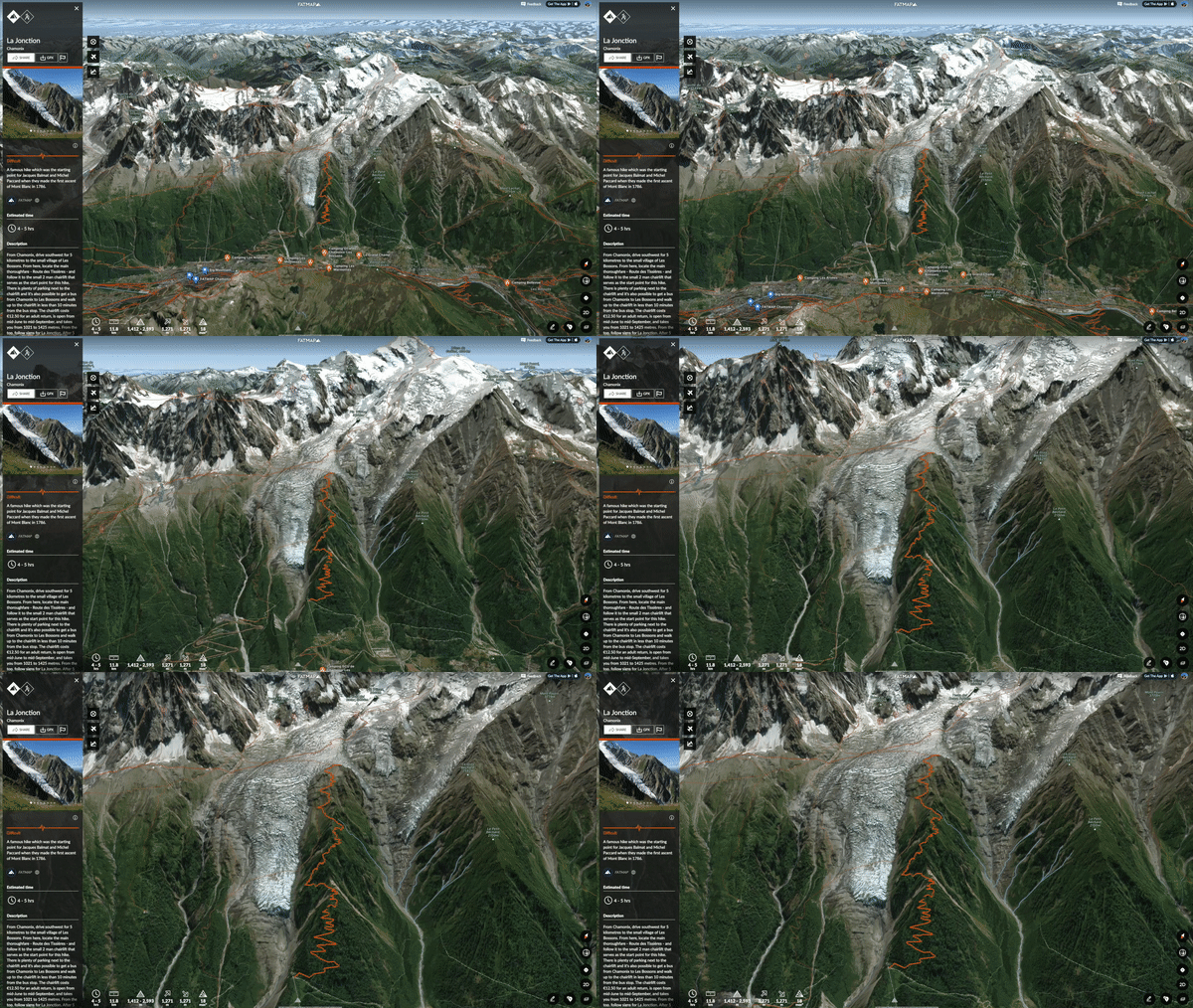
Fatmap, for its part, was founded a decade ago, with an initial focus on providing ski resorts with high-resolution digital maps. In the intervening years, the company has worked with various satellite and aerospace companies to bolster its platform with detailed maps incorporating summits, rivers, passes, paths, huts, and more, arming anyone venturing into mountainous terrain the information they need to know exactly what they’ll encounter before they arrive.


Fatmap in action Image Credits: Fatmap / Strava

With 1.6 million registered users, Fatmap’s mission, ultimately, is to be the Google Maps of the great outdoors, with a premium subscription ($30 / year) unlocking access to extra features such as downloadable maps and route planning in the mobile app.

Integrated
The ultimate long-term goal for Strava is to integrate Fatmap’s core platform into Strava itself, but that will be a resource-intensive endeavor that won’t happen overnight. And that is why Strava is working to create a single sign-on (SSO) integration in the near-term, meaning that subscribers will be able to access the full Fatmap feature-set by logging into the Fatmap app with their Strava credentials.

While Strava and Fatmap will remain separate products for now, Strava said that it will decide in the future whether Fatmap will live on as a standalone product once the technical integration has taken place.

CEO and cofounder Michael Horvath, who stepped down in 2013 before returning as head honcho six years later, said that the Fatmap acquisition is part of Strava’s “ongoing investment to provide a best-in-class digital experience” for those seeking an active lifestyle.

“Where other map platforms have been designed for navigating streets and cities, Fatmap built a map designed specifically to help people explore the outdoors,” Horvath told TechCrunch in a Q&A. “We will enable Fatmap technology in all of Strava’s services, empowering anyone to discover and plan an outdoor experience with curated local guides, points of interest and safety information.”

In terms of timescales, Strava said that it has set up a dedicated team tasked with integrating Fatmap, and it anticipates this to start showing up inside Strava from around mid-2023. The company was also quick to stress that Fatmap’s tech will be available to both free and paid-for Strava members, though certain features relating to maps, discovery, and route-planning will be reserved for paying subscribers.

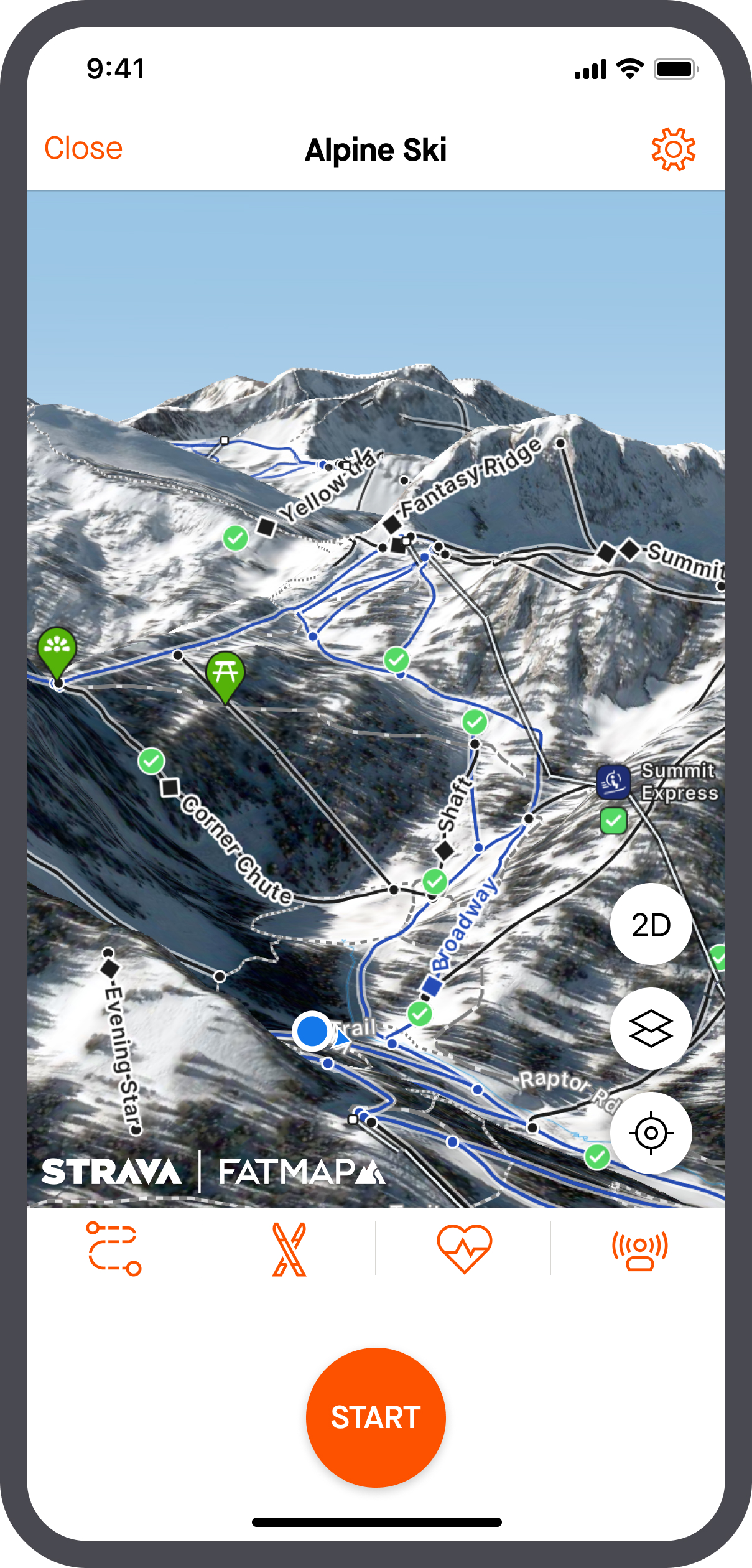
Strava provided TechCrunch with the following mockup to give an idea of what Fatmap might look like inside a future incarnation of Strava.

Strava / Fatmap integration mockup

Strava has raised north of $150 million in funding since its inception, with big-name backers including esteemed Silicon Valley investor Sequoia Capital, but the company hasn’t engaged in much acquisition activity in its 14 year history. Strava did acquire injury prevention app Recover Athletics last May for an undisclosed figure though, and today we’ve learned that Strava also bought online athlete community Prokit in 2021, something that Strava didn’t officially announce at the time.

It’s clear that the proprietary 3D mapping technology Fatmap had developed would have taken too much time and resources for Strava to replicate itself from scratch, which is why buying Fatmap outright likely made more sense in this instance.

“Strava’s primary goal is to be the digital experience at the center of active people’s lives — that includes offering people a holistic view of their active lifestyle, no matter where they live, which sport they love or what device they use,” Horvath said. “This concept fuels much of our strategic thinking and product roadmap. For acquisitions specifically, we explore those that can accelerate our strategic vision to create the best subscription service for active people serving the largest active community in the world.”

While Fatmap is incorporated in the U.K. and has part of its workforce based there, the bulk of its 50 employees are spread across offices in France, Germany and Lithuania. Strava said that it’s keeping the Fatmap team in tact, and each will continue to report to Fatmap founder and CEO Misha Gopaul, who will now serve as VP of Product at Strava and report to Strava’s chief product and technology officer Steve Lloyd.

While Strava isn’t revealing how much it paid for Fatmap, the startup had only raised around $8 million so the deal is unlikely to break the bank for Strava. What it will do, though, alongside its other two recent acquisitions, is make Strava a stickier proposition for a greater number of people — not just cycling and running for which Strava is better known.

FT : UK public sector borrowing soars more than expected

UK public sector borrowing soars more than expected
ONS figures more than double to show the highest December borrowing since monthly records began in 1993

UK public sector borrowing more than doubled in December, driven up by higher debt interest payments and the government’s measures to help households and businesses with soaring energy prices.

Public sector net borrowing hit £27.4bn last month, up from a revised £10.7bn in the same month in 2021 and the highest December borrowing since monthly records began in 1993, according to data published by the Office for National Statistics on Tuesday.

The figure was much higher than the £17.7bn forecast by economists polled by Reuters and well above the £17.6bn forecast in November by the Office for Budget Responsibility, the UK fiscal watchdog.

Public borrowing rose “largely because of a sharp rise in spending on energy support schemes and an increase in debt interest,” said the ONS.

Higher interest on government debt cost £17.3bn last month, the highest December figure since monthly records began in April 1997.

“Right now we are helping millions of families with the cost of living, but we must also ensure that our level of debt is fair for future generations,” said chancellor Jeremy Hunt.

The cost of servicing government debt has risen sharply since mid-2021 largely as a result of higher inflation, with the interest payable on index-linked gilts rising in line with the retail prices index.

Spending rose on the government’s policies to help households and businesses deal with high energy prices, including the energy bills support scheme.

Public sector borrowing in the financial year to December was £128.1bn, £5.1bn more than that borrowed in the same period last year, but £2.7bn less than forecast by the OBR.

>>> Europe : Brokers Upgrades & Downgrades - 24th of January 2023 V2(+)

>>> Up
* Alcon PT Raised to $85 from $70 at Argus
* Atlantic Sapphire ASA Raised to Buy at Arctic Securities
* DS Smith Raised to Outperform at Davy
* Industrials REIT Cut to Hold at Panmure Gordon; PT 131 pence
* M&C Saatchi Raised to Buy at Peel Hunt; PT 200 pence (+)
* Rolls-Royce Raised to Neutral at Exane (+)
* Shaftesbury Raised to Buy at Panmure Gordon; PT 459 pence
* Swatch Raised to Equal-Weight at Morgan Stanley
* US Solar Fund Raised to Positive at Stifel

>>> Down
* Alfa Laval Cut to Hold at Nordea (+)
* AMD Cut to Market Perform at Bernstein
* Ambu Cut to Sell at SEB Equities; PT 85 kroner
* Canada Goose Cut to Neutral at Baird; PT C$38.73
* Credito Emiliano Cut to Accumulate at Banca Akros (+)
* Dassault Aviation Cut to Neutral at Exane (+)
* Direct Line Cut to Sell at Citi
* Dometic Cut to Hold at Pareto Securities; PT 80 kronor (+)
* Ericsson Cut to Sell at Goldman; PT 50 kronor
* Ericsson ADRs Cut to Sell at Goldman; PT $4.90
* Greencoat UK Wind Cut to Positive at Stifel
* JLEN LN Cut to Positive at Stifel
* MTU Aero Cut to Underperform at Exane (+)
* Randstad Cut to Underperform at Oddo BHF; PT 50 euros
* RCOI LN Cut to Positive at Stifel
* Sage Cut to Add at Numis; PT 880 pence
* Sobi Cut to Hold at Handelsbanken
* Unite Group Cut to Hold at Panmure Gordon; PT 1,038 pence

>>> Initiation
* Do & Co Reinstated Buy at Berenberg; PT 60 euros
* Kesko Rated New Buy at DNB Markets; PT 25 euros

>>> Call
* AB Foods Posts Strong Update, Aided by Primark, Ingredients: RBC (+)
* AMD Cut at Bernstein on Worsening PC Climate, Intel Competition (+)
* Citi Reshuffles EU Insurer Picks, Downgrades Direct Line to Sell
* Davy Sees Positive Risk-Reward in Packaging, DS Smith Raised
* E.ON Still Offers 20% Upside After PT Cut, Berenberg Says
* Ericsson Cut, PT to Street-Low at Goldman Amid Series of Risks
* European Stocks Still Have Upside After Rally, Bernstein Says (+)
* Komax Strong Order Intake Should Underpin Outlook, Baader Says (+)
* Liberum Raises Airline Price Targets, EasyJet Preferred Pick
* Liberum, Deutsche Bank Raise Airline PTs on Positive Outlook (+)
* Swatch Sales Weighed Down by Headwinds in China, Says Vontobel (+)

>>> TradeGate Pre-Market Indications

DAX:
  • No major movers
MDAX:
  • TAG Immobilien (TEG TH) +1.5%
  • Rheinmetall (RHM TH) +1.1%
    • Germany’s Rheinmetall Could Ship 139 Leopard Tanks, RND Reports
  • Encavis (ECV TH) +1%
  • Fraport (FRA TH) -1.2%
SDAX:
  • PVA TePla (TPE TH) +1%
  • flatexDEGIRO (FTK TH) +0.7%
  • Schaeffler (SHA TH) -0.6%
  • PNE AG (PNE3 TH) -1%