>>> US Early premarket gappers

Early premarket gappers
  • Gapping up:
    • DLO +27.4%, ANGO +13.3%, CAVA +11.7%, AVAL +8.6%, LRN +7.6%, HHRS +7.3%, HRB +7.2%, COIN +6.3%, NEXT +3.4%, NBTX +2.2%, FMC +2.1%, JMIA +1.9%, IDYA +1.9%, AKAM +1.7%, ALHC +1.6%, ELP +1.4%, PBR +1%, IONQ +1%, DINO +0.8%, HOLI +0.8%
  • Gapping down:
    • COHR -21.8%, TSEM -11.8%, MRCY -11.3%, ARHS -8.7%, HLLY -6.7%, HESM -5.7%, JD -2.7%, JKHY -2.6%, A -2.1%, ALC -1.2%, ACHR -0.9%

>>> Stoxx 600 Pre-Market Indications

  • Novo Nordisk (NOVC TH) +0.8%
  • Nemetschek (NEM TH) -0.9%
  • Henkel (HEN3 TH) -1%
  • Continental (CON TH) -1%
  • Allianz (ALV TH) -1%
  • Porsche (PAH3 TH) -1.1%
    • VW’s Risk Rising, Signaling Downshift for $234 Billion of Debt
  • Bayer (BAYN TH) -1.3%
  • TUI (TUI1 TH) -1.4%
  • Yara (IU2 TH) -1.4%
    • Yara Reader Interest Increases
  • Vonovia (VNA TH) -1.5%
  • Telefonica Deutschland (O2D TH) -1.6%
    • Telefonica Deutschland Cut to Neutral at JPMorgan; PT 2.20 euros

>>> TradeGate Pre-Market Indications

DAX:
  • Bayer (BAYN TH) -1.3%
  • Vonovia (VNA TH) -1.5%
MDAX:
  • SMA Solar (S92 TH) -1.1%
  • Telefonica Deutschland (O2D TH) -1.4%
    • Telefonica Deutschland Cut to Neutral at JPMorgan; PT 2.20 euros
  • HelloFresh (HFG TH) -1.8%
SDAX:
  • Dermapharm (DMP TH) +1.3%
    • Dermapharm 1H Adjusted Ebitda EU168M
  • Grand City Properties (GYC TH) +1.2%
    • Grand City Properties Boosts FY FFO I Forecast
  • Varta (VAR1 TH) -1%
  • Aroundtown (AT1 TH) -1.4%

>>> What to look at today - 16th of August 2023

Asian stocks dropped on concern over China’s stuttering economy and signs the Federal Reserve will keep interest rates higher for longer to tame inflation. Benchmark indexes fell across the region with some of the biggest declines in Hong Kong, South Korea and Australia. The MSCI China Index is on course to erase all its gains made since last month’s Politburo meeting. The losses follow a drop in US equities Tuesday when robust economic data added to concern the Fed will keep rates elevated for longer. China’s economic woes remained in focus with a report showing new-home prices fell for a second month in July, adding to fears over the ailing property sector. JPMorgan Chase & Co. cut its full-year growth forecast for the country to 4.8% from 5% after a raft of disappointing data for July while Macquarie Group lowered estimates for the yuan. While the market obviously is waiting for a stimulus bazooka, signals from the government show that they only are taking piecemeal approach, he said. The offshore yuan was steady after the People’s Bank of China sought to boost market sentiment with a stronger-than-expected currency fixing and its largest injection of short-term cash to the financial system since February. In the earnings pipeline Wednesday is Tencent Holdings Ltd. The company is expected to record its fastest pace of revenue growth in more than a year, fueling optimism the internet sector is emerging from a historic trough despite Chinese economic turmoil. US stocks had dropped Tuesday after retail sales beat forecasts, bolstering the case for further Fed tightening. That message was reinforced by Minneapolis Fed President Neel Kashkari, who said that while inflation has been coming down, “it’s still too high.”  Major currencies were mixed. The kiwi gained after the Reserve Bank of New Zealand left its key rate unchanged as economists predicted, but said forecasts now show a small chance of another rate hike. While investors navigate a hawkish Fed and a slowdown in China, a devaluation in Argentina and Russia’s emergency rate hike on Tuesday to stem the ruble’s slide added to the risk-off sentiment. On the economic front, the UK reports inflation and the euro area will publish growth figures. Later, minutes from the Fed’s July policy meeting are due.  Oil slipped for a third day, while gold edged higher. US After Hours DLO +33.5% on earnings and naming MELI exec as co-CEO; CAVA +7.8% higher in first earnings report since IPO; LRN +7.6%, HRB +5.9% higher on earnings; MRCY -10.7% lower on earnings.

Nikkei -1.36% Hang Seng -1.47% CSI -0.60% Shanghai -0.60% Shenzen -0.69%

Eur$ 1.0918 CNH 7.3185 CNY 7.2946 JPY 145.53 GBP 1.2707 CHF 0.8779 RUB 98.0833 TRY 27.0657 WTI$ 80.70 Gold 1,905 BTC 29,152 -0.06% ETH 1,822-0.30%

S&P -0.04% Nasdaq +0.01% EuroStoxx -0.44% FTSE -0.20% Dax -0.43% SMI -0.14%

Macro :
- Vietnam’s Richest Man Adds $30 Billion as EV Maker Goes Public
- Air Freight Activity Showing No Signs of Recovery, BMO Says
- Norway’s $1.4 Trillion Wealth Fund Returns 10% on Tech Surge
- UK 6% Mortgages vs. House Prices: Loan Supply Key in 2023 Battle
- Akamai Said to Price $1B Convertible Bonds at 1.125% Coupon

Keep an eye on :
- CARLB DC : Carlsberg 1H Net Income Misses Estimates
- CLEU US : China Liberal Education Falls 44%: Chinese US Listings
- DEMANT DC : Demant Boosts FY Organic Revenue Forecast
- ESNT LN : Essentra 1H Revenue GBP166.3M
- GLB ID : Glanbia Raises FY Adj. EPS at Constant FX Growth View to 12%-15%
- GCY GY : Grand City Properties Boosts FY FFO I Forecast
- IMPN SW : Implenia 1H Ebit CHF49.9M Vs. CHF95.1M Y/y
- INTC US : Intel Is Said to See Tower Deal Failing to Win Chinese Approval
- HLUNB DC : Lundbeck Boosts FY Adjusted Ebitda Forecast
- MAU FP : Maurel & Prom to Buy Assala Energy for $730m
- NETC DC : Netcompany 2Q Gross Profit Misses Estimates
- NKT DC : NKT Maintains FY Oper Ebitda Forecast
- OXY US : Occidental to Buy Carbon Engineering for $1.1 Billion in Cash
- SAN FP : Sanofi Said to Have Been Mystery Buyer in Reata Bidding War
- STEAG GY : Kretinsky to Team Up With RAG Foundation for Steag Bid
- STORB SS : Storskogen 2Q Ebit Misses Estimates
- VOW GY : VinFast’s $65 Billion De-SPAC Valuation Vaults It Past Ford, GM

>>> Europe : Brokers Upgrades & Downgrades - 16th of August 2023

>>> Up
* Aallon Group Raised to Buy at Inderes; PT 12.50 euros
* Cloudberry Clean Energy Raised to Buy at DNB Markets
* Tritax Big Box Raised to Overweight at Barclays; PT 165 pence
* TT Electronics Raised to Buy at Peel Hunt; PT 240 pence

>>> Down
* Antofagasta Cut to Underperform at RBC; PT 1,200 pence
* Navamedic Cut to Neutral at SpareBank; PT 35 kroner
* Ponsse Cut to Sell at Inderes; PT 27.50 euros
* Ponsse Cut to Sell at Nordea; PT 29 euros
* Telefonica Deutschland Cut to Neutral at JPMorgan; PT 2.20 euros
* Segro Cut to Underweight at Barclays; PT 775 pence
* Vestum Cut to Hold at Danske Bank Markets; PT 9.80 kronor

>>> Initiation
* CAB Payments Rated New Equal-Weight at Barclays; PT 335 pence
* CAB Payments Rated New Overweight at JPMorgan; PT 320 pence
* Trainline Rated New Buy at Shore Capital; PT 320 pence

>>> Call

FT : Norway oil fund chief attacks UK backlash against green measures

Norway oil fund chief attacks UK backlash against green measures
Chief executive Nicolai Tangen says climate change is an increasing financial risk and should not be a matter of politics

The head of the world’s largest sovereign wealth fund has expressed concern that political resistance to climate and environmental measures is spreading from the US to the UK.

Nicolai Tangen, chief executive of Norway’s $1.4tn oil fund, told the Financial Times: “A new thing this summer is the ESG [environmental, social, governance] backlash in the UK, on the back of that one Uxbridge vote . . . That’s bad. You have a big country in Europe that is slowing down the work on climate at a time where it’s more important than ever.”

The UK’s opposition Labour party failed to win a by-election in the outer London constituency of Uxbridge last month, despite being far ahead of the ruling Conservatives in many national polls.

Both sides have taken this as evidence that voters are unhappy with green policies: earlier this year, London’s Labour mayor Sadiq Khan extended the reach of vehicle emissions charges to outer London to improve air quality.

Tangen said climate change was an increasing financial risk and should not be a matter of politics. “To me, climate is about as political as gravity. It’s just not political. I don’t understand how you can turn this into politics.”

Norway’s oil fund is one of the most influential investors in the world, owning on average more than 2.5 per cent of every listed company in Europe. It is funded from revenues from the country’s oil and gas revenues.

Under Tangen, it has been putting more pressure on companies it owns shares in to take action on climate change. This has included filing its first shareholder proposals at an annual meeting in a decade, and publicly speaking out against an ESG backlash that first started in the US

The former hedge fund manager said climate change was an increasing financial risk partly because rising temperatures were affecting crop productivity, causing price inflation in foodstuffs from orange juice to rice.

“What we have seen this summer is you go from global warming to global boiling,” he said, adding: “lately there is a much closer link between climate and inflation. That’s why it’s a proper financial risk . . . We have to ratchet up the work on climate”.

Tangen also laid out the fund’s views on artificial intelligence. It is calling on its 9,000 portfolio companies to ensure there is accountability at board level, that they are open about how AI is designed and used and that they manage risks carefully.

The fund has doubled its number of meetings with portfolio companies about AI, holding 166 this year up to May, compared with 177 for the whole of 2022.

“Boards are absolutely not on top of this,” said Tangen, adding that the fund would vote against companies that did not have enough expertise at director level.

But he added: “If you don’t think there are opportunities with AI, then in my mind you are a complete moron.” Internally, it had already made the fund’s trading operations more efficient, he said, and the aim was for it to increase productivity by 10 per cent.

Regulating AI globally would be “very tough”, he said, because the technology was crucial to the “weapons race, medical race, self-driving race, financial race” between the US and China.

The importance to the fund of a few key investments was apparent in the first half of this year: just seven companies — Alphabet, Amazon, Apple, Meta, Microsoft, Nvidia, and Tesla — accounted for a third of its gains. Those companies now account for 12 per cent of its portfolio.

Carine Smith Ihenacho, chief corporate governance and compliance officer at the fund, said that, aside from the tech industry, the fund was looking particularly at sectors such as healthcare, consumer goods and retail financial companies to be responsible in their use of AI.

(ZH) With China's Economy On "Verge Of Collapse", PBOC Central Banker Calls For

With China's Economy On "Verge Of Collapse", PBOC Central Banker Calls For Helicopter Money

As Bloomberg's Garfield Reynolds writes in the aftermath of last night's unexpected Chinese rate cut, while the nation's economic struggles were (finally) severe enough for the authorities to respond with their biggest interest-rate cut since the pandemic, it will be nowhere near powerful enough to help spark a turnaround.
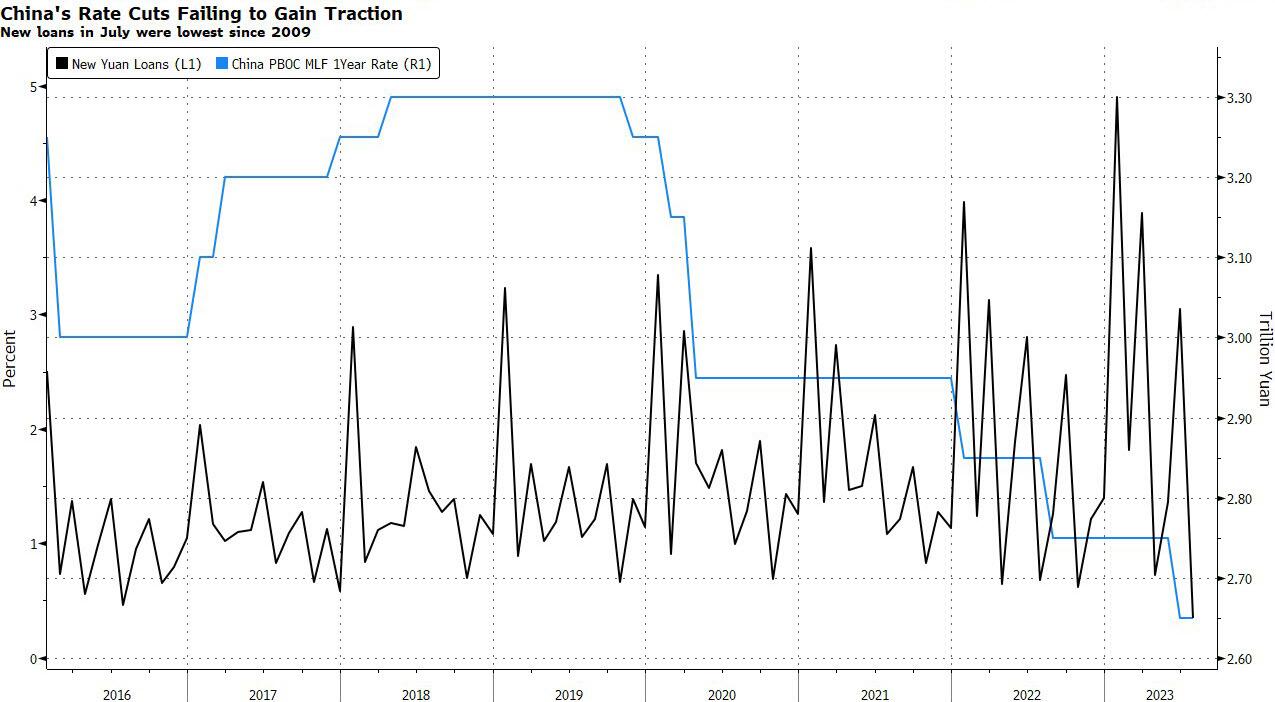
For a start, Reynolds writes, that scope "is rather less impressive when you realize the reduction in the rate on one-year PBOC loans — or medium-term lending facility — was all of 15 basis points. Most central banks faced with the sort of slowdown China is facing might well decide to cut by three times as much or more."
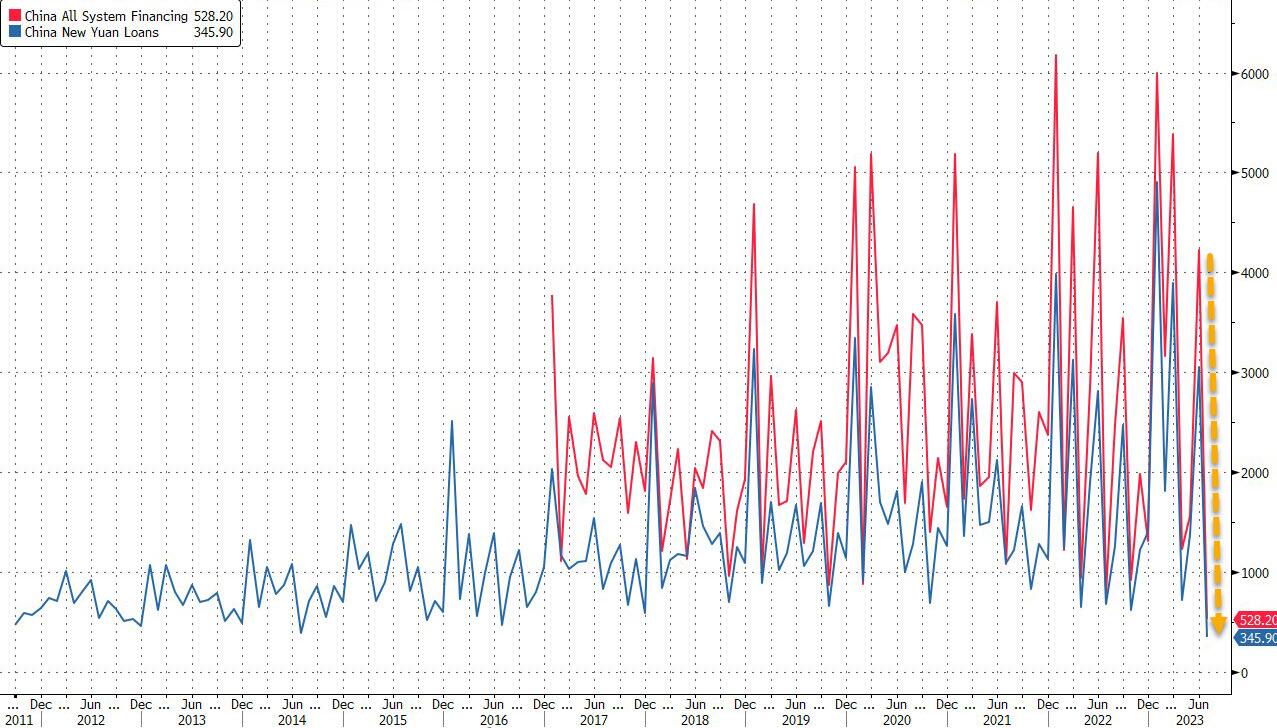
The real difficulty for China is that previous reductions haven’t done all that much to galvanize lending in order to stimulate activity; after all as we have discussed previously, one can't fix a lack of demand problem with more supply (one can , however, create asset bubbles).
Furthermore, as we observed on Sunday, China's new loans tumbled in July to the lowest since 2009...
.... and the PBOC’s ever-increasing interest-rate benchmarks were all at multi-year lows even before this month’s reduction.
Part of the reason for the lack of demand is the ongoing woes in the key property sector, though the situation also underscores concerns that China is tipping into a balance-sheet recession in which companies avoid fresh borrowings in order to service and pay down their existing debt.
As China slides into a Japan-style balance sheet recession and the resulting deflation - as recently discussed by Richard Ku - it is facing even bigger problems than just a garden-variety property and/or debt crisis.
Indeed, as Rabobank's Michael Every cites the Economic Observer, a subsidiary of Xinhua News Agency, which published a newsletter titled "Finance Bureau Chiefs in the Past Half Year", and which concluded that local government finances and the national economy are reportedly “on the verge of collapse, and the thunder will explode at any time.” To be sure, recent events ensure the coming collapse:
  • Country Garden just defaulted;
  • Zhongzhi Enterprise Group missed payments on high-yield investment products;
  • recent bank loan data were terrible;
  • and today saw industrial production 3.7% y-o-y (4.3% expected),
  • retail sales 2.5% y-o-y (vs. 4.0%),
  • fixed asset investment 3.4% y-o-y year-to-date (vs. 3.7%),
  • property sales -8.5% y-o-y year-to-date (vs. -8.1%),
  • and unemployment 5.3% vs. 5.2% (not to mention that youth unemployment which just hit all time highs, will no longer be reported for obvious reasons).
Summing it up, China “has fallen into a psycho-political funk,” says the FT, as its youth tell Soviet jokes again or say ‘let it rot’, and a high-earning Beijing worker is quoted as saving as much as he can to prepare for a property crash or a move against Taiwan.
So is there anything that could actually stop the bleeding in China from an economic or market perspective? Well, as Nomura's Charlie McElligott writes - and agrees with our assessment - the biggest reason why China is imploding in slow-motion is that that, as opposed to rest of world, Chinese authorities never responded with Fiscal transfer into pockets of individuals and businesses who were bled dry during the covid crisis.
Hence, the one thing that could truly “shock and awe” markets would be outright “helicopter drops” of money direct to households and businesses in order to stimulate DOA Chinese consumption.
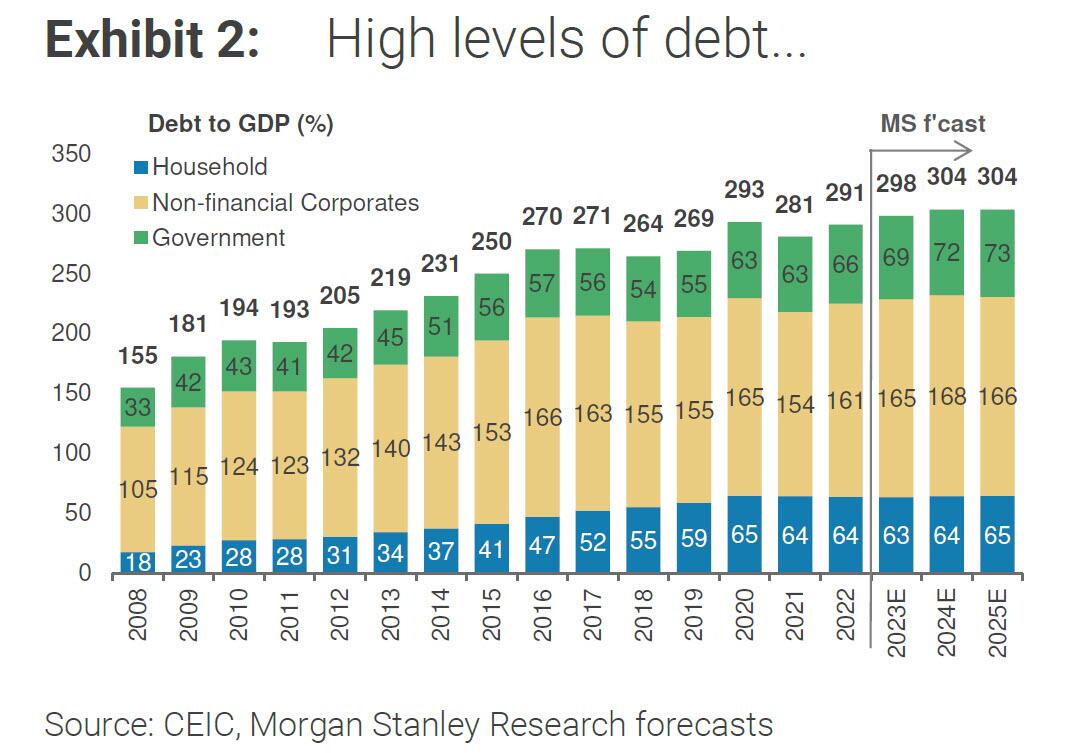
Impossible you say, after all China has nearly 300% debt/gdp... only the terminal economic basket case that is Japan is higher.
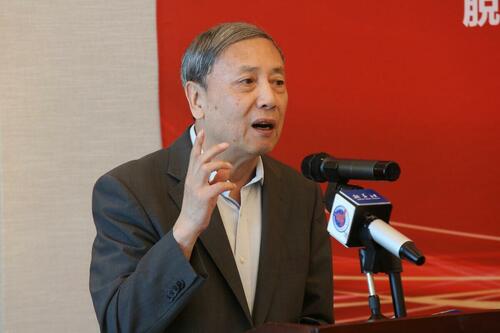
Or maybe not: as Bloomberg writes today (see “PBOC Adviser Says China Urgently Needs to Boost Consumption”) Cai Fang, a member of the monetary policy committee at the PBoC, i.e. one of China's top central bankers, warned that the top priority for policymakers is to stimulate household consumption:
Cai added in the article posted late Monday on a social media account of the China Finance 40 Forum, one of the nation’s top economic think tanks, that continued unemployment in the wake of the pandemic is crimping household spending and that consumer confidence is expected to weaken without new policies.
"The most urgent goal now is to stimulate household consumption, and it is necessary to use all reasonable, legally compliant and economic channels to put money in residents’ pockets," said Cai, 66, one of the most well-known economists in China to focus on demography and labor economics.
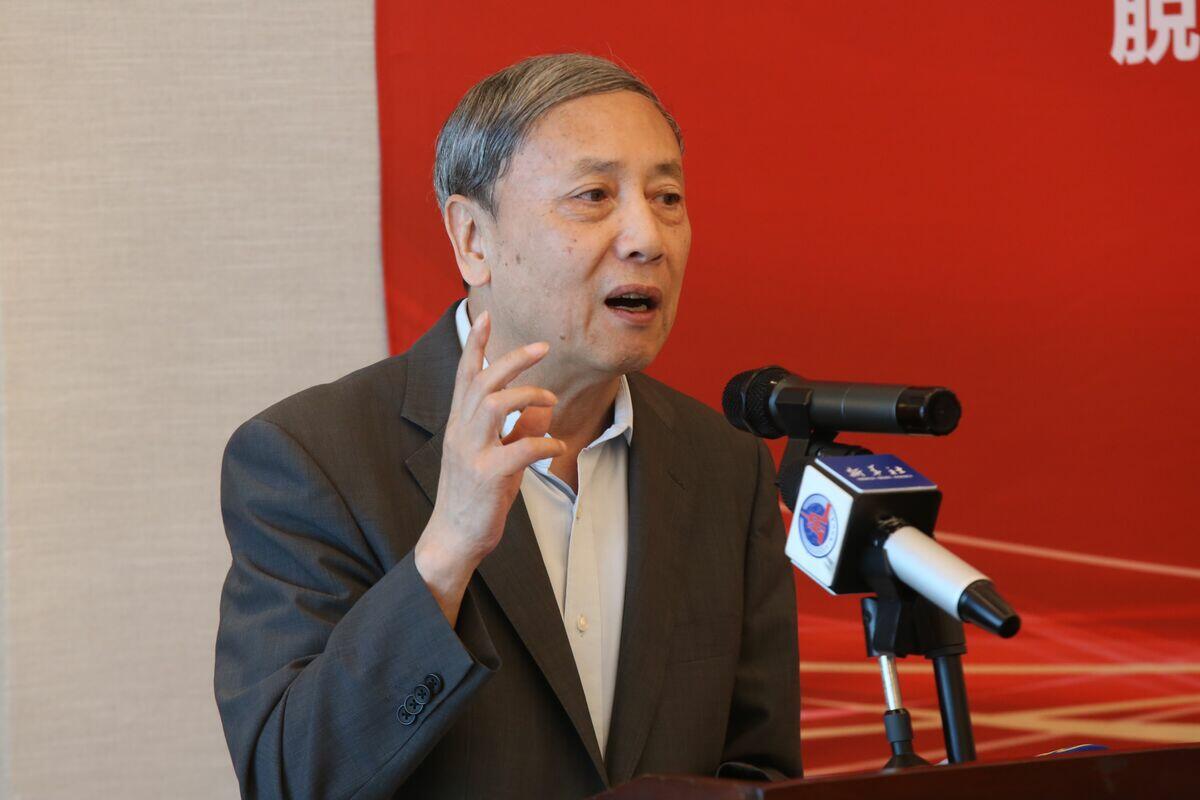
The former vice president of the Chinese Academy of Social Sciences, a state think tank, joined the PBOC’s policy advisory body in early 2021, and has helped the government map five-year plans for economic and social development. In July, Cai called on officials to reform the household registration system to unleash the consumption potential of the nation’s large pool of migrant workers.
Cai Fang
One can almost see why just hours later Beijing halted the publication of China's youth unemployment data.
More importantly, however, Cai called for the inevitable helicopter drops to boost household consumption and aid the economic recovery:
He is among a group of economists who have called for providing direct stimulus to consumers to boost spending, a path that Beijing has so far been unwilling to follow. Earlier this year, Cai said direct stimulus of 4 trillion yuan ($551 billion) paid directly to Chinese households is an option to spur a recovery in consumer spending that has been slowed by weak wage growth during the pandemic.
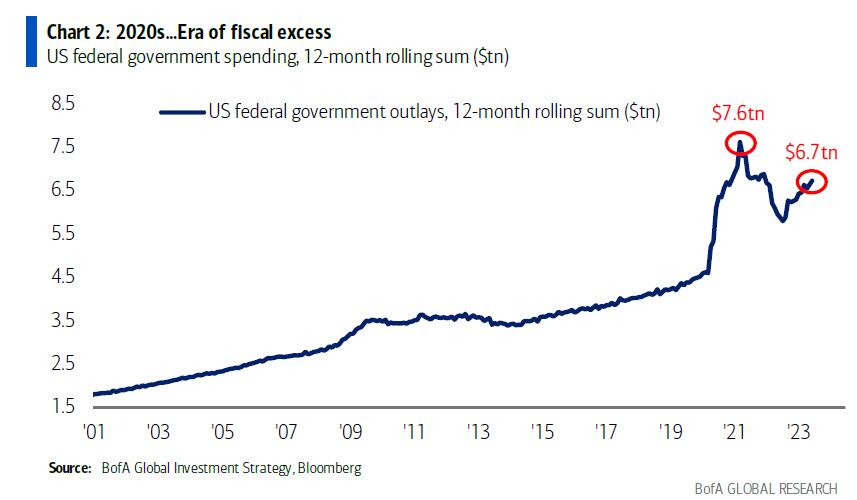
And while China can probably pretend it can avoid what's coming for a few more months, it is now just a matter of time before China joins the rest of the "developed" world in what Michael Hartnett recently called the "era of fiscal excess."
After all, there is probably a reason why former PBOC governor, Yi Gang, who called for "economic prudence" and was against against massive stimulus, was recently "retired."

WSJ : U.S. Steel Takeover Talk Rattles Manufacturers

U.S. Steel Takeover Talk Rattles Manufacturers
Deal for American steelmaker could leave fewer options for the alloy used in cars, food cans and other products

A takeover of United States Steel X -2.73%decrease; red down pointing triangle could create a new industry leader—and draw pushback from antitrust authorities and steel buyers.

The pursuit by Cleveland-Cliffs CLF -2.63%decrease; red down pointing triangle of one of the nation’s biggest steelmakers, made public in recent days, could ratchet up market concentration in steel used to make auto fenders, food cans and batteries for electric vehicles. Cleveland-Cliffs and industrial conglomerate Esmark have both made offers for U.S. Steel that would value the company at more than $7 billion.

Suitors for U.S. Steel are attracted to the 122-year-old company’s relatively low stock price and its hefty capacity to produce steel that includes some of the largest and newest steel mills in the country, according to analysts. Elevated spending on transportation and energy infrastructure, giant manufacturing plants and electric vehicles are expected to stoke demand for more steel in the years ahead.

Steel production in the U.S. already is concentrated among four big suppliers—U.S. Steel, Cleveland-Cliffs, Nucor NUE -1.62%decrease; red down pointing triangle and Steel Dynamics STLD -3.20%decrease; red down pointing triangle. Cleveland-Cliffs is the largest producer of sheet steel and U.S. Steel is the second largest. Some manufacturers said further consolidation in the steel industry would give producers more leverage to raise prices at a time when the U.S. has the most expensive steel in the world.

“We already have a very concentrated market for steel,” said Scott Buehrer, president of B. Walter & Co., an Indiana-based manufacturer of wire racks, furniture hardware and other fabricated steel products. “It’s hard to compete with companies outside the U.S. who have access to much lower-priced steel.”

Cleveland-Cliffs Chief Executive Lourenco Goncalves said that absorbing U.S. Steel’s operations would create a lower-cost, more innovative supplier for manufacturers. Cleveland-Cliffs said Sunday it made a cash and stock offer to acquire Pittsburgh-based U.S. Steel for $35 a share, which the company rejected, calling the offer “unreasonable.”

Privately held Esmark, which operates steel distributors and a company that coats steel with tin for use in food cans, went public with its own bid for the company by offering shareholders $35 in cash for each of their shares. CEO James Bouchard said he has been working for months on an offer for U.S. Steel, where he once was an executive for the company’s operations in Europe.

Acquiring U.S. Steel would make Cleveland-Cliffs the largest steel company in North America, with annual production of nearly 26 million tons and sales of almost $40 billion. Nucor, which is now the largest domestic steelmaker, would drop to second place with 18 million tons, followed by Steel Dynamics, according to materials submitted by Cleveland-Cliffs in its offer to U.S. Steel.

The realignment of the steel industry would leave Cleveland-Cliffs with an outsize stake in the flat-rolled steel business, analysts said. The company would account for more than 50% of the sheet steel consumed annually in the U.S., according to KeyBanc Capital Markets.

Cleveland-Cliffs’ potential concentration within the automotive steel market is likely to become a flashpoint for steel users and antitrust regulators.

Cleveland-Cliffs already is the largest supplier of automotive sheet steel. The auto industry is U.S. Steel’s biggest customer as well, accounting for more than 20% of its sales last year, Keybanc said.

U.S. Steel and Cleveland-Cliffs produce most of their steel from iron ore melted in blast furnaces. It is a production process that yields high-quality sheet steel used in car fenders, hoods and other exterior parts of vehicles. If Cleveland-Cliffs bought U.S. Steel, it would become the only steel company in the U.S. using blast furnaces. As a result, Cleveland-Cliffs also would become the lone domestic supplier of tinplate used in food cans. Can manufacturers primarily use steel made from iron ore.

U.S. Steel and Cleveland-Cliffs also are the only suppliers of iron ore in the U.S. Cleveland-Cliffs, which was an ore mining company until it started buying its steel customers a few years ago, would control the entire domestic ore supply if it acquires U.S. Steel.

Cleveland-Cliffs also would be the only domestic steel company capable of producing steel for electric vehicle motors if it acquires U.S. Steel’s Big River Steel mill in Arkansas, where U.S. Steel is close to completing a line to produce the electrical steel.

U.S. Steel’s board said it rejected Cleveland-Cliffs’ proposal when the two companies couldn’t agree on the terms for conducting talks over the offer. The company said it is evaluating other offers. Regarding Esmark’s bid, U.S. Steel said it welcomes the company joining the multiple parties that have submitted offers for all or part of the company.

U.S. Steel shares closed Tuesday 2.7% lower at $30.23.

Esmark is a privately held conglomerate based near Pittsburgh that runs a portfolio of industrial businesses and service businesses, including aircraft leasing, real estate management and natural gas and oil drilling.

Currently, Esmark doesn’t produce steel itself or operate ore mines. The company owns steel distributors and processors. One of the only overlaps between U.S. Steel and Esmark is in steel-coated tin used in food cans. Esmark owns a company that coats sheet steel with tin. U.S. Steel also produces tinplate for cans, including making the sheet steel for the cans.