- CTS Eventim (EVD TH) +1.7%
- Novo Nordisk (NOVC TH) +1.4%
- Nibe (NJB TH) +1.1%
- ASML (ASME TH) +0.9%
- China’s Chip-Gear Makers Soar as US Probe Spurs Development Bets
- VW (VOW3 TH) +0.9%
- Coloplast (CBHD TH) +0.9%
- TUI (TUI1 TH) +0.8%
- Engie (GZF TH) +0.8%
- OMV (OMV TH) -0.5%
- Deutsche Telekom (DTE TH) -0.5%
- Gerresheimer (GXI TH) -0.5%
- TotalEnergies (TOTB TH) -0.6%
- Nel (D7G TH) -0.6%
- Tomra (TMRA TH) -0.7%
- SCA (SCA TH) -0.7%
- Rolls-Royce (RRU TH) -0.9%
- Porsche AG (P911 TH) -1.1%
- Wartsila (MTA TH) -3.1%
- Wartsila Rated New Underweight at Barclays; PT 8.50 euros
DAX:
- Infineon (IFX TH) +0.9%
- China’s Chip-Gear Makers Soar as US Probe Spurs Development Bets
- US Probes Made-in-China Huawei Chip as Alarm in Washington Grows
- VW (VOW3 TH) +0.9%
- Porsche AG (P911 TH) -0.8%
- Lotus Unleashes Emeya, a Porsche Panamera-Like Electric Sedan
MDAX:
- CTS Eventim (EVD TH) +1.7%
- Encavis (ECV TH) +1.7%
- SMA Solar (S92 TH) +1.3%
SDAX:
- No major mover
The Lotus Emeya is a super speedy EV sedan designed to take on Porsche

Image Credits: Lotus
Lotus revealed Thursday evening in New York City the Emeya, an all-electric four-door grand tourer that aims to compete with the likes of Porsche on speed, tech and luxury and help transform the Chinese-owned British automaker into a global performance brand by 2028.
The flagship vehicle launch comes at an auspicious time for the “born British, raised globally” company, which is preparing to make its debut on the Nasdaq public exchange. Lotus, which is owned by China’s Geely, is going public via a merger with special purpose acquisition company with L Catterton Asia Acquisition Corp. The merger is expected to close by the end of the year.
A successful public debut would be the accelerant in Lotus’ (and Geely’s) plans to scale production and sell some 150,000 vehicles a year by 2028. That’s a huge feat considering Lotus has produced a fraction of that amount on an annual basis over its 75 years of existence.
The company has already made progress towards that goal. The company said that as of June 30, it had received 17,000 orders for its battery-electric Eletre SUV and mid-engine Emira sports car. The Eletre, the company’s first all-electric vehicle, is produced at a factory in Wuhan, China. Deliveries began in March.
The Emeya, which is expected to go into production in 2024, will also be produced at the Wuhan factory.
Nuts and bolts
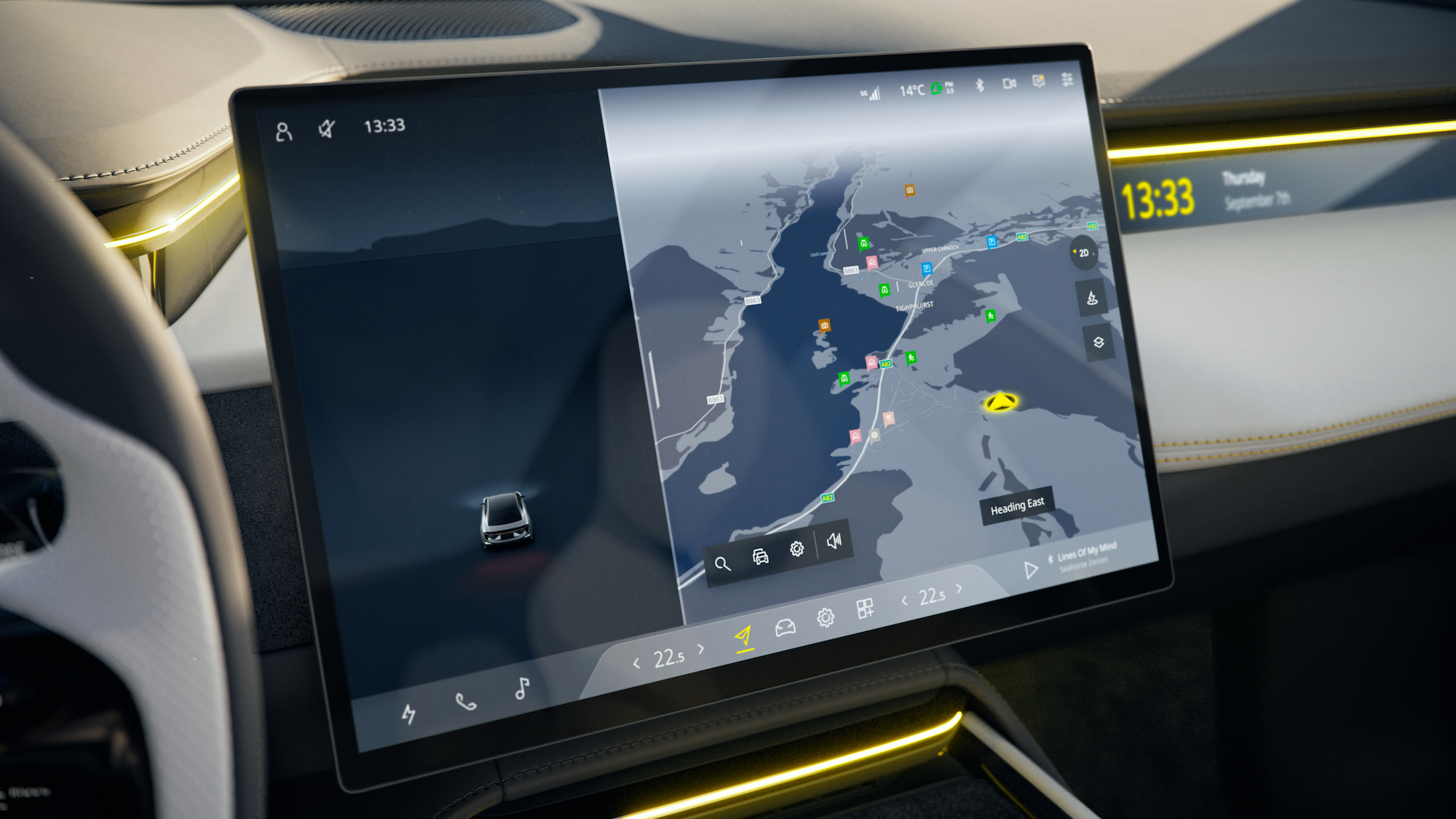
Image Credits: Lotus
The Emeya is fast, according to Lotus. How fast? The company said the dual-motor grand tourer will be able to accelerate from zero to 62 miles (100 kilometers) per hour in under 2.8 seconds. The top speed will be 155 miles per hour. That puts the Lotus Emeya in the same category as Porsche’s all-electric Taycan Turbo S, the Lucid Air and the Tesla Model S Plaid.
The company didn’t give specifics on the vehicle’s battery range. It did say it would be in line with the Eletre, which has an estimated range of 373 miles using the more optimistic European WLTP cycle.
The company said the Emeya’s battery will also be capable of fast charging. When using 350 kW DC fast charger (finding one that hits that level is another matter), the Emeya will be able add 93 miles of range in five minutes and reach an 80% charge within 18 minutes, according to the company.
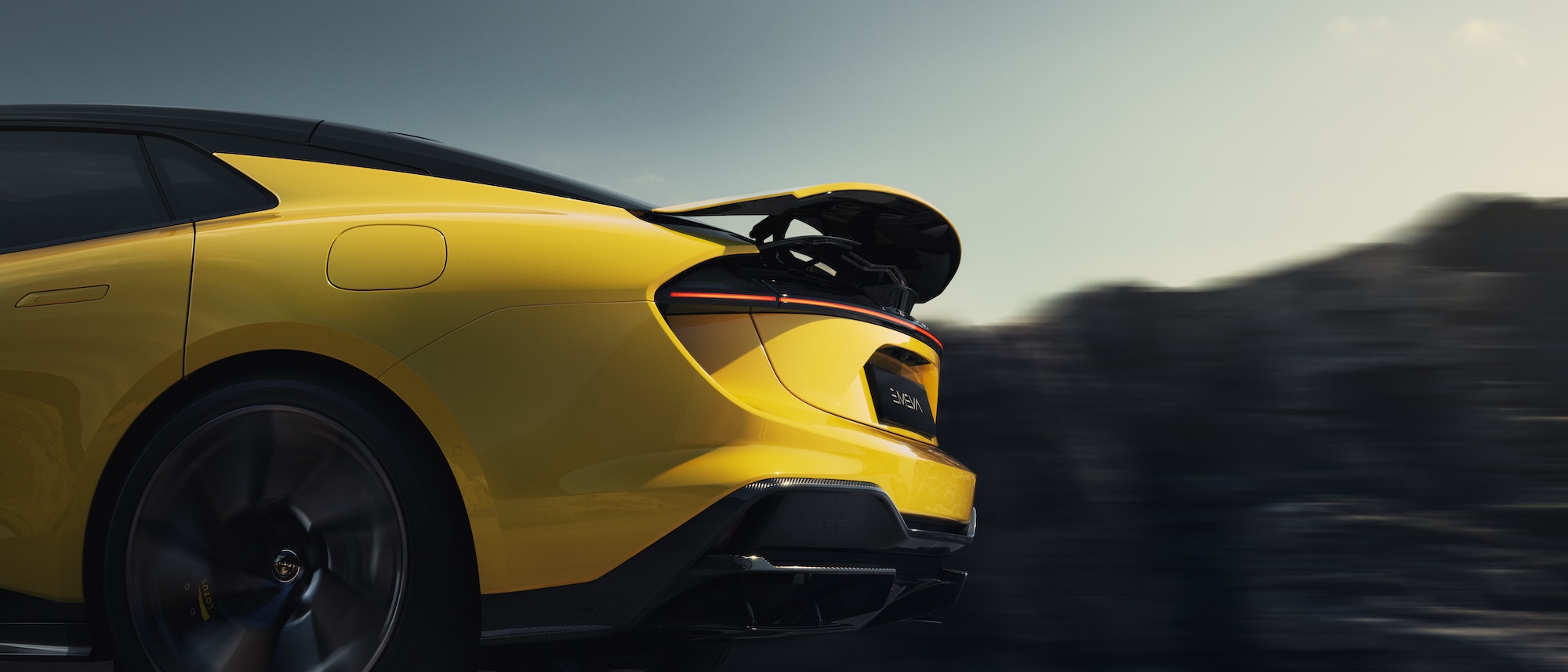
Image Credits: Lotus
The company did share some of details about its aerodynamic design, driving features and interior accoutrements, including an electronically controlled air suspension system that includes onboard sensors that “feel the road 1,000 times a second” and automatically adjust the vehicle to ensure the smoothest ride.
Inside the vehicle are all the luxury details one might expect, including an immersive audio system developed with KEF. There’s also a 55-inch projected augmented reality head-up display and a large central infotainment screen. The company touted the sustainable materials in the Emeya as well, including a new thread made from repurposed fiber from the fashion industry.
Lotus didn’t disclose the price of the Emeya or its market availability. The company said more information will be released in the fourth quarter.
Annabel’s Unveils World Amazon Day Facade, Seal Set to Perform at Annual Event
To date the foundation has planted 1.75 million trees and is on track to hit 2 million seedlings by March 2024.

Annabel's facade for World Amazon Day
COURTESY OF ANNABEL'S
LONDON — Annabel’s, the private members club in London, has unveiled its annual facade for World Amazon Day.
The installation will be seen throughout the month of September outside the club’s famous location on Berkeley Square replicating plants, flowers and birds of the Amazon.
“This year, we celebrate four years of Annabel’s for the Amazon and the Caring Family Foundation’s work dedicated to the Amazon Rainforest. Though we have made good progress, I have seen first hand that there is much work that remains to be done. The Annabel’s facade this year draws attention to our beautiful rainforest being engulfed by flames to depict the reality of what the Amazon is facing, it serves as a stark message that it is in great danger,” Patricia Caring, co-executive chairwoman of The Birley Clubs and cofounder of The Caring Family Foundation told WWD.
Related Articles


The Caring Family Foundation
MAÍRA SANTOS
“Our mission this year is to continue planting trees, but our focus is to support the Indigenous communities who carry out the reforestation programs,” she added, reiterating that the need of the Indigenous people comes first.
The Caring Family Foundation will be working with the Brazilian foundation SOS Amazônia, as well as expanding their efforts to two more Indigenous and traditional communities.
To date the foundation has planted 1.75 million trees and is on track to hit 2 million seedlings by March 2024.
The members club will host its annual For the Amazon event on Sept. 21 with a special performance by artist Seal and a set by Copenhagen-based house group, WhoMadeWho.
A special talk conducted by Sônia Guajajara and Txai Suruí, members of the Indigenous community will take place on Sept. 25.
“It gives me so much pride to be doing this work for my country Brazil, but even more so to be able to do this work for us all, for this generation and those that come after us,” Caring said.
Shares in Asia echoed US declines and a rally in the dollar stalled as the greenback weakened against most major currencies. Treasury yields also fell. Stocks across the region slipped while trading in Hong Kong was scrapped due to weather. Japanese equities fell for a second day after its economy expanded at a slower pace than initially estimated. The declines followed selling on Wall Street that weighed on tech stocks, partly driven by concerns about Apple Inc’s iPhone sales in China. The S&P 500 fell 0.3%, while the Nasdaq 100 dropped 0.7%. Apple shares slumped 2.9%. US equity futures were little changed Friday. Apple’s Asia-based suppliers also fell. In currencies, the dollar edged lower, but was still set for its longest run of weekly advances in years amid speculation the Federal Reserve will keep interest rates elevated. The offshore yuan weakened, approaching the lowest level on record. The official daily reference rate for the currency was lower, in a sign policymakers will allow gradual depreciation of the currency. Meanwhile, the Japanese yen briefly strengthened after Finance Minister Shunichi Suzuki said Japan will watch FX moves with a high sense of urgency and won’t rule out any options to address excessive moves. China plans to expand a ban on the use of iPhones in sensitive departments to government-backed agencies and state companies, a sign of growing challenges for Apple in its biggest foreign market and global production base. Beijing intends to extend that restriction far more broadly to a plethora of state-owned enterprises and other government-controlled organizations, people familiar with the matter said. Others foresee a muted impact on Apple. Government officials were probably already avoiding the company’s products, according to Evercore ISI’s Amit Daryanani. A broad crackdown on the company would also affect jobs in China, where most iPhones are assembled, he wrote. At the same time, US officials are investigating an advanced chip revealed to be in a new Huawei Technologies Co. phone, which has set off a debate about the efficacy of its sanctions. Oil declined for a second day on Friday after a nine-session rally propelled futures into overbought territory. For the week, the US crude West Texas Intermediate benchmark has risen by almost 1%, rallying at one point on Wednesday above $88 a barrel to the highest level since November. US After Hours SWBI +9.3%, SMAR +5.4%, DOCU +3.6% higher on earnings; RH -8.4%, ZUMZ -5.9% lower on earnings; HPP -8.2% suspends dividend.
Nikkei -1,20% Hang Seng -1,34% CSI -0,56% Shanghai -0,20% Shenzen -0,09%
Eur$ &,0719 CNH 7,3534 CNY 7,3439 JPY 147,21 GBP 1,2498 CHF 0,8908 RUB 98,3424 TRY 26,8491 WTI$ 86,28 Gold 1,925 BTC 26,289 ETH 1,648
S&P +0,11% Nasdaq +0,18% EuroStoxx +0,40% FTSE +0,09% Dax +0,32% SMI +0,08%
Macro :
- Italy Still Reviewing Options for New NPL Rules, Meloni Says
- Spain’s IBEX 35 Equities Index Unchanged After Quarterly Review
- Spain’s IBEX 35 Equities Index Unchanged After Quarterly Review
- Private Credit’s $10 Billion Win Is Bad News for Wall Street
- Ex-FTX Executive Salame to Plead Guilty to Criminal Charges
- EQT Boss Sees Natural Gas Markets Remaining ‘Extremely Volatile’
Keep an eye on :
Keep an eye on :
- AIR FP : Spirit Trims 737 Expectations -- Market Talk
- BPE IM : BPER Banca Names Gian Luca Santi CFO
- DIE BB : D'Ieteren Sees FY Adjusted Pretax Profit Above EU960M
- ENI IM : Eni Cashes In on Convertible Bond Demand With €1 Billion Offer
- GRPN US : Windward Management Said to Boost Stake in Groupon to 8.6% (1)
- HEIA NA : Heineken Slips; CEO Says the Summer Has Been ‘Brutal’ in Europe
- NEM US : Newmont to Hold Special Meeting on Newcrest Mining Deal Oct. 11
- OKE US : ISS Recommends Magellan Midstream Holders Vote ‘for’ Oneok Deal
- ORA FP : Orange Interested in Buying TDF’s Fiber Network: Les Echos
- ORSTED DC : Eversource, Orsted in Tax Equity Capital Contribution Pact
- REP SM : Repsol to Pay Quantum Energy $768 Milllion for US Renewable Firm
- RUI FP : Rubis 1H Ebitda EU409M Vs. EU314M Y/y
- SPM IM :Saipem Gets New Offshore Contracts for €850m
- SAX GY : Stroeer Considers Options for 2024 Sale of Statista: Reuters
- SSE LN : Wind Farm Developer SSE Rethinks US Entry in Blow to Biden Plans
- STLA IM : Stellantis May Cut German Spending Over Energy Costs: Augsburger
- ROL SW : Altana Controls 87.44% of Voting Rights in Von Roll
- ZAL GY : Zalando Extends Co-CEO Contracts for Another Four Years
- ZAL GY : Zalando Extends Co-CEO Contracts for Another Four Years
>>> Up
* First Solar Raised to Buy at Deutsche Bank; PT $235
* Next Raised to Buy at SocGen; PT 8,239 pence
* Next Raised to Buy at SocGen; PT 8,239 pence
* Petrobras ADRs Raised to Outperform at Bradesco BBI; PT $15
* Wallenius Wilhelmsen Raised to Buy at SEB Equities
>>> Down
* FinecoBank Cut to Neutral at JPMorgan; PT 14.90 euros
>>> Down
* FinecoBank Cut to Neutral at JPMorgan; PT 14.90 euros
>>> Initiation
* Alfa Laval Reinstated Overweight at Barclays; PT 430 kronor
* TeamViewer SE Rated New Hold at SocGen; PT 18.80 euros
* TeamViewer SE Rated New Hold at SocGen; PT 18.80 euros
* UPM-Kymmene Rated New Outperform at CICC; PT 36.40 euros
* Vne Rated New Outperform at EnVent S.p.A.; PT 5.77 euros
* Wartsila Rated New Underweight at Barclays; PT 8.50 euros
* Watches of Switzerland Rated New Hold at Stifel; PT 680 pence
>>> Call
>>> Call
Lars Fruergaard Jørgensen, the Novo Nordisk boss who dethroned Europe’s biggest company
Danish pharma chief is leading the expansion of blockbuster obesity drug that propelled shares to record high
Just after Lars Fruergaard Jørgensen took over as Novo Nordisk’s chief executive in 2017, he took a decision that would this month make the Danish drugmaker Europe’s largest company by market capitalisation.
The pharmaceutical company had not yet launched Ozempic, the diabetes drug that would later become famous as celebrities took it off-label for weight loss, and was years from the approval of Wegovy, the version that targets obesity. The management team were debating whether to embark on an expensive trial that would prove whether or not Wegovy would cut the risk of heart attacks and strokes.
Mads Krogsgaard Thomsen, chief executive of the Novo Nordisk Foundation, which has the majority of voting rights in the company, described executives asking: “Why would we do such a trial with a high risk of maybe not showing anything? Maybe it’s just the anti-diabetic effect that is responsible for the benefits we’ve seen in diabetes. What if we don’t see anything in obesity, and the trial costs hundreds of millions of dollars?”
But at the end of the day, it was up to Jørgensen. “His head was on the block. It is a lot of money,” he said.
His gamble paid off: the initial trial data published last month showed that patients who took the Wegovy drug had a 20 per cent lower chance of suffering a cardiovascular event such as a heart attack or stroke than those who received a placebo.
Investors hope the data will prove to health systems and insurers that the medicine, which has made headlines as a rich person’s slimming tool, could actually save lives and costs. Shares soared 16 per cent that day, and continued rising until Novo Nordisk overtook French luxury conglomerate LVMH as the largest European company on Monday.
Jørgensen has a huge commercial opportunity: Novo Nordisk is one of two main companies, along with Eli Lilly, in a market that the Canadian investment bank BMO estimates could be worth up to $130bn to $140bn a year at its peak.
But he also faces giant challenges: the company is still trying to scale up supply of the drug, some health insurers are reluctant to foot the bill, and Ozempic and Wegovy are being used as slimming jabs by people who are far from obese.
Jørgensen learnt to take responsibility at a young age, on the family farm in Jutland, Denmark.
Lars Green, chief financial officer of sister company Novozymes, has known Jørgensen since university.
“His upbringing means he has always learned that things do not come by themselves. They require an investment, or an effort, and based on those efforts you harvest your returns,” he said.
After studying finance and business, Jørgensen joined Novo Nordisk on the graduate scheme in 1991 and has worked with the company in the US, Japan and the Netherlands, in functions from technology to business development.
Jesper Brandgaard, former chief financial officer at Novo Nordisk, described Jørgensen when he became interim head of corporate finance at the company, aged just 33. “He is the type of person that very easily will be assigned responsibility, and then takes care of the responsibility, whether it’s needing to feed the pigs or whatever he needs to do,” he said.
Jørgensen, 56, met his wife at Novo Nordisk and they now have two adult children. As well as responsibility, he stresses the importance of reflection in life, going kayaking on the lake near his house.
Novo Nordisk, which, while it turned 100 this year, is far from a household name, and Jørgensen does not want to become a ‘brand’, like some other chief executives of Big Pharma. Often described by his friends as a humble introvert who listens intently, he is eager to share the stage with his team.
Emily Field, an analyst at Barclays, said he did not dominate his earnings calls like some better known pharmaceutical leaders. “He has not made himself the face of the company and people really like that. It is about Novo Nordisk, not about him,” she said.
But one person familiar with the matter said while he liked the idea that the organisation was flat, he held the veto on everything. “At first you think he doesn’t have a lot of gravitas, but after half an hour in a room with him you see he is very calm, very poised, never gets angry. He can control the room by very quickly lifting his head,” he said.
Long before its obesity drugs hit the headlines, Novo Nordisk was under political pressure in the US for rising insulin prices. Recently, the company was suspended from the UK industry association for mismarketing a previous obesity drug. Jørgensen apologised and said the failure to disclose sponsorship of a training course was a “mistake”.
Now Jørgensen faces scrutiny at home in Denmark, where Novo Nordisk is the largest taxpayer, and he is president of the industry’s European lobby group, battling the biggest EU reform in pharma legislation for 20 years.
Jørgensen recently met one of his critics in the Danish parliament, Socialist People’s party member Lisbeth Bech-Nielsen, for lunch. She argued that now the company had a market cap and earnings that were “out of this world”, it should consider lowering prices. “Obviously, we didn’t agree, but I had a good impression of him,” she said.
Nathalie Moll, director-general of the European Federation of Pharmaceutical Industries and Associations, believes Novo Nordisk is a poster child for European innovation. She said Jørgensen was the right person to lead the industry group because he knew how to make Europe better for a company “that grows, not a company that has already grown, or a tiny company, but one that has really evolved over the last 30 years”.
Why Gucci is a GGood investment
A new exhibition – and creative director – have fuelled fresh interest in the brand’s archive
‘We have to fight’: Europe’s carmakers dig in against China’s EV incursion
Big names accept the need to sharpen their competitive edge as overseas rivals swamp the Munich motor show
This was Brian Gu’s first ever Munich motor show, but the vice-chair of the Chinese EV maker Xpeng still saw a lot of familiar faces from home.
“They’re all here,” he said, naming Chinese rivals from Warren Buffett-backed BYD to Geely.
Twice as many Chinese carmakers exhibited at Europe’s largest biennial motor show this year compared to 2021, occupying almost two-thirds of the floor space.
Many used the show to unveil a bevy of enticing new models intended to win European motorists over from the German brands that historically dominated the exhibition.
Xpeng, which recently agreed a €5bn deal to help Europe’s largest carmaker Volkswagen improve its technology, used the Munich event to reveal that it would from next year start selling cars in Germany, France and the UK.
For years, China’s carmakers learned their craft from western rivals, through joint ventures that the international auto groups were required to form.
At the same time, China placed significant bets that batteries would dominate technologies needed to decarbonise road transport, and particularly the 90mn cars sold worldwide every year.
Now, with a fast-growing EV market and a wealthy, car-loving population, Europe has become the largest crucible of battery car activity outside of China, and a leading target for the country’s carmakers.
As a ban on petrol or diesel car sales by 2035 looms, the Chinese see an opportunity to capture market share by offering models with advanced technology and world-leading batteries at low prices.
“It is always a big threat when other people catch up,” said Thomas Ingenlath, CEO of EV brand Polestar, which is majority owned by Volvo Cars and Li Shufu, owner of Volvo’s parent Geely.
“Other countries . . . have found an edge to technology which [legacy carmakers] might have ignored for too long,” he adds. “The question is always how fast can you react?”
Now, after months of fruitless lobbying of politicians to block or deter Chinese imports, the region’s carmakers are preparing to face down their newest rivals.
“We have to fight,” says Uwe Hochgeschurtz, European operations chief at Stellantis, the region’s second-largest carmaker.
“We must be very careful because when you have a new technology, somebody who has already invested for some time in this technology, there is probably a lack of competitiveness,” he says. “That’s dangerous, and we have to fight and to make sure that we are coming back to a competitive situation.”
Stellantis has cost advantages from making Fiat, Peugeot and Vauxhall cars using one system, he says, while its array of nameplates that include Alfa Romeo and Jeep are widely known.
“Everybody knows our brands, you do not have to create something which has a strange name in it.”
Yet illustrious logos may not be enough to stave off the new entrants, as the steady rise of Tesla has demonstrated.
Prospects of a price war one of the main talking points at the Munich event as executives toyed with possible implications of the coming wave.
“If your profitability overall is higher than most of your competitors, you can follow longer than the others,” says Hochgeschurtz, who pointed out that Stellantis was the most profitable of its rivals. “So you are better prepared for a price war.”
The company is even considering manufacturing EVs in cheaper regions outside of Europe, and importing them in.
“We have some capacity in some other countries close to Europe,” he said, and would consider any plan “if it makes business sense”.
Renault’s chief executive Luca de Meo said while prices needed to come down, there were differences in vehicle specifications.
The often-made comparison between the low-price Chinese MG 4 and Renault’s electric Megane focuses on the €10k difference, but the French model has a higher-grade battery, better infotainment and installed Google services, he says. “It’s a different car.”
“Of course we need to make electric cars cheaper, they are too expensive,” de Mayo said, adding: “But not everybody is looking for the cheapest product in the market.”
The Chinese are acutely aware of the fertile ground to be found in lower price brackets.
“Many European consumers cannot afford the current electric vehicles,” said LeapMotor founder Matt Lei, who helped relaunch the MG brand as an electric nameplate. He said he was “shocked” at how prices across the continent had risen since he lived in the region. “We have to beat on price.”
Yet Europe has one of the highest-priced cars in the world and is home to the greatest density of premium or luxury brands, stretching from Sweden’s Volvo to Britain’s Range Rover, Germany’s Mercedes, Audi and BMW and Italy’s Masserati.
Price is “clearly much more of a challenge in the low price spectrum than in the premium and luxury segments where we operate”, says Polestar’s Ingenlath.
“I am not so much afraid of the price position, I’m much more afraid of the kind of technology they bring, whether they are somewhere ahead of us that is unreachable. That would be frightening.”
Yet on technology too, the Chinese are quietly confident.
“Technologically, I think we are quite, quite the best,” says Xpeng’s Gu. “Also on the cost areas, the scale, in manufacturing, the supply chain and everything that can give us the confidence that we can build something competitive.”
Not all the Chinese brands are brimming with ambition, and many are realistic about the challenges of breaking into the auto world’s most competitive arena.
“I would rather say the biggest challenge for us at this moment is not how successful we are by 2030,” said Lei. “Instead, we need to find our way to survive here.”
“The customer’s expectation is very high. So for me, at this moment, I have to do everything correctly in order to please my customers, so that they can recognise this brand and I can survive. So I believe that is the ultimate goal for me.”
Many executives that it will take years for any significant market share to be taken, while Europe’s own players are racing to improve their vehicles to meet the challenge.
“We should not underestimate their might and competence, and the customer loyalty,” says Sigrid de Vries, head of ACEA, the European industry’s trade body. “The industry is too easy to talk down.”
Saudi push for $100 oil brings new headache for Biden administration
Rising energy prices come as president puts economic record at heart of re-election bid
A renewed effort by Saudi Arabia and Russia to push the price of oil towards $100 a barrel threatens to become another headache for President Joe Biden as he puts his record on the US economy — and thwarting inflation — at the centre of his re-election bid.
Brent crude this week breached $90 a barrel for the first time in 2023 after Riyadh and Moscow extended supply cuts to the end of the year, despite oil having already rallied 25 per cent since June as global demand hits a record high.
The Saudi move to push up oil prices also risks reopening a rift between Saudi Arabia and Washington just as the US pursues a historic deal to normalise relations between Israel and the kingdom, and tries to shore up an alliance against Russia at this weekend’s G20 meeting in India.
“The Saudis don’t have a lot of friends in Washington right now. There’s absolutely the risk that they start to become ‘Exhibit A’ if Washington wants to blame someone for high pump prices or a slowing economy again,” said Raad Alkadiri, an analyst at Eurasia Group in Washington.
The extension of the cuts also comes at a delicate time domestically for the White House, which has highlighted a strengthening economy and slowing inflation as a sign that “Bidenomics” is working.
Pump prices tend to play an outsized role in voter perceptions of the economy, and analysts say a tightening oil market could propel crude to $100 a barrel before the end of the year — pushing fuel costs higher just as inflation begins to ease in western economies.
“The danger for the White House is that rising gasoline prices have the power to reverse the sense that the situation is improving and inflation is coming down,” said Richard Bronze, co-founder of consultancy Energy Aspects.
Any further rise in petrol prices could also complicate the US Federal Reserve’s job as it decides whether it needs to raise interest rates — already at a 22-year high — again this year to cool the economy.
Alan Detmeister, an economist at UBS and former Fed staffer, said he expected to see a “fairly large” increase in the consumer price index for August when the data is released next week because of higher petrol costs. He also expects another uptick in September data, released in October.
Slower price rises in other sectors might help offset energy-fuelled inflation, but he said oil price movements could “easily” return annual US inflation to at least 4 per cent in September, compared with 3.2 per cent now.
The pain is already plain at US petrol stations, where prices have climbed by almost a quarter this year to $3.80 a gallon. That remains below the record high of more than $5 reached last summer — but still 60 per cent above their level when Biden entered office in January 2021.
The fuel price inflation — visible in shining lights along major roads across the country — has provided Biden’s Republican opponents with attack lines ahead of next year’s presidential election. They blame the White House for prioritising climate policy over domestic oil output.
“They’re using the environment to just destroy people. We have liquid gold right under our feet. We were making a fortune. And then he turned that off,” said Donald Trump, the former president and Republican primary frontrunner, in a recent Newsmax interview. “We’re going to drill, baby, drill . . . We’re going to get the energy prices way, way down.”
Last year, when a global energy price crisis raged following Russia’s full-scale invasion of Ukraine, the White House pulled out the stops as petrol prices rose towards and above $4/g, considered a politically sensitive threshold.
Biden implored shale drillers to pump more oil and then authorised record volumes of crude stored in federal emergency stockpiles to be unleashed on the market, helping to tame a sharp oil price rise.
But those levers are less effective now. The once-prolific shale sector is growing slowly these days and the Strategic Petroleum Reserve has been drawn down to its lowest level since 1983. The combination has helped to tighten oil markets as global fuel demand soars, giving Saudi Arabia more sway over prices.
Chris Christie, the former New Jersey governor now running in the Republican primary, suggested that Biden’s cool relationship with Riyadh was to blame for Crown Prince Mohammed bin Salman “making this deal with Russia” to cut more oil supply.
“The crown prince is sending a message to Joe Biden,” Christie said on Fox Business on Wednesday. “‘You won’t have a good relationship with us, well, we’ll have a good relationship with Russia’.”
Energy traders have also questioned why Saudi Arabia has extended its oil cuts given prices have already risen sharply in the past three months.
Opec observers say the kingdom’s position is nuanced, even as speculation swirls about the role Riyadh could potentially play in a tight US election.
The crown prince has targeted a higher oil price to pay for its costly Vision 2030 reform project, which ranges from building the concept city Neom on the Red Sea to buying in superstar footballers such as Cristiano Ronaldo.
“The reality is that the Saudi budget and MBS’s long term ambitions is going to require oil around $85 or higher,” said Alkadiri. “Projects like Neom don’t get built on $70-a-barrel oil.”
White House efforts to rebuild ties with Riyadh — a reversal from Biden’s campaign-trail promise to make the kingdom a pariah — is a reason for the administration’s tempered response to the cuts announcement this week, say analysts.
That is in stark contrast to last October, when Saudi Arabia first led Opec and its allies in making production cuts, prompting the White House to accuse the cartel of “aligning” with Russia after it invaded Ukraine and induced an energy crisis in Europe.
Jake Sullivan, Biden’s national security adviser, said on Tuesday after Riyadh announced the extra cuts that the White House would continue “regular engagement with the Saudis”.
But he also noted that the “ultimate metric” for judging Biden’s success would be “the price of a gallon of gas for the American consumer”.
Biden could meet MBS at the G20 meeting in New Delhi, though no formal bilateral meeting has been confirmed.
“It seems like they’re playing the long game this time and strategically thinking about the US-Saudi relationship as more than just an energy supply relationship,” said Kevin Book at Clearview Energy Partners in Washington.
“Normalisation [between Israel and Saudi Arabia] seems bigger than pump prices at $90 a barrel, but at $120 you could see a different result.”
Saudi Arabia also hopes to gain leverage in its discussions with the White House, say analysts. The kingdom has a long list of requests, from stronger military support to backing for a civilian nuclear programme.
Promises to intervene if oil prices get too high remain a strong card for Riyadh to wield. Its announcement included a monthly review of the cuts that analysts say could be used as a bargaining chip in negotiations, especially as the election campaign swings into gear.
“Saudi Arabia has leverage, I think, across a number of issues right now,” said Karen Young at Columbia University’s Center on Global Energy Policy. “Having an administration that’s going into an election cycle, they’re holding a lot of cards.”