After Hours Summary: X +1.2% following upbeat Q3 guidance; NIO -5.5% on convertible notes offering, SFIX -2.3% after downbeat JulQ earnings results, SQ -2.2% on CEO departure
After Hours Gainers:
Companies trading higher in after hours in reaction to earnings/guidance: X +1.2% (guidance)
Companies trading higher in after hours in reaction to news: NSC +1.7% (Value Assurance Program for February derailment compensation), CLF +0.7% (trading in sympathy with X), INDI +0.3% (acquiring EXALOS AG; also files stock offering)
After Hours Losers:
Companies trading lower in after hours in reaction to earnings/guidance: SFIX -2.3%
Companies trading lower in after hours in reaction to news: LLAP -24.2% (stock offering), NIO -5.5% (files $1.0 bln convertible notes offering), SQ -2.2% (CEO departing), WNC -2.1% (multi-year agreement with Rockland Flooring), AL -1.8% (long-term lease placement with HiSky), ALUR -1.3% (stock offering), JLL -1% (files mixed shelf), HE -0.6% (appoints CFO positions), MRCY -0.6% (introduces space-qualified processing board), STLD -0.3% (trading in sympathy with X), ES -0.1% (elects new COO), STLA -0.1% (resumes UAW negotiations, according to Bloomberg)
AirPods Pro get USB-C and a few new tricks
Adaptive Noise Control and Conversational awareness are good, but not selling the case separately is a bummer
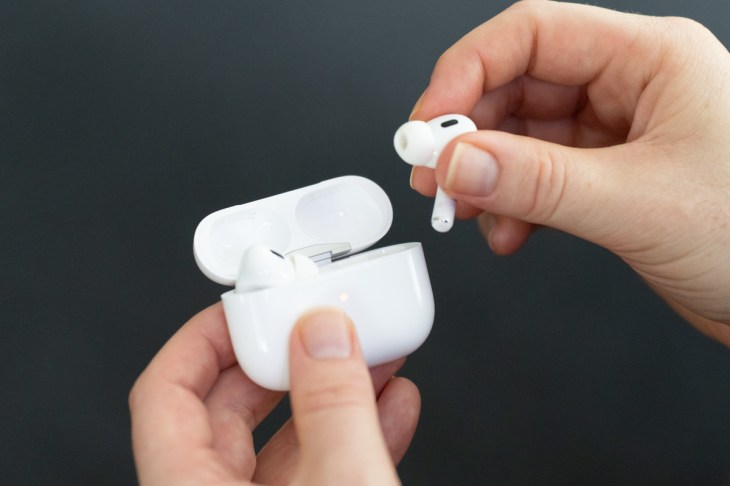
Image Credits: Darrell Etherington
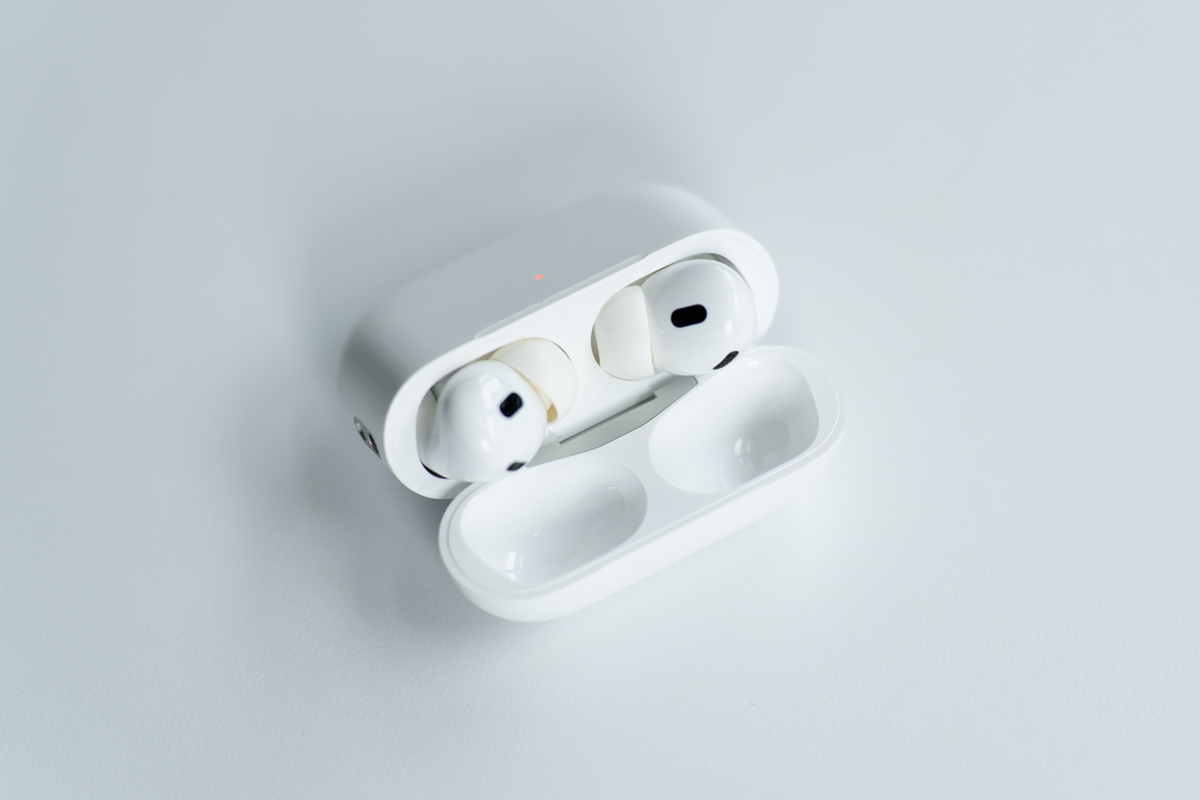
No name change. The AirPods Pro 2 are still the AirPods Pro 2. Apple’s high-end earbuds got the blink-and-you’ll-miss-it treatment during last week’s iPhone 15 event. In fact, I both blinked and missed it, while headsdown on a news story. My suspicion is the company’s failure to give the buds much stage time is a direct reflection of the upgrade here, which arrives in the form of a USB-C charging case and some updates to listening modes.
There’s also one other important bit of information that Apple has yet to reveal, but it has to do with a piece of hardware we won’t be seeing until early next year. Much like the AirPods, the Vision Pro was mostly absent from the event. I’d anticipated a look at some additional content, but it seems the company is saving that for closer to launch. In fact, the newish AirPods Pro belatedly confirm something we’ve suspected for a while: Spatial audio was setting the stage for spatial computing. Confirmation arrives in the form of the H2 chip.
Image Credits: Apple
In addition to its appearance in the AirPods Pro, the chip can also be found in the Vision Pro — an aspect about the headset the company hasn’t revealed until now. What that means in practical terms is that the headset is effectively built for Apple’s headphones. How’s that for ecosystem play? When the two are paired, you’ll get 20-bit, 48kHz lossless audio at ultra-low latency. Given how spatial audio on headphones give the listener a sense of location, it’s easy to see how the two will ultimately pair nicely together. Of course, that specific experience is something we’ll have to save for another day, closer to the Vision Pro launch, I suppose.
In practical terms, you could say that the true, fully immersive Vision Pro experience requires the purchase of a separate pair of AirPods. If you’re already spending $3,500, what’s another $249 between friends?
For now, it’s all about what’s new on the AirPods. Hardware-wise, USB-C is the thing. With this news, Apple removes one of the last remaining Lightning devices from its lineup. There are still some notable products left sporting the Lightning port, including the Magic Keyboard/Mouse/TrackPad, lower-end AirPods and AirPods Max (a surprising oversight at last week’s event), some older phones and an iPad. Those will go away over time, because they have to — though Apple technically has until 2024 to completely overhaul the line.
AirPods Pro 2 with USB-C. Image Credits: Darrell Etherington
USB-C is a great standard, and this is decidedly good news, aside from the annoyance of having to dispose of all of those old Lightning cables. The less good news at the moment is that Apple is not currently selling the USB-C case on its own. If you want the new port, you’re going to have to go all-in to the tune of $249. I’m not saying they never will, but Apple hasn’t offered any indication of plans to the effect.
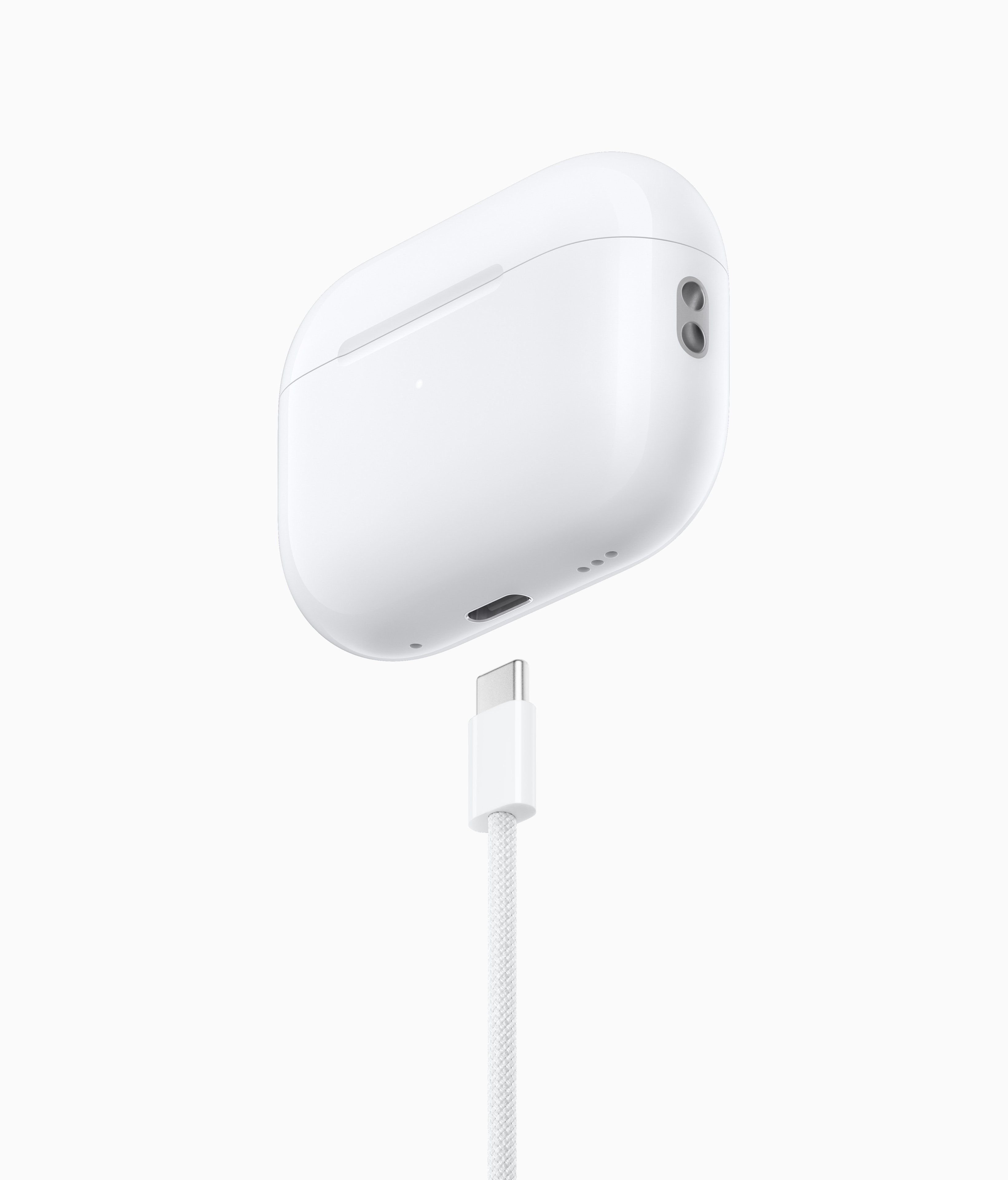
Image Credits: Apple
Otherwise, we’re talking the same hardware here. In fact, original AirPods Pro 2 will charge in the old case. That’s all fine news. I mean, obviously it would be great to get a full overhaul here, but the originals arrived almost exactly a year ago, and Apple’s refresh cycles are longer for its headphones than iPhone. Case in point, it’s been nearly three years since the first and (to this point) last AirPod Max was released.
Sound-wise, the AirPods are top tier. It’s a full, rich listening experience that handles both music and podcasts well. Sony remains at the top of my list for pure sound quality with the WF1000XM5. But ecosystem has always been Sony’s Achilles’ heel. Despite what you might think after watching five minutes of the “Gran Torino” movie, there simply aren’t any Sony Vaios laptops out in the wild. On the other hand, ecosystem is arguably what Apple does best. Automatic switching is one of the best examples of this. A lot of different companies offer some version of this, but Apple implementation feels truly seamless. Stick them in your ears and you can move from your iPhone to your MacBook without ever giving it a second thought.
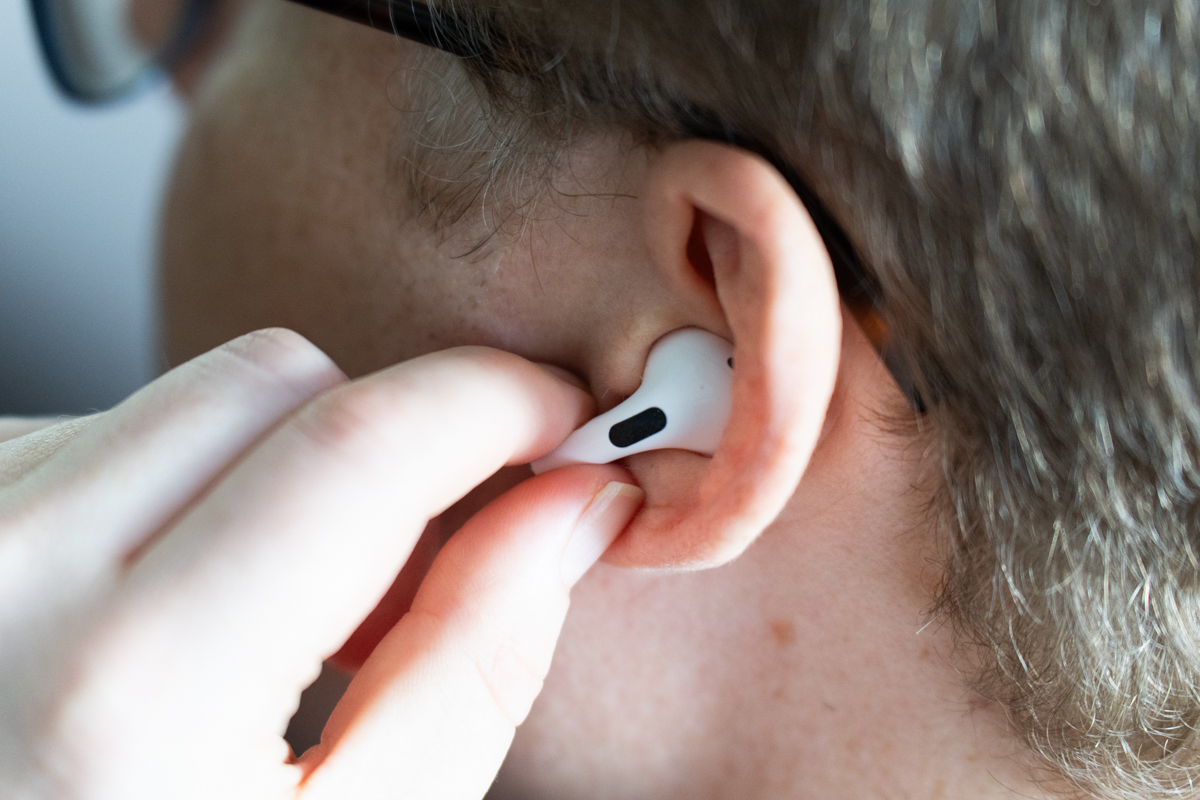
Image Credits: Darrell Etherington
On the software side, the big news is the new modes, specifically Conversational Awareness and Adaptive Noise Control. In iOS 17, you access these by swiping down into Control. When the AirPods are connected, long-press onto the volume slider. Below that, you get options for Noise control, Conversational Awareness and Spatial Stereo. We’ll skip the latter (which has been around) for now, and focus on the other two.
Noise Control now has four settings: Off, Transparency, Adaptive and Noise Cancellation. Adaptive is a bid to offer a kind of middle ground that isn’t just turning the whole thing off. It also sports a rainbow-colored icon, so it’s hard to miss when you know where to look. Noise Cancellation can rob you of situational awareness. On the flip side, in a noisy environment, transparency can feel like you’re not listening to anything at all. The new mode uses the on-board mic to detect ambient sound and adjust levels accordingly.
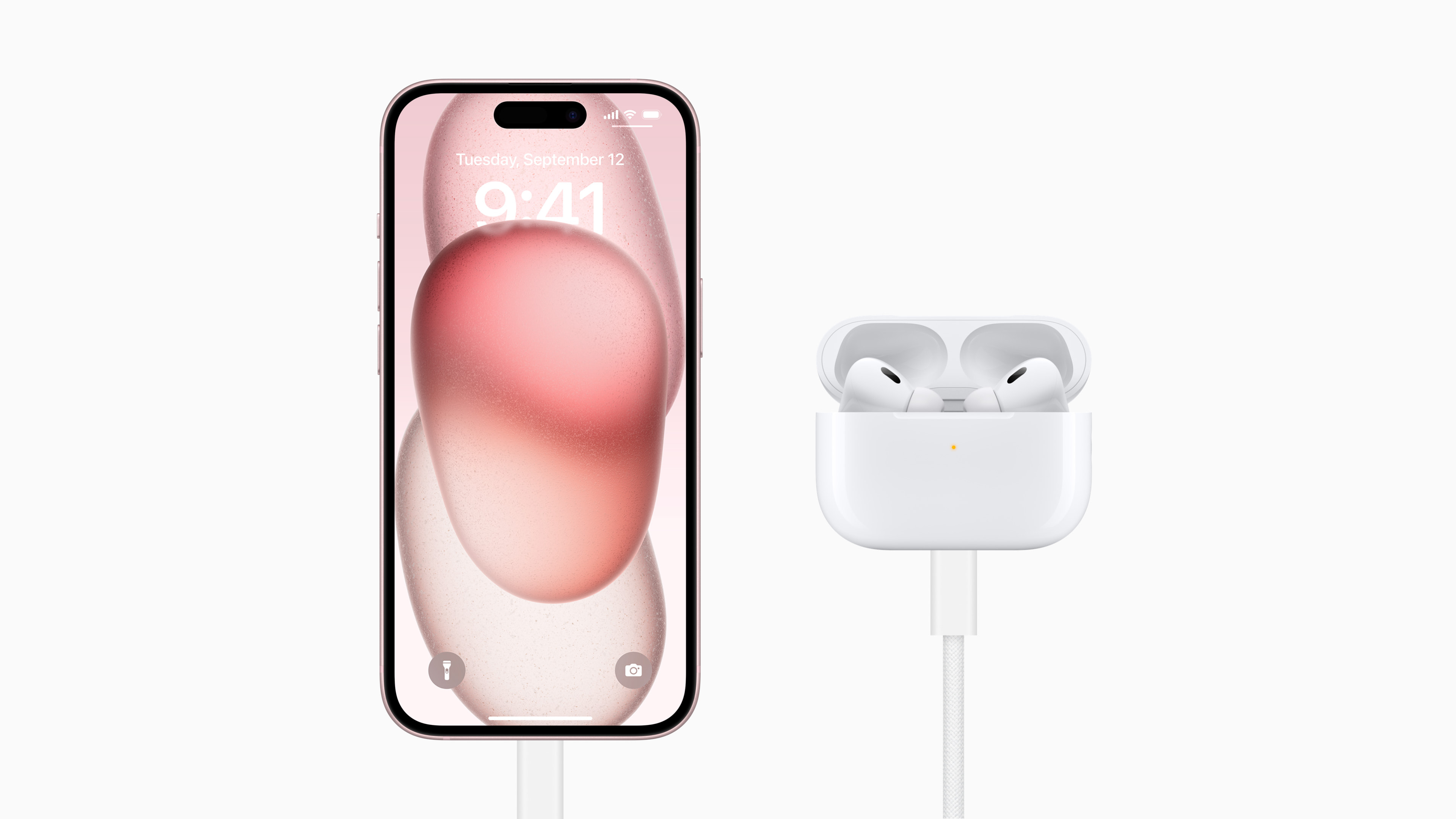
Image Credits: Apple
As I write this, I’m sitting in a hotel bar working while my room is being cleaned. This place is beginning to fill up with people I’m told are called “Sheerios.” Apparently a redheaded gentleman is performing a concert at the stadium that the Santa Clara Hilton shares a parking lot with. With Adaptive Transparency on, I can hear the people speaking around me, glasses clinking, the bartender refilling ice. Rather than being fully immersive, it’s almost as if the music I’m listening to is playing over the PA (particularly when paired with fixed Spatialized Stereo).
Granted, a bar is maybe not the ideal testing bed. A more pertinent application would be, say, walking down a crowded city street, or riding the subway and making sure you don’t miss your spot. I’ve always been an all noise cancelling, all the time person, but the appeal of the new setting is certainly clear for those moments where you want to hear the music, but not necessarily be swept up in it altogether. Apple has done a fine job balancing the two here. The headphones are not, however, listening for other human voices, so it doesn’t distinguish that from other ambient sound. That is, however, what the next feature is for.
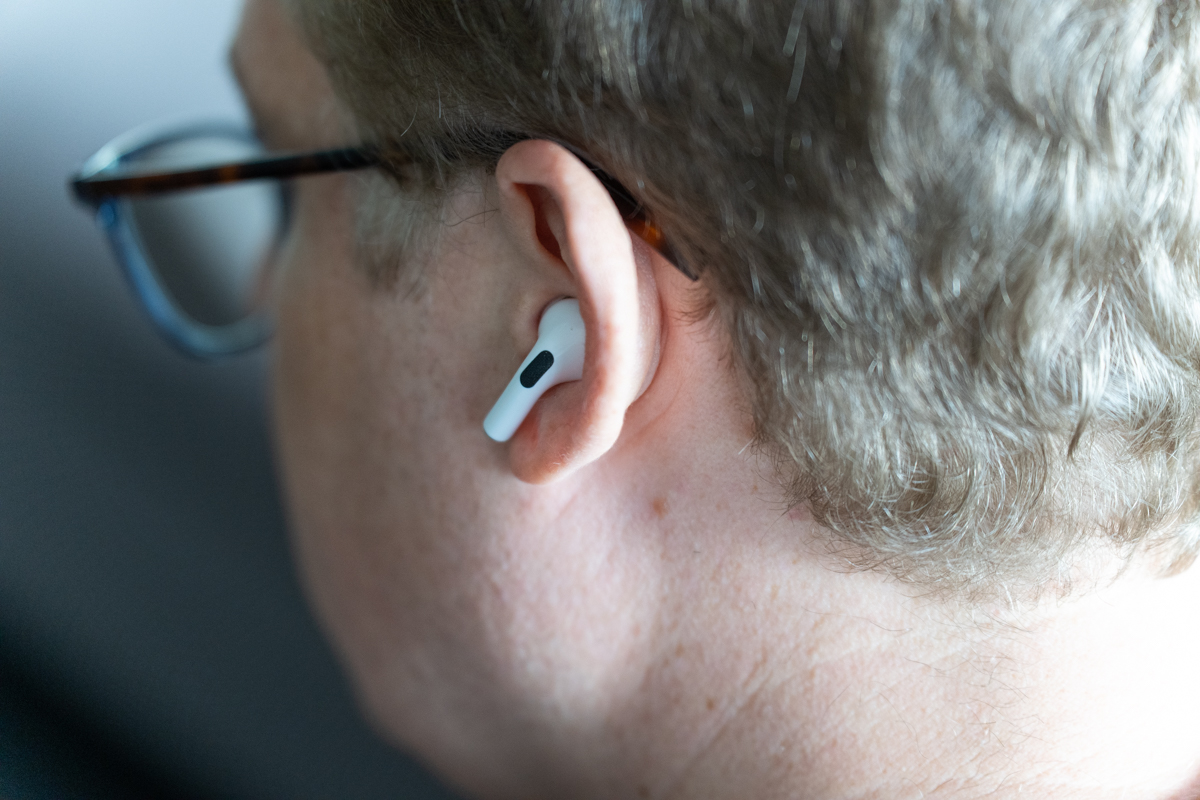
Image Credits: Darrell Etherington
Conversational Awareness is a nice addition. It uses a combination of different sensors to determine when you’re talking. That includes obvious things like built-in mics, coupled with more surprising elements like the accelerometer, which detects vibration to determine that you are, in fact, the one who is talking, without having to resort to something like voice recognition. When that’s triggered, the audio begins to lower, effectively getting out of your way when talking.
I was impressed by the detection. It didn’t trigger when I, say, coughed, yawned or cleared my throat. When I started talking, however, the music began to lower. It doesn’t stay down for any specific set amount of time. The company says it relies on an algorithm to determine such things. Factors include the length of time you’re talking, so it doesn’t mistake a break in conversation for the end of one.
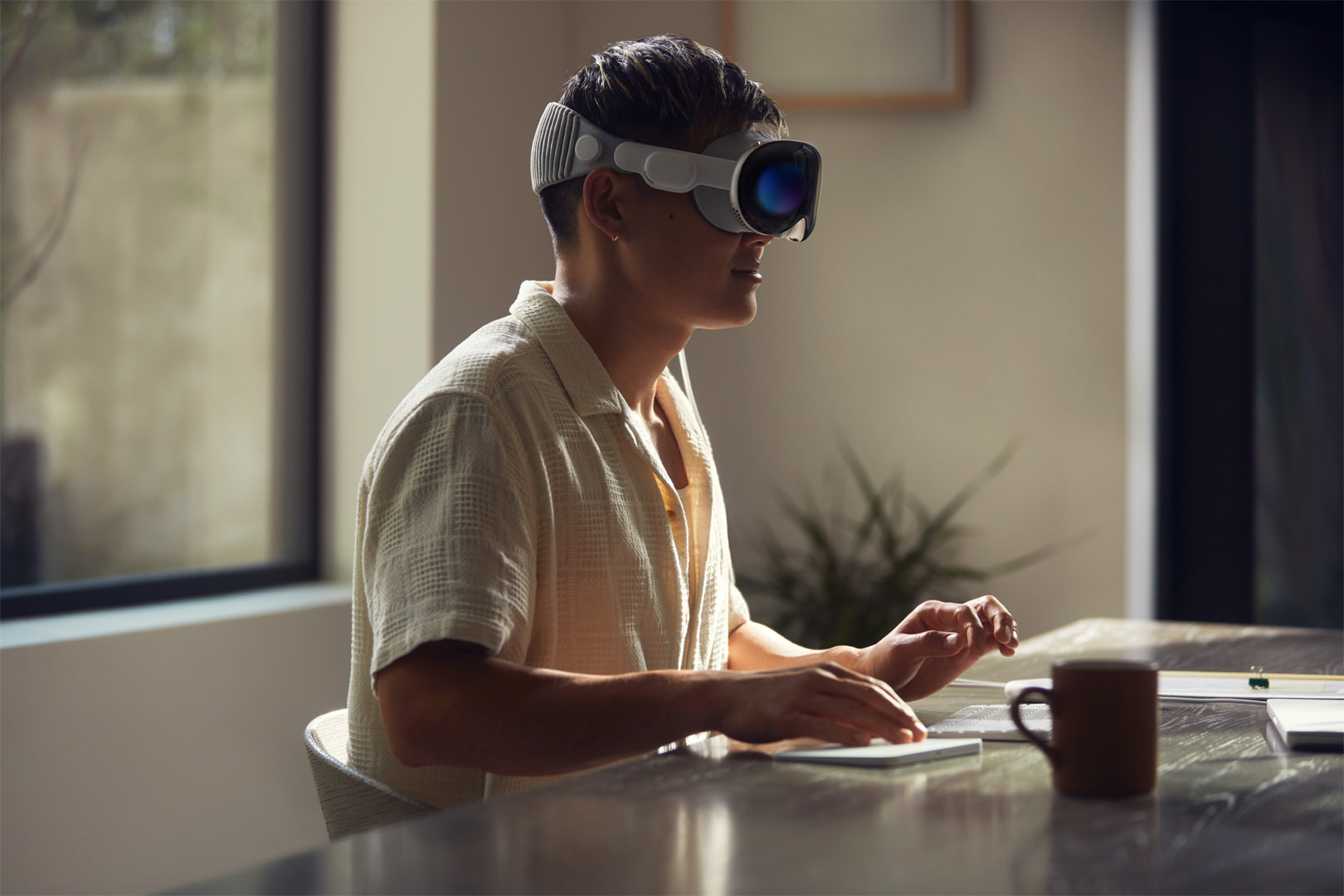
Image Credits: Apple
One other aspect to all of this is hidden away in the settings menu. Personalized Volume is more or less what it sounds like. Apple describes the feature thusly: “Using machine learning to understand environmental conditions and volume selections, Personalized Volume automatically fine-tunes the listening experience for users based on their preferences over time.”
I’ve been using the new buds for a few days, so I don’t feel confident giving you a definitive review of the feature’s efficacy. Nevertheless, it’s fascinating seeing how Apple is using sensors and machine learning in a bid to take the line beyond the standard earbud. Apple’s also been pushing the idea of a pair of headphones that you never need to take out.
There’s still the question of common etiquette when, say, speaking to a cashier at the check out. I see me continuing to pull one or both out when speaking to someone. After all, Conversational Awareness lets you hear them, but it doesn’t let them know that you’re listening. I’m not sure there’s a fix to that specific disconnect, but we can already see keeping earbuds in becoming more acceptable — or, at the very least, more common.
The nice bit is that the AirPods Pro’s price remains unchanged at $249. The biggest downside at the moment is that if you just want the new USB-C, you’ve still got to buy the whole thing.
SoftBank leads Mapbox fundraising as it pushes ahead on AI empire
Son’s decision to back US mapping company in $280mn investment round comes in wake of Arm listing
SoftBank is leading a $280mn funding round in US location-mapping company Mapbox, as the Japanese conglomerate’s founder and chief executive Masayoshi Son steps up his dealmaking in artificial intelligence.
The investment in San Francisco-based Mapbox, according to people close to SoftBank, is part of a push into AI that fulfils Son’s promise to go on the “counteroffensive” and has included discussions with multiple potential investment targets including OpenAI.
Mapbox software sits behind the in-car navigation systems of Toyota, BMW, General Motors and others — systems that are increasingly adaptive to changing conditions and whose ability to process new information will be critical as vehicles become more autonomous.
The decision to plough fresh investment into Mapbox, which was among the earliest group of companies backed by SoftBank’s $100bn Vision Fund, comes days after Son’s tech conglomerate listed UK chip designer Arm in the US.
The Japanese group raised almost $5bn through the initial public offering of Arm, whose shares rose strongly from their trading debut to give the chip designer a market capitalisation of $62bn at the end of last week.
Analysts calculate that the money raised from the listing, along with the potential for new financing and SoftBank’s existing cash and borrowings, could combine to provide an estimated $65bn war chest for Son, who has said that Arm will be at the centre of a push to “rule the world” of AI.
According to PitchBook, which tracks data on private companies, Mapbox had a valuation of $1.2bn as of its last round in April 2020 and had previously raised a total of $360mn since it was founded in 2011. People close to the company say that new round values the company marginally higher — at about $1.3bn — before including new capital raised.
Two bankers involved in the Arm IPO, and close to SoftBank, said that the chip group’s New York listing was to a significant extent testing the waters for other tech listings that were shelved in the downturn. These, including several Vision Fund portfolio companies, have been awaiting signals that the market had improved enough for them to dust off their IPO plans.
The same bankers said that such companies could include Mapbox, which internally discussed going public in 2021 through a merger with a SoftBank-backed special purpose acquisition company but dropped the idea when the tech market soured.
Mapbox chief executive Peter Sirota, said the new funding for the group would be used to enhance the ways in which its AI software can interact more closely with the cameras and other sensors in a vehicle “so split-second decisions can be made with the best data possible”.
Mapbox’s services include cloud-based location data used by Facebook, Snap and others. The company will this week be exhibiting at the Tokyo Game Show for the first time in a bid to promote its services to developers whose games use real-world locations.
SoftBank declined to comment.
losing Stock Market Summary
The stock market had a mixed showing today following Friday's sell-off. The major indices settled flat after pulling back from their highs of the day, following the trend of the mega cap stocks. The Russell 2000 was relatively weak, falling 0.7%.
The lack of conviction was driven by some hesitation ahead of the FOMC meeting on Wednesday. The market is not expecting a rate hike and will be more focused on the updated Summary of Economic Projections and dot plot, as well as the tone that Fed Chair Powell takes at his press conference.
Apple (AAPL 177.97, +2.96, +1.7%) was a source of support for the major indices after reacting favorably to comments from analysts. The stock had been up as much as 2.5% at its high of the day, but drifted lower with the broader market. Nonetheless, the gain in Apple helped to drive the outperformance of the S&P 500 information technology sector (+0.5%).
The energy sector (+0.7%) was another standout performer despite oil prices settling slightly lower. WTI crude oil futures fell 0.5% to $90.53/bbl. Meanwhile, the consumer discretionary sector (-1.0%) fell to the bottom of the pack. It was the only sector to move more than 1.0% in either direction.
Ford (F 12.34, -0.27, -2.1%), General Motors (GM 33.34, -0.61, -1.8%), and Stellantis (STLA 18.94, -0.31, -1.6%) were standout laggards today after the UAW rejected a Stellantis offer to increase pay by nearly 21% over the contract term, with a 10% immediate increase.
The 2-yr note yield and 10-yr note yield settled unchanged from Friday at 5.04% and 4.32%, respectively.
This morning's economic data was limited to the NAHB Housing Market Index, which dropped to 45 in September (Briefing.com consensus 50) from 50 in August.
Looking ahead, Tuesday's calendar includes the August Housing Starts and Building Permits report at 8:30 a.m. ET.
- Nasdaq Composite: +31.0% YTD
- S&P 500: +16.0% YTD
- S&P Midcap 400: +5.5% YTD
- Russell 2000: +4.2% YTD
- Dow Jones Industrial Average: +4.5% YTD
U.S. Steel issues upside Q3 EPS guidance as each of company's segments are outperforming earlier estimates
- Co issues upside guidance, sees Q3 EPS of $1.10-$1.15 vs. the $0.97 FactSet Consensus estimate. Third quarter 2023 adjusted EBITDA is expected to be approximately $550 million.
- The Flat-Rolled segment's adjusted EBITDA is expected to be broadly in-line with the second quarter. While spot prices declined sequentially, average selling prices are expected to be slightly higher than previously anticipated on our July earnings call, which is a key driver to the better-than-expected performance in this segment. Additionally, the segment's diverse customer base has kept its order book resilient.
- The Mini Mill segment's adjusted EBITDA is expected to be lower than the second quarter. While selling prices moderated during the quarter, segment results are expected to reflect better customer volume performance than previously anticipated and benefit from lower raw material costs. EBITDA margins are expected to remain resilient in the low-to-mid teens.
- The European segment's adjusted EBITDA is expected to be lower than the second quarter. Economic headwinds in the region and typical seasonal slowdowns are expected to result in lower average selling prices and a decline in shipment volumes. These headwinds are expected to be partially offset by lower raw material costs in the quarter.
- President and Chief Executive Officer David B. Burritt said, "We are on track to safely deliver a strong third quarter, with each of our operating segments outperforming earlier estimates and contributing to a healthy adjusted EBITDA for the company. A more resilient commercial portfolio and management actions driving higher cost benefits are resulting in better-than-expected performance this quarter. Today's guidance also reflects the expected impact on third quarter financial results from the United Autoworkers union strike announced earlier this month. Consistent with actions taken in 2022 to balance our melt capacity with our order book, we will temporarily idle blast furnace ‘B' at Granite City Works and are reallocating volumes to other domestic facilities to efficiently meet customer demand."
Treasury Sec Yellen: US-China relationship is most important to world
- Would be disastrous for US to decouple from China
- US needs to derisk but not decouple from China
- US, China need to address climate, debt relief together
OpenAI Hustles to Beat Google to Launch ‘Multimodal’ LLM
As fall approaches, Google and OpenAI are locked in a good ol’ fashioned software race, aiming to launch the next generation of large-language models: multimodal. These models can work with images and text alike, producing code for a website just by seeing a sketch of what a user wants the site to look like, for instance, or spitting out a text analysis of visual charts so you don’t have to ask your engineer friend what these ones mean.
Google’s getting close. It has shared its upcoming Gemini multimodal LLM with a small group of outside companies (as I scooped last week), but OpenAI wants to beat Google to the punch. The Microsoft-backed startup is racing to integrate GPT-4, its most advanced LLM, with multimodal features akin to what Gemini will offer, according to a person with knowledge of the situation. OpenAI previewed those features when it launched GPT-4 in March but didn’t make them available except to one company, Be My Eyes, that created technology for people who were blind or had low vision. Six months later, the company is preparing to roll out the features, known as GPT-Vision, more broadly.
What took OpenAI so long? Mostly concerns about how the new vision features could be used by bad actors, such as impersonating humans by solving captchas automatically or perhaps tracking people through facial recognition. But OpenAI’s engineers seem close to satisfying legal concerns around the new technology. Asked about steps Google is taking to prevent misuse of Gemini, a Google spokesperson pointed to a series of commitments the company made in July to ensure responsible AI development across all its products.
OpenAI might follow up GPT-Vision with an even more powerful multimodal model, codenamed Gobi. Unlike GPT-4, Gobi is being designed as multimodal from the start. It doesn’t sound like OpenAI has started training the model yet, so it’s too soon to know if Gobi could eventually become GPT-5.
The industry’s push into multimodal models might play to Google’s strengths, however, given its cache of proprietary data related to text, images, video and audio—including data from its consumer products like search and YouTube. Already, Gemini appears to generate fewer incorrect answers, known as hallucinations, compared with existing models, said a person who has used an early version.
In any event, this race is AI’s version of iPhone versus Android. We are waiting with bated breath for Gemini’s arrival, which will reveal exactly how big the gap is between Google and OpenAI.
Miuccia Prada Formally Takes On Fondazione Prada’s Director Role
The designer is furthering her commitment to the foundation and naming a steering committee that includes director Alejandro González Iñárritu.
Miuccia Prada is furthering her commitment to Fondazione Prada by revealing that she is formally taking on the role of director of the cultural institution that she established alongside her husband Patrizio Bertelli in 1993.
Already president of Fondazione Prada, which operates three outposts in Milan and Venice, Prada said: “Right from the start, through the Fondazione’s activities I aspired to investigate human culture in all its variety and complexity. Over these 30 years, I have wondered in different ways how artistic and intellectual research can impact people’s lives. Searching for increasingly topical answers to this question is the fundamental objective I have set myself with the foundation.”
After relinquishing her role as co-chief executive officer of the Prada Group, which she shared with Bertelli, as part of her company’s succession plan that saw Andrea Guerra join the Italian luxury firm in the role of group CEO, Prada is restating her personal commitment to Fondazione Prada’s present and future projects, after de facto leading it for the past 30 years.
The institution concurrently unveiled the creation of a steering committee tasked with identifying “research areas to develop multidisciplinary projects that can impact the contemporary cultural debate and indicate possible lines for experimentation and education.”
Comprising professionals across different disciplines, the committee will work in tandem with Prada, as well as general manager Cristian Valsecchi and head of programs Chiara Costa.
The committee includes Giuliana Bruno, Emmet Blakeney Gleason professor of visual and environmental studies at Harvard University; Giancarlo Comi, honorary professor of neurology at the Università Vita-Salute San Raffaele in Milan; Theaster Gates, artist, activist and professor at the University of Chicago in the Department of Visual Arts; Alejandro González Iñárritu, film director, screenwriter and film producer, and Salvatore Settis, archaeologist, art historian and professor emeritus at the Scuola Normale Superiore in Pisa, Italy.
Fondazione Prada counts three permanent locations overall including a stately multicomplex venue on Largo Isarco, in southeastern Milan, opened in 2015 and completed in 2018 with the addition of the Torre [tower], and the Osservatorio [observatory] inside the city’s Galleria Vittorio Emanuele II. The third location is headquartered in Venice at Ca’ Corner della Regina.