Biogen Caused Biotech Collapse but Might Also Lead Stocks Higher -- > Link to article :http://bit.ly/1LjM4JD
BOSTON (TheStreet) -- Investors are hurling insults at Hillary Clinton and Martin Shkreli for triggering the steep decline in biotech stocks, but Biogen (BIIB - Get Report) CEO George Scangos deserves as much or more of the blame.
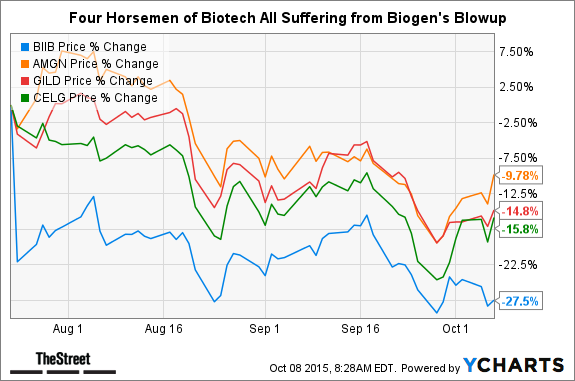
Biogen, on July 24, slashed earnings and revenue guidance for the rest of the year, blaming weak sales of its key multiple sclerosis drugs. Biogen lost $20 billion in market value the day after the second-quarter earnings disaster, but the ripple effect was felt across all biotech stocks. Investors' confidence in the ability of large-cap biotech companies to grow earnings and sales into perpetuity was shaken. Strong second quarter earnings from Celgene (CELG - Get Report) , Amgen (AMGN - Get Report) and Gilead Sciences (GILD - Get Report) were overshadowed by Biogen's blow-up.
The iShares Nasdaq Biotechnology ETF (IBB) closed at an all-time high on July 20, four days before Biogen slashed its financial forecasts. The fund's been on a downhill run ever since. The political and media firestorm over drug pricing followed by calls for greater regulation accelerated the selloff in biotech stocks in September, but the decline really started with Biogen in July.

STOCKS TO BUY: TheStreet Quant Ratings has identified a handful of stocks with serious upside potential in the next 12-months.
If Biogen put biotech investors in a funk, is there anything the company can do to brighten the mood? The question gets put to the test on Oct. 21, when Biogen reports earnings for the third quarter. It's fitting Biogen will be the first of the large-cap biotech companies to address investors during the third-quarter earnings season.
Most important for Biogen will be to demonstrate stability in its multiple sclerosis drug franchise, starting with Tecfidera, the key profit and revenue driver for the company. The current third-quarter consensus estimate for worldwide sales of Tecfidera is about $885 million, or essentially flat on a quarter-over-quarter basis. Widely disseminated data on U.S. prescription volume suggest Tecfidera could deliver actual sales slightly higher than expectations.
"People want to know that the quarter is OK and Tecfidera is not getting worse," said RBC Capital biotech analyst Michael Yee, speaking on a weekly video he sends to investor clients.
If Biogen pulls off a clean third-quarter earnings performance, Yee believes the stock recovers and moves higher because 2016 is busy with important study results for key drugs in the company's pipeline. A buoyant Biogen could help lift the rest of the biotech sector.
But Yee's game plan doesn't address Biogen's central role in the current controversy over prescription drug prices. One way Biogen boosts profits is by raising the price of its decades-old multiple sclerosis drug Avonex every year, sometimes twice a year. Avonex now costs more than $60,000 a year, up from less than $10,000 a year when it was first approved in 1996. Newer, more effective multiple sclerosis drugs have reached the market recently, including Biogen's own Tecfidera, but the company and its competitors continue to raise the price of their older drugs in lockstep with each other.
Biogen CEO Scangos has been very vocal criticizing Shkreli, the CEO of Turing Pharmaceuticals, for raising the price of an old infectious disease drug by 5,000%. But investors will be listening on the Oct. 21 conference call to hear what, if anything, Scangos says about Biogen's own drug-pricing decisions, or if he concedes changes need to be made.
Drug pricing "will be the first or second question asked, guaranteed, so it's better if they address the issue proactively," said Barclays biotech analyst Geoff Meacham. "Biogen has the opportunity to give generalist investors some comfort if they explain how the company is developing innovative drugs that are deserving of higher prices."