Selling a Vision, and a $2 Million Hypercar, at Pebble Beach
A spin around Monterey Car Week with Lukas Czinger, who with his father Kevin Czinger, is using 3D-printed sports cars as the ultimate marketing vehicles.
The chassis lurking under the skin of most cars is a pretty pedestrian thing—mostly sections of stamped and welded steel perforated with mounting points for the engine, suspension and everything else required to make the machine whole.
The 3D-printed chassis of the Czinger 21C, however, has an unnervingly organic look. Imagine a car not so much designed as evolved out of a puddle of primordial goo, formed around a skeleton of high-end alloys—destined to cradle two lucky souls who sit in the cockpit, like Maverick and Goose, one ahead of the other.
The Czinger (pronounced “zinger”) is the brainchild of battery and electric vehicle entrepreneur Kevin Czinger and his son, Lukas. It has a wholly novel design, thanks to its entirely different manufacturing process. A traditional automotive factory has a lot of big machines stamping out parts, with foundries and suppliers making the smaller stuff, all of it meticulously designed and coordinated for months or years ahead of mass production. Any little change of component specification or output volume requires the sorts of logistical nightmares that have driven Tesla’s Elon Musk to a state of mania.
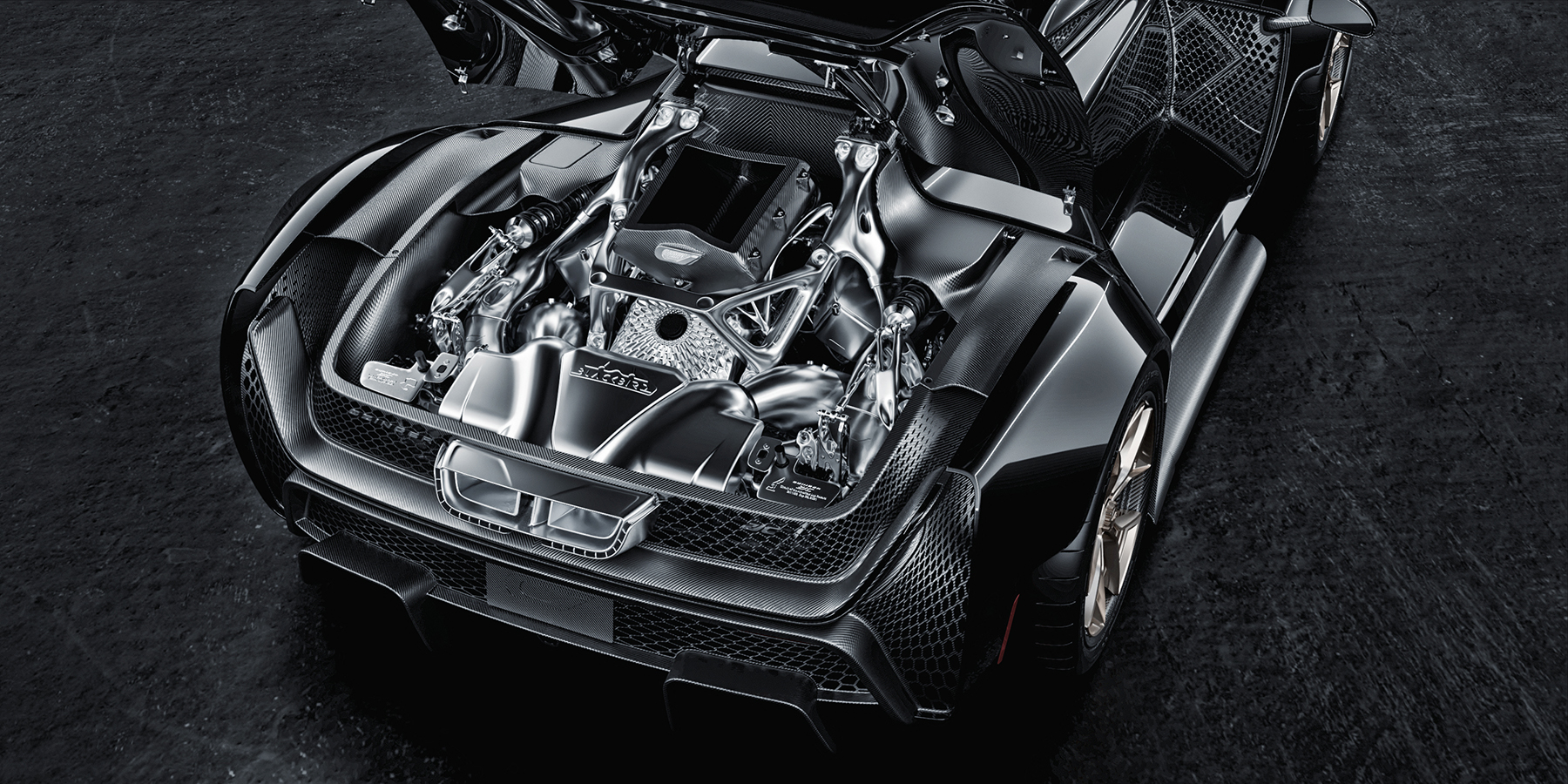
The 3D-printed chassis of the Czinger 21C looks not so much designed as evolved out of a puddle of primordial goo.
The Czinger 21C, which is produced by the Czingers' sibling company Divergent 3D, relies on additive manufacturing—aka 3D printing—to create parts that are stronger and lighter than anything made through traditional techniques. The car also opens the door to something more broadly disruptive: call it manufacturing as a service. “If you think big picture, that means Divergent can essentially act like Amazon Web Services,” said Lukas. “We build these modular factories all over the world.…You want a part made that’s a run of 10? We’ll make 10. You want 10,000? We’ll make 10,000.”
The 28-year-old former investment banking analyst is chief operating officer at Divergent 3D and a co-founder of Czinger, the hypercar company he started in 2019 with his father. Kevin, who previously co-founded and helmed battery fabricator and EV manufacturer Coda Automotive, founded Divergent 3D back in 2013.
The 21C is the first product from Czinger, and as I witnessed at this month’s Monterey Car Week, it’s a marvel of engineering: a $2 million, 1,250 horsepower hypercar that weighs less than a Honda Civic. More than just a really fast car (top speed: 253 miles per hour), it also does double duty as a proof of concept and a marketing tool for additive manufacturing in the automotive world. Divergent and Czinger “work very, very closely together under one roof,” Lukas said. “They complement each other and they earn business for each other."
For the ultrawealthy elite who flock to Monterey Car Week every year, a car like the Czinger is but one mild indulgence among many. Buyers with garages full of such toys are often shuttled out on chartered jets arranged by their dealers, hosted for a comped week of high-end festivities and auctions that culminate in the Pebble Beach Concours d’Elegance, the world’s most prestigious car show.
While Sunday’s Concours celebrated the past (this year’s Best in Show was a 1937 Mercedes-Benz), another part of Car Week focused much more on the future. At a Friday gathering called Quail, a Motorsports Gathering, Czinger unveiled the Blackbird, a special edition of the 21C hypercar meant to honor the iconic Lockheed SR-71 Blackbird, still the fastest aircraft in the world (or at least the fastest our military is ready to tell us about). The Blackbird features 1,350 horsepower (100 more than a base 21C), and is lavished with special touches like custom wheels, a different exhaust system and an interior that evokes the SR-71 with orange highlights referencing the signature glow of its afterburners.
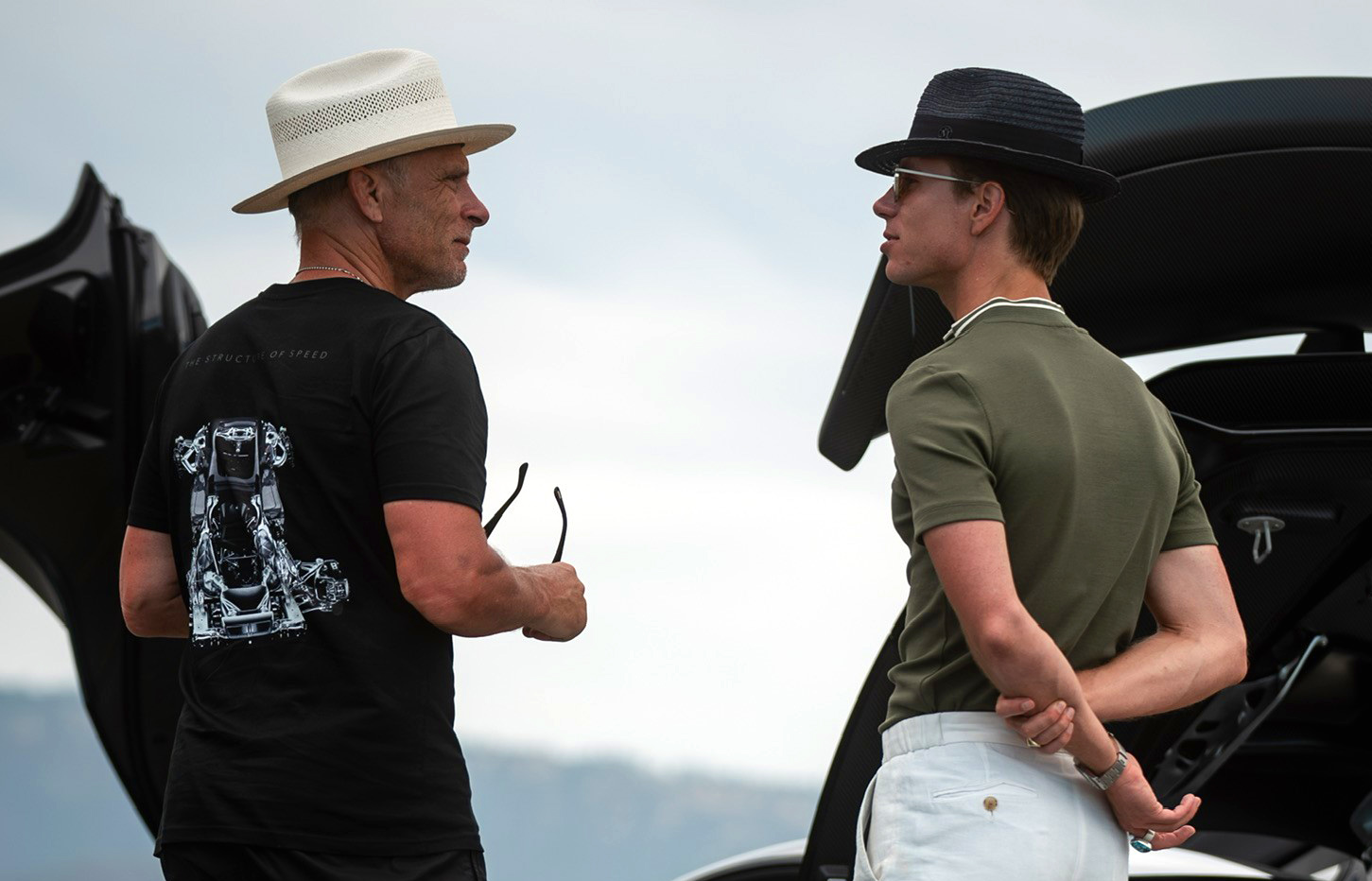
Kevin and Lukas Czinger, promoting the $2.8 million special-edition Blackbird during Monterey Car Week.
When it eventually goes into production—the Czingers are promising the first vehicles later this year—the entire 21C run will be just 80 cars. Czinger will produce four special Blackbirds, each priced at $2.8 million. Yes, a single car for the price of 28 Porsche 911s. Blackbird was just one of dozens of high-tech, high-performance machines making their international debuts at Quail, many of them priced well into seven figures.
Lukas spent the day fielding interviews, chatting with clients and smiling for the cameras in front of the Blackbird. Despite the glaring afternoon sun shining down, the hypercar was a dark, menacing specter on Czinger’s stage, its doors splayed to the sky like wings. Few there could hope to afford one, but buying one takes more than a bounteous bank account.
Lukas told me the company was looking not just for customers, but for “long-term ambassadors” who would offer the brand their own level of exposure, access and prestige. “Once you sell someone a $2 million–plus car, they don’t go away. They’re either your problem or, you know, your happiness. You think pretty carefully about who that first 80 are.” At Quail, those sorts of people are not in short supply. By the next day, all four of the special-edition Blackbirds had been pre-ordered.

Lukas and I spoke early the following morning, just a few hours after the last visitors left the Blackbird party celebrating the car’s unveiling. The Czingers transformed Carmel’s Sunset Center into a makeshift speakeasy, one requiring QR codes instead of secret phrases to enter. (Had any party like this happened during the real Prohibition, it wouldn’t have survived long. You could hear the bass from a block away and see the LED lights shining into the sky from even farther afield.)
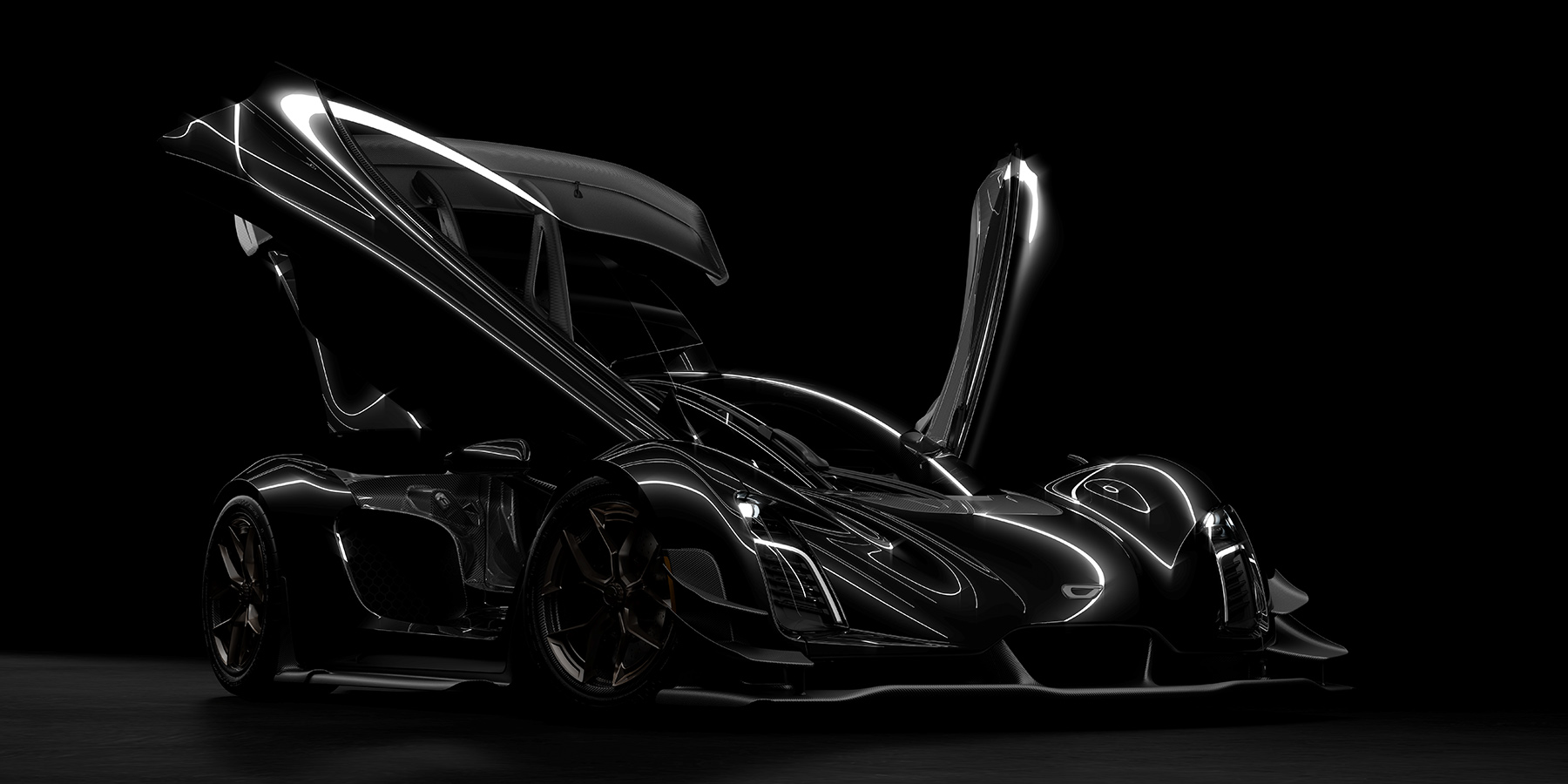
The Czinger 21C Blackbird edition.
At the party, Lukas was surrounded by fans and clients, a common theme for the weekend. He lamented he’d barely had any time to himself, just a few minutes here and there to mentally reset. But, he told me, that’s often enough. “It sounds kind of trite, but I just step back and breathe in a different way. Give myself a kind of step back of perspective and recharge pretty quickly. Focus, regroup and, you know, enjoy again.”
This practice is part of Lukas’ broader meditative mindset, something he developed while studying electrical engineering at Yale University, where he also played soccer and suffered a traumatic concussion in a match. To recover, he had to take a year off from school and work. “I found myself alone a lot, not able to do a lot of the things that I had learned to love,” he said. The aftereffects of a brain trauma—light and sound sensitivity, an inability to focus—left him with little to do but meditate, which he’d do for upward of four hours a day.
While the side effects lingered for years, Lukas recovered enough to get back to work. He’d previously spent summers doing mergers and acquisitions at various investment firms before accepting a job with Centerview Partners at the company’s San Francisco offices. He loved his life, despite working upwards of 18 hours a day. He did, though, take a little time off to see his father speak at the 2015 Solid Conference in San Francisco, focusing on future advancements in hardware.
Kevin spoke about reinventing manufacturing, radically reducing the amount of materials required to build a car and ultimately reducing its environmental footprint. “It was basically a pitch,” Lukas said. “It was him really teasing interest and declaring that he would like to start something.” That something would prove the potential of Divergent's technology—and would ultimately become the Czinger company and the 21C.
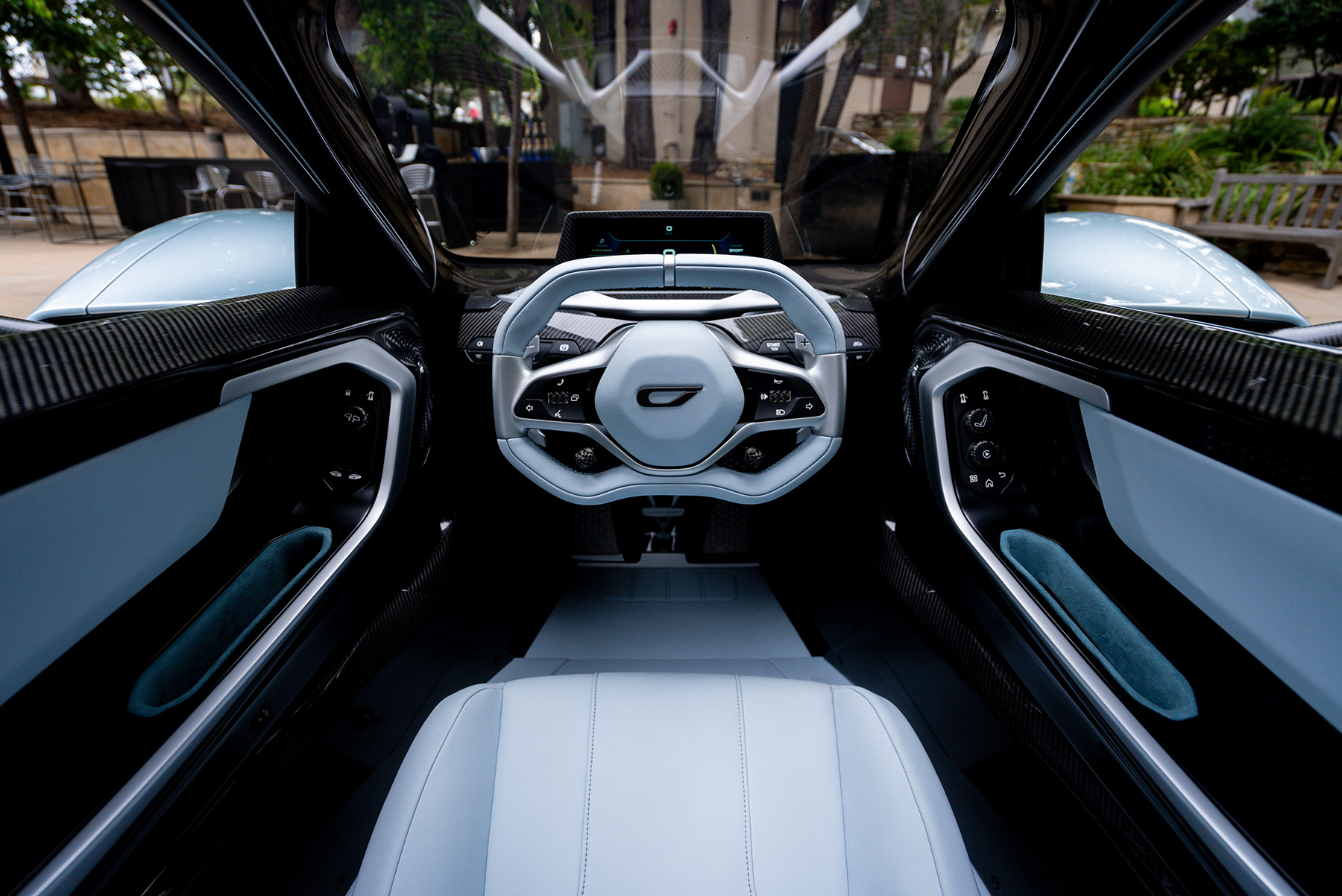
The 21C is a two-seater, with the driver and passenger sitting single-file, like fighter pilots in a cockpit.
Lukas decided to leave his fledgling finance career and build Czinger with his father. Since then, Divergent and Czinger have raised over $700 million, with Stockholm-based investment group Hexagon AB contributing $100 million—“plenty of capital for the next few years,” Lukas said.
That's despite some aggressive goals. Divergent plans to have 30 factories around the globe by 2030, each able to churn out high-quality parts at volume using additive manufacturing, meaning no lengthy and expensive tooling. The company already has numerous clients in the aerospace and automotive industries, including Aston Martin and another unannounced major automaker.
For Czinger, its biggest test comes soon, when the rubber literally meets the road. The first of the 21C hypercars ships later this year. After the Pebble Beach Concours festivities, Lukas was off to let a few lucky customers get early test drives. “I get nervous every time you put customers in the car,” he said. “I hope they love it.”
They had better, because while the 21C has become a marketing tour de force for Divergent, the only thing that matters to Czinger drivers is whether it’s a great car. And for $2 million-plus, it will have to be more than great