12 Charts That Show How Life Has Returned to Normal—or Not
As people ease off their couches and back to office desks after a two-year hiatus, there’s a lot to get used to.
The internet has become even more essential, for commerce, communication and entertainment. Social media platforms such as TikTok and OnlyFans saw jumps in viewership. Remote workers left city apartments to rent houses in scenic destinations. But settling into Zoom calls meant travel suffered—public transit and airlines sat barren while e-commerce and grocery-delivery services became more popular.
The following charts show how some pandemic habits have reversed as life edges toward normalcy. More businesses and schools have reopened. Conferences like South by Southwest and EthDenver were hosted in person in 2022, after a two-year pause in large gatherings. At the same time, some pandemic-era trends, like telehealth and food delivery, appear to be here to stay.
THE TAKEAWAY
• Meal delivery and telehealth look like they’re here to stay
• Travel has rebounded after a pandemic-induced slump
• A Wall Street selloff has dampened venture investments
• Meal delivery and telehealth look like they’re here to stay
• Travel has rebounded after a pandemic-induced slump
• A Wall Street selloff has dampened venture investments
A New Model for Healthcare
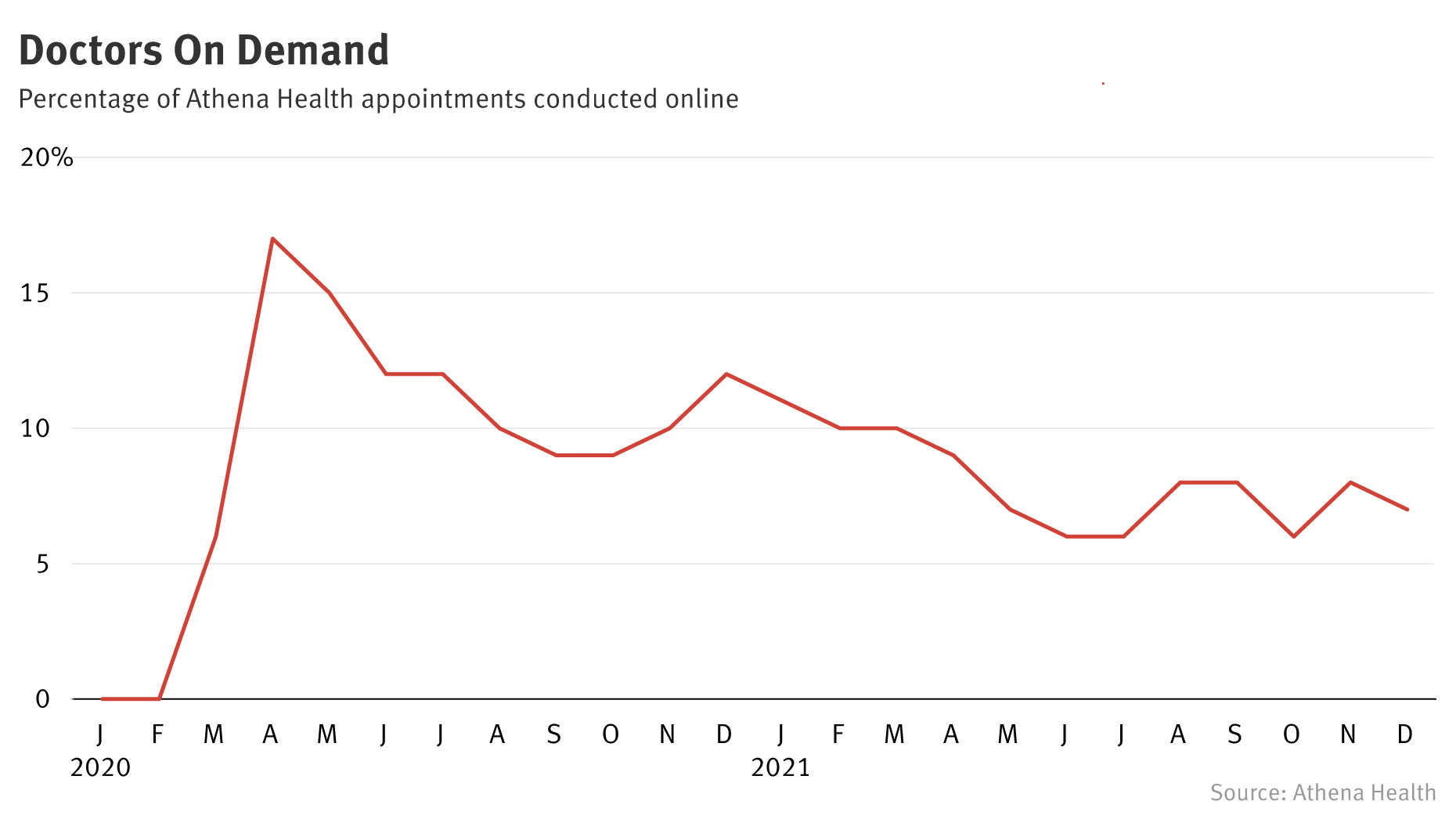
The pandemic prompted big changes in the delivery of healthcare. At the start of 2020, fewer than 1% of medical appointments were held virtually. In a matter of weeks, that figure soared to 17%. While these numbers have since tapered off, medical professionals still show interest in video calls, phone calls and text messaging.
One Medical, which charges customers an annual subscription fee to access a chain of primary care clinics and virtual services, launched on-demand remote care in 2014. But few people used it before Covid-19, said Will Kimbrough, the company’s senior medical director, who has managed its virtual care team since 2017.
Kimbrough thinks telehealth could endure because the pandemic prompted changes in insurance contracts that helped healthcare professionals get past discomfort about providing virtual care. “A lot of providers thought, ‘How can I talk about depression without sitting in the same room with somebody?’” he said.
Good Times for a Video Social-Media Service
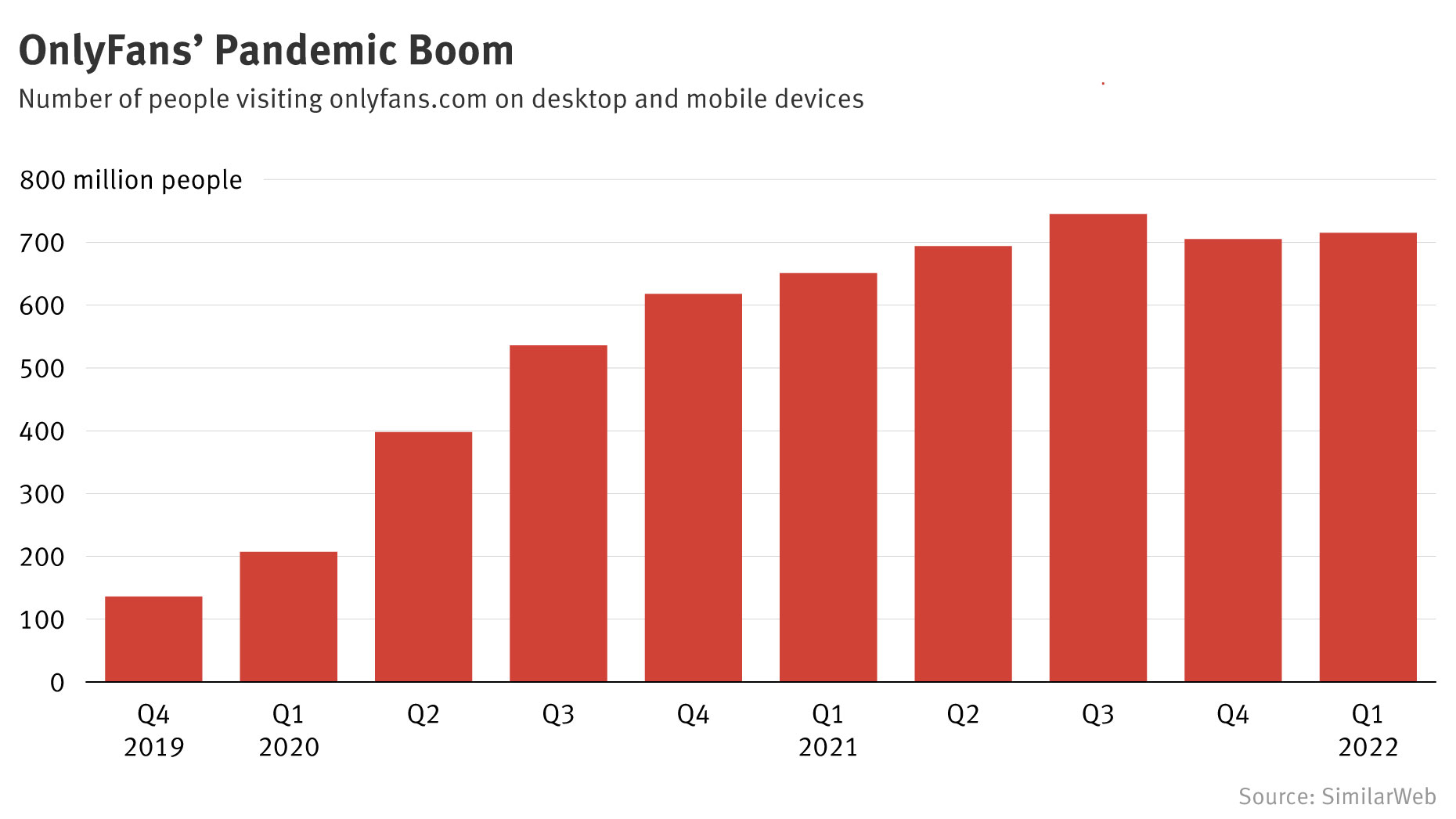
Even as some people return to clinics, others are spending dramatically more time online. Take OnlyFans, for example. The subscription-based social media platform, which is popular with sex workers, has been on a tear. It almost doubled its user base between the first and second quarters of last year, according to data from Similarweb, which tracked the number of visitors to OnlyFans’ website on desktops and mobile devices.
The number of visitors to the website peaked at around 740 million in the third quarter of last year and has remained close to that level since. This could be good for the company’s ambitions to go public. Last month, Axios reported that OnlyFans has been in talks with multiple special purpose acquisition companies with that goal in mind.
Ravi Mhatre, a partner at Lightspeed Venture Partners, thinks OnlyFans could succeed in going public, despite turmoil in the public markets and the racy nature of the startup’s business. “There aren’t that many companies that are platforms for creators that are at scale, so if they’re one of the first to go out, there’s probably going to be a lot of investors interested in them,” he said.
Online Gaming Dips
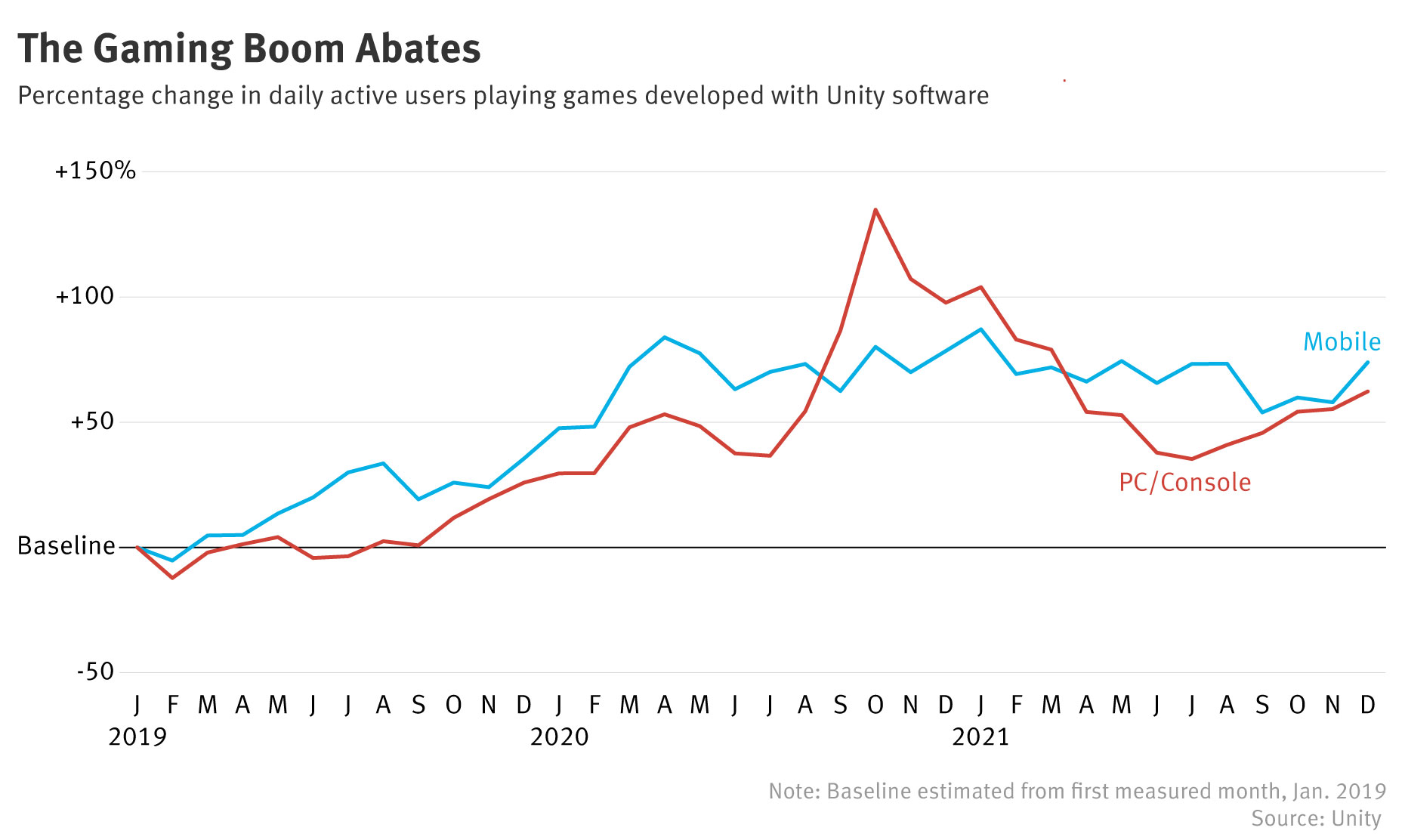
The pandemic led to a surge in online gaming that peaked in late 2020, according to statistics from Unity, which provides software used to develop games.
The surge abated last year, though more people are still gaming than before the pandemic. It’s possible that gaming has become a learned behavior, especially for some children who plugged into gaming consoles while cooped up at home.
“They play these games with their headsets on, they mic up and they’re talking to their friends and interacting socially way more through digital venues,” said Mhatre.
Sure enough, 62% of parents responding to a survey by The Information allowed their kids to play videogames, ranging from Roblox to Mario Kart. Of that share, 85% let their kids play before age 9.
Meal Delivery Endures
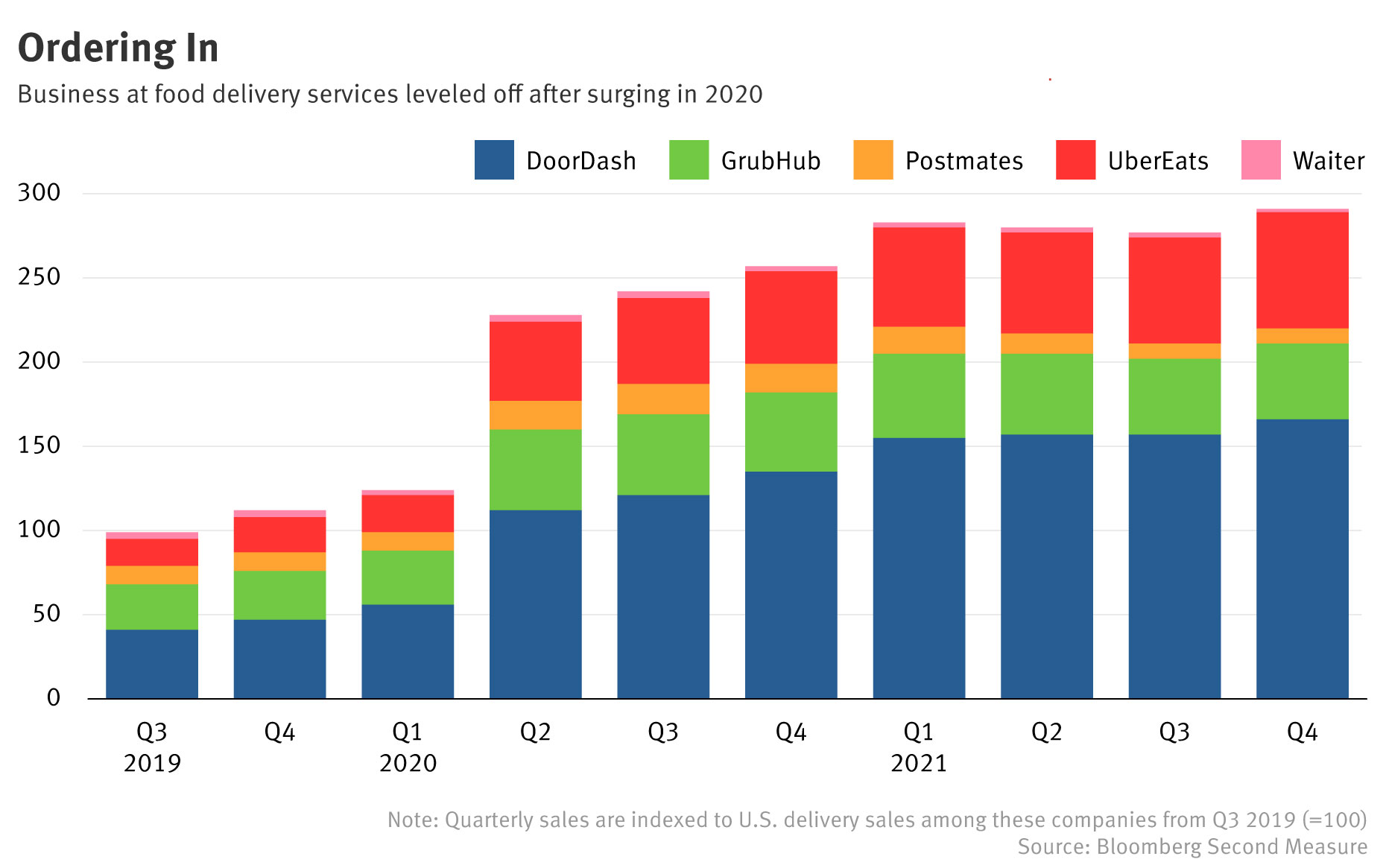
Covid-19 changed many things, including how Americans shop and dine, to the benefit of delivery services such as DoorDash, Grubhub and Uber Eats. Use of such services continued to climb last year even as many restaurants reopened, according to data from Bloomberg Second Measure.
Increasingly, delivery apps are offering food options from ghost kitchens, which prepare food only for delivery, not for in-person dining. Some of these operate as separate kitchens, while others rent space and personnel from existing restaurants and pay them a cut of their sales.
The popularity of meal-delivery services spawned a bevy of upstarts offering quick delivery of groceries and convenience items. Investors poured billions of dollars into startups like Gopuff and Getir last year. DoorDash launched DashMart, its version of 15-minute delivery, and Instacart launched a similar service. But some of these startups have hit tough times in 2022. Gopuff, which was valued at $15 billion last fall, plans to lay off hundreds of employees, around 3% of its workforce, to cut $40 million in costs.
Travel Rebounds
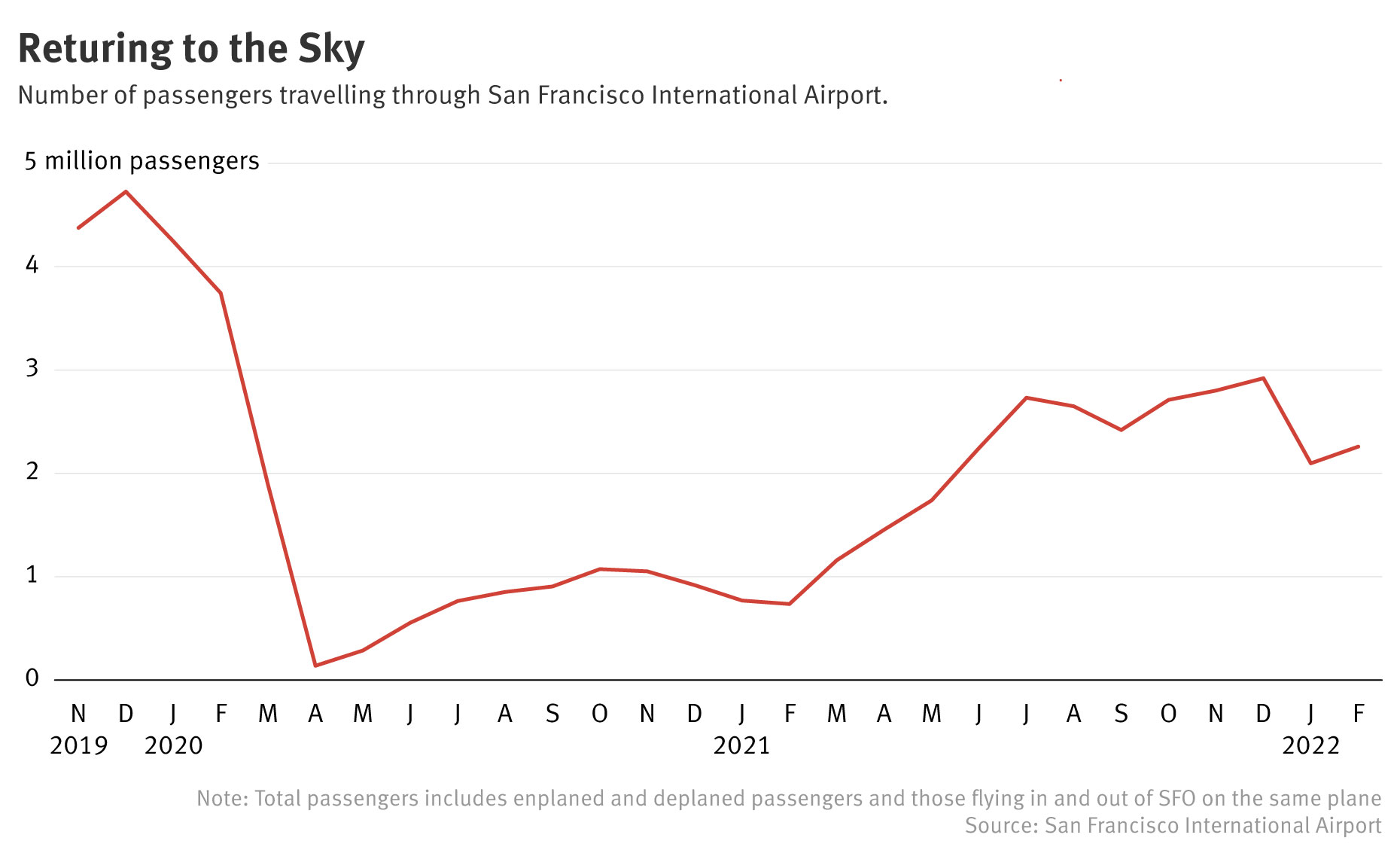
Pandemic-induced lockdowns had a devastating impact on travel. The number of passengers traveling through San Francisco International Airport, which serves the Bay Area, home to Google, Meta Platforms, Apple and other technology companies, plummeted 93% to fewer than 140,000 in April 2020, from almost 1.9 million people the prior month.
Traffic rebounded last year but remains significantly below pre-pandemic levels. More recently, air travel has had to overcome new Covid-19 variants and higher fuel costs following Russia’s invasion of Ukraine.
Where to Stay?
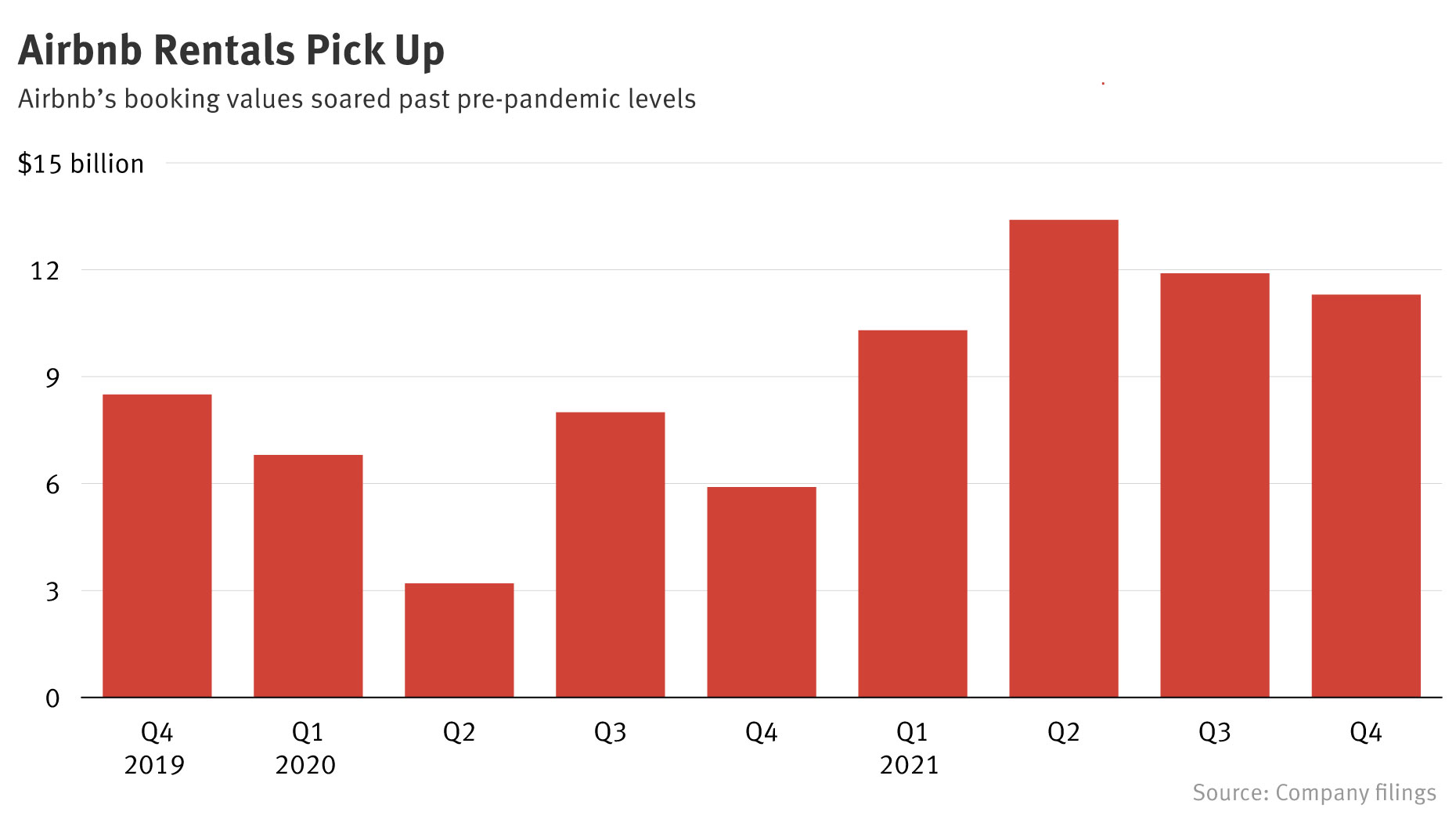
With more people traveling, it’s not surprising that Airbnb has enjoyed a renaissance. The home-sharing service was hit particularly hard as the pandemic began. Vacationers punted indefinitely on their travel plans.
But bookings began to rebound in the second half of 2020 as people with remote jobs saw an opportunity to book suburban homes with more space than small city apartments or to work from alternate locations.
Bookings remained high throughout 2021. In the fourth quarter of last year, they even exceeded the same period two years earlier, before the pandemic.
Message Received
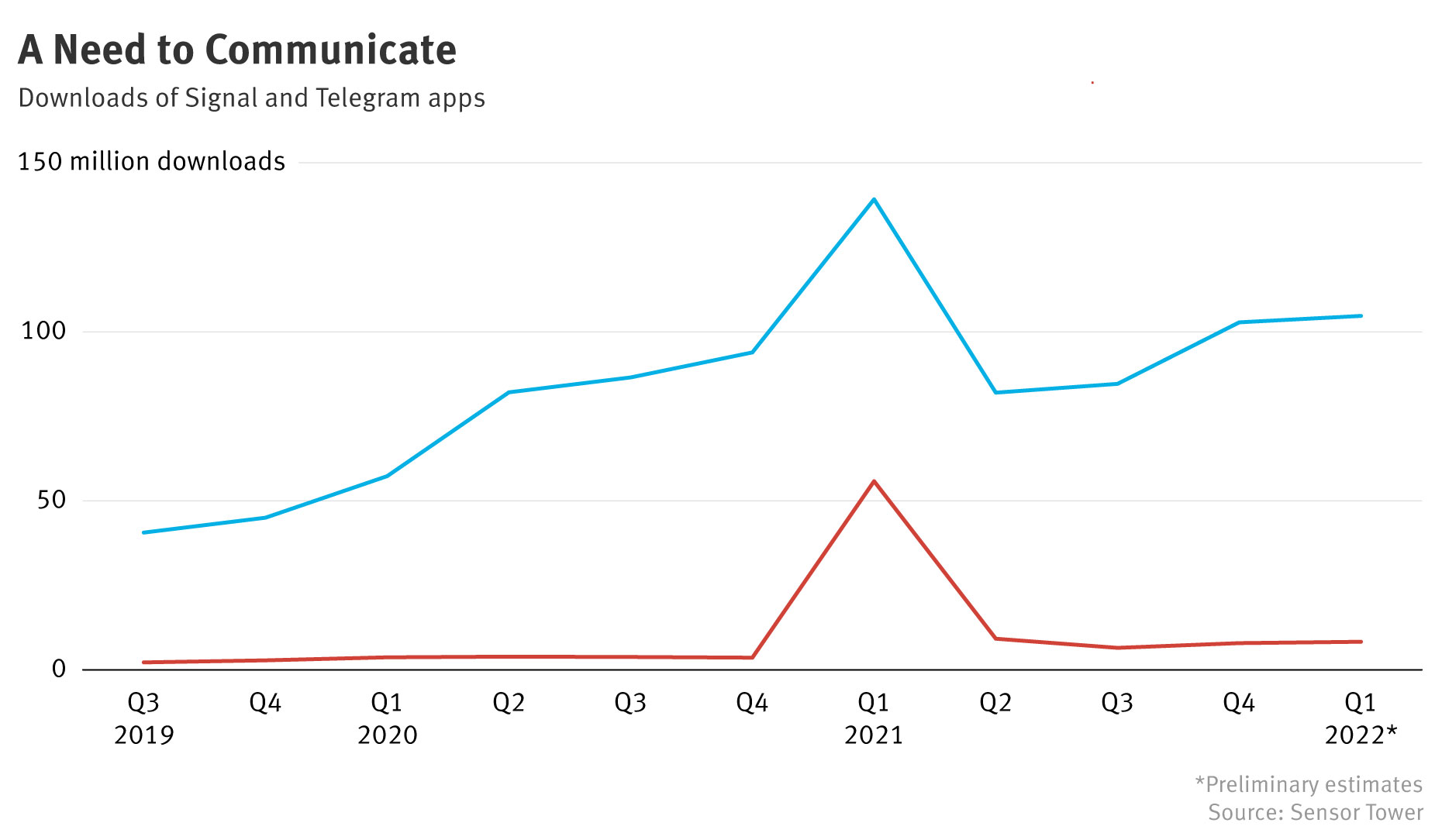
Less travel meant more desire to connect electronically. More people have been using communications apps Telegram and Signal, which both enjoyed a significant boost early in 2021 when WhatsApp told users it would begin to share data more liberally with its parent company, Meta.
More recently, Telegram has gained popularity with crypto communities. In a previous interview with The Information, Lydia Hylton, partner at Bain Capital Crypto, said many investors are turning to Telegram and Discord chats to gauge the popularity of non-fungible tokens.
Mhatre said some crypto enthusiasts use Telegram to get past the anonymity of blockchain wallets, which make it hard to identify who a person might be.
A Boom in Digital Art
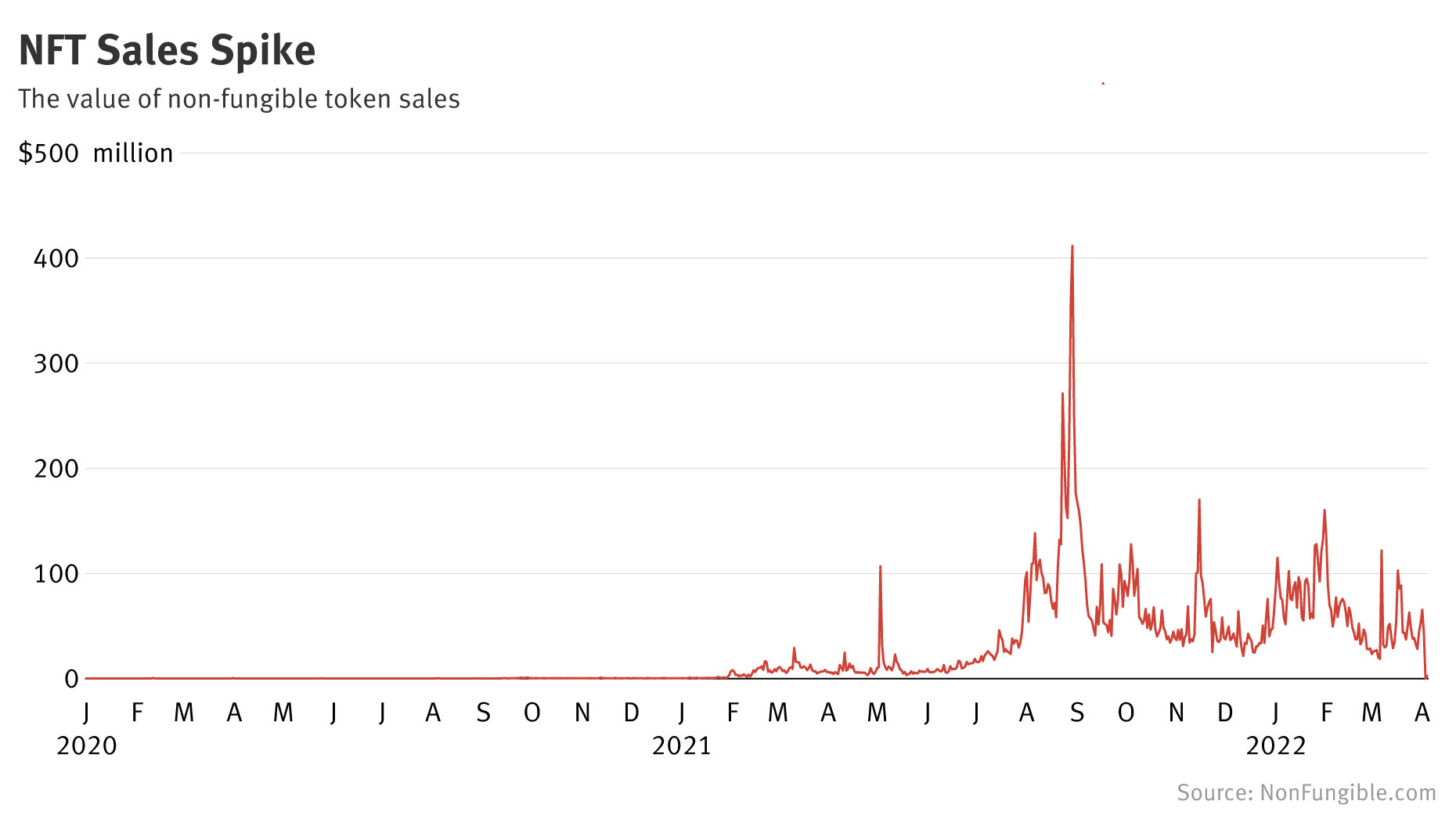
Sales of NFTs spiked last year, and then quickly fell, though the pandemic’s role isn’t clear. Some investors attribute the surge to sales of NFT art by people stuck at home during the pandemic, which has obscured other uses of the technology—in gaming, for instance.
“The hype is always about short-term gains. Long term, fundamentally, things are changing,” said Jai Das, co-founder, president and partner at Sapphire Ventures. “We’re still bullish on those” other uses.
SPAC Mania Ebbs
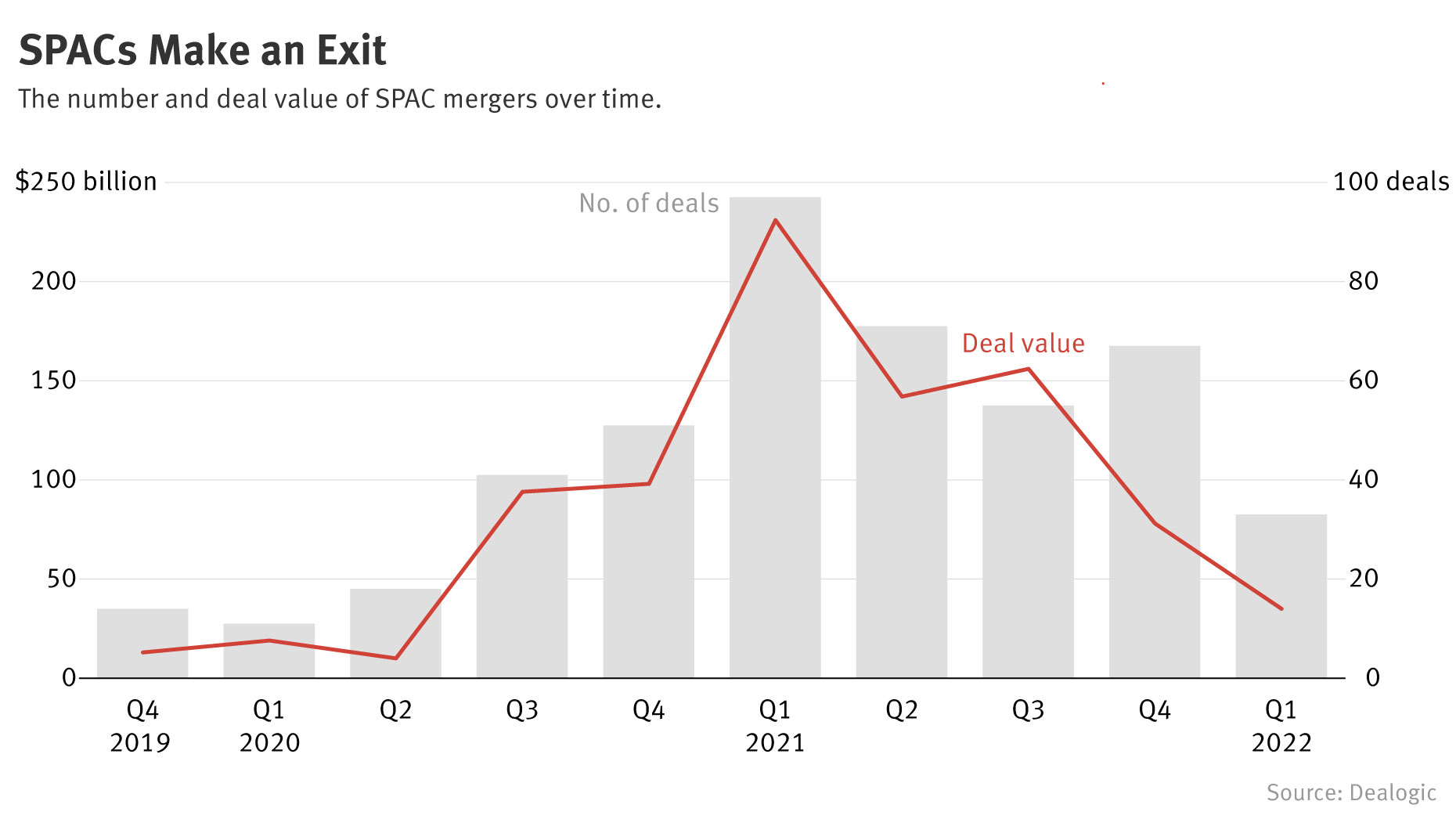
A year ago, private companies were rushing to go public through mergers with SPACs. But lackluster returns and increased regulatory scrutiny have dampened investor enthusiasm and reversed the trend.
Earlier this year, nearly 80% of companies that went public via SPAC mergers were trading below the standard $10 per share SPAC issue price.
Pamela Marcogliese, a lawyer focused on capital markets transactions, said a Securities and Exchange Commission announcement last April required SPACs to refile registration statements. This slowed things down as auditors were flooded with new financial statements. Proposed SEC rules might further discourage startups from going public via a SPAC.
Venture Investments Slow
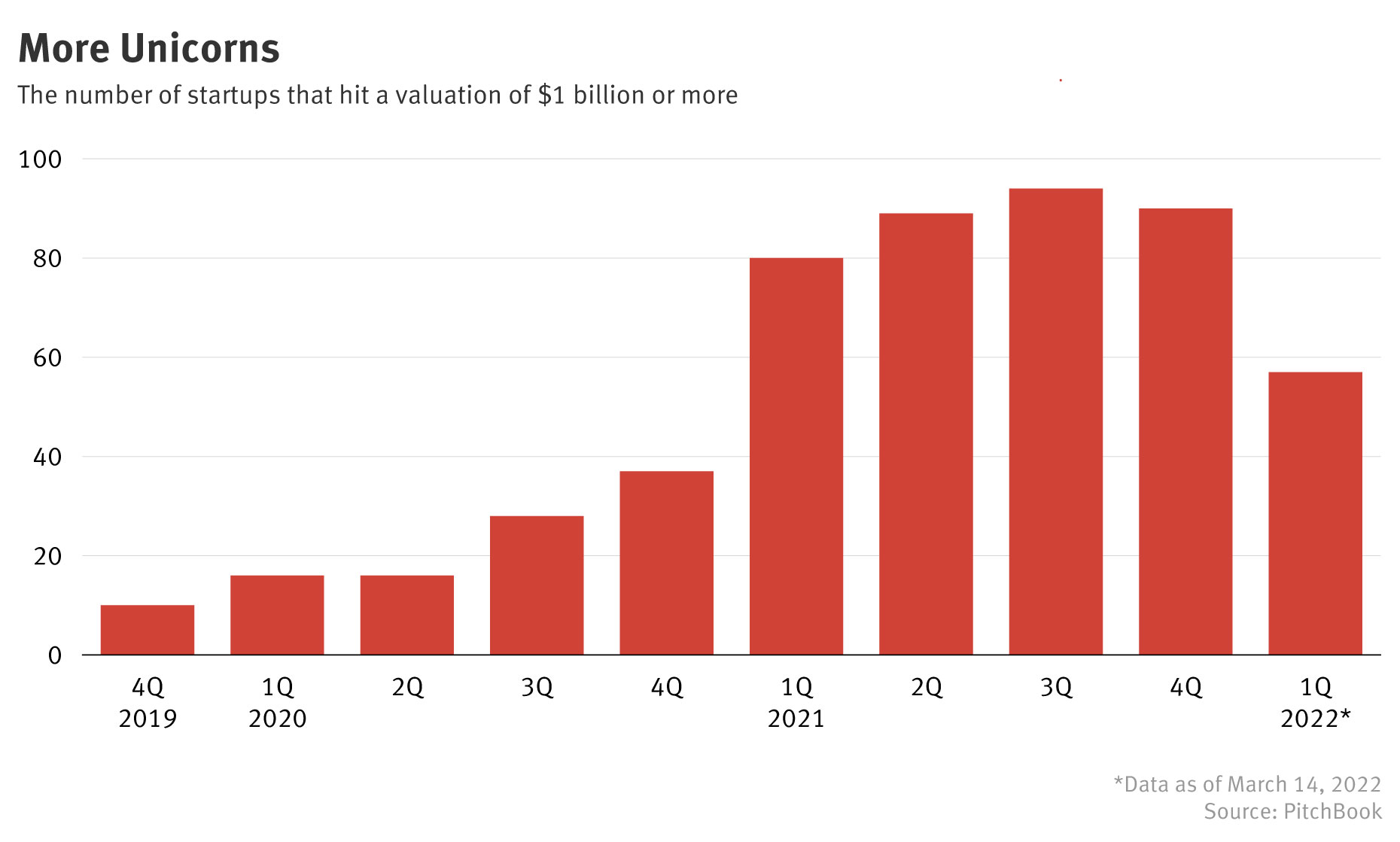
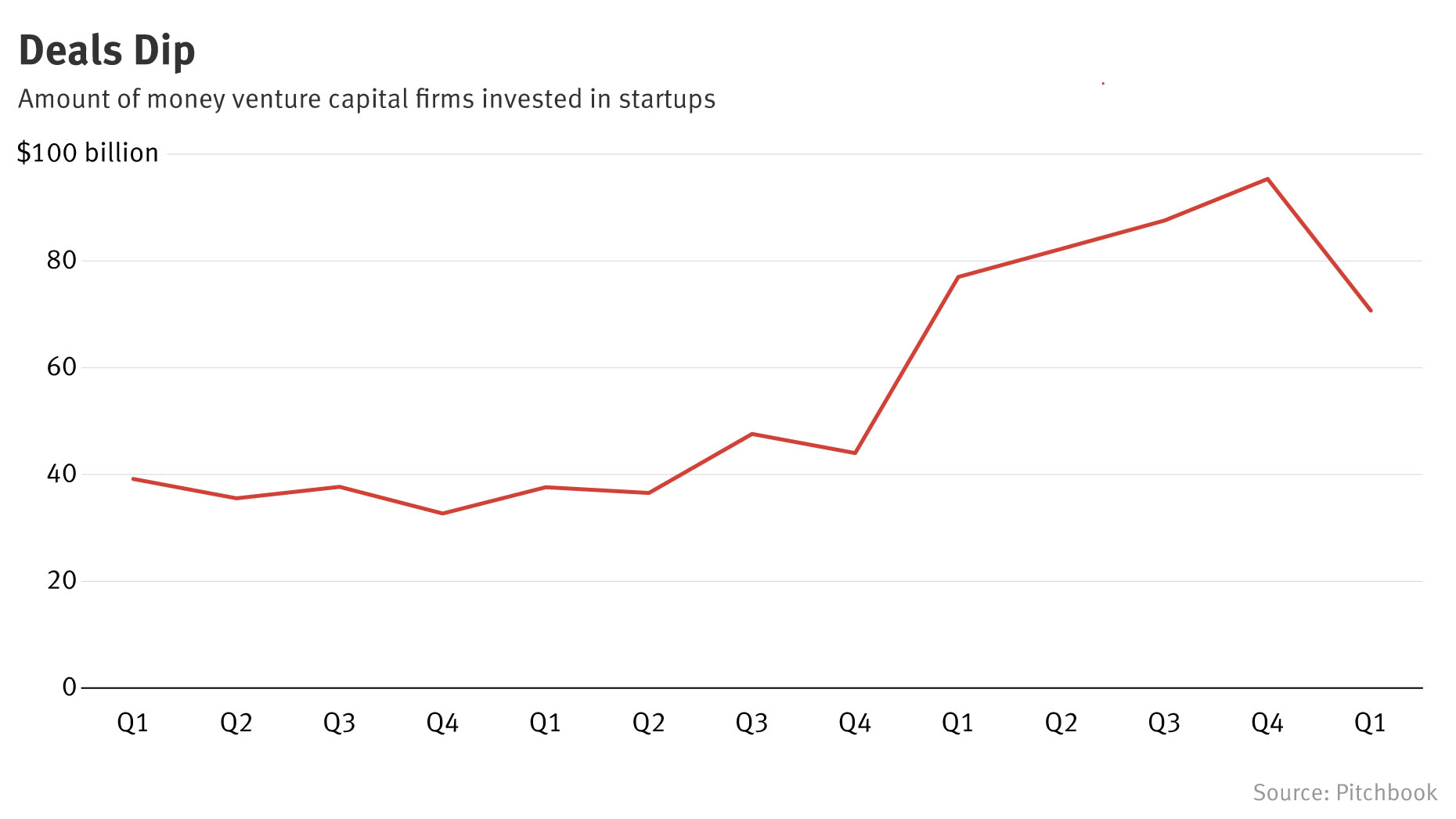
A downturn on Wall Street in the first months of this year has dampened the boom in startup investing. The number of investments made by venture capitalists in the first quarter fell almost 10% compared with the fourth quarter of last year; the amount of money invested fell even more sharply, by 25%. The dip has also encouraged some startup founders to cut costs, with the goal of saving cash for a downturn.
Ruth Foxe Blader, a partner at Anthemis, thinks some of the slowdown in venture capital investments is a correction to a flurry of activity last year. “I think it’s partly in response to the really stratospheric valuations that we saw in 2021 and the deal velocity, both of which really felt unsustainable,” she said.
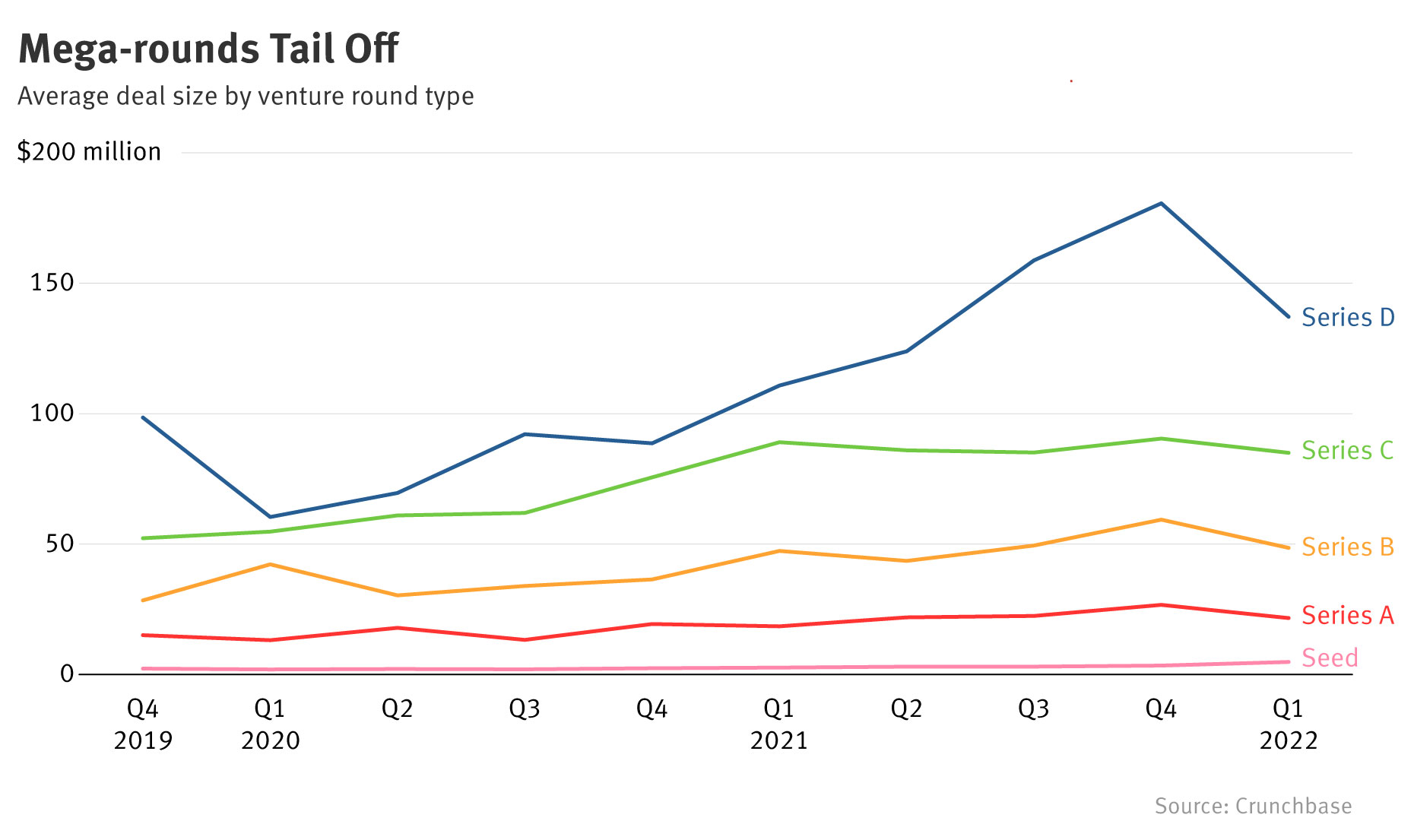
The downturn has been most pronounced for late-stage deals, the average of which had soared past $100 million last year. Blader said investors watch the public markets particularly closely for these companies, which are generally nearest to going public.
“People are scratching their heads about ‘What does the exit look like?’ and ‘How does the public market really look at this company?’ ‘Do these unit economics make a lot of sense?’” she said.
As investments drop, so do valuations, meaning fewer private companies reach unicorn status, with valuations exceeding $1 billion.
“Valuations have come down,” said Das of Sapphire Ventures. He said investors have walked away from some deals and reduced the size of their investments in others.