US companies’ cash pile hits $1.7tn
 ©Companies; Getty Images


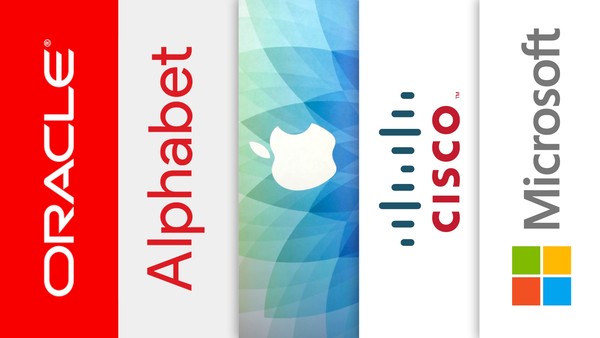
©Companies; Getty ImagesFive tech groups with $504bn in cash between them, nearly a third of the $1.7tn on balance sheets of US non-financials
US companies are increasingly hoarding cash — with just five groups holding more than half a trillion dollars — as multinationals trim capital spending and issue debt in the face of a lacklustre global economic recovery.
The figures underscore how cash has become concentrated at a handful of companies, many of which have left earnings outside of the US to avoid the hit from repatriating profits under the country’s complex tax code.
Analysts with the rating agency said that overseas cash, worth $1.2tn last year, would probably remain there as the US election looms. Companies are instead expected to deepen their reliance on debt, issuing bonds to finance shareholder returns and mergers and acquisitions.
“At this stage in the political cycle and given strong differences on both sides of the aisle in Washington, we do not expect tax law reform that would prompt overseas cash repatriation,” said Moody’s Richard Lane of Moody’s.
Apple accounted for more than a tenth of the total cash reserves, holding $216bn, 93 per cent of which is overseas. The top-five list included the addition of Oracle, which ousted Pfizer after the pharmaceuticals group completed its $17bn takeover of Hospira.
Capital spending such as new equipment, one of the largest annual expenses, slipped 3 per cent to $885bn — the first decline since the US emerged from recession — as energy and mining groups retrenched in the face of sharply lower commodity prices.
But the rising cash piles mask a rapid increase in debt. For the first time since 2012, cash, short-term investments and liquid long-term investments slipped below debt maturities due over the next five years, Moody’s found.
Total debts rose by nearly $850bn last year to $6.6tn, a separate report from rating agency Standard & Poor’s showed, which put overall cash levels in the US at a slightly higher $1.8tn. While cash had increased by about $600bn over the past five years, obligations surged by $2.8tn.
The increased leverage has been concentrated in smaller and lower quality groups that took advantage of record-low borrowing costs spurred by stimulative monetary policy.
While the top 25 cash hoarders hold cash in excess of their obligations, the cash-to-debt ratio fell to 12 per cent for low-rated junk companies. In 2010, that figure stood above 20 per cent.
“Companies aren’t exactly flush with cash,” S&P analyst Andrew Chung added. “As the credit cycle ages, rates rise and macroeconomic growth slows, that’s when companies in the bottom 99 per cent who levered up [could have] funding issues.”
The increased leverage has not deterred investors from hoovering up large US debt sales, which topped $400bn earlier this week as bankers completed billion-dollar plus transactions for Dell, CVS Health, Southern Co and Boeing.
Investors have pointed to the drop in sovereign debt yields as they buy up corporate bonds, with nearly $10tn of debt trading with a negative yield.