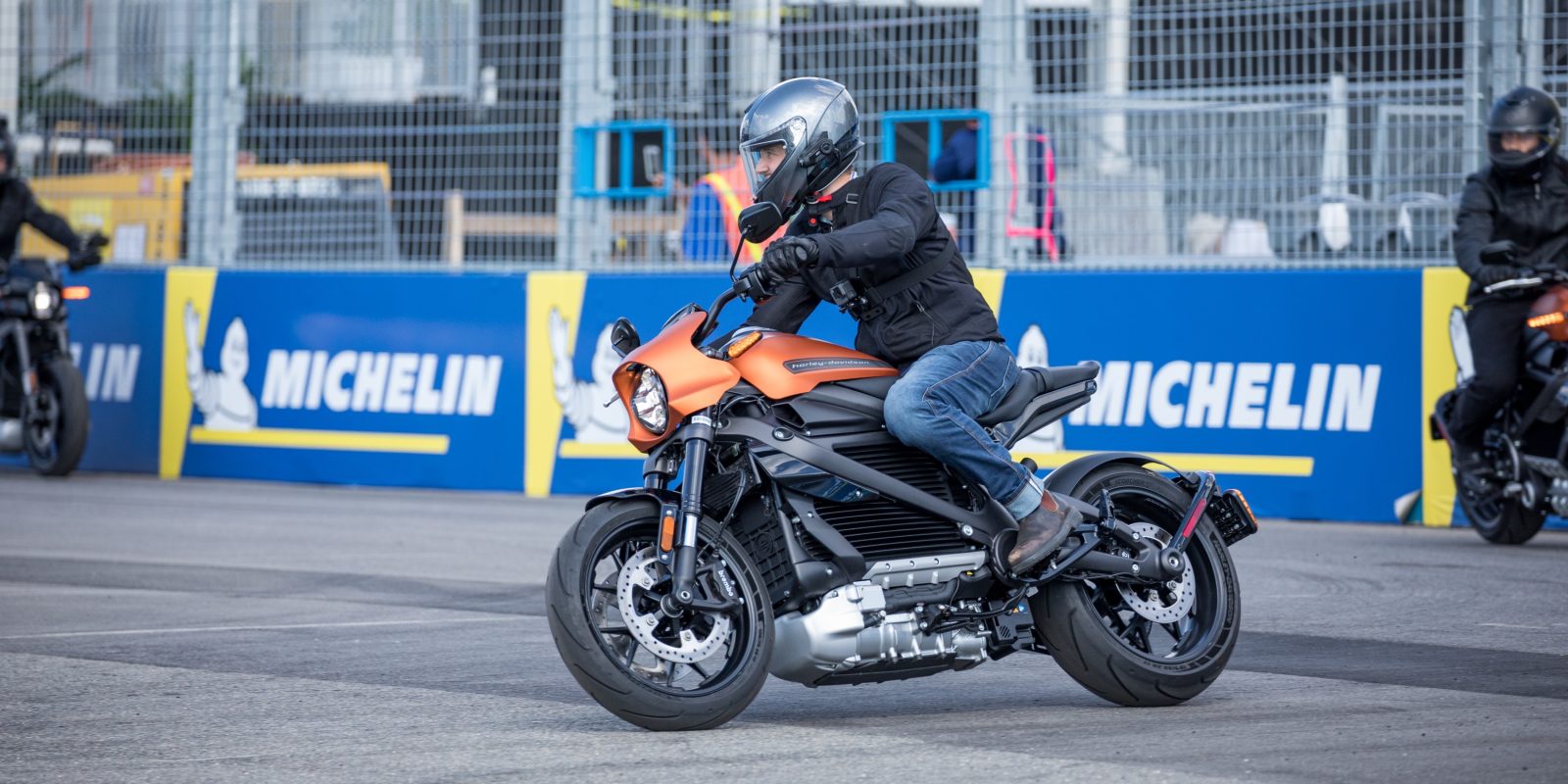
This weekend I had the opportunity to test ride Harley-Davidson’s much anticipated new electric motorcycle, the LiveWire. As excited as I was to finally get a chance to ride the LiveWire before its release, I didn’t have the highest of expectations. I thought the LiveWire would be a bike that looked better than it rode. But as it turns out, the LiveWire is a high power beast just waiting to be unleashed.
Harley-Davidson LiveWire test ride
Harley-Davidson invited a select group of journalists to Brooklyn this weekend to take the LiveWire for a test on the Formula E track. The tight and twisty track was designed for the low and grippy race cars – not for motorcycles.
But even with zero runoff and walls closing in on me at every corner, I did my best to push the LiveWire hard. And boy was I surprised by what this electric motorcycle could do!
This weekend we finally learned the important tech specs that Harley-Davidson had been keeping under wraps for so long. Most importantly, we learned that the motor is rated at 78 kW (105 hp) and the battery capacity is 15.5 kWh. Those are both huge for an electric motorcycle and were the first clues that the Harley-Davidson LiveWire isn’t just for show.
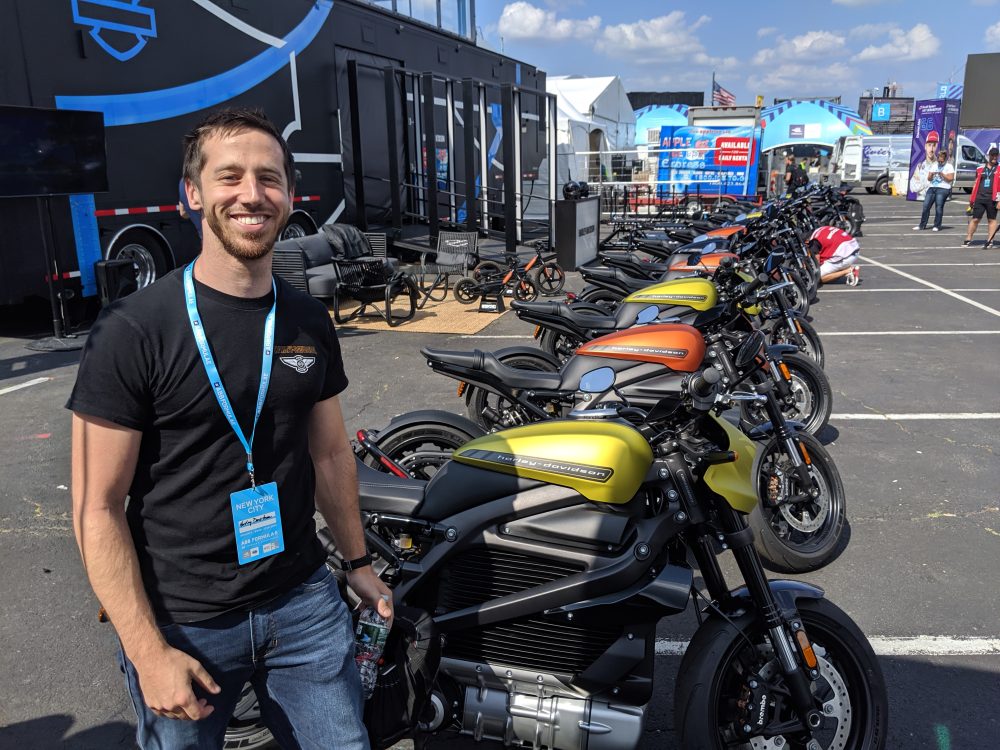
That’s the grin of an Electrek writer who is about to become one of the first LiveWire riders ever
But you don’t really get the sense of what 78 kW feels like in a 549 lb (249 kg) vehicle until you really open it up.
And fortunately I had some straightaways to do just that, as you’ll see in my video ride below.
Harley-Davidson LiveWire video ride
The LiveWire can hit a top speed of 110 mph (177 km/h).
However, I maxed out at 87 mph (140 km/h) before I ran out of short straightaway and had to rely on those Brembo Monoblock brakes to drop an anchor before I ran out of track.
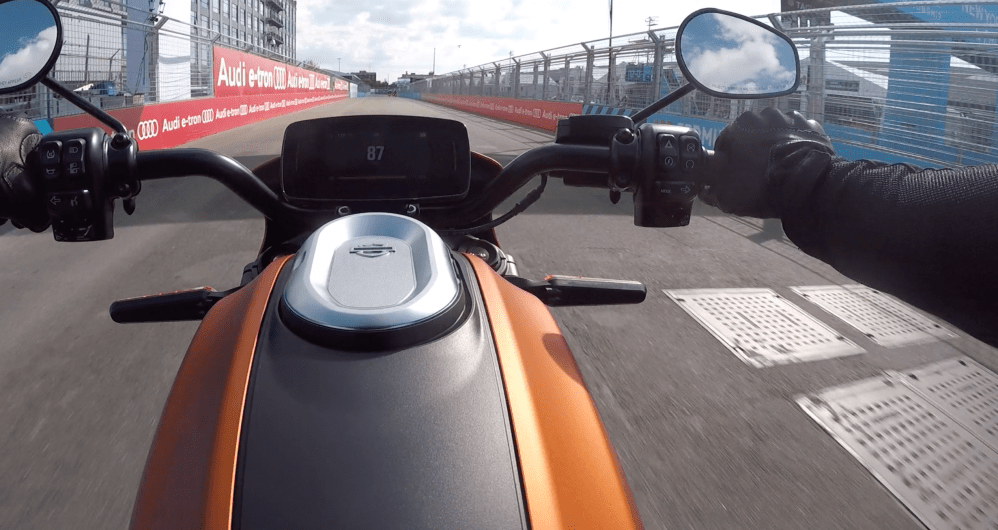
Fortunately the rider assist systems on the LiveWire work beautifully. The ABS brakes and anti rear wheel lift worked great when screeching to a halt. The traction control is also a nice feature, though I wasn’t about to go testing that in these tight turns. Save that for when you accidentally need it on the highway. And the anti-wheelie system meant I could get the most out of the powerful acceleration of the LiveWire without worrying about having to keep the front wheel down.
With a 0-60 mph (0-97 km/h) time of just 3.0 seconds, and another 1.9 seconds to reach 80 mph (129 km/h), the LiveWire accelerates like nothing I’ve ridden before. And part of the thrill of that insane acceleration is that there are no gears to worry about. With the twist of a wrist (and an attempt to hold on) you’re rocketing forward listening to the sweet whine of the drivetrain.


Speaking of that whine, make sure you check out the video above to hear it. That sound from the LiveWire isn’t coming from any artificial noisemakers. That’s the combined sound of the 90º bevel gears and the unique longitudinally mounted motor, plus a bit of belt whirr for good measure. And to be honest, it sounds pretty sweet. The bike is quiet, don’t get me wrong. But it is by no means silent. Anyone who enjoys the aural feedback of winding up an engine will understand the joy of hearing and feeling the LiveWire respond to your inputs.
There’s nothing really “Harley” about the sound, despite what the company will try to tell you. And I think that’s fine. The LiveWire is designed for a new generation of young (and wealthy, let’s be real) riders that don’t necessarily connect with the throaty, chromed out Harleys of old. And this new generation is likely to connect better with the aggressive whine of a high power and high torque electric motor than a century-old gas engine. The LiveWire just seems to connect with the rider in a way that gas bikes aren’t able to. Instead of sitting on a rumbling and vibrating bike, the silent idle and electric scream create a more intimate bond. And as someone who has now ridden both gas and electric Harley-Davidson motorcycles, I definitely feel more connected with the latter.
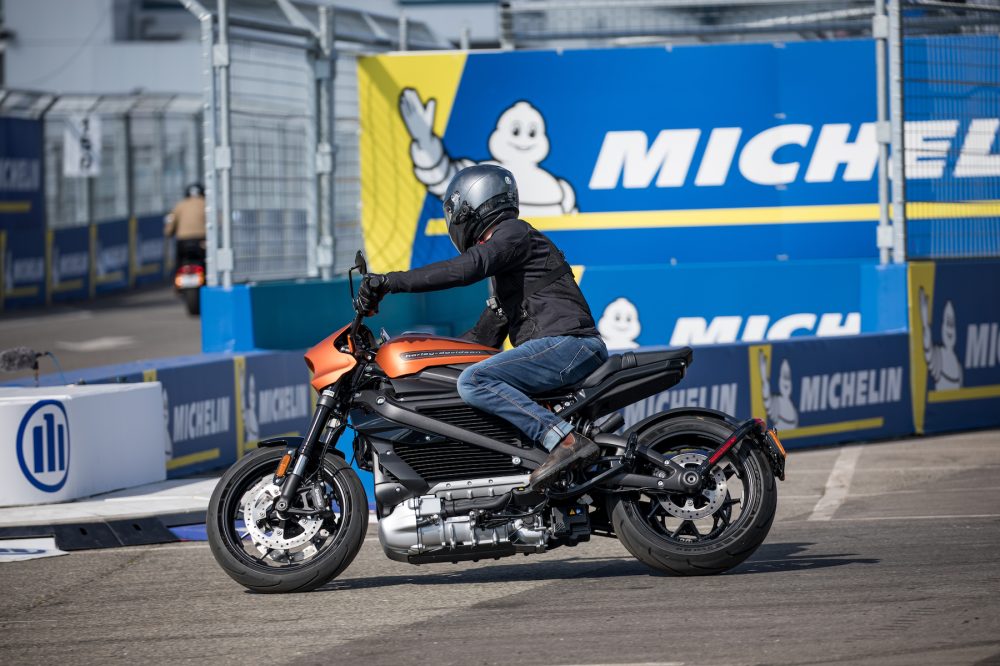
Another way the LiveWire creates a connection with the rider is through its “heart beat pulse”. This one through me for a loop when they described it to us in the presentation, but feeling it made all the difference. Essentially, when you’re sitting still but the bike is on and ready to ride, there is a slight haptic response in the handlebars in the form of a pulsing feeling. It’s not overpowering, but you feel it. And the point is to let the rider know that the bike is on and capable of rocketing off at any moment, lest the lack of engine noise lull him or her into a false sense of security. Essentially it is a gentle reminder that the bike is ready to lurch, even though you can’t hear anything.
Is it a necessary feature? No. But it’s a pretty cool added touch that I enjoyed, and anyone who doesn’t like it can turn it off in the settings.
Speaking of the settings, there are four ride modes and three customizable modes. I probably should have tried out Rain and Eco mode, but I was having too much fun in Road and Sport mode that I forgot anything else existed.