WWD : Kering Sees Potential to Triple the Revenue for Saint Laurent

Kering Sees Potential to Triple the Revenue for Saint Laurent
Kering has plans for more stores and many more sales under the Saint Laurent banner.

KEring has plans to keep the recent exponential growth of Saint Laurent going, targeting almost double the revenue by 2021.
At an investor day dedicated to Saint Laurent, Kering touted the brand’s 14 consecutive quarters of 20-plus percent growth, and said it’s on track to go from 1.2 billion euros in sales in 2016 to about two billion euros in sales by 2021.
Kering’s longer term plan for Saint Laurent, which now has Versus Versace alum Anthony Vaccarello at the design helm after a commercially successful four years led by Hedi Slimane, includes three billion euros in sales.
Given Kering’s plans for store expansion of Saint Laurent, Barclays analyst Julian Easthope said in a note that the two billion euros sales target “should be attainable,” with admitting the three billion euros goal is “more aspirational, but suggests the group aims to invest and growth the brand in the long-term.”

“Overall, this was a very upbeat investor day,” Easthope added.
In terms of retail, Kering said it plans to hit 200 Saint Laurent stores over the next two years, a roughly 25 percent increase over the 159 stores operating at the end of 2016.
Barclay’s pointed out that many “major brands” have somewhere around 350 stores, leaving “plenty of white space” for longer term expansion, which will be necessary to hit to three billion euros in sales.
Kering has already begun investing more heavily in retail for Saint Laurent. The company said the brand’s business is now 68 percent retail, 27 percent wholesale and 5 percent royalties, compared to 60 percent retail. Thirty-one percent wholesale and 9 percent royalties in 2012, when Slimane joined the brand.
“The investment in retail is clearly paying off,” Easthope said.
The company also broke down Saint Laurent sales by age, revealing 65 percent of its sales come mostly from women between the ages of 18 and 34, with 52 percent coming from those between the ages of 25 and 34.
Saint Laurent is also favored by locals, which account for 63 percent of its customers, while only 37 percent are tourists. Kering said it intends to invest more in travel retail, which accounted for just 1.8 percent of Saint Laurent’s sales last year.
The brand is doing well with much-coveted Millennials, despite only 22 percent of its marketing spend going toward social media, but that’s likely to change in the near-term.
Marketing was a “big theme” of the investor day, according to Barclays, which said Kering is planning to further cultivate “desire” for Saint Laurent through various advertising moves and is set to more than double its spend in digital marketing this year.

WWD : Carla Fendi Dies in Rome

Carla Fendi Dies in Rome
She was honorary president of the Fendi company

MILANCarla Fendi passed away in Rome on Monday evening, aged 80.
She was honorary president of the Fendi company, which late Monday evening issued a release emphasizing how Carla Fendi “never stopped to actively contribute with unchanged passion to the success of the company that continued to be a reason to live; from the first international recognitions obtained with the help of the four sisters until her last days. She was for all of us a source of inspiration and an example of dedication, work culture and sensibility for beauty. She will accompany us forever.”
Fendi joined the company in the Fifties and with her sisters Anna, Paola, Franca and Aida, helped develop and expand the family-owned venture, mainly in charge of marketing and communication and championing its expansion in the U.S. She forged a strong relationship with Karl Lagerfeld, who last year marked his 50th anniversary as creative director of Fendi.

LVMH Moët Hennessy Louis Vuitton and Prada Group acquired 51 percent of the Rome-based leather goods and fashion house in 1999. LVMH bought Prada’s stake in November 2001, and today controls the company, helmed by chairman and chief executive officer Pietro Beccari.
In 2007, she created the Carla Fendi Foundation, whose goal is to support Italy’s cultural and artistic patrimony. Among others, the foundation has helped restore the Caio Melisso theater in Spoleto, Italy. She was named honorary president of the Spoleto Theater.
Tributes on social media started to flow in after news of Fendi’s passing.

WWD : Kering Fends Off Allegations It Makes Eyewear in China

Kering Fends Off Allegations It Makes Eyewear in China
Selima Optique told a court the luxury powerhouse is operating a “bait-and-switch scheme,” which Kering flatly denied.

Kering has denied allegations that various sunglasses it labels and advertises as “Made in Italy” are fully or partly “Made in China.”
Selima Optique Inc., a luxury sunglass and eyewear boutique with several stores in New York City and France, last week hit Kering, its subsidiary Kering Eyewear and its executives Antonio Bortuzzo and Ken Liming, with a proposed class action lawsuit in New York federal court alleging sunglasses manufactured by the company are falsely advertised as “Made in Italy.”
A Kering spokeswoman denied the allegations in their entirety, and said “Kering Eyewear luxury products are made in Italy and are labeled in compliance with all applicable law.”
The boutique, which purchases eyewear from Kering wholesale, pointed to brands like Yves Saint Laurent, Gucci, Brioni, Tomas Maier and Stella McCartney.

While Selima accused Kering of “egregiously” using “Made in Italy” labels, the boutique said “at best” all the various parts of the sunglasses are made in China and then shipped to Italy for assembly.
Under Italy’s 2009 “Made in Italy Law,” in order to be labeled as made in the country, a product has to be entirely made in Italy, including planning, manufacturing and packaging. Companies are also are not allowed to “lead a consumer to believe that the product or goods originate from Italy… without their being accompanied by specific, clear indications as to foreign provenance or origin,” according to the complaint.
“Wholesale customers and retail consumers, who pay a premium for Italian made products especially those carrying designer labels such as Yves Saint Laurent, are falling victim to a deceitful bait-and-switch scheme by defendants, who are selling eyewear that are actually manufactured in China, while bearing the stamp ‘Made in Italy,’” Selima argued. “Defendants’ misleading packaging and labeling are exacerbated by an overall marketing campaign, online and in print, that mislead wholesale customers as well as the consuming public to believe that their products are made in Italy.”
Selima also manufactures and sells its own branded line of eyewear and often collaborates with design houses for special editions, and so claims that it’s not only been damaged by Kering’s actions as a wholesale customer, but as a competitor as well.
The boutique said it first became aware of Kering’s alleged manufacturing practice in October, when it received a package of YSL eyeglass frames and its head of merchandising noticed one side of the frame was stamped “Made in Italy” and the other was marked “Made in China.”
Selima contacted Kering about the stamp, and the company attributed it to a manufacturing mistake, saying the part of the frame with the China label was meant for a style of Puma sunglasses, which are made in China.
“[Kering] did not explain why a temple that is stamped ‘Made In China’ belonging to a pair of sunglasses that is purported to be made in China would inexplicably end up in an Italian factory,” Selima noted.
Although the boutique admitted that it would like to continue purchasing from Kering in the future, it said without court action, there is “no way to determine… whether the products sold by defendants are genuinely made in Italy.”
Based in Veneto, Italy, Kering Eyewear was created in 2016 in order for the French conglomerate to control the entire value chain of its eyewear business, previously operated under a licensing model.
Selima is also accusing Kering of unfair competition, deceptive trade practices, negligent misrepresentation and unjust enrichment. It’s also looking to certify a class of wholesale customers and competing eyewear retailers to pursue unspecified damages.
In March, Kering Eyewear said it would take over the development, production and distribution of Cartier eyewear, marking its first license deal with a brand outside the group.
As part of the strategic partnership, Cartier parent Compagnie Financière Richemont took a 30 percent stake in Kering Eyewear. Financial terms of the deal were not disclosed.
Kering Eyewear also absorbed the Manufacture Cartier Lunettes plant in Sucy-en-Brie, France.

(ZH) Uber Insiders Are Desperate To Sell But "The Demand Side Has Dried Up"

With the CEO on 'temporary' leave, and lacking most of the C-suite, Uber's seemingly endless stream of PR disasters has finaly begun to impact its 'king of unicorns' status as CNBC reports a growing number of insiders are seeking to sell their shares. But buyers are hard to find.

As a gentle reminder, here is a snapshot of some of the most notable scandals that have emerged, involving the world's most valuable private company:
  1. Another tale of sexism and unacceptable workplace behavior in Silicon Valley company has emerged. This time it's at Uber, according to an explosive blog post published on Sunday by a former company engineer named Susan Fowler Riggetti.
  2. Uber's newly-hired VP of engineering Amit Singhal was asked to, and did, resign on Monday after the company learned from Recode that he was accused of sexual harassment shortly before leaving Google a year ago. Here's more on the difficult position of former employers in this case.
  3. A video showing Uber CEO Travis Kalanick rudely arguing with a long-time driver at the end of his ride was published by Bloomberg. "I need leadership help," Kalanick said in an apology he issued shortly after.
  4. Susan Fowler Rigetti, the former Uber engineer who wrote of discrimination, said she's hired attorneys after a new law firm began to investigate her claims. Uber confirmed it has hired Perkins Coie, which reports to former A.G. Eric Holder, who's leading the investigation.
  5. Uber said on Thursday that it will finally apply for a DMV permit to test self-driving cars in California after its cars' registrations were revoked in December because it refused to get the permit.
  6. Charlie Miller, one of the two famous car hackers who joined Uber's Advanced Technology Center in August 2015, announced he's leaving the company.
  7. The New York Times uncovered a secret Uber program called Greyball, through which the company uses software and data to evade law enforcement in cities.
  8. Keala Lusk, a former Uber engineer, published a blog post detailing how her female manager mistreated her, signaling that the company's problematic culture isn't limited to the men who work there.
  9. Ed Baker, Uber's head of product and growth, resigned. Though the reason is unclear, he was allegedly seen kissing another employee three years ago, which was anonymously communicated to board member Arianna Huffington, according to Recode.
  10. A report outlines a trip by a group of Uber employees to a Seoul karaoke-escort bar in 2014, which included company CEO Travis Kalanick and his girlfriend, Gabi Holzwarth. After arriving, several male employees picked escorts to sit with, and went to sing karaoke. Uncomfortable, a female marketing manager, who was part of the group, left after a couple of minutes, while Holzwarth and Kalanick left after an hour.
  11. California regulators have recommended that Uber be fined $1.13 million for failing to investigate and/or suspend drivers who are reported by a passenger to be intoxicated. The state requires ride-hailing companies to have a zero-tolerance policy for driving under the influence of alcohol or drugs.
  12. A new report says Uber used a secret program dubbed "Hell' to track Lyft drivers to see if they were driving for both ride-hailing services and otherwise stifle competition. Only a small group of Uber employees, including CEO Travis Kalanick, knew about the program, according to a story in The Information, which was based on an anonymous source who was not authorized to speak publicly.
  13. Waymo sued Uber in civil court, claiming that Uber was using trade secrets stolen from Google to develop Uber’s self-driving vehicles.
  14. Uber fires Anthony Levandowski, a star engineer brought in to lead the company’s self-driving automobile efforts who was accused of stealing trade secrets when he left a job at Google.
  15. Uber said Tuesday that it had made a mistake in the way it calculated its commissions, at a cost of tens of millions of dollars to its New York drivers, and the company vowed to correct the practice and make the drivers whole for the lost earnings.
  16. Uber fires over 20 staff following the release of a report about sexual harrassment in the workplace.
  17. Reports emerge that Uber CEO Travis Kalanick fired off a bizarre email in 2013 to hundreds of employees where he listed the conditions under which they could have sex with each other at a company outing in Miami
  18. Uber’s chief business officer, Emil Michael, resigned from the company.
  19. Holder report released, CEO Kalanick temporarily takes leave of absence.
This list is by no means comprehensive, but appears to be enough straws to break the unicorn's back, as CNBC reports, there's an imbalance in the market for private sales of Uber as insiders look to cash out.


"The demand side has dried up relative to the sell side," said Larry Albukerk, managing director of EB Exchange, a San Francisco broker that has arranged private sales of tech-company shares since 1999. "We're getting calls all the time from people who want to sell" at least part of their Uber stake, said Albukerk.

Uber employees have long faced tighter restrictions on share sales compared to workers at other tech start-ups. Arranging private share sales for Uber insiders has been notoriously difficult, said Albukerk, because CEO Travis Kalanick has kept a tight grip on transactions.

Another secondary market broker, who asked not to be named so as not to endanger his relationship with clients, said Uber has a "lockdown" on private sales.
Some have suggested that loosening restrictions at Uber could boost employee morale and make the company more attractive to prospective talent.
However, doing so now could cause a rush to sell by early employees and investors, who so far have been unable to realize any gains, and exacerbate the already dismal optics of the company.

(ZH) Saudis Foil Iranian Terror Attack On Major Offshore Oil Field

The situation in the Middle East is furiously escalating with each passing day.
While today's news of Israeli financial support for Syrian insurgents came out of left field, our earlier assessment following the report of "turmoiling" Syrian rebels in the aftermath of the Qatar crisis still stands, namely that "the next major regional conflict appears set to be between Saudi Arabia and Iran. All it needs is a catalyst."
That catalyst nearly presented itself overnight, when the Saudi information ministry said the Saudi Royal Navy allegedly foiled an attempted terrorist attack on a major offshore oilfield in the Persian Gulf on June 16, when it captured three members of Iran's Revolutionary Guard Corps from a boat as it approached the kingdom's offshore Marjan oilfield. The Saudi Center for International Communications added that the boat carried explosives, and the Iranians aboard "intended to carry out terrorist act in Saudi territorial waters."
Quoting an “official source”, the Saudi SPA news agency said that just after midnight on June 16, 2017, three boats bearing flags in white and red flags rushed to the Marjan offshore oil field off the Eastern Province. The navy fired warning shots but were these were ignored by the assault boats. It said one of the boats was subsequently seized and found to be “carrying weapons for a sabotage target.” The other two boats escaped.
“This was one of three vessels which were intercepted by Saudi forces. It was captured with the three men on board, the other two escaped,” a statement from the ministry’s center for international communications said.
"The three captured members of the Iranian Revolutionary Guard are now being questioned by Saudi authorities," it said, citing a Saudi official and added that the vessel was carrying explosives and intended to conduct a "terrorist act" in Saudi territorial waters.
The Saudi Press Agency also reported that the Saudi Navy fired warning shots at the two boats that managed to escape.
According to Reuters, on Saturday Iran's Tasnim news agency said that Saudi border guards had opened fire on an Iranian fishing boat in the Gulf on Friday, killing a fisherman. It said the boat was one of two Iranian boats fishing in the Gulf that had been pushed off course by waves.
The alleged attempt to carry out a terrorist attack on Saudi oil facilities takes place as tensions between Iran and Saudi Arabia have steadily deteriorated, and follow a pari of suicide bombings and shootings in Tehran killed which killed 17 people in Tehran in the first week of June. Iran repeated accusations that Saudi Arabia funds Sunni Islamist militants, including Islamic State.
It the Saudi account of events is accurate, and if Iran is indeed preparing to take out Saudi oil infrastructure in retaliation or otherwise, the simmering cold war between Saudi Arabia and Iran is about to get very hot.

>>> What to look at today - 20th of June 2017

Dow +0.68% S&P +0.83% Nasdaq +1.6% Russell +0.81%
Best sectors were Biotech +2.5%, SemiCap +2.3%, Soc Media +2.1%, Internets +2%, Casino +1.6% and worst Oil E&P -0.9%, Oil&Gas -0.8%, Oil Equip -0.7%, Oil Serv -0.6%, Uts -0.4%. SPX and Dow closed at record - no macro data yesterday, and TMT bounced (barron's positive) - few M&A headlines, but catalyst was convincing rally in NDX from its 50day support. Volumes terrible as we ended at 6.26b shares...-35% below Friday's vlm (but we had expiry/rebal Friday), and -9% below 20day ave. As noted again, SemiCap, SocMedia, Internets, HWares all led...so was risk back on the tech sector. NDX up +1.6% and SemiCaps +2.3% (FAANG +1.3%). Industrial, Machinery another record close. Note that Energy was hit as WTI ended down -1.4% and at a fresh 52wk low...Oil SubGroups lagged (weakness in Crude helped Airlines and TRAN index). Asian markets are trading mixed on Tuesday. Market strength has exhibited signs of a reflation rebound with the US dollar index up 1% from Thursday’s low. Chinese equities are steady ahead of MSCI’s decision later today on whether to include A-shares in its emerging markets indexes. Analysts have assigned a ~50-50 chance of inclusion, though any positive decision would be largely viewed as symbolic given the small number of shares in question. US After Hours  LPCN +38% on positive trial results... RS -7% and CMG -2% following guidance, TSLA +1.3% on China unit production, ALXN +1.6% on CEO share purchase

Nikkei +1.13% HAng Seng -0.16% CSI -0.13% Shanghai -0.03%

Eur$ 1.1159 CNH 6.8333 CNY 6.8291 JPY 111.60 GBP 1.2743 CHF 0.9748 RUB 58.3249 WTI$ 44.44 +0.02%

S&P +0.09% EuroStoxx +0.22% Dax +0.26% FTSE +0.07% SMI +0.47%

Macro :
-  Fed’s Evans Suggests Delaying Next Rate Hike: Macro Squawk Wrap

Keep an eye on :
- ABE SM : French Regulator Recommends Amending Highway Investment Plan
- AB1 GY : German Government Sees Hurdles For Air Berlin Aid: Stuttgarter
- AD NA : Ahold Delhaize likely to be eyed by Amazon, Kroger
- AIR FP : SpiceJet Rises After Agreeing With Boeing to Buy 40 737 Maxs
- ATC NA : Altice USA to Carry Out IPO Pricing Wednesday: Les Echos
- BT/A LN : BT Group Holder Orange Offering 133m Shares: Terms
- BLT LN : BHP Shareholder Backs Single Listing at Right Price: Australian
- ECP FP : EuropaCorp Sells Film-Music Copyrights to Sony/ATV for EU14.55m
- EDF FP : Fire at EDF’s Bugey Nuclear Plant Extinguished: Regulator ASN
- EVT GY : Evotec to Invest in Facio Therapies to Support FSHD Therapy
- FGR FP : French Regulator Recommends Amending Highway Investment Plan
- GLPG NA : Galapagos Starts Phase 2 Filgotinib Studies in Six Indications
- ISP IM : Italy’s Iccrea Considers Buying Veneto Banks’ Good Assets: Sole
- ENI IM : Eni and NIOC to Sign Deal for Iran Energy-Field Studies: Banner
- KER FP : Kering’s Yves Saint Laurent Sees EU2b Annual Sales in Mid-Term
- LIN GY : Sinopec, Linde Form JV in Ningbo to Produce Industrial Gases
- MS IM : RTI-Mediaset Completes Acquisition of Mediaset Premium
- NESN VX : Nestle Invests in U.S. Online Meal Subscription Service Freshly
- NOVN VX : Novartis’ RTH258 Shows Robust Visual Gains in NAMD Patients
- SNF FP : French Regulator Recommends Amending Highway Investment Plan
- SAP BB : Velge Family Plans EU60/Share Offer for Sapec After Dividend
- SEAM SS : Kinnevik in Underwriting Agreement to Buy Seamless SDS Shares
- SL/ LN : Standard Life Hasn’t Discussed Future Relationship With Lloyds
- TSLA US : Tesla Said Close to Agreeing on Plan for China Production Plant
- TKA GY : Thyssenkrupp Elevators Doing Well in U.S., While China Is Firmer
- DG FP : French Regulator Recommends Amending Highway Investment Plan
- VIV FP : Vivendi Said to Appeal Ruling on Telecom Italia, Mediaset: FT

>>> Europe : Brokers Upgrades & DOwngrades - 20th of June 2017

>>> Up
*Clariant Raised to Buy at SocGen, PT CHF25
*Finnair Raised to Buy at HSBC, PT EU6.50
*Goodyear Raised to Buy at Jefferies
*Ipsen Raised to Add at AlphaValue
*Mercialys Raised to Buy at Tradition Securities & Futures
*Munich Re Raised to Hold at Deutsche Bank
*Osram Raised to Buy at Bankhaus Lampe
*Swisscom Raised to Hold at Berenberg
*Swiss Re Raised to Buy at Deutsche Bank
*Unibail-Rodamco Raised to Buy at Tradition Securities & Futures
*Vivint Solar Raised to Buy at Goldman

>>> Down
*Cairn Energy Cut to Reduce at AlphaValue
*DKSH Cut to Neutral at Credit Suisse
*Eurotunnel Cut to Underweight at Barclays
*HAVAS SA Cut to Hold at Jefferies, PT EU9.90
*ICADE Cut to Hold at Tradition Securities & Futures, PT EU78
*Innofactor Cut to Accumulate at Inderes, PT EU1.80
*Metso Cut to Reduce at Kepler Cheuvreux, PT EU28
*Next Cut to Reduce at AlphaValue
*Proximus Cut to Sell at Berenberg
*Rheinmetall Cut to Neutral at MainFirst, PT EU95
*Statoil Cut to Hold at SocGen, PT NOK157

>>> Initiation
*Idorsia New Buy at Jefferies, PT CHF20
*Idorsia New Neutral at JPMorgan, PT CHF7.50
*Inwit New Hold at Santander, PT EU5.85
*TAG Immobilien New Hold at National Bank AG, PT EU13.50

>>> Call

(ZH) There Have Been 296 Earthquakes Near The Yellowstone Supervolcano Within Th

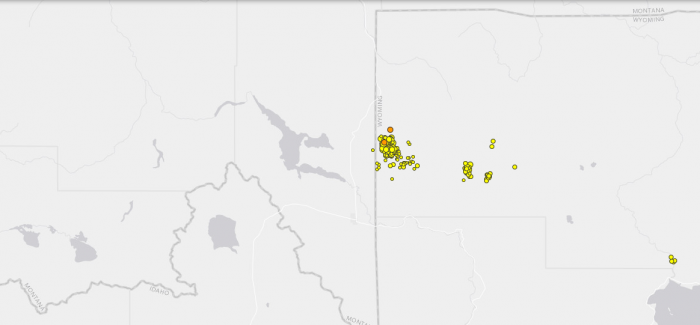
There Have Been 296 Earthquakes Near The Yellowstone Supervolcano Within The Last 7 Days

Is it possible that the Yellowstone supervolcano is gearing up for a major eruption? If you follow my work on a regular basis, then you already know that I spend a lot of time documenting how the crust of our planet is becoming increasingly unstable. Most of this shaking is taking place far away from the continental United States, and so most Americans are not too concerned about it. But we should be concerned about it, because a major seismic event could change all of our lives in a single instant. For instance, a full-blown eruption of the Yellowstone supervolcano would have the potential of being an E.L.E. (extinction level event). That is why it is so alarming that there have been 296 earthquakes in the vicinity of the Yellowstone supervolcano within the last 7 days. Scientists are trying to convince us that everything is going to be okay, but there are others that are not so sure.
The biggest earthquake in this swarm occurred last Thursday evening. It was initially measured to be a magnitude 4.5 earthquake, but it was later downgraded to a 4.4. It was the biggest quake in the region since a magnitude 4.8 earthquake struck close to Norris Geyser Basin in March 2014. This magnitude 4.4 earthquake was so powerful that people felt it as far away as Bozeman


The main quake was centered about 5.8 miles underground.

The quake and aftershocks occurred just over 8 miles northeast from West Yellowstone, according to the U.S. Geological Service.

A witness reported that she felt the building she was in move.

Dozens of people reported that they felt it in and around West Yellowstone, Gardiner, Ennis, and Bozeman.
But by itself that one quake would only be of minor concern. What is troubling many of the experts is that this earthquake has been accompanied by 295 smaller ones.
There is normally a rise in seismic activity before a volcano erupts, and according to theoretical physicist Michio Kaku, a long overdue eruption at Yellowstone could “rip the guts out of the USA”


Scientists currently believe that there’s a 10% chance that a “supervolcanic Category 7 eruption” could take place this century, as pointed out by theoretical physicist Michio Kaku who appeared on a segment for Fox News.

The grey haired physicist told Shepard Smith that the “danger” we are now facing with the caldera is that it’s long overdue for an eruption which Kaku said could “rip the guts out of the USA.”

Kaku said that a “pocket of lava” located under the park has turned out to be twice as big as scientists originally thought.
I would like to try to describe for you what a full-blown eruption of the Yellowstone supervolcano would mean for this country.
Hundreds of cubic miles of ash, rock and lava would be blasted into the atmosphere, and this would likely plunge much of the northern hemisphere into several days of complete darkness. Virtually everything within 100 miles of Yellowstone would be immediately killed, but a much more cruel fate would befall those that live in major cities outside of the immediate blast zone such as Salt Lake City and Denver.
Hot volcanic ash, rock and dust would rain down on those cities literally for weeks. In the end, it would be extremely difficult for anyone living in those communities to survive. In fact, it has been estimated that 90 percent of all people living within 600 miles of Yellowstone would be killed.
Experts project that such an eruption would dump a layer of volcanic ash that is at least 10 feet deep up to 1,000 miles away, and approximately two-thirds of the United States would suddenly become uninhabitable. The volcanic ash would severely contaminate most of our water supplies, and growing food in the middle of the country would become next to impossible.
In other words, it would be the end of our country as we know it today.
The rest of the planet, and this would especially be true for the northern hemisphere, would experience what is known as a “nuclear winter”. An extreme period of “global cooling” would take place, and temperatures around the world would fall by up to 20 degrees. Crops would fail all over the planet, and severe famine would sweep the globe.
In the end, billions could die.
So yes, this is a threat that we should take very seriously.
But today, most Americans think of Yellowstone as little more than a fun tourist attraction. But the truth is that many tourists have discovered just how dangerous Yellowstone can be. Some have been scalded by boiling water from geysers that can get as hot as 250 degrees Fahrenheit, and one man from North Carolina recently had to be flown to a burn center after he mistakenly fell into a hot spring


A North Carolina man was flown to the University of Utah Burn Center after falling into a hot spring at Yellowstone National Park late Tuesday night.

Gervais Dylan Gatete, 21, was with seven other people in the Lower Geyser Basin north of Old Faithful when he fell, according to a park news release.

The group attempted to transport Gatete, an employee with Xanterra Parks and Resorts, by car for medical treatment. Just before midnight, they flagged down a park ranger near Seven Mile Bridge on the West Entrance Road.
Since Yellowstone is still very active, scientists assure us that it will erupt again one day.
And when that happens, all of our lives will be completely turned upside down in a single moment.

TechCrunch : Is Whole Foods a healthy option for Amazon?

Is Whole Foods a healthy option for Amazon?

If you’ve been under a rock or staring at a fidget spinner over the past few days, you may have missed the news that Amazon is working to purchase Whole Foods for nearly $14 billion dollars. The markets favored the new partnership as they pummeled their competitors.

Both companies have unlocked several short and long-term opportunities with this purchase.

Hundreds of New Fulfillment Locations<
As the business idiom goes — location, location, location. With hundreds of stores, fastidiously, placed in affluent locations, Whole Foods could be viewed as an incredible real-estate acquisition for Amazon.

The distance from the warehouse to the home determines how quickly we can get those batteries that we need, right now.

Amazon, currently, offers same day deliver in nine markets. In 2015, Piper Jeffray analysts predicted that households with an annual income greater than $50,000 are the core market for same day delivery. They also estimated that Amazon fulfillment locations were within approximately 20 miles of 50-65% of their target market. This acquisition moves Amazon from the outskirts into the neighborhood.

Every Whole Foods doubles as a return location, micro-warehouse, pick-up location, and, as we’ll discuss later, landing pad.

High-Price Meets Hyper-Efficient

Amazon and Whole Foods have projected very different images of themselves. We don’t think low-price products when we think Whole Foods. Whole Foods, which some of my friends call “whole wallet,” focuses on their high-quality, high-price, heavily curated selection. On the other hand, Amazon is known for their hyper-efficiency, value and choice.

For Amazon, the ability to distribute products they already sourced at a higher-margin is a boon for their business. In other words, the Whole Foods markup builds Amazon a highly profitable channel for their goods.

Whole Foods realized that they need to provide a lower price-point option to reach a larger market. Therefore they launched Whole Foods 365 “Where Quality Meets Savings” to address more prices sensitive consumers. With Amazon’s lower cost supply chain, Whole Foods 365 may have found what it needs to get prices down to a point where they can, not only, undercut Walmart and Costco but provide a more convenient experience to their button-loving consumers.

Enabling the Last Mile

Amazon has focused on getting their products to their customers efficiently since they were founded. Amazon Prime, Amazon Fresh, Amazon Flex (delivery), Amazon Fresh Pickup, andAmazon Go are all relatively recent forays the company has made to disrupt retail with faster delivery.

Taking a step back, let’s recall what each company has to offer. Amazon has a more sophisticated tech infrastructure, innovative online consumer experience, better fulfillment processes and inventory management. What Amazon lacks is the human face and the connection to our communities. The only smile many know of Amazon is their branding on the corrugated boxes.

Whole Foods has property in incredible locations, a strong brand, and tens of thousands of employees that serve their communities in their locations. These are the missing pieces that Amazon has needed to scale their “last mile” delivery. It’s not easy to build a culture of service-drive people, and Whole Foods has an incredible staff that could support their new machine-driven parent.

Whole Foods currently has distribution partners like Instacart and Postmates who will likely lose a lot of business. They are just two services that could be cut-off in the future as Amazon has a new fulfillment location in our neighborhoods.

In NovemberAmazon announced that it was testing a new AI-powered store that didn’t require checkout. More recently, it was reported that their system was having a difficult time tracking when there were over twenty people in the store at any given time. Although this concept will come to market some time in the not-so-distant future, Whole Foods will provide an incredible testing ground once Amazon is ready to deploy their solution at-scale. This would allow us to treat Whole Foods like an extension of our refrigerators.

It’s still too early to know but we may look back and say that Amazon just acquired an entire fleet of drivers that could, if they wish, accomplish several activities for their new parent company.

The Machines are Coming

Lurking in the background of every future of technology discussion are two topics: drones and autonomous vehicles. Amazon has been quiet on the latter but it’s obvious that they could be a huge winner if they could deliver their own goods. However, there’s still was a major logistical issue for both of these endeavors — where do we take our vehicles and drones to re-charge and re-stock.

With this massive real-estate acquisiton, Amazon has inherited hundreds of local roofs and parking lots that could now re-charge and re-supply their fleets. As less and less of the population drives, these parking lots will allow expansion of the store and more room for other activities.

Cheers to a Convenient Future

The future of retail going to be interesting for all of us. It’s hard to deny that the market continues to create a world where we’re all going to have more time to watch Designated Survivor and The Housemaiden and less of a need to ever take time out to run errands.

We will choose the most convenient options that align with their pocket-book and values, in that order.

Over the past few years we’ve seen Amazon testing new ways of getting groceries in consumers fridges, with Amazon Fresh, Amazon Fresh Pickup, drone delivery, and Amazon Go. As I look back with this acquisition, I can’t help to think, “Were they just preparing for this the whole time or did they realize they couldn’t do it alone?”

>>> Ahold Delhaize likely to be eyed by Amazon, Kroger

Ahold Delhaize likely to be eyed by Amazon, Kroger

Ahold Delhaize [AD.EN], the Dutch – Belgian supermarket chain, could become a target for the US internet company Amazon [NASDAQ:AMZN] or for the US retail company Kroger [NYSE:KR], the Dutch daily Het Financieele Dagblad reported, citing several financial analysts.
Analyst Bruno Monteyne, of business bank Bernstein told the daily that after acquiring supermarket chain Whole Foods, Amazon could be out for more. In that case Ahold Delhaize is a likely target, especially when it comes to the activities of Ahold in the US. Other potential targets for Amazon are the British chains Morrison and Sainsbury, as well as the French supermarket chain Carrefour.
The US retail company Kroger could also be interested in acquiring Ahold Delhaize, the report said. If Kroger would acquire Ahold Delhaize it would grow into a company with an annual turnover of USD 180bn.
Analyst Steward McGuire of Credit Suise also said that Ahold Delhaize is a tempting target for US supermarket chains.
In late 2018, Ahold Delhaize will lose its protective foundation, which will strongly increase the company as a target for takeover.