>>> Fed Chair Yellen Q&A: focused on trying to achieve 2% inflation target and t

Fed Chair Yellen Q&A: focused on trying to achieve 2% inflation target and there has been no discussions on raising it 
- Reiterates intention to return to a Treasury only portfolio 
- 2% is not a ceiling, rather a symmetric objective 
- Repeats recent lower inflation readings appear to be result some temporary measures at work 
- Reiterates that the Fed should not follow any mechanical rule on monetary policy 
- Balance sheet normalization process should start this year and "relatively soon"
- Intend to serve out my term (Feb 2018) and to achieve our mandated objectives; have not given any thought to another term

FT : Vast iceberg breaks off Antarctic’s Larsen C ice shelf

Vast iceberg breaks off Antarctic’s Larsen C ice shelf


Scientists say ‘little doubt’ that climate change is causing ice shelves to disappear

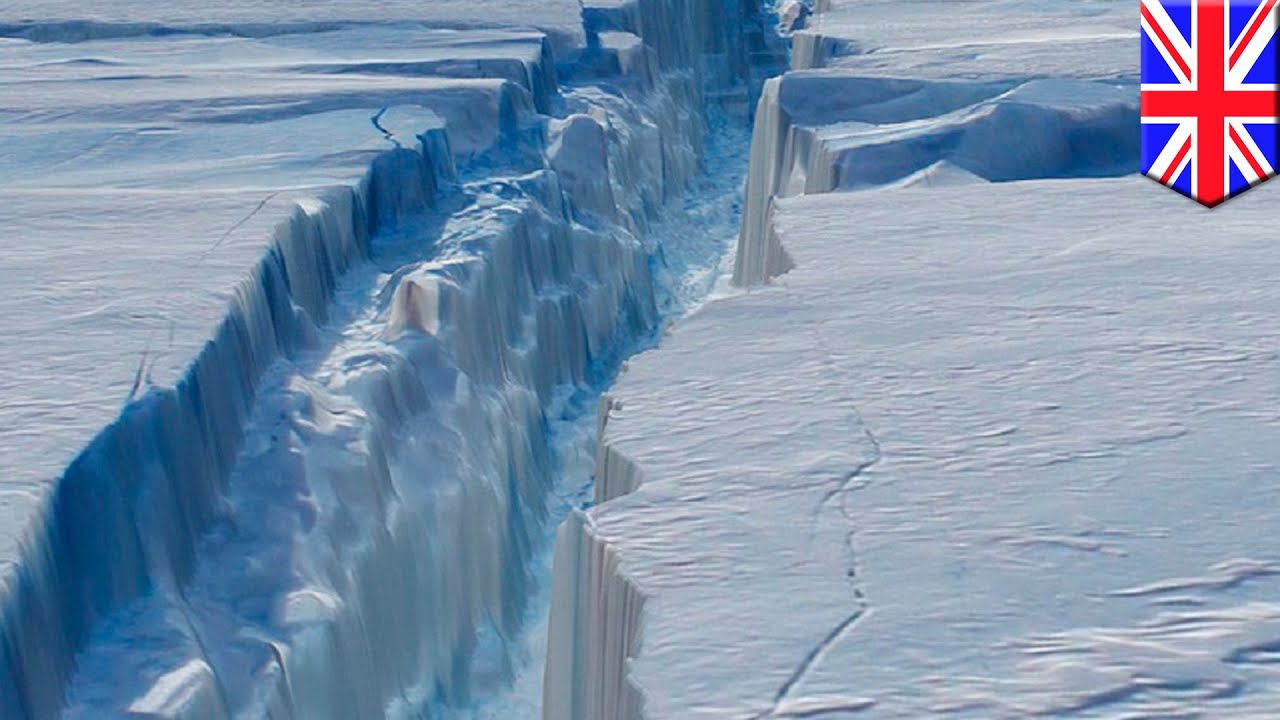
A vast iceberg nearly the size of the US state of Delaware has finally broken away from Antarctica, changing the frozen landscape forever.

Scientists have been waiting months for the dramatic calving of the iceberg, one of the biggest on record at almost 6,000 square kilometres, after huge cracks emerged on the Larsen C ice shelf in West Antarctica.

That left the one trillion tonne iceberg hanging by a thread of ice just 4.5km wide, according to researchers at Project Midas, a UK-based research project investigating the effects of a warming climate on the Larsen C shelf.

Because ice shelves are floating extensions of land-based glaciers that flow into the ocean, the splitting off of the gigantic iceberg is not expected to have any immediate effect on sea levels.

However, ships could face extra risks if the iceberg breaks up and parts of it drift into warmer waters.


The iceberg could remain in one piece but is more likely to break into fragments according to Adrian Luckman, a professor at Swansea university and lead investigator of the Midas project.

“Some of the ice may remain in the area for decades, while parts of the iceberg may drift north into warmer waters,” Prof Luckman said.

Because ice shelves act as huge buttresses that hold back glaciers flowing down to the coast, researchers will be watching the Larsen C shelf closely for further signs of deterioration.

When the Larsen A and B ice shelves further north of Larsen C collapsed in 1995 and 2002 respectively, there was a “dramatic acceleration” of the glaciers behind them, said David Vaughan, director of science at the British Antarctic Survey.

This led to larger volumes of ice making its way into the ocean, contributing to sea level rise, Prof Vaughan added. “If Larsen C now starts to retreat significantly and eventually collapses, then we will see another contribution to sea level rise.”

Martin O’Leary, another glaciologist with the Midas project, said his team was not aware of any link between the latest calving and human-induced climate change. However, he said the move puts the ice shelf in a vulnerable position.

“This is the furthest back that the ice front has been in recorded history. We’re going to be watching very carefully for signs that the rest of the shelf is becoming unstable,” he said.

Scientists at the British Antarctic Survey (BAS) said there was “little doubt” that climate change was causing ice shelves to disappear in some parts of Antarctica, but no obvious sign that climate warming was causing the whole of Antarctica to break up.

“There are other parts of Antarctica which are losing ice to the oceans but those are affected less by atmospheric warming and more by ocean change,” said Prof Vaughan. “Larsen C itself might be a result of climate change, but in other ice shelves we see cracks forming which we don’t believe have any connection to climate change.

“For instance on the Brunt Ice Shelf [in Antarctica] where BAS has its Halley Station, there those cracks are a very different kind which we don’t believe have any connection to climate change.”

>>> US Gapping down

Gapping down
In reaction to disappointing earnings/guidance
:
  • IPCI -1.4%
Other news:
  • OCUL -32.2% (receives Complete Response Letter from FDA for DEXTENZA NDA; company believes that DEXTENZA can be approved open manufacturing items are resolved), ALDR -10.7% (commences 12.5 mln share common stock offering)
  • KIN -2.5% (proposed public offering of its common stock)
  • SMRT -2.3% (Chico's will replace Stein Mart in the S&P SmallCap 600)
  • ARNA -1.7% (to offer and sell $150.0 million of shares of its common stock in an underwritten public offering)
  • DLR -1.4% (commenced an offering of two series of pounds sterling-denominated Guaranteed Notes due 2024 and 2029)
Analyst comments:
  • MON -0.5% (downgraded to Hold from Buy at Jefferies)
  • FCX -0.8% (downgraded to Sell from Hold at Berenberg)
  • HOG -2% (Goldman out cautious following checks, indicating softer Q2; also downgraded to Mkt Perform from Outperform at Bernstein)

>>> US Gapping up

Gapping up
In reaction to strong earnings/guidance
:
  • COHU +9.8%, (raises Q2 revenue guidance), FAST +7.8%, HCSG +3.9%, (also declared quarterly cash dividend of $0.18875/share, up from prior $0.1875/share ), AAL +3.5%, (raises Q2 unit rev and pre-tax margin guidance), AIR +1.6%, OZRK +1.5%, .
M&A news:
  • IDSY +3.4% (to acquire substantially all of the assets of electronics manufacturer/marketer Keytroller; proposes underwritten public offering)
  • LOGI +1.6% (to acquire console gaming brand ASTRO Gaming for $85 million in cash)
  • ABM +0.8% (to acquire GCA Services Group), .
Select oil/gas related names showing strength:
  • SND +5.3%, NFX +3.4%, CLR +2.5%, WLL +2.4%, SLCA +1.9%, HCLP+1.6%, CHK +1.5%, SM +1.4%, SN +1.1%, APA +1%, DVN +0.9%
Other news:
  • NTP +22.6% (confirms share purchase agreement to sell 6,504,355 shares of the Company held by the co's Chairman M.K. Koo and his wife at $17.00/share to the Kaisa Group)
  • TROV +16% (announces Novogene will purhcase NextCollect for validation in the Chinese market)
  • NAK +15.1% (EPA has begun process to withdraw Proposed Determination that would have restricted development of Pebble Project in southwest Alaska)
  • CARA +14.6% (announces summary results from its Phase 1 safety and pharmacokinetic trial of Oral CR845)
  • CRNT +9.5% (received in Q2 orders totaling more than $9 mln for its IP-20 Platform)
  • NRG +9.1% (to hold call tomorrow July 12 at 8:30am ET to provide the results of its business review and detailed plan to transform the company)
  • DRRX +6.3% (upgraded to Buy from Hold at Stifel)
  • BDSI +5.7% (BioDelivery Sciences and Purdue Pharma (Canada) announce that they have signed an exclusive agreement for the licensing, distribution, marketing and sale of BELBUCA)
  • PYPL +3.2% (now available on Apple (AAPL) App Store, Apple Music, iTunes & more)
  • TAHO +2.7% (extending today's rebound -- down approx 40% month-to-date)
  • CLNT +1.8% (launched global bike sharing app service that joins local sharing bike operators in Hong Kong)
  • VBIV +1.6% (announces plans for Ph 3 clinical program for Sci-B-Vac following positive discussions with the FDA, EMA and Health Canada)
Analyst comments:
  • NVDA +0% (upgraded to Buy from Hold at SunTrust)

>>> Semiannual Monetary Policy Report to the Congress

Semiannual Monetary Policy Report to the Congress


Chairman Hensarling, Ranking Member Waters, and other members of the Committee, I am pleased to present the Federal Reserve's semiannual Monetary Policy Report to the Congress. In my remarks today I will briefly discuss the current economic situation and outlook before turning to monetary policy.
Current Economic Situation and Outlook
Since my appearance before this committee in February, the labor market has continued to strengthen. Job gains have averaged 180,000 per month so far this year, down only slightly from the average in 2016 and still well above the pace we estimate would be sufficient, on average, to provide jobs for new entrants to the labor force. Indeed, the unemployment rate has fallen about 1/4 percentage point since the start of the year, and, at 4.4 percent in June, is 5‑1/2 percentage points below its peak in 2010 and modestly below the median of Federal Open Market Committee (FOMC) participants' assessments of its longer-run normal level. The labor force participation rate has changed little, on net, this year--another indication of improving conditions in the jobs market, given the demographically driven downward trend in this series. A broader measure of labor market slack that includes workers marginally attached to the labor force and those working part time who would prefer full-time work has also fallen this year and is now nearly as low as it was just before the recession. It is also encouraging that jobless rates have continued to decline for most major demographic groups, including for African Americans and Hispanics. However, as before the recession, unemployment rates for these minority groups remain higher than for the nation overall.
Meanwhile, the economy appears to have grown at a moderate pace, on average, so far this year. Although inflation-adjusted gross domestic product is currently estimated to have increased at an annual rate of only 1-1/2 percent in the first quarter, more-recent indicators suggest that growth rebounded in the second quarter. In particular, growth in household spending, which was weak earlier in the year, has picked up in recent months and continues to be supported by job gains, rising household wealth, and favorable consumer sentiment. In addition, business fixed investment has turned up this year after having been soft last year. And a strengthening in economic growth abroad has provided important support for U.S. manufacturing production and exports. The housing market has continued to recover gradually, aided by the ongoing improvement in the labor market and mortgage rates that, although up somewhat from a year ago, remain at relatively low levels.
With regard to inflation, overall consumer prices, as measured by the price index for personal consumption expenditures, increased 1.4 percent over the 12 months ending in May, up from about 1 percent a year ago but a little lower than earlier this year. Core inflation, which excludes energy and food prices, has also edged down in recent months and was 1.4 percent in May, a couple of tenths below the year-earlier reading. It appears that the recent lower readings on inflation are partly the result of a few unusual reductions in certain categories of prices; these reductions will hold 12-month inflation down until they drop out of the calculation. Nevertheless, with inflation continuing to run below the Committee's 2 percent longer-run objective, the FOMC indicated in its June statement that it intends to carefully monitor actual and expected progress toward our symmetric inflation goal.
Looking ahead, my colleagues on the FOMC and I expect that, with further gradual adjustments in the stance of monetary policy, the economy will continue to expand at a moderate pace over the next couple of years, with the job market strengthening somewhat further and inflation rising to 2 percent. This judgment reflects our view that monetary policy remains accommodative. Ongoing job gains should continue to support the growth of incomes and, therefore, consumer spending; global economic growth should support further gains in U.S. exports; and favorable financial conditions, coupled with the prospect of continued gains in domestic and foreign spending and the ongoing recovery in drilling activity, should continue to support business investment. These developments should increase resource utilization somewhat further, thereby fostering a stronger pace of wage and price increases.
Of course, considerable uncertainty always attends the economic outlook. There is, for example, uncertainty about when--and how much--inflation will respond to tightening resource utilization. Possible changes in fiscal and other government policies here in the United States represent another source of uncertainty. In addition, although the prospects for the global economy appear to have improved somewhat this year, a number of our trading partners continue to confront economic challenges. At present, I see roughly equal odds that the U.S. economy's performance will be somewhat stronger or somewhat less strong than we currently project.
Monetary Policy
I will now turn to monetary policy. The FOMC seeks to foster maximum employment and price stability, as required by law. Over the first half of 2017, the Committee continued to gradually reduce the amount of monetary policy accommodation. Specifically, the FOMC raised the target range for the federal funds rate by 1/4 percentage point at both its March and June meetings, bringing the target to a range of 1 to 1-1/4 percent. In doing so, the Committee recognized the considerable progress the economy had made--and is expected to continue to make--toward our mandated objectives.
The Committee continues to expect that the evolution of the economy will warrant gradual increases in the federal funds rate over time to achieve and maintain maximum employment and stable prices. That expectation is based on our view that the federal funds rate remains somewhat below its neutral level--that is, the level of the federal funds rate that is neither expansionary nor contractionary and keeps the economy operating on an even keel. Because the neutral rate is currently quite low by historical standards, the federal funds rate would not have to rise all that much further to get to a neutral policy stance. But because we also anticipate that the factors that are currently holding down the neutral rate will diminish somewhat over time, additional gradual rate hikes are likely to be appropriate over the next few years to sustain the economic expansion and return inflation to our 2 percent goal. Even so, the Committee continues to anticipate that the longer-run neutral level of the federal funds rate is likely to remain below levels that prevailed in previous decades.
As I noted earlier, the economic outlook is always subject to considerable uncertainty, and monetary policy is not on a preset course. FOMC participants will adjust their assessments of the appropriate path for the federal funds rate in response to changes to their economic outlooks and to their judgments of the associated risks as informed by incoming data. In this regard, as we noted in the FOMC statement last month, inflation continues to run below our 2 percent objective and has declined recently; the Committee will be monitoring inflation developments closely in the months ahead.
In evaluating the stance of monetary policy, the FOMC routinely consults monetary policy rules that connect prescriptions for the policy rate with variables associated with our mandated objectives. However, such prescriptions cannot be applied in a mechanical way; their use requires careful judgments about the choice and measurement of the inputs into these rules, as well as the implications of the many considerations these rules do not take into account. I would like to note the discussion of simple monetary policy rules and their role in the Federal Reserve's policy process that appears in our current Monetary Policy Report.
Balance Sheet Normalization
Let me now turn to our balance sheet. Last month the FOMC augmented its Policy Normalization Principles and Plans by providing additional details on the process that we will follow in normalizing the size of our balance sheet. The Committee intends to gradually reduce the Federal Reserve's securities holdings by decreasing its reinvestment of the principal payments it receives from the securities held in the System Open Market Account. Specifically, such payments will be reinvested only to the extent that they exceed gradually rising caps. Initially, these caps will be set at relatively low levels to limit the volume of securities that private investors will have to absorb. The Committee currently expects that, provided the economy evolves broadly as anticipated, it will likely begin to implement the program this year.
Once we start to reduce our reinvestments, our securities holdings will gradually decline, as will the supply of reserve balances in the banking system. The longer-run normal level of reserve balances will depend on a number of as-yet-unknown factors, including the banking system's future demand for reserves and the Committee's future decisions about how to implement monetary policy most efficiently and effectively. The Committee currently anticipates reducing the quantity of reserve balances to a level that is appreciably below recent levels but larger than before the financial crisis.
Finally, the Committee affirmed in June that changing the target range for the federal funds rate is our primary means of adjusting the stance of monetary policy. In other words, we do not intend to use the balance sheet as an active tool for monetary policy in normal times. However, the Committee would be prepared to resume reinvestments if a material deterioration in the economic outlook were to warrant a sizable reduction in the federal funds rate. More generally, the Committee would be prepared to use its full range of tools, including altering the size and composition of its balance sheet, if future economic conditions were to warrant a more accommodative monetary policy than can be achieved solely by reducing the federal funds rate.
Thank you. I would be pleased to take your questions.

FT : Consumers swerve record butter prices, for now

Consumers swerve record butter prices, for now
A supply shortage combined with rising demand has sent wholesale prices to a record high

Europe is in the throes of a butter shortage.

Rising demand and a decline in milk production has led to a doubling in the price of the dairy spread this year. French bakeries want to raise the price of pastries, brioches and croissants that are dependent on butter, while the chief executive of Arla, the company behind the Anchor and Lurpak dairy brands, last week warned UK consumers that there would not be enough butter at Christmas.

The strains in Europe have global origins. The combination of falling milk output in key producing countries and adverse weather sent the international butter price to a record high in June, according to the UN Food and Agricultural Organization.

“Limited export availabilities of dairy products in all major producing countries” led to significant rises in dairy prices, including butter, the FAO said this month.


The current supply shortage and ensuing rally in the butter price follows one of the most sustained periods of low dairy prices since world markets crashed in 2007-08. Favourable weather and the EU’s move to liberalise its dairy market in 2015 depressed prices.

They more than halved between 2014 and 2015, with many dairy farmers around the world going out of business or struggling under increased debts. The EU responded by introducing voluntary output cuts and compensated farmers for not producing milk. World milk supplies from leading five producer regions slipped 0.4 per cent in 2016.

In the southern hemisphere, bad weather in Australia and New Zealand has left production so far this year lagging that of 2016.


Consumption of butter, on the other hand, continues to grow. Kevin Bellamy, global dairy strategist at Rabobank, the Dutch lender, believes there has been a “structural shift” in demand patterns for the dairy spread.

That helped limit the drop in the price in 2014 and 2015 when supply was robust. “People are moving towards butter, putting more of it in manufactured food,” he says.

Recent studies have also cast doubt on the link between butter and cardiovascular disease, sharpening consumers’ enthusiasm. Bad publicity over the potential health effects of some vegetable oil-based spreads has also prompted consumers to switch back to butter.


Raphael Moreau, a food analyst at Euromonitor, says that butter consumption has been lifted by demand for “natural” products among shoppers as they move away from spreads such as margarine. “In the UK, butter consumption has also been supported by the home-baking boom,” he says.

Despite the rise in butter prices, “many farmers don’t have the ability to increase output,” says Patty Clayton, a senior dairy analyst at the UK Agriculture and Horticulture Development Board, which is funded by farmers and growers.

Nor do record prices mean dairy farmers and companies can simply shift their production to take advantage, as they also have to supply retail customers with fresh milk, cream and cheese. “Milk producers have to prioritise their long-term customers,” Ms Clayton says.


The current shortage would have been less severe if there were inventories available to fall back on. However, the robust demand has eroded global stocks. Moreover, China is back in the market buying dairy products including butter and cheese, says Mr Bellamy of Rabobank.

Despite the rise in the wholesale prices of butter, retailers and food manufacturers have been reluctant to pass on increases to consumers. However, analysts expect that to change as margins are squeezed.

“Given the recent inflation in butter prices, if that continues, that is going to be reflected in consumer prices,” cautions Ms Clayton, who predicts the price will remain under upward pressure for the rest of the year with production unlikely to rebound in the short term.

“Butter prices will come back but it may take several months, but it will not go back to original levels,” Mr Bellamy says.

Many dairy farms in Europe and Brazil are suffering from a shortage of young cows to bring into the herd after the years of sluggish dairy prices.

“Because of the period of prolonged low prices the young stock aren’t there,” he adds.