>>> Danaher beats by $0.05, beats on revs; raises FY17 EPS guidance (86.05)

Danaher beats by $0.05, beats on revs; raises FY17 EPS guidance (86.05)
  • Reports Q3 (Sep) earnings of $1.00 per share, $0.05 better than the Capital IQ Consensus of $0.95; revenues rose 9.6% year/year to $4.53 bln vs the $4.47 bln Capital IQ Consensus.
  • Co raises guidance for FY17, sees EPS of $3.96-4.00 vs. $3.96 Capital IQ Consensus Estimate, and above prior guidance of $3.90-3.97

>>> Noble Group, Vitol may not agree on sale of Noble's oil business; Vitol CEO

Noble Group, Vitol may not agree on sale of Noble's oil business; Vitol CEO says
19 OCT 2017
Vitol Group, which is in talks with Noble Group [SGX:CGP] for a possible acquisition of Noble Group's USD 1bn-worth oil business, may not reach an agreement for the purchase eventually, according to a newswire report.
The overall terms and conditions of the potential deal, now under discussions, are very complicated, and the talks may not end in agreement, Bloomberg reported, quoting Vitol CEO Ian Taylor talking in an interview with Bloomberg TV.
In a related report, Hong Kong-based supply chain manager Noble Group short-listed potential buyers of its US-market-focused oil business, worth about USD 1bn, with Vitol Group and Mercuria Group on the list, Financial Times report in September.
The complicated issues include a question of how much of the oil business sale price should go into an escrow account, the Bloomberg report said, citing people familiar with the situation.

>>> Goldman Sachs, Leonard Green, Pamplona and Providence compete in Pure Gym se

Goldman Sachs, Leonard Green, Pamplona and Providence compete in Pure Gym second round
19 OCT 2017
The second round of Pure Gym auction is underway, with Goldman Sachs Private Equity, Leonard Green, Pamplona and Providence in the running for the asset, four sources familiar said. Final bids for the UK-based fitness clubs chain are due 2 November, two of the sources said.
Jefferies and Harris Williams are advising incumbent sponsor CCMP on the deal.

The deal is marketed off cGBP 70m EBITDA, as previously reported by this news service.

Pure Gym has two main competitors, The Gym Group and Xercise4Less. Together, they dominate the low-cost gym market in the UK, as reported.
Pure Gym was in advanced discussions to merge with The Gym Group in 2014 but the deal was blocked by the regulator, as reported. At the time of the prospective acquisition in summer 2013, Pure Gym had a run rate EBITDA of around GBP 17m and operated around 43 gyms. The Gym generated approximately GBP 10m EBITDA with 36 gyms throughout the UK.
CCMP acquired Pure Gym in 2013 for an estimated GBP 150m. The group then acquired LA Fitness in 2015, which significantly increased its size.

Pure Gym operates more than 170 clubs in the UK, making it the country's largest.
CCMP, Providence and Pamplona declined to comment. GS and Leonard Green did not respond to requests for comment.

LEs Echos : Arthur Sadoun : « Accenture est un concurrent plus réel pour Publici

Arthur Sadoun : « Accenture est un concurrent plus réel pour Publicis que Google et Facebook »

A l'occasion de ses résultats financiers pour le troisième trimestre, Arthur Sadoun, CEO de Publicis réffirme sa confiance dans la pertinence de son modèle hybride, mix de technologie et de créativité.

Matinée délicate pour Publicis en Bourse. Après la publication de ses résultats trimestriels ce jeudi, le titre décroche de quelque 6% alors que le chiffre d'affaires a diminué de 2,2% sur un an, lors des trois derniers mois.

Vous publiez ce matin votre revenu pour le 3ème trimestre. Quel est votre constat ?
Commençons par une bonne nouvelle. Alors que Publicis avait enregistré quatre trimestres négatifs d'affilée aux Etats-Unis, assorti d'un deuxième trimestre 2017 « flat », le groupe affiche 3,5% de croissance sur ce qui est notre premier marché et qui représente plus de 50% de notre activité. C'est une véritable performance sur le marché le plus difficile et le plus concurrentiel de notre secteur


Comment expliquez-vous ce retournement de tendance ?
C'est d'abord la résultante de la stratégie que nous avons mise en place du « Power of One », grâce à laquelle nous avons gagné des budgets tels que Walmart ou encore HPE, USAA, FirstNet et Lowe's. En revanche, nos revenus en Europe sont en recul de 1,5%. Le principal effet est une base de comparaison très défavorable puisque le 3ème trimestre 2016 était en progression de 7,6%. Au global, notre croissance est de 1,2% sur le troisième trimestre, après -1,2% au premier et +0,8% au deuxième. Nous nous étions engagés à une amélioration séquentielle de notre croissance organique entre le 2ème et 3ème trimestre. L'objectif est atteint.


Des géants comme Procter envisagent de réduire drastiquement leurs budgets, cela vous inquiète ?
La rationalisation de nos clients ne date pas d'hier et peut même jouer à l'avantage de ceux qui se transformeront assez vite pour leur apporter des solutions. Nos clients font face à trois défis : la croissance, la pression sur les coûts et la confiance des consommateurs dans leur marque. A nous de nous transformer le plus rapidement possible pour les aider à relever ces défis. Dire, comme certains de nos concurrents, que les problèmes de notre industrie sont la faute de nos clients est une erreur. L'enjeu majeur pour les groupes de communication, c'est la vitesse à laquelle ils se transforment.


C'est une course contre la montre ?
Aujourd'hui, il existe une forme d'urgence car tout s'accélère, pour nous comme pour nos clients.


Vers quel modèle veut évoluer Publicis ?
Notre enjeu, c'est de passer d'un modèle de groupe de communication à celui d'un partenaire plus global dans la transformation de nos clients. Nous travaillons depuis des années à réinventer le marketing client, mais cette réinvention n'est possible que si on transforme en parallèle, de l'intérieur, le business model de nos clients, via la technologie. Publicis a un avantage compétitif énorme sur ses concurrents car nous sommes les seuls à pouvoir proposer de manière connectée à la fois la transformation de l'expérience client et la transformation du business model de nos clients par la technologie. Le tout relié par la data. Quand on gagne le budget McDonald aux Etats-Unis, ce que l'on gagne c'est la réinvention des restaurants. Et nous gagnons parce que nous pouvons parler à la fois au CMO (le patron du marketing, NDLR) et au CTO (le patron de l'informatique et de la technologie).


Combien de temps vous êtes-vous donné pour finaliser la transformation du modèle de Publicis ?
Maurice Lévy aujourd'hui Président du Conseil de surveillance a posé les bases de cette transformation que nous devons achever. Nous nous fixons l'année pour transformer notre mode de collaboration avec nos 35 principaux clients-annonceurs. Quant à l'aboutissement final, en interne, de notre transformation qui devrait prendre la forme d'une alchimie réussie entre création, technologie, media et consulting au service de nos clients, elle prendra du temps. On ne mène pas une telle révolution en quelques mois. Je n'ai aucun doute. Notre modèle est le bon. Mais il faut maintenant réussir l'exécution. Publicis, c'est 80.000 personnes dans le monde qui doivent apprendre à travailler autrement. Notre ambition est de passer d'une holding company à une plateforme. C'est à dire mettre les clients au centre avec un P&L unique, la technologie au coeur, en abattant les silos.


Le conseil, c'est le métier d'un IBM, d'un CapGemini ou d'un Accenture. Publicis a les moyens de se substituer à ces géants ?
Publicis est capable de gérer de manière intégrée le marketing d'un côté et la transformation technologique de l'autre, oui. Et nous nouons aussi des partenariats car une plateforme doit savoir travailler en open source. Nous l'avons fait sur Mc Donald avec CapGemini qui a apporté l'infrastructure mondiale pour être capable de déployer le modèle d'outsourcing de l'IT, tandis que Publicis apporte son expertise dans l'expérience client. Ce modèle convergent entre la transformation de l'expérience client et la transformation des business digitaux, c'est l'avenir de notre industrie. Les frontières vont bouger plus fortement dans les quatre ou cinq années à venir que lors des quarante dernières années.


Le partenariat pourrait-il devenir un mariage, à terme, avec Accenture ou CapGemini ? Avec 90% de capital flottant, Publicis est opéable...
Lorsqu'on parle de stratégie, d'acquisition ou de fusion, notre préoccupation est d'agir dans l'intérêt de nos clients. La convergence entre la transformation marketing et la transformation digitale est incontestablement ce dont nos clients ont besoin. Les cabinets de consulting entrent sur ce marché en faisant l'acquisition d'agences créatives. Nous avons fait le mouvement opposé avec l'acquisition de Sapient et nous commençons à voir les premiers résultats de cette stratégie. Nous ne voyons pas cette tendance générale comme une menace. Bien au contraire, elle nous rend très confiants sur le fait que notre stratégie est la bonne. Notre avantage est qu'il est plus facile d'intégrer une composante technologique dans un monde de créatifs, que l'inverse. Cela ne nous empêche pas de collaborer avec des cabinets de consultants pour compléter notre offre. C'est ce que nous faisons au cas par cas, et notre organisation en plateforme facilite ces partenariats. Et cette logique de partenariats est notre mode de fonctionnement naturel.


Les GAFAS s'intéressent également aux agences de publicité...
Mais cela reste dans le domaine du marketing. D'ailleurs, quant à moi, je juge Accenture comme un concurrent bien plus réel que Facebook ou Google avec lesquels il est possible de nouer des partenariats beaucoup plus larges.
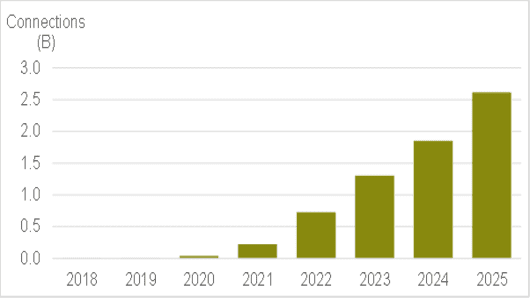

CNBC : 1 billion could be using 5G by 2023 with China set to dominate

1 billion could be using 5G by 2023 with China set to dominate
* Fifth generation mobile technology still in infancy
* Reports suggest Chinese adoption of "5G" will be largest and fastest
* Qualcomm claims successful "5G" technology test

The next revolution in mobile technology looks set to be led by China.
5G, the fifth generation of mobile network, doesn't yet exist but aims to provide faster data speeds and more bandwidth to carry ever-growing levels of web traffic.
Analysts at CCS Insight predict the technology will be in place by 2020 and said in a report Wednesday that there will be more than one billion users of 5G by 2023, with more than half based in China.

"China will dominate 5G thanks to its political ambition to lead technology development, the inexorable rise of local manufacturer Huawei and the breakneck speed at which consumers have upgraded to 4G connections," said Marina Koytcheva, VP Forecasting at CCS Insight.
Source: CCS Insight Market Forecast: 5G Subscriptions Worldwide
CCS Insight said 5G will take off faster than any other previous mobile technology with the United States, South Korea, and Japan all battling to launch the first commercial network.
Exact technology specifications for 5G have yet to be agreed internationally and there are still uncertainties about the technology. These include how and where network operators will deploy vast numbers of new base stations, the lack of clear business case for operators, and consumers' willingness to upgrade their smartphones, CCS Insight said.
In Europe, market fragmentation, the availability of spectrum and the influence of regulators bring additional challenges.

Qualcomm CEO: 5G Products coming in 2019 11:51 AM ET Wed, 2 Aug 2017 | 03:22
But several technology firms are trying to show progress in the 5G. Chipset manufacturer, Qualcomm, claimed this week that it had demonstrated the first working 5G data connection on a mobile device.
The speed generated in the test would allow users to download data at around 1,000 Mbps. One estimate suggested this would allow users to download a 2 hour HD film in around 12 seconds.
Qualcomm said the demonstration used their Snapdragon X50 NR modem chipset over a 28GHz millimetre wave spectrum band.
The 28 GHz millimetre wave spectrum band has been described as problematic because the radio signal at this frequency reportedly deteriorates if data is transmitted over more than a few kilometres.
The technology could also be important for technologies like driverless cars.

>>> RB CEO’ dismisses talk that home hygiene division could be spun off; not rul

RB CEO’ dismisses talk that home hygiene division could be spun off; not ruling out acquisitions

Reckitt Benckiser Group [LON:RB] Chief Executive Rakesh Kapoor has dismissed talk that the UK-based consumer products group’s plans to separate its home hygiene brands from its health products would facilitate a spin-off of the home hygiene arm, The Times reported.
Kapoor was speaking as Reckitt released its 3Q17 trading update, at which the company announced plans to split the home hygiene and health products operations. The CEO said that the two businesses would be separate but still be part of the group.
The item noted that Reckitt has previously spun-off peripheral businesses.
The Daily Mail reported that a comment from Kapoor had prompted the spin-off speculation. Kapoor said he wants the company to secure a leading position internationally in the consumer health sector and that Reckitt had not realised the extent of its opportunity in the sector, according to the newspaper.
Spinning off the home hygiene arm could provide funds for Reckitt to acquire Pfizer’s [NYSE:PFE] consumer health division, the item said.
Reckitt said it is not ruling out making acquisitions, the newspaper added.
Pfizer disclosed last week that it plans to sell its consumer health division, the report continued, adding that the division could sell for up to GBP 11bn (EUR 12.30bn).
Reckitt Benckiser’s market capitalisation stood at GBP 48.24bn at the close of trading in London on Wednesday.

FT : Nikkei 225 notches up longest winning streak in almost 30 years

Tokyo’s price-focused Nikkei 225 equity index closed higher for the thirteenth straight day on Thursday, marking its longest winning streak since 1988.

The thirteen-day run of higher closes for the index, which like the Dow Jones Industrial Average weights stocks by price, is the longest on record since a 15-day run that ended on March 2, 1988.

The gauge’s rise of 5.4 per cent during the current streak is, however, less impressive than the climb of 8.5 per cent during the whole of the 1988 run, as well as when compared to the earlier rally’s first thirteen days – by which point the Nikkei had risen 6.7 per cent.

The benchmark Topix index, which focuses on market capitalisation, finished Thursday up 0.3 per cent, marking its ninth straight positive close.

Vanity fair : DONALD TRUMP CLAIMS STOCK-MARKET GAINS CANCEL OUT NATIONAL DEBT

DONALD TRUMP CLAIMS STOCK-MARKET GAINS CANCEL OUT NATIONAL DEBT
Proof positive that the president should not challenge anyone to an I.Q. test.

With alarming regularity, Donald Trump will offer an authoritative opinion on a topic he clearly knows nothing about. Last week, for instance, he told Fox News that he might “wipe out” Puerto Rico’s $72 billion debt—something neither he nor the federal government has the power to do. Over the summer, he described a (nonexistent) health-insurance plan with a $12 annual premium. In May, he told The Economist that he invented the phrase “prime the pump.” And last night, he boldly claimed that gains in the stock market under his administration have reduced the national debt.

Speaking to his pal Sean Hannity on Fox News, Trump said, “The country—we took it over and owed over $20 trillion,” referring to the national debt. He went on, “As you know, the last eight years, [the federal government] borrowed more than it did in the whole history of our country. So they borrowed more than $10 trillion, right? And yet we picked up $5.2 trillion just in the stock market. Possibly picked up the whole thing in terms of the first nine months, in terms of value.”

“So, you can say in one sense we’re really increasing values; and maybe in a sense we’re reducing debt,” he added. “We’re very honored by it.”

Here’s where Trump’s desperate need for adulation and complete ignorance on most topics converged. While the stock market is in the midst of a historic—but not at all unprecedented!—run, which the president regularly brags about on Twitter, it has . . . no effect on paying down the national debt. Higher stock prices mean gains for investors and shareholders; they in no way impact the amount of money the government owes. (Case in point: during the Obama years, the S&P 500 returned a whopping 235 percent while the national debt skyrocketed.)

As Business Insider's Josh Barro theorized, it's possible that Trump was thinking about the national debt and the stock market in the same terms as one of his real-estate holdings—stocks are up in anticipation of future growth, which improves the government’s hypothetical ability to service its debt. But even this generous explanation relies on so many assumptions that it doesn't really help Trump—as the president continues to be reminded, the United States is not a real-estate business, and the White House is not a family office.

During his campaign, Trump claimed that under his tutelage the U.S. would be debt-free within eight years—a feat that has not been accomplished since 1835. But from his point of view, the U.S. is just a few good quarters away from accomplishing that goal ahead of schedule.

FT Lex : The next crash: not the usual suspects

The next crash: not the usual suspects
Traders are wiser and more diversified but still vulnerable to shock of the unknown

The City of London was another country 30 years ago. Banking and lunchtime drinking were both respectable activities and markets could crater impressively. Much analysis of what has changed since Black Monday begs one underlying question: what would it take for everything to crash again?

More than mere overvaluation. Equity multiples are elevated, at around 14.5 times forward earnings in the UK and 18 in the US. But technology and capital flows have connected markets in ways that reduce rather than amplify risk. Plentiful real-time data has replaced telexes, company handbooks and hearsay.

There is a risk of herding. Connectedness means common ideas and fads propagate. Yet there is a difference between markets drifting and bumping lower in response to new information, such as recession or falling profits, and a crash.

Broader international ownership of assets gives reason to think financial markets may be more stable than in the past. For instance, US investors increased their allocation to foreign companies from 8 per cent of their stock portfolios in 1997, to 29 per cent as of 2013, according to data from The Federal Reserve Bank of Kansas City, and Morningstar.

Combined with widespread use of passive investment funds, diversification should dampen extremes. A dip in one market, or in say, stocks versus bonds, starts an automatic process to rebalance portfolios, by buying what has become cheaper and selling assets which have held up in price.

Investors have also learned the lesson of the 2008 financial crisis, and subsequent wobbles, which is that buying when others appear desperate to sell can be highly profitable. To overcome this and spark panic will require a “black swan”: a left-field crisis few investors have allowed for, like the subprime meltdown. On battlefields, they say the shell that gets you is the one you do not hear coming.