Abu Dhabi sovereign fund halts new business with Goldman Sachs
Mubadala suspends activities pending outcome of litigation related to 1MDB scandal
Abu Dhabi’s state investment company has halted all new dealings with Goldman Sachs, piling pressure on the Wall Street bank that has been dragged into the multibillion-dollar embezzlement scandal linked to Malaysian state investment fund 1MDB.
“We have suspended any activities with Goldman Sachs pending [the] outcome of the litigation,” said Brian Lott, a spokesman of Mubadala Investment Company in a statement. “The only exceptions are engagements signed prior to the litigation, which will continue as per contractual terms”.
Goldman declined to comment on Mubadala's suspension.
The International Petroleum Investment Company, a Mubadala unit and former partner of 1MDB, in November sued Goldman, accusing the US bank of bribing its officials during a “massive global conspiracy”.
IPIC filed a lawsuit in New York seeking unspecified punitive damages from Goldman and individuals, including Tim Leissner, a former partner at the bank who has pleaded guilty to conspiracy charges over the affair.
In November, Goldman said it was “in the process of assessing the details” of the IPIC lawsuit and expected to contest it “vigorously”.
In 2015, IPIC guaranteed billions of dollars of bonds arranged by Goldman and issued by 1MDB, from which the US Department of Justice alleges $4.5bn have gone missing. After the Malaysian fund defaulted, the government in Kuala Lumpur at the time agreed to repay IPIC in a settlement that has since been challenged by the new government.
The suspension comes after the Malaysian Securities Commission on Thursday announced it issued a “show cause” letter to Goldman in December, a document that typically requires companies to explain why they should not face disciplinary action for contentious issues. Goldman also declined to comment on the “show cause” letter.
Mnuchin’s Hollywood Ties Raise Ethical Questions in China Talks
WASHINGTON — “Wonder Woman,” the 2017 film that Steven Mnuchin helped produce before becoming Treasury secretary, hauled in about $90 million at the box office in China. It was the film’s most successful international market and a roaring success for an American superhero export. But because of China’s strict laws for foreign films, the studio behind the movie, Warner Bros., received just a small fraction of those revenues.
Now, as Treasury secretary and one of the lead negotiators in trade talks with China, Mr. Mnuchin has been personally pushing Beijing to give the American film industry greater access to its markets — a change that could be highly lucrative to his former industry. While Mr. Mnuchin divested from his Hollywood film production company after joining the Trump administration, he maintains ties to the industry through his wife, the actress and filmmaker Louise Linton.
In 2017, Mr. Mnuchin sold his interest in the company, StormChaser Partners, to Ms. Linton, who at the time was his fiancée. In his 2018 disclosure, which was obtained from the Treasury Department through a records request by The New York Times, StormChaser is listed as one of Ms. Linton’s assets.
Since they are now married, government ethics rules consider the asset to be owned by Mr. Mnuchin. And while the documents show that Mr. Mnuchin sold his stake to Ms. Linton for $1 million to $2 million, he is now owed that same amount, in addition to interest, from StormChaser in 2026, according to the 2018 form.
[Read Mr. Mnuchin’s financial disclosure documents here.]
Mr. Mnuchin’s remaining ties to the film industry are raising questions among ethics officials and lawmakers about whether a conflict of interest exists. At a congressional hearing on Thursday, Mr. Mnuchin was questioned by a top Senate Democrat about those continuing financial ties. The Office of Government Ethics still has not certified his 2018 financial disclosure, which is the first since his marriage to Ms. Linton.
Access to China’s film market has not been a primary issue in the trade talks, which have focused largely on Beijing’s treatment of foreign companies, including its requirement that firms hand over valuable technology, its barriers to foreign business and its subsidies to Chinese firms.
But Mr. Mnuchin has championed more equitable treatment of American films in China, viewing existing restrictions on foreign entertainment as part of the problematic behavior the Trump administration is trying to correct.
Under the current system, foreign companies must secure Chinese partners to enter China’s market and they are restricted in how much they can earn as part of the arrangements. China applies a strict quota for the number of Hollywood films it lets into its theaters. For most box office showings, Chinese companies take in 75 percent of all revenue, leaving the remainder to Hollywood. To operate in the tightly managed Chinese entertainment sector, American companies have also had to form a vast network of complicated ties with Chinese state-owned firms.
Since the trade talks began last year, film lobbyists have met with Mr. Mnuchin’s top deputies, as well as with officials from the Commerce Department and the office of the United States Trade Representative. Mr. Mnuchin has been especially responsive to lobbying from the film industry, according to people familiar with the discussions, given his background and understanding of the challenges that American moviemakers face in China.
Editors’ Picks
‘Tell Your Husband to Leave Me Alone’
Amy Schumer Doesn’t Care What You Think (That Much)
‘Billions,’ ‘Succession’ and the Making of Wealth Porn
At a congressional hearing last month, Robert Lighthizer, President Trump’s top trade negotiator, said increasing the revenue share earned by American film companies in China was “absolutely” a priority in the talks, and he highlighted Mr. Mnuchin’s role.
“Secretary Mnuchin has been very much involved,” Mr. Lighthizer added. “He of course knows a great deal about that industry, a lot more than I do.”
On Thursday, Senator Ron Wyden of Oregon, the top Democrat on the Senate Finance Committee, raised concerns about Mr. Mnuchin’s financial ties to the film industry and asked the Treasury secretary whether he had, in fact, really divested himself of the StormChaser asset listed on his disclosure form.
Mr. Wyden also suggested that the transaction might have been more of a loan to Ms. Linton than a true financial separation from StormChaser.
“What we have wondered is if there has been an exchange of an asset for a loan rather than a divestment,” Mr. Wyden said.
Mr. Mnuchin declined to discuss details of the transaction, but said that his financial disclosures were certified by career ethics officials in the Treasury Department.
“I am advised by people at Treasury that I am fully in compliance and I have no ethical issues,” Mr. Mnuchin said.
Sign Up for On Politics With Lisa Lerer
A spotlight on the people reshaping our politics. A conversation with voters across the country. And a guiding hand through the endless news cycle, telling you what you really need to know.
SIGN UP
When asked by reporters after the hearing why his StormChaser ties did not represent a conflict of interest, Mr. Mnuchin said that he would not discuss any specific assets.
Treasury noted separately that Mr. Mnuchin’s disclosure was certified internally on June 27, 2018, and that the department was working with the Office of Government Ethics to obtain its certification.
Mr. Mnuchin and Ms. Linton, who married in 2017, brought Hollywood glitz to Washington, but their continuing links to the film industry have also brought complications.
After working for 17 years at Goldman Sachs, Mr. Mnuchin in the last decade became a big name in Hollywood as a film investor. His companies, Dune Entertainment and later RatPac-Dune, helped produce and finance dozens of films that were box office smashes in China, including “Avatar,” “Gravity,” “Dunkirk,” “Wonder Woman” and “Ready Player One.” Mr. Mnuchin was also a co-chairman of Relativity Media, a fledgling Hollywood studio that had a joint venture in China.
During his confirmation hearing in 2017, Mr. Mnuchin said that Relativity’s joint venture in China was “not particularly successful.” He said that he was not aware of direct Chinese investment in the business but that, in the future, Chinese investments in Hollywood may need to be reviewed by the Committee on Foreign Investment in the United States, which the Treasury secretary oversees.
Mr. Mnuchin agreed to divest from dozens of investments in early 2017, after he was nominated by Mr. Trump. Later that year, he sent a letter of apology to the Office of Government Ethics after appearing to promote one of his movies when he said at an event, “Send all your kids to ‘Lego Batman.’”
This month, the Center for Public Integrity reported that Mr. Mnuchin’s most recent financial disclosure, which Treasury approved last June, has yet to be certified by the ethics office. That has raised questions about the reason for the delay.
Ethics experts have pointed to Mr. Mnuchin’s continuing ties to StormChaser Partners as a potential reason for the holdup.
“It certainly creates a significant appearance issue,” said Virginia Canter, a former senior ethics counsel at the Treasury Department. “Not just because he previously was in the entertainment business, and may in fact go back into it at some point when he leaves Treasury, but because his spouse appears to have holdings in these films and is part of the film industry and may benefit if favorable terms are negotiated with China.”
According to a report in The Hollywood Reporter this year, Ms. Linton spends much of her time in Los Angeles, where she has been writing, directing and producing a comedy called “Me, You, Madness.” She has also been busy reshooting “Serial Daters Anonymous,” a 2014 satire that was never released in which she had a starring role. She told the magazine that financing for her films comes from “a variety of investors.”
While Mr. Mnuchin’s role in pressing for the film industry has raised some concerns, there is broad support in the United States to push for changes to China’s film regulations. The film industry supports more than two million American jobs, according to industry data, and Hollywood has been a powerful force for exporting American culture around the world.
“Even if concessions are made in trade negotiations there’s a long way to go, because the business environment continues to keep Hollywood from operating on an equal plane,” said Aynne Kokas, an assistant professor of media studies at the University of Virginia and the author of “Hollywood Made in China.”
Still, the China market has been lucrative for Hollywood, offering a rapidly growing box office and a ready source of financing, at a time when the American industry faces pressure from streaming services like Netflix and Amazon Prime and a saturated film market in the United States.
Hollywood has found the lure of the China market irresistible, even though operating in China means enduring censorship and unfair treatment as well as working with state-owned companies.
Hollywood has long been a victim of rampant piracy in China, including from bootleg DVDs distributed in back alley stores and online streaming services. But China has done a better job of policing these forms of piracy in recent years as its own industry has developed, said Stanley Rosen, a professor at the University of Southern California.
“As their films are being pirated, they are now beginning to enforce copyright protections of their own films,” Mr. Rosen said.
Despite better intellectual property protection, the playing field for foreign companies is far from even. China still limits the number of Hollywood films that can appear in its movie theaters, the dates those films can appear and the distributors they can use to reach the theaters. And Chinese censors only welcome films that show their country in a positive light — censorship that has led American studios to make editorial choices like depicting North Koreans as villains rather than the Chinese, or smashing the Taj Mahal rather than the Great Wall of China.
Even for box office hits, Hollywood studios receive a quarter of ticket proceeds, with the rest going to Chinese partners. Increasing that to the global average, which is around 40 percent, is one of the industry’s biggest requests. Last month, Mr. Lighthizer said that this was a “key issue” that “had not been resolved” in negotiations.
Mr. Lighthizer also described restrictions on distribution as complicated, saying: “There should be some changes there, too, but what we haven’t done is challenge control. It’s not something we want to bring into this, the idea of challenging control in China.”
In another congressional hearing this week, Mr. Lighthizer reiterated that the United States was renegotiating the amount of Chinese box office revenue shared with American firms, saying it was a “very unfair situation.”
Like many other American industries, Hollywood has grown frustrated with China’s pattern of promising to open its film market, only to fail to do so. As early as 2001, the World Trade Organization urged China to open up its film market. An agreement between the two countries governing China’s rules for Hollywood films expired in February 2017, and it has not been renegotiated.
Some lawmakers hope that Mr. Mnuchin and Mr. Lighthizer will be able to finally change that.
“This is our opportunity to even the playing field here to some extent,” Representative Judy Chu, Democrat of California and a member of the Ways and Means Committee, said in an interview. “The U.S. film industry clearly has been at a disadvantage.”
M&A optimists get a dose of reality
Dealmakers are usually the worst at calling the end of a cycle. But judging by the mood at the biggest M&A gathering of the year, the future looks a lot less bright than a year ago.
The top deal lawyers, bankers, proxy solicitors, spin-doctors and journalists attending the Tulane Corporate Law Institute conference in New Orleans aren’t quite saying that the dealmaking bull run that started in 2013-14 is over — after all this is a crowd of ultimate optimists (except the reporters).
What is clear, though, is that very few people are expecting 2019 to be as rich in activity as in the past. The best clue that things aren’t as bright as they’ve been in the past few years? Everyone seems to be spending much more time talking about shareholder activism than megadeals.
It’s true that many of those at the conference tend to focus more on either aiding or countering raucous hedge fund investors trying to drive change at listed companies. Still, this is a sophisticated crowd that had a broad pulse of the market.
Mark Shafir, Citigroup’s co-head of global M&A, said that the M&A data so far are “disconcerting”. Below is a slide he shared that explains that we should expect a slower year (clue: the sign were clear from the second half of last year):
The biggest problem is uncertainty: political, economic and social. The big elephant in the room is Donald Trump, for a change. The volatile leadership of the US president, especially when it comes to trade matters with China and Europe, has many concerned that there is diminished visibility to get deals done.
What makes life harder is that activist investors (and now even institutional stock pickers) are making it harder to close agreed deals. On top of that, the share prices of the acquirer has been going down, not up after a transaction is announced. No acquiring chief executive wants to see that happen, alas, more of them prefer to pass on dealmaking.
The best example is Bristol-Myers Squibb’s $90bn (agreed) deal to acquire rival drugmaker Celgene. Bristol-Myers’ share price fell 14 per cent after the deal was announced in early January, and since then, Wellington, the respected institutional investor, and activist hedge fund Starboard have come out saying they’ll vote against the takeover.
But don’t despair yet. The party isn’t completely over.
The broader environment for transacting remains pretty strong. Interest rates are low, which means raising cash is cheap, and economic growth remains subdued, two factors that have driven the M&A boom of the past six years or so.
On top of that technological disruption will continue to force many traditional companies, across all sectors, to make meaningful deals to remain relevant and in business. A perfect example of such a deal would be Altria, the US maker of Marlboro cigarettes, making a huge investment to buy a stake in Juul, the electronic version of smokes.
“There’s a convergence of factors that lead me to be cautiously optimistic: the need for companies to enhance technology, the available liquidity, and the fact that there’s still a lot of good assets,” said Michael DeFranco, the chair of Baker McKenzie’s global M&A practice. “Then there’s the activists pushing for sales.”
To sum up the debate between bulls and bears look no further.
To the masters of the universe, everything is a trade
“Pretty funny. The way the world works these days is unbelievable.” Indeed it is.
If you haven’t been following the college admissions scandal, that’s a quote from William McGlashan,pictured below, a former top executive at the private equity firm TPG.
He was so desperate to get his son into the University of Southern California that he allegedly paid more than $250,000 to a consultant to fake the younger McGlashan’s footballing abilities using Photoshop and doctor his university entrance exam.
Please use the sharing tools found via the share button at the top or side of articles. Copying articles to share with others is a breach of FT.com T&Cs and Copyright Policy. Email licensing@ft.com to buy additional rights. Subscribers may share up to 10 or 20 articles per month using the gift article service. More information can be found at https://www.ft.com/tour.
One parent told Singer he’d been recommended by “people at Goldman Sachs”.
Some spectators were basking in schadenfreude at the humiliation of parents in the highest echelons of society accused of lying and cheating to get their children into university.
Ironically McGlashan was head of social impact investing at TPG and co-founded The Rise Fund, a socially conscious investment vehicle, with U2 frontman Bono. McGlashan said he had resigned from both roles while TPG claimed it had fired him for cause, the FT’s Andrew Edgecliffe-Johnson reported.
In his statement McGlashan said: “There are aspects of the story that have yet to emerge that I wish I could share.”
Elsewhere, Manuel Henriquez, the founder and chief executive of venture capital firm Hercules Capital, has also stepped down after being named in the complaint.
It’s unclear if the indictments will affect profits at any of these firms. But law firms and financial sponsors sell themselves on their good judgment, which some of their biggest rainmakers seemingly haven’t shown.
How not to do DD on Chinese IPOs
Hong Kong’s Securities and Futures Commission has gone after four global investment banks for shoddy due diligence with what amounts to its biggest cumulative fine to date.
The SFC said on Thursday it had penalised UBS, Morgan Stanley, Bank of America Merrill Lynch and Standard Chartered a total of about HK$786.7m ($100m) after an investigation revealed gaping holes in the banks’ roles as sponsors for initial public offerings. UBS will also lose its IPO sponsorship licence for a year.
In Hong Kong, IPO sponsors are legally responsible for claims made in prospectuses, and the SFC has warned investment bankers that they must improve due diligence on companies when preparing for a float or face consequences.
The record-breaking fines are connected to two offending IPOs: China Forestry in 2009 and Tianhe Chemicals in 2014. StanChart worked on the former, BofA and Morgan Stanley on the latter. UBS did both, hence the Swiss bank paying the bulk of the fine. More on the situation here.
For a taste of what went wrong, here are a few excerpts from the SFC’s sanctions:
When doing DD on Tianhe’s customer base to make sure it had the scale of business it claimed, “Morgan Stanley did not have direct contact with Tianhe’s customers for the purpose of setting up due diligence interviews or confirming the mode and place of the interviews”.
Tianhe’s purported biggest customer, a state-owned company referred to as “customer X”, evaded meetings and, at one point during an interview with Merrill and the other banks, one of its representatives “refused to produce his identity and business cards and stormed out of the meeting room”. (Nothing to see here, folks.)
A cornerstone investor did its own DD and reported irregularities to banks. “The potential cornerstone investor’s apparent inability to locate the representative of customer X should have raised a red flag. Even if this alone was not a sufficient red flag this is all the more so when it was compounded with what happened during Merrill Lynch’s interview with the individual.”
UBS and StanChart failed miserably to confirm that China Forestry actually owned the forests it said it did. Both banks “claimed that other professional parties, including lawyers and forestry experts, were involved in some of the site inspections. However, none of them had been instructed to verify the existence of the group’s forests as disclosed in the prospectus.”
Investors in Hong Kong should feel comforted by the fact that, a decade later, the SFC will get around to handling these things.
$1 Billion Hedge Fund Shuttering Due To Collapse In Volatility
The Fed's active vol suppression (or, to paraphrase Fed Chair Powell circa 2012, the Fed's "short volatility position") has claimed its latest casualty: Argentiere Capital's flagship $940 million fund is returning capital to investors after years of failed bets on rising market volatility.
The fund, which was founded by former JPMorgan top trader Deepak Gulati in 2013, will continue to manage a modest $250 million in other strategies. What is odd is that the Zug, Switzerland-based investment firm actually outperformed most hedge funds and the broader market in 2018, when it returned 2.5%, however it posted single-digit losses in the prior two years.
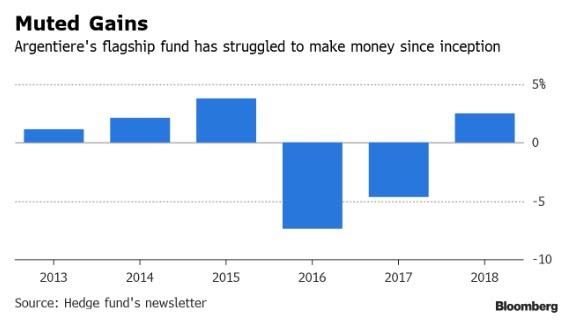
The fund's premature end comes shortly after Gulati told investors at the end of 2018 that markets had finally seen “the end of the ultra-low volatility regime” and a strategy based on swings in prices “appears to be a very attractive asset class to own.” Alas this was not meant to be, as Powell shocked markets after he capitulated just a weeks later, resulting in a historic plunge in the VIX, which has collapsed from its December high, tumbling to a five-month low on Thursday as realized volatility suffered on its biggest drawdowns since 1928.

The decision to shutter its biggest fund follows an increasingly troubled time for hedge funds which bet on rising volatility (and all other hedge funds too), due to activist central banks which now openly advocate for higher asset prices and lower volatility. According to Eurekahedge’s Cboe Volatility benchmarks, hedge funds betting on volatility lost 6.1% in the first two months of this year, while those wagering on less turmoil made 2.8%.
As Bloomberg notes, Argentiere, which was named after a skiing village in the French Alps, was started by Gulati and a team of former JPMorgan prop traders in 2013 with $300 million. At its peak in April 2016, the fund managed as much as $2.4 billion, Gulati stopped taking fresh capital. Assets evaporated as investors pulled out and performance waned.
With central banks now actively micromanaging capital markets, hedge funds have found it next to impossible to generate alpha. A slew of hedge funds including Brenham Capital Management and Cumulus shuttered last year, leading to closures outnumbering launches for the third consecutive year, according to Bloomberg, citing data provider Eurekahedge.
Generating profits for clients that beat benchmark returns is also more complicated with the traditional fee structure at hedge funds, according to Steve Eisman: "It is hard to make alpha when you are charging 2-and-20” in fees, the Neuberger Berman Group money manager said in a Bloomberg Television interview Thursday. “As we get to a more normalized rate world, it will be easier, but that is a long road."
The bigger problem is that with the Fed's brief - and now failed - experiment with normalization now over, it is unlikely that central banks will ever allow a "more normalized rate world", one where price discovery is actually allowed, after prices quickly discovered 2,300 on the S&P in December. As such the future for hedge funds, who collected 2 and 20 to underperform a broader market which will never be allowed to drop by central banks, has never been more dire.
New Satellite Network Offers Clues Into Boeing 737 Max Crashes
Clues linking the recent Boeing 737 Max plane disaster to a prior, October 2018 crash came from outer space.
A new reported reveals that a satellite network is capable of tracking planes across the world, tracked the flight path of the Boeing 737 Max that crashed last Sunday. This data was critical in convincing the United States to ground the jet, following the lead of other countries around the world.
The FAA was convinced by the erratic, six minute flight of the Ethiopian Airlines plane, finding that it was close enough to an October 29th crash of another 737 Max off of the coast of Indonesia to "warrant concerns". After the data was reviewed, "it became clear -- to all parties, actually -- that the track of the Ethiopian Airlines flight was very close and behaved very similarly to the Lion Air flight," according to the agency's Acting Administrator, Daniel Elwell .
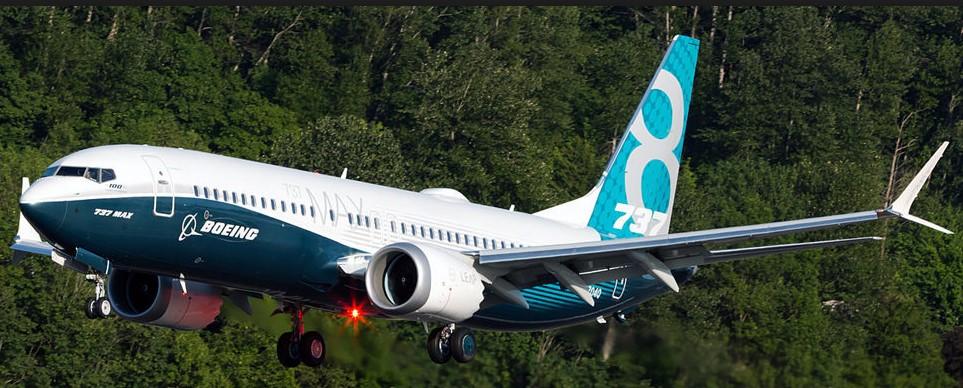
Marc Garneau, Canada's transport minister, also used satellite tracking to make his determination to ground the 737 Max.
The company that provides the flight tracking data is Aireon LLC - it was formed in 2012 by Iridium Communications and Nav Canada, a nonprofit entity that guides air traffic in Canada. Aireon will introduce a new commercial airline tracking service this week. Don Thoma, Aireon’s chief executive officer, said in an interview last month: "We now have a global picture of all aircraft. It’s finally real. It’s finally here."
This company shared the data with the United States NTSB and FAA, as well as several European authorities and various African aviation authorities. Initial tracks of the plane from an Ethiopian ground station "weren’t consistent with how aircraft fly and weren’t credible". It was only after authorities reviewed the Aireon data that concerns were raised.
October's Lion Air 610 crash experienced more than "two dozen short dips shortly after takeoff" according to the article. Indonesian investigators said that the plane was automatically commanded to dive because of software known as Maneuvering Characteristics Augmentation System (MCAS). The software misinterpreted the plane as being in danger of losing lift on its wings.
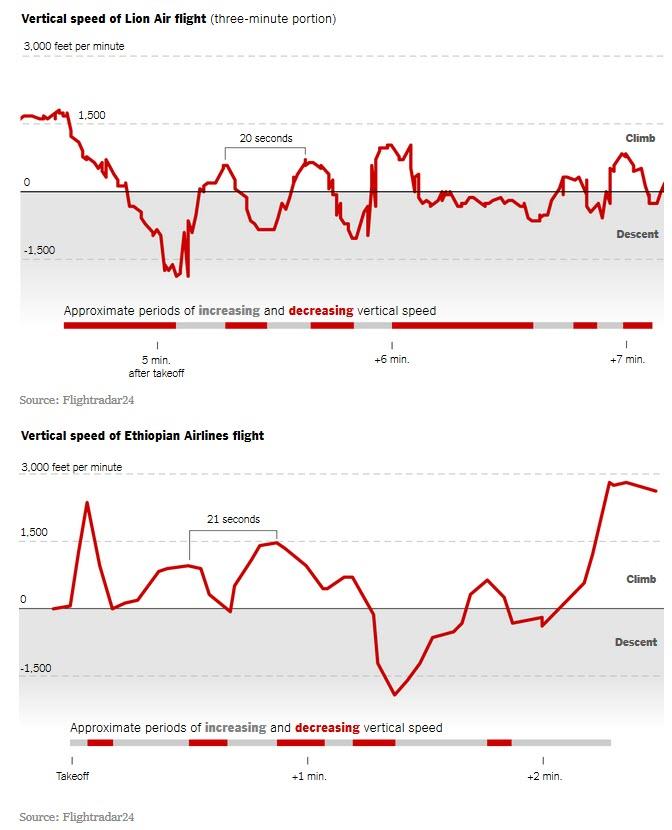
Boeing put MCAS in its planes as a protection against an aerodynamic stall, but in the case of the October flight, a sensor malfunction signaled that the plane was in danger when it wasn’t, causing it to dive automatically. Rather than switch off the motor triggering the dives, the pilots tried to counteract it with their controls until it dove into the sea.
The Ethiopian flight showed similar "highly unusual descents followed by climbs".
Peter Goelz, a former managing director at the NTSB said: "It certainly puts a magnifying glass on the MCAS system. There’s an implication that there were two similar accidents and that it likely involved the interaction of the MCAS system with the flight of the aircraft."
Kevin Durkin, an aviation lawyer, said: "If you have a defective product and it turns out Boeing knew about it, this could easily expose them to punitive damages. The standard is whether the company engaged in conduct with a 'conscious indifference to the safety of others'."
Beyond just legal damages, however, is the reputational that Boeing will likely suffer: as noted earlier, in a worst case scenario, some $600 billion in Boeing 737 Max orders could be at risk should prospective be put off by how Boeing has handled the two, seemingly linked disasters.
"It Feels Like VIX Is About To Jump": 3 Reasons Why Goldman Will Sell On "Freaky Friday"


With traders puzzled by the sharp rebound in stocks from last week's modest selloff, earlier today we reported that Nomura's Charlie McElligott had a theory that explained said market move higher, one which revolved around three catalysts:
- Buybacks (Healthcare, Tech, Industrials and Fins are the top 4 S&P sectors today and are 4 of the top 5 Buyback desk ‘executed’ sectors, with Mutual Fund Overweights / Megacaps +1.4% vs S&P +1.0% and RTY +0.8%, respectively)
- Overwriters continue to systematically roll-out into Friday’s Quad Witch OpEx, driving a dealer “delta-grab” and further spurring mkt gains
- Finally, VIX term-structure continues to compress and steepen further into contango, with systematic roll-down strats in “high cotton” again shorting volatility (VIX back to Oct 3rd / pre-Powell “a long way” from neutral on interest rates comment the following day)
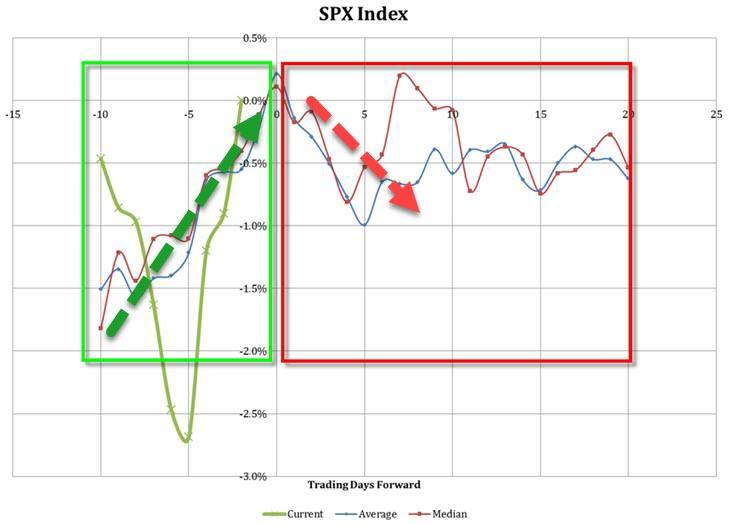
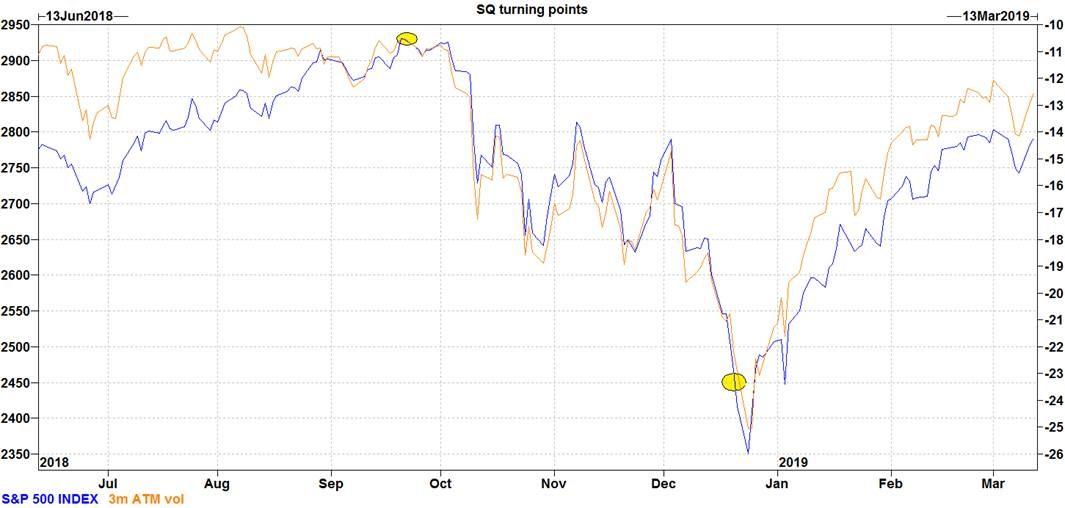
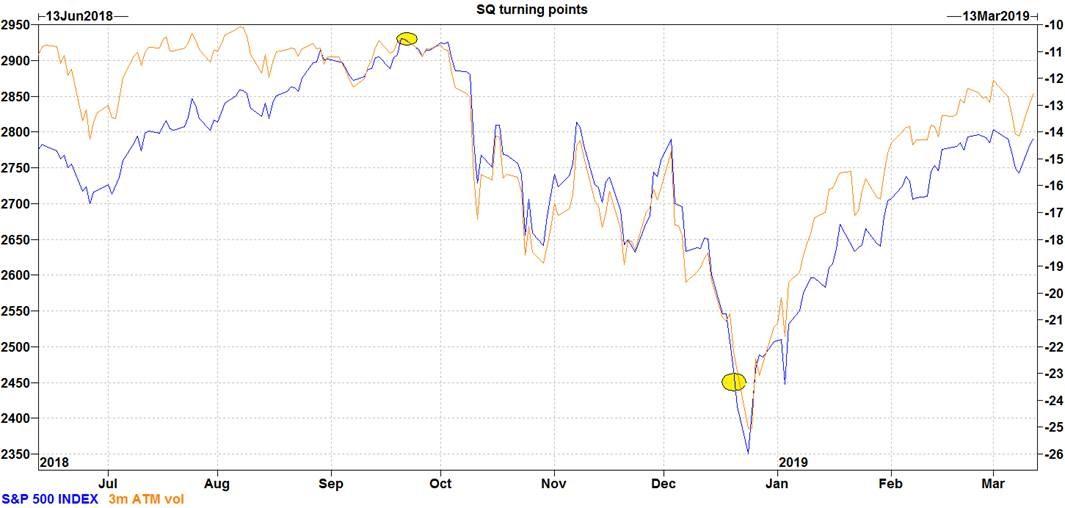
Of these three, the key driver was simple - the notorious March Quad Witch, i.e. "Freaky Friday" (as a reminder the last two quads took place at key inflection points: the 21st Sep print of 2940 preceded a three month equity selloff of almost 20%, followed by a 21st Dec print of 2458, or 16% below current spot).
The "March Surprise" window-for-stock-pullback scenario has anticipated this type of “melt-up” into Friday’s options expiration, as that’s the seasonality of “up into OpEx, down out of OpEx" shown on the chart below.
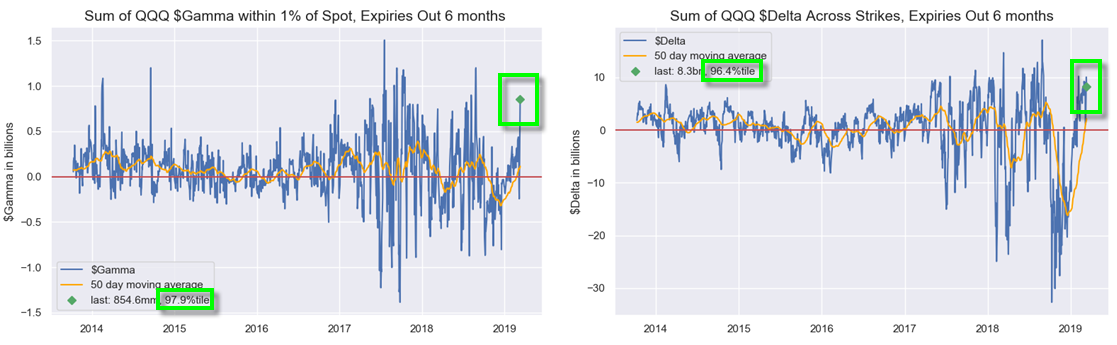
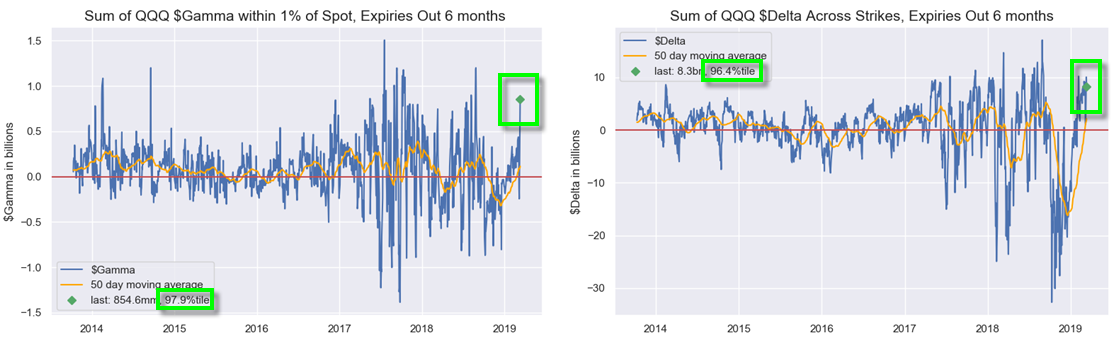
And speaking of the "extreme" gamma and delta positioning, McElligott noted that the sum of Nasdaq Gamma within 1% of spot is currently in the 98th %ile, while the sum of QQQ Delta across strikes is 96th %ile, which explains the forced dealer delta grab via overwriter roll-outs CEASE and aligns with the buyback blackout commencement.
The electronic ink was barely dry on McElligott's note when Goldman's vol trader, Moran Forman, magically came out with "his own" take on the upcoming market reversal, which surprisingly also revolved around two things: an anticipated slide in dealer long gamma positions (just as Charlie noted above), and the drop in buyback activity (an idea which again was "inspired" by, well, see above).
Whatever the source of Mr. Forman's analysis, the Goldman trader is correct that after Friday, 2 major "vol-dampening" forces will be gone, meanwhile with Trump also kicking the China Trade can down the road into April (at the earliest), Goldman writes that "it feels like VIX creeps higher again."
To summarize Goldman's three catalysts for market turbulence:
- BUYBACK BLACKOUT WINDOW: 3/25/19 – 5/3/19 desk models +75% of S&P co’s are in their dormant period for discretionary buybacks, which typically corresponds to a -35% decline in activity for the biggest buyer of US Equities link
- TECHNICALS: Moran references Goldman chief technician Sheba Jafari’s call, which is bullish on a break above 2817 and bearish below 2798
- VOLUMES: Yesterday’s break higher came on the lowest cash volumes YTD (5.7bn shares) yet elevated options volumes +10% vs YTD, focused mainly on buyers of short-dated upside spurring the spot up/vol up dynamic.
Forman's full note is below:
"Freaky Friday"
The last two quarterly SQ prints occurred right around market turning points. 21st Sep print of 2940 preceded a three month equity selloff of almost 20%, followed by a 21st Dec print of 2458, or 16% below current spot.
Technically, there are a number of important points between 2798-2817 – which leads our technical analyst Sheba to conclude buying on a break above 2817, or selling tactically if we fail to break (target 2706).
Today was the first day in a few weeks we saw spot higher with vol higher (1m vol +0.4v), and we started to see upside chasing from the macro community. Positioning is still very light, as seen below in the long/short ratio of the GS PB Book. Bad data is being excused by the shutdown and seasonality, and investors seem more buy-the-dip than sell-the-rally.
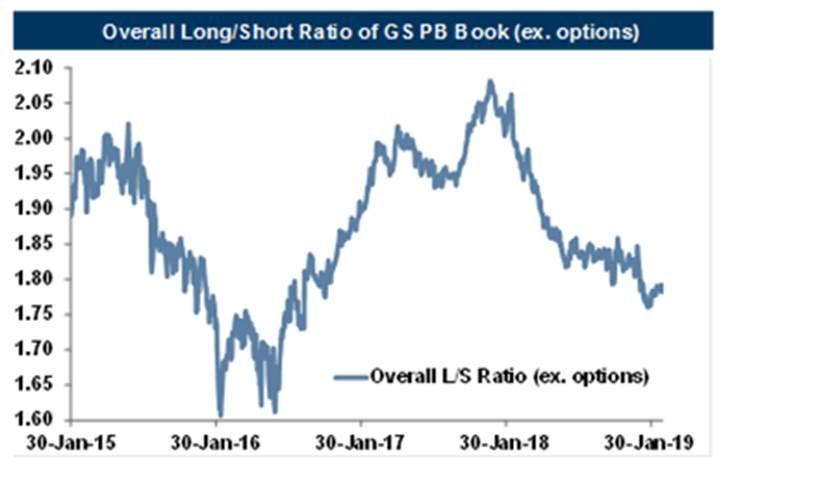
We have seen systematic vol selling pick up as realized has trickled lower with term structure steepening. As we view vol selling as part of the global search for yield, it is perhaps not surprising that this flow has picked up, with 10y yields 60bps off the Q4 highs. The correlation between yields and equities has been consistently positive in the post crisis era. The current equity rally, with bonds stable, is testing whether we have shifted into a different, dovish Fed regime that allows for growth, higher inflation and less hikes.

As most of our flow has been rolling out March optionality farther out the curve, we believe some of the market long gamma will roll off dealer books this Friday.
* * *
Bottom line: If the last two quad-witches were any indication, the market's recent melt up is about to come to an abrupt end.
After Hours Summary: AVGO +5%, PVTL / ORCL -4%, ADBE -2.5% among the notable earnings/guidance moversAfter Hours Gainers:
Companies trading higher in after hours in reaction to earnings/guidance: CATS +13.4%, ASUR +6.1%, AVGO +5.4%, ULTA +3.5%, HTHT +2.4%
Companies trading higher in after hours in reaction to news: KPTI +21.1% (announces FDA extension of review period for selinexor New Drug Application; PDUFA action date extended by three months to July 6, 2019), ORGO +5.6% (announced new $100 million credit agreement with Silicon Valley Bank and MidCap Financial) ADMP +5% (announces FDA acceptance of NDA for its higher dose naloxone injection product candidate ), HIIQ +3.2% (expands common stock repurchase authorization by additional $100 mln), GNW +2.4% (Genworth Financial and Oceanwide extend merger agreement), NWL +1% (announces retirement of CEO Michael Polk, effective at the end of the second quarter)
After Hours Losers:
Companies trading lower in after hours in reaction to earnings/guidance: ASNA -20.6%, HEAR -12.6%, TLYS -7.5%, DOCU -7.4%, ZUMZ -6.2%, NDLS -5.1%, TUSK -4.7%, PVTL -4%, ORCL -3.9%, ADBE -2.5% (also will replace Twenty-First Century Fox in the S&P 100)
Companies trading lower in after hours in reaction to news: KOPN -16.1% (proposed public offering of common stock), MTNB -10% (commences underwritten public offering of common stock), ZG -3.1% (downgraded to Underweight from Equal Weight at Barclays), TRTX -3% (announces public offering of 6.0 mln shares of common stock), SCM -2.1% (light volume; announces public offering of common stock), TRTN -2.1% (announces secondary offering of 7,132,790 common shares by selling shareholders and repurchase by the company of 1.5 mln common shares), FB -1.7% (Chief Product Officer Chris Cox has left the company, also WhatsApp VP Chris Daniels), HR -1.3% (announces public offering of 3.25 mln shares of common stock), OKTA -1.1% (files mixed securities shelf offering), BABA -0.6% (Alibaba's Jack Ma and Joseph Tsai affiliated entities adopt Rule 10b5-1 share sales plans)
>>> Up
* Cerved Upgraded to Buy at HSBC; Price Target 10 Euros
* Galenica Upgraded to Buy at Kepler Cheuvreux; PT 54 Francs
* Dufry Upgraded to Buy at Baader Helvea; Price Target 116 Francs
* GEA Group Upgraded to Overweight at Barclays; PT 28 Euros
* Raiffeisen Raised to Equal-weight at Morgan Stanley
* Voltabox Upgraded to Hold at Commerzbank; PT 17.35 Euros
>>> Down
* Bakkavor Downgraded to Sell at Berenberg
* Bakkafrost Downgraded to Sell at DNB Markets; PT 400 Kroner
* Britvic Downgraded to Neutral at Citi
* Cairn Energy Downgraded to Sector Perform at RBC; PT 2.25 Pounds
* Greencore Group Downgraded to Hold at Berenberg
* Grieg Seafood Downgraded to Sell at DNB Markets; PT 110 Kroner
* Leroy Downgraded to Sell at DNB Markets; PT 63 Kroner
* Mowi Downgraded to Sell at DNB Markets; PT 170 Kroner
* Norway Royal Salmon Cut to Sell at DNB Markets; PT 170 Kroner
* Salmar Downgraded to Hold at Berenberg
* Scottish Salmon Downgraded to Sell at DNB Markets; PT 16 Kroner
* Schaeffler Cut to Hold at Pareto Securities; PT 7.50 Euros
* Wirecard Downgraded to Sell at Citi; PT 100 Euros
>>> Initiation
* B&M European Reinstated Overweight at Barclays; PT 4.50 Pounds
>>> Call