FT : Warren Buffett’s Berkshire Hathaway grows cash pile to $128bn

Warren Buffett’s Berkshire Hathaway grows cash pile to $128bn
Sage of Omaha has struggled to find large acquisitions to boost returns

Berkshire Hathaway grew its cash pile to a record $128bn in the third quarter, as Warren Buffett struggled to find large acquisitions to boost Berkshire’s returns. 

Mr Buffett has gone nearly four years since completing a major acquisition, forcing him and Charlie Munger, his longtime business partner and vice-chairman of Berkshire, to look elsewhere to invest their cash hoard. 

Berkshire’s holding of cash or short-term Treasuries marks an increase from the $122bn it held in the prior quarter, the company said on Saturday as it reported third-quarter earnings.

Bill Smead, chief executive of Smead Capital Management, said Mr Buffett had not found an attractive M&A target and could be building the “monstrous cash hoard in the event Buffett or Charlie Munger — the masterminds of Berkshire — go into the hospital”. Mr Buffett is 89 years old and Mr Munger is 95 years old.

Mr Smead said Mr Buffett could also be waiting to deploy Berkshire’s cash in the event the stock market faced a bear market akin to the 1987 crash.

As the cash pile grows, so too do profits from its vast business empire. The group posted a record $7.8bn in quarterly operating profit in the third quarter, a 14 per cent rise from the same period last year. These profits reflect earnings from Berkshire Hathaway’s businesses, but do not include paper gains from its investment holdings, which fluctuate with the stock market. When these are included, the group’s overall profits were reported to have eased to $16.5bn in the quarter from $18.5bn for the same period in 2018.

“These are very strong results reflective of a strong domestic economy despite all of these challenges,” Jim Shanahan, an analyst with Edward Jones, said. The gains were driven by strong results from its railroad, utilities and insurance companies, he said.

Berkshire bought back about $700m of its own shares in the third quarter, bringing its total buybacks for the year to $2.8bn. The Omaha, Nebraska, conglomerate changed its buyback policy last year, and some shareholders are frustrated that the company hasn’t spent significantly more cash repurchasing its stock.

In addition to Berkshire’s portfolio of businesses, the group has expansive stock holdings dominated by shares in financial companies. American Express and Wells Fargo are among the group’s biggest holdings, while Apple stock, which Berkshire first bought in 2017, is now the largest.

The value of Berkshire’s shares in the iPhone maker grew $7bn to $57bn in the third quarter as Apple stock rose. Further gains by Apple in the fourth quarter so far have pushed that holding to $65bn, marking a $25bn paper gain for Berkshire this year alone.

In his annual letter to shareholders earlier this year, Mr Buffett said “sky-high” prices meant the likelihood of putting the excess money to work in a large deal was “not good.”

“That disappointing reality means that 2019 will likely see us again expanding our holdings of marketable equities,” he said. “We continue, nevertheless, to hope for an elephant-sized acquisition.”

BArron's : Germany’s Economic Malaise Hasn’t Hit the Stock Market — Yet

Germany’s Economic Malaise Hasn’t Hit the Stock Market — Yet

The German stock exchange has outperformed most other Western bourses this year—but the German economy has become the slowest-growing in Europe.

There are reasons for the disconnect between the country’s markets and its real economy, notably the fact that the big German companies have a global footprint that makes them little dependent on their domestic market. But that benefit may fade if the global slowdown worsens into a serious recession.

The DAX stock index, up about 24%, is outperforming comparable stock markets in Western economies including the S&P 500’s 21% gain and the French CAC 40’s 22% climb.

The German economy, meanwhile, is unquestionably slowing. The country’s economic ministry on Oct. 17 downgraded its gross domestic product growth forecast for this year and 2020 to 0.5% and 1%, respectively. That will put Germany near the bottom of Europe’s growth charts this year. Only Italy, whose economy isn’t expected to expand this year at all, will fare worse.

As Europe’s powerhouse, Germany is dragging down the region’s economies. The German government seems deaf to the many voices, within and outside the country, urging it to do something. It can argue that the causes are beyond its control. Uncertainties due to trade war threats, Brexit, and emerging countries were bound to hit Europe’s largest export-oriented economy.

The travails of Germany also raise the question of whether the country is experiencing a temporary malaise or going through the first signs that its economic model needs readjusting.

Every indicator in the last few months points to the risk that Germany has entered a technical recession, defined as two consecutive quarters of declining gross domestic product. Germany’s GDP shrank 0.1% in the second quarter. That in itself wouldn’t be a major sign of worry if the recession stayed, indeed, “technical,” and looked like just a bump in the road. But this is not the case. On the contrary, there are now signs that the troubles of Germany’s manufacturing industry, where everything started, now are affecting the rest of the economy.

According to the Munich-based ifo Institute for Economic Research, which publishes a monthly indicator on economic sentiment closely watched by market analysts and policy makers, “in manufacturing, the business climate has only one direction: downward.”

“Whatever the reasons for the slump, the problem now is that we are seeing the beginning of a spillover in the services sector,” says Nadia Gharbi, an economist at Pictet, the Swiss private bank.

Marcel Fratzscher, who teaches at Humboldt University in Berlin and heads the DIW-Berlin economic institute, notes that Germany’s economy has “strong fundamentals.” At 3.1%, the unemployment rate is still the lowest in Europe and half the European Union average.

And Germany’s Federal Statistics Office noted this week that the number of people employed kept increasing in September, albeit at a slower rate than in months past. But as Fratzscher notes, there may come a time when the economy’s problems show up in the unemployment numbers. That could be the moment when the morale of German consumers, whose spending helped cushion the blow from shrinking trade this year, will start to falter.

Barron's : There’s Gold in Salmon. Here’s How to Play the Boom.

There’s Gold in Salmon. Here’s How to Play the Boom.

Salmon is increasingly in demand from health-conscious consumers around the world. Yet the salmon industry remains unfamiliar to U.S. investors because it is centered in Norway, where more than half of the world’s farmed salmon is produced.
The industry’s growth prospects look good, thanks to annual demand growth in the mid-single digits, largely unpenetrated markets in Asia, and salmon’s small market share relative to meat.

The combined market value of the 10 leading companies is around $30 billion, comparable in size to the top U.S. meat producer, Tyson Foods (ticker: TSN). The Oslo bourse is the main market for the major producers. The industry leader, Mowi (MOWI.Norway), has a market value of $13 billion and is the only one with liquid U.S. shares (MHGVY), which trade around $25. Other leading salmon producers include SalMar (SALM.Norway) and Lerøy Seafood Group (LSG.Norway). The stocks trade for an average of 17 times projected 2019 earnings and yield an average of 4%, reflecting high dividend payout ratios.
“There is huge potential for the salmon industry,” says David Marcus, manager of the Evermore Global Value fund (EVGBX). “As the world gets wealthier, people want to eat healthier and that means more salmon.”

Note: $1 USD = 9.20 Norwegian Kroner (NOK); E=Estaimte; N/A=Not applicable
Sources: Bloomberg; Carnegie Investment Bank
More than three million metric tons of salmon—both farm-raised and wild—are produced annually, against more than 100 million tons each for poultry and pork. Beef is about 60 million tons. Supply is expected to grow at a modest 5% annual pace in the next five years because of regulation on new farms in Norway and other major producing countries.
Salmon costs more than most cuts of meat, which is a brake on demand. The wholesale price of farm-raised salmon is about 55 Norwegian kroner per kilo, or about $3 per pound. A krone is worth about 11 cents.
While foodies may prefer wild Chinook, most of the U.S. market is supplied by farm-raised salmon that arrives fresh or frozen by air. Indeed, more than 70% of the global salmon market is farm raised, largely in cold sea waters, like those off Norway, as well as off Chile, Scotland, and Iceland.
Like the meat business, the salmon industry has practices that have come under scrutiny. Salmon farms use netted cages that can measure 90 feet across and 30 to 50 feet deep. While profitable—leading companies often reporting operating profit margins of 15% or higher—the crowded pens can be a breeding ground for sea lice, which attack and kill salmon, and deadly algae blooms.

One company, Atlantic Sapphire (ASAME.Norway), has positioned itself as an eco-friendly alternative, and it has been the hottest salmon stock this year. Using saltwater and fresh water pumped from large underground aquifers, Atlantic Sapphire is raising salmon in large tanks and aims to target the U.S. market. It plans to begin production next year at the world’s largest onshore facility near Miami.
“This could be the most sustainable way to produce protein in the world,” says CEO Johan Andreassen. “Salmon is mostly imported into the U.S. It leaves an enormous carbon footprint and is costly.” Transportation costs are about $1 per pound.
Atlantic Sapphire’s thinly traded shares are up 57% this year to 108 Norwegian kroner, giving it a market value of $800 million. Marcus thinks it could generate $90 million of annual earnings before interest, taxes, depreciation, and amortization by 2022 and more than double that by 2026.
The company has raised salmon using a similar technology at a Danish plant. Now, it needs to demonstrate that it works on a larger scale. The Florida site has both salt and fresh water and the ability to send wastewater down thousands of feet into the ground. “I can make a bold statement that we will have zero impact on coastal areas and the ocean,” Andreassen says.

He says the company may consider a U.S. listing, which would boost its profile, especially with ESG-focused investors. The University of Michigan endowment is one of its largest holders.
Mowi benefits from vertical integration, scale, geographic diversification, and a well-regarded management team. Its results—and those of rivals—have been uneven, however, because of cost and price swings. Spot salmon prices recently hit a four-year low of 47 kroner per kilo due to high supply growth in the third quarter before rallying to a recent 54 kroner. This past week, Mowi said third-quarter operating profit fell almost 30%. Still, Mowi says it is “positioned for further profitable growth” as it plans to expand salmon volume by 11% this year, to 430,000 metric tons, and by 5% in 2020.
Marcus is partial to Salmones Camanchaca (SALMON.Norway), a leading Chilean producer. Its shares, at 66 kroner, are off 20% this year. Harvest volumes and profits fell sharply in the second quarter because of sea lice and algae blooms. “The valuation is so attractive that it factors in issues like sea lice, which is an industry problem,” Marcus says. Salmones Camanchaca trades for about eight times projected 2020 earnings, a discount to the group average of 13 and yields almost 5%.

Barron's : Fiat Chrysler-Peugeot Deal Could Be a Winner

Will a combined Fiat Chrysler Automobiles and Groupe PSA thrive in an automotive future filled with electric drivetrains and autonomous vehicles?

Assuming the proposed marriage clears political and regulatory hurdles, the Italian-American and French auto manufacturers both should benefit in the long term. But they’ll still face daunting challenges. In the short term, Fiat Chrysler investors look as if they’ll do better than PSA shareholders.

The biggest positive for both companies: “The name of the game for the global automotive industry is economy of scale. The more that you can commonize vehicles, the better off you’re going to be, as far as your total cost structure,” says Morningstar analyst Richard Hilgert, who is bullish on the deal.

Based on 2018 numbers, the merger would make the as-yet-unnamed auto maker the world’s third largest, with about 8.7 million vehicle sales, behind Volkswagen’s (ticker: VLKAF) 10.8 million and Toyota Motor’s 10.6 million, and ahead of General Motors ’ (GM) 8.4 million. Besides Peugeot, PSA’s (UG.France) brands are Citroën, DS, Opel, and Vauxhall. Fiat Chrysler’s (FCAU) include RAM, Fiat, Lancia, Chrysler, Dodge, Jeep, Alfa Romeo, and Maserati.

A prescient report by UBS analyst Patrick Hummel last spring, when the companies first seriously discussed a deal (later torpedoed by a failed mating dance involving Fiat Chrysler and Renault), projected annual savings of three billion to 6.6 billion euros ($3.34 billion to $7.35 billion) from full integration. The companies are shooting for €3.7 billion.

Peugeot’s emissions expertise should reduce the tab for helping Jeeps meet tough new pollution limits in Europe, where Fiat Chrysler sold a bit more than a million vehicles last year, compared with PSA’s 3.1 million for all its brands. The French company also has more modern vehicle platforms than Fiat Chrysler and is ahead of it in electrification. Combined, they’d have more money to develop e-vehicles and self-driving cars.

For PSA, the biggest benefits include gaining a ready-made launching pad—Fiat Chrysler dealerships—for its long-coveted return to the American market, which it fled more than a quarter-century ago. And although the all-stock linkup is being cast as a merger of equals, the French concern would hold more power, with Peugeot boss Carlos Tavares becoming CEO, and PSA holding six of 11 board seats. John Elkann, Fiat Chrysler’s chairman and a member of Fiat’s founding Agnelli family, will have the same title at the new company.

Tavares, a tough, driven executive viewed by many as one of the auto industry’s savviest leaders, has helped PSA improve the quality, profitability, and attractiveness of its vehicles. More relevant to the merger, he’s been able to meld different industrial cultures, quickly making GM’s former chronically money-losing German-British Opel/Vauxhall unit profitable after Peugeot acquired it in 2017.

PSA’s strength in Europe will bolster Fiat Chrysler there. In turn, Fiat Chrysler’s financial power—it reported robust quarterly earnings of $2.2 billion Thursday, before one-time charges produced a $200 million net loss—will be a boon for PSA. Both are players in Latin America, but markets there have been weak in recent years.

Under the deal, the new company’s shares will be split 50-50 between the two stockholder bases. Arndt Ellinghorst, an Evercore ISI analyst, argues that, after all balance-sheet, operating, stock-market value, and profitability factors are considered, PSA is paying about a 20% premium for Fiat Chrysler. That’s why, at midday Friday in New York, Fiat Chrysler was trading at $15.68, up 19.4% on the week, while PSA was at €23.28 in Paris, down 6.3%.

Longer term, investors from both sides should gain. Ellinghorst sees the new company’s margins, based on earnings before interest, taxes, depreciation, and amortization (Ebitda), hitting 12.5% in 2021 and 12.7% in 2022, versus 11.7% and 11.1% for PSA and Fiat Chrysler, respectively, last year.

As part of the transaction, Peugeot is expected to distribute to shareholders its €2.75 billion stake in Faurecia, an auto-parts maker, according to The Wall Street Journal, while Fiat Chrysler holders would get €5.5 billion from a special dividend and the sale of its Comau automation and robotics unit.


On the negative side, Hilgert observes: “Each of the countries that [Peugeot and Fiat Chrysler] operate in is looking at their company as a national champion, so they want to protect the manufacturing footprint within each of their countries.” Forget about boosting efficiency by curbing employment or shuttering unneeded factories in France or Italy. In addition, the U.S.-Canada-Mexico trade pact that will replace Nafta has rules aimed at boosting U.S. vehicle content and protecting American jobs.

Another problem is that both companies are weak in China, the world’s biggest market. Hilgert thinks that “Jeep has a pretty good shot in China. I’m not so confident on the Peugeot side.”

Perhaps the biggest challenge: French cars never were popular in the U.S.; Peugeots had a reputation for quirkiness and unreliability. (Fittingly, Columbo, the clever but clueless hero of the classic 1970s’ TV detective series, drove a ratty Peugeot convertible.) Today’s Peugeots are light years ahead of yesteryears’, but so are all other cars. Fiat Chrysler has had little success in peddling Italian Alfas and Fiats to Americans. Betting that it will do better with French Peugeots looks like a long shot, especially with a global auto downturn seemingly unfolding.

FT : How one franc turned LVMH into the world’s largest luxury group

How one franc turned LVMH into the world’s largest luxury group

A symbolic one franc. That is all that Bernard Arnault paid for Boussac, a near-bankrupt textile company, back in 1984.

From this tiny acquisition, Mr Arnault built LVMH over the past four decades into the world’s largest luxury group by revenues and became Europe’s richest man in the process. LVMH’s €46.8bn sales last year were more than three times the size of its nearest rival, Kering. 

This growth has been propelled by Mr Arnault’s voracious appetite for dealmaking. Initially, he was drawn to struggling textile company Boussac because it owned one particular jewel that he wanted to get his hands on: luxury brand Christian Dior. From there Mr Arnault used Christian Dior as the cornerstone on which he has followed up with 40 or so more acquisitions. 

After snapping up Boussac, Mr Arnault’s course was confirmed in 1989 when he engineered a majority stake in LVMH, itself the product of a merger between fashion house Louis Vuitton and champagne and cognac producer Moët Hennessy.

He then ousted the Louis Vuitton president Henry Racamier from his family company. Mr Arnault went on to deploy the same tactics of ousting founders, dividing families or driving a wedge between business partners in order to make other acquisitions such as Givenchy, Château d’Yquem and Duty Free Shoppers.


Mr Arnault has used deals as a way to expand beyond LVMH’s roots and enter new sectors.

For example, in 2006 he bought luxury hospitality group Hotels Cheval Blanc. LVMH further extended its reach into luxury experiences in December last year with the $3.2bn acquisition of travel and hospitality group Belmond, owner of the Hotel Cipriani in Venice and the Orient Express. 

Only rarely in Mr Arnault’s extensive history of dealmaking has he missed out on a prized target.

His biggest defeat came 20 years ago when French industrialist François Pinault emerged victorious against him in a long-running and acrimonious battle for control of Italian luxury brand Gucci. Mr Pinault used Gucci as a linchpin to build his own luxury empire: Kering. 

And Mr Arnault’s one other notable miss was Hermès, the French brand known for its Birkin handbags and silk scarves.

About a decade ago, LVMH began secretly amassing shares in Hermès, using derivatives contracts with different banks to stay below the disclosure threshold.


The Dumas family who owned Hermès did not realise what was happening until it emerged in 2010 that LVMH owned 17 per cent of the company.

Mr Arnault always maintained that he had only “good intentions” vis-à-vis Hermès and no plan to take control. But the Dumas family thought otherwise, believing it to be a corporate assault. 

They successfully went to court to prevent LVMH and the Arnault family from mounting a takeover, although Mr Arnault still had a victory of sorts as he made money when he sold out of Hermès.

Earlier this week, LVMH confirmed that it was pursuing another high-end brand, US jeweller Tiffany & Co.

If successful, the $14.5bn deal would mark Mr Arnault’s largest-ever acquisition and push LVMH further into hard luxury, giving it a portfolio of jewellery assets to rival that of Richemont.

Age does not appear to have dimmed 70-year-old Mr Arnault’s hunger for deals. He told the Financial Times this year: “We are still small. We’re just getting started . . . We are number one, but we can go further.”

WSJ : Megamergers Become a Possible Lifeline for Under-Pressure Car Industry Tra

Megamergers Become a Possible Lifeline for Under-Pressure Car Industry
Trade wars, tech upstarts, slumping markets have all combined to drive auto consolidation

The proposed merger of Fiat Chrysler and Peugeot applies an old auto-industry recipe to new challenges: Use size to boost profit amid changing consumer habits and the most-expensive technology transition in years.

The tie-up would be the biggest car combination since Daimler acquired Chrysler two decades ago. Smaller deals followed, some of which have worked—notably Fiat’s acquisition of Chrysler. But DaimlerChrysler’s messy divorce in 2007 triggered an industrywide reevaluation of the merits of big, full-blown mergers.

Fiat Chrysler Automobiles FCAU 2.74% NV and Peugeot owner PSA Group of France are now giving that tarnished strategy another try. If successful, the combination would create the world’s third-largest auto manufacturer by sales and transform competition around the world, putting others under pressure to consolidate or take other measures to stay in the race.

General Motors Co. , Ford Motor Co. F 3.49% and Chrysler once ruled the auto world, but have been retreating from or struggling in foreign markets for years as Toyota Motor Corp. and Volkswagen AG extended their reach.

A new challenge is coming from upstarts like Tesla Inc. and Uber Technologies Inc., along with regulatory requirements to limit greenhouse gas emission. The old guard is now committed to spending hundreds of billions of dollars to build electric cars with no certainty that battery-powered vehicles can become the new mass-market ride.

Meanwhile, a new global giant is emerging in China. In 2010, Geely Automobile Holdings Ltd. acquired Volvo Cars from Ford for $1.8 billion. Since then, it has also gained a 10% stake in Germany’s Daimler, becoming its largest single investor, and stakes in Swedish truck-and-bus maker Volvo AB, British sports-car brand Lotus and Malaysia’s Proton Holdings Bhd.

All this is happening as demand for cars is slumping in a cyclical swing some experts fear may have a structural dimension. Surveys show millennials and younger consumers are increasingly reluctant to buy cars for financial or environmental reasons.

The global auto industry, which sold almost 96 million cars world-wide in 2018, is losing momentum. New-car sales were off slightly last year and are expected to decline around 4% this year. The slump, exacerbated by the U.S.-China trade war and Brexit, is likely to last for five years or more, Continental AG , a big global auto supplier, said last week.

After the DaimlerChrysler debacle, the industry settled for looser alliances, such as the cooperation between Renault SA, Nissan Motor Co. and Mitsubishi Corp.

But Sergio Marchionne, the legendary Fiat Chrysler chief who died last year, was a persistent advocate for deeper ties. He drafted a 25-page manifesto in 2015 imploring the industry to share the costs of developing parts most customers never notice, such as engines in small cars.

“It’s duplicative, does not deliver real value to consumers and is pure economic waste,” the report said of the separate spending by auto makers.

The current crisis of overcapacity has buttressed Mr. Marchionne’s argument posthumously. As car sales flat-line, there isn’t enough demand to keep all the world’s car factories humming.

Volkswagen, for example, has been cutting output in its German factories since the beginning of the year. Other manufacturers such as Mercedes-Benz have eliminated some shifts to adjust to weaker sales.

Fiat Chrysler’s factories in Europe ran at about 52% capacity last year, well below the European industry average of 73%, according to LMC Automotive, and that was before this year’s accelerated decline in global auto demand.

John Elkann, the scion of the Agnelli family that controls Fiat Chrysler, bought into Mr. Marchionne’s vision. In the spring, he tried to merge Fiat Chrysler with Renault. But the deal fell apart amid troubles in the Renault-Nissan alliance after the last year’s arrest in Japan of its chief, Carlos Ghosn, on allegations of financial misconduct. Mr. Ghosn has denied all charges against him.

The planned merger with Peugeot could lend traction to the argument that a more thorough shakeout of the industry is needed to bolster profit and lessen waste by creating fewer but stronger manufacturers.

In Europe, Fiat Chrysler and Peugeot would have a combined 22.8% market share, making it the second-largest auto maker by sales after Volkswagen, which has 23.8% of the European Union auto market, according to the Association of European Automobile Manufacturers.

After its acquisition of GM’s European business in 2017, Peugeot revamped Opel, the German manufacturer, and Britain’s Vauxhall, more than doubling their European market share, and returning Opel to profit through cost-cutting and sharing technology with Peugeot. Adding Fiat Chrysler’s Jeep brand to its arsenal could help Peugeot chip away further at Volkswagen’s dominance of the European market.

Peugeot CEO Carlos Tavares, who is slated to take the reins of the combined company, won’t have the same advantage he had at Opel. GM did the heavy lifting before the sale, shutting down an Opel factory after a long battle with German politicians and unions. In the case of Fiat, Mr. Tavares would have wage those battles himself.

Volkswagen finance chief Frank Witter said the announced deal was “no surprise.” The German auto maker, which has extensive sharing of technology and components across its 12 automotive brands, doesn’t need a merger to navigate the industry turbulence, he said.

“We believe that with our strong portfolio and multibrand group we have the scale to successfully master the transformation,” he said.

The proposed merger would give Peugeot a foothold in the U.S., where Volkswagen has entered into a deal with Ford to develop self-driving car technology. Ford is also licensing Volkswagen’s electric-vehicle technology, and the two have plans for self-driving robotaxis.

Mr. Witter said the merger of Fiat Chrysler and Peugeot wouldn’t put Volkswagen and Ford under pressure to consider more far-reaching cooperation in the U.S. or Europe.

Lower-cost Asian manufacturers could feel a more direct impact, said Pedro Pacheco, a senior research director at Gartner Group, an industry and technology consulting firm.

“Together Peugeot and Fiat Chrysler will cover much bigger volumes and this will lead to more competitive prices in the market,” he said. “This could be a threat to some Asian manufacturers, the smaller ones such as Hyundai, Kia and some Honda models.”

Japanese auto makers historically have shied away from equity tie-ups. But they are now beginning to draw closer to their partners to better compete with overseas rivals in developing new technologies.

Toyota, for example, has been converting loose alliances with smaller Japanese auto makers into stakes, bringing the companies closer to achieve cost advantages.

In August, Toyota said it would buy a 4.9% stake in Suzuki Motor Corp. , its partner of three years, to help it expand in India and Africa, markets where Toyota has struggled to compete against low-price rivals. And earlier this month, Toyota said it would raise its stake in Subaru Corp. from 16.8% to over 20%.

Kiyoshi Fujiwara, executive vice president of Mazda Motor Corp., said his company’s experience suggests looser cooperation is enough to meet today’s challenges, and that the sort of full merger Fiat Chrysler and Peugeot are trying isn’t necessary.

Still, he said, “we are extremely interested in seeing whether it works or not.”

(ZH) How Iran Used Google To Disrupt 5% Of Global Oil Production Profile picture

How Iran Used Google To Disrupt 5% Of Global Oil Production

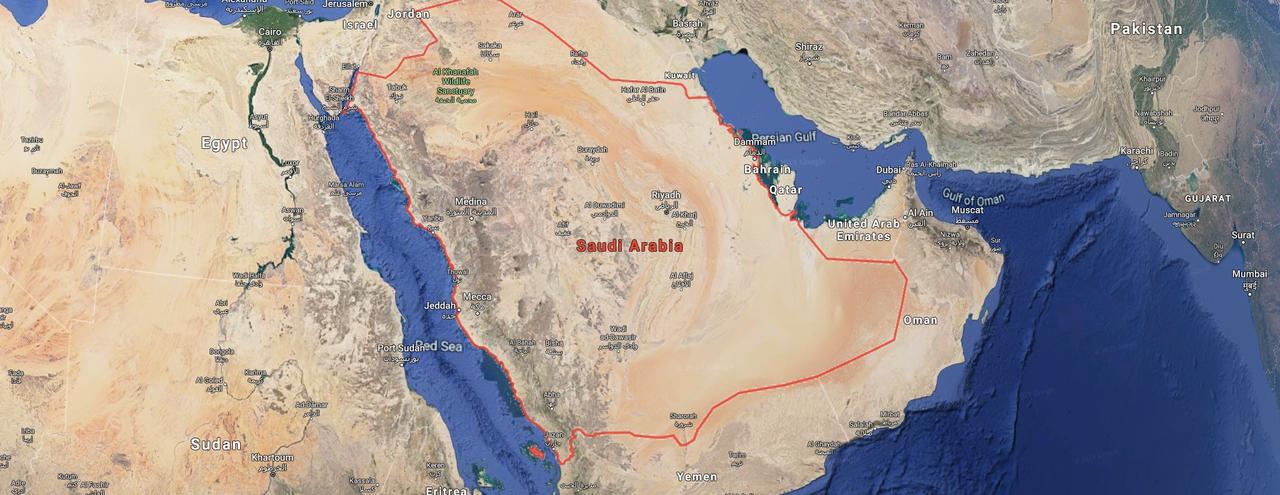
Officials at Saudi Aramco believe that Iran used satellite maps from Google Maps to precisely attack the oil facilities in Saudi Arabia in the middle of September, a U.S. Senator who visited the Kingdom after the attacks said, raising concerns that no energy infrastructure is safe.
Joe Manchin, Senator for West Virginia, visited Saudi Aramco facilities two weeks after the attacks. The U.S. Senator spoke to Aramco officials and shared part of his conversation during the North American Infrastructure Leadership Forum in Washington, as carried by the Washington Examiner.
On September 14, the Abqaiq facility and the Khurais oil field in Saudi Arabia were hit by attacks, which resulted in the temporary suspension of 5.7 million bpd of Saudi Arabia’s crude oil production, or around 5 percent of global daily oil supply.

U.S. President Donald Trump, Secretary of State Mike Pompeo, and Energy Secretary Rick Perry all blamed Iran for the attack. Saudi Arabia has also pointed the finger at Iran.
Senator Manchin was shown a video of the missile attacks in Saudi Arabia, he said at the forum.
The Senator asked a Saudi Aramco official whether the oil giant is concerned about someone working at the facility getting the information or the coordinates of possible strikes to hostile actors.
“He looked at me and said, ‘If we thought that was a problem, we would be, but basically it’s all Google, Google Maps.’ He said, ‘It’s so accurate,'” the Senator said, as carried by Washington Examiner.
The revelation that clear images on Google Maps can help terrorists target oil and gas facilities had Senator Manchin worried about the state of the U.S. energy infrastructure, especially natural gas pipelines.
An attack on a single natural gas pipeline in the United States could lead to mass blackouts, Neil Chatterjee, chairman of the Federal Energy Regulatory Commission (FERC), said last month, discussing America’s energy infrastructure in the aftermath of the attacks in Saudi Arabia.

WSJ : Investors to Big Oil: Make It Rain

Investors to Big Oil: Make It Rain
Shareholders skeptical of fossil-fuel companies want more cash, but the pressure is straining balance sheets

Investors want just one thing from the world’s biggest oil companies: cold, hard cash. But it is becoming harder for the oil giants to deliver.

Companies such as Exxon Mobil Corp. XOM 3.00% , Royal Dutch Shell RDS.B 1.48% PLC and BP BP 2.08% PLC have long used hefty and reliable dividends to keep investors on board in a sector that has volatile profits tied to commodity prices. The importance of the payments has only grown recently, as investors have become wary of the companies due to short-term concerns about oil overabundance, and long-term fears that climate change and electric vehicles cloud the future of fossil fuels.

But as the companies throw money at investors through dividends and share buybacks to keep them from fleeing, the payouts have begun to strain their balance sheets.

Exxon and France’s Total SA TOT 1.12% haven't generated enough cash this year to cover new expenses and dividends, according to FactSet data and company disclosures. BP was able to cover its dividend, but the company’s debt levels rose relative to its market capitalization. Shell needed asset sales to help cover dividends and buybacks.

Energy has been the worst-performing sector of the S&P 500 for more than a decade, and the third-quarter earnings have continued a lackluster streak that has lasted throughout the year.

Exxon, which remains under pressure to return to its practice of buying back billions of dollars in shares annually, reported net income of $3.17 billion, down about 50% from the same period a year ago, but slightly better than what analysts had expected. Exxon increased its annual dividend in the first quarter, a step the company has taken for 37 years in a row.

The company announced that it would begin production next month at its massive new megaproject in the South American nation of Guyana, earlier than an anticipated 2020 startup. Guyana is one of several areas where Exxon is investing new sums to boost growth and returns in the future.

Unlike other companies that are buying back shares, Exxon “is increasing capital spending to increase growth,” Jennifer Rowland, an analyst at Edward Jones, said in a note. “Investor sentiment is likely to remain poor until the company starts to show positive results from its large spending program. This isn’t likely to occur until 2021 at the earliest,” she said.

Chevron Corp. CVX 0.06% reported net income of $2.6 billion from July to September, down from $4 billion in the same period in 2018. The company increased share buybacks to $1.25 billion in the quarter.

Shell’s U.S. shares fell 3.5% Thursday after the company warned that it might not finish buying back $25 billion in shares by 2020 as originally expected. BP’s U.S. shares fell by more than 3.3% Tuesday after BP reported a loss and failed to increase its dividend.

Oil-and-gas companies now make up about 5% of the S&P 500 index, down from 14% a decade ago, according to Evercore ISI. Their middling recent returns limit their ability to step up shareholder payments that investors increasingly demand as a key step that would bring them back into the sector.

“Eventually, oil demand is going to go down,” said Kevin Holt, a senior portfolio manager for Invesco Ltd., which has more than $1 trillion in assets under management. “With that question of terminal value, it’s even more important that companies ramp up the cash return. Why grow the business if we won’t need as much oil in 20 years?”

While Mr. Holt says oil demand may not decline for two decades, investors now want more cash returns because companies spent too much when prices were high, setting the stage for poor performance when prices fell.

Investors have long gotten generous dividends from Big Oil. In the U.K., Shell and BP combined pay one in every seven pounds of the FTSE 100 dividend, said Jason Kenney, an analyst at Spanish bank Santander. Shell hasn’t cut its dividend since 1945.

Giant oil companies have found this harder to sustain since 2016, when oil prices plummeted to below $30 a barrel, from above $100. For at least two years, many big oil companies were generating a free cash flow that was either negative or below the combination of their capital-expenditure commitments and their dividends, said Mr. Kenney.

Chevron, the second-largest U.S. oil company, has been an exception to this trend. For years, Chevron spent far more on new oil projects than it generated from operations, but the company has entered a harvest mode in recent years as those developments began production. In the first half of this year, Chevron generated $7.3 billion in excess cash, more than enough to pay for about $4.5 billion in dividends and almost $1 billion in buybacks.

Chevron’s production rose 3%, and in the Permian Basin in Texas and New Mexico, output rose 35% compared with a year ago, up to 455,000 barrels of oil and gas a day. The company also said it expects costs in one of its flagship projects in Kazakhstan to rise by 25% from an estimate of about $36.8 billion three years ago to $46.5 billion. Exxon is also part of the partnership funding the development.

Many big oil companies have relied heavily on asset sales to help pay for buybacks, dividends and in some cases even fund new investments, as the amount of cash they generated wasn’t nearly enough to cover those costs. Since 2014, Exxon, Shell, BP, Total and Chevron have sold off more than $110 billion in assets, according to FactSet data.

That strategy worked as long as assets sold for a high enough price. But the lack of investor interest in fossil fuel companies has brought new challenges in this arena as well. BP sold off some U.S. assets at lower prices than expected in the quarter and was forced to book a $2.6 billion write-down.

Exxon has so far fared better as it launched a plan to sell $15 billion of assets by 2021. In September, the company announced a $4.5 billion sale of properties in Norway. Analysts at Mizuho Securities had pegged the value at about $3.3 billion. Exxon Chief Executive Darren Woods said the company reached about a third of its target, and the company continues to weigh potential asset sales in the Gulf of Mexico, Malaysia, Australia and Azerbaijan.

Exxon’s oil and gas production rose by about 3% to 3.9 million barrels a day in the third quarter, driven primarily by its massive ramp-up in the Permian Basin. It reported a third-quarter profit of $3.17 billion, or 75 cents a share, compared with $6.24 billion, or $1.46 a share, a year ago.

Exxon Vice President Neil Hansen said the company is also actively looking at potential acquisition opportunities as the value of other U.S. oil operators has fallen this year.

“It’s going to have to compete with what is already in our portfolio,” Mr. Hansen said in a call with investors. “The environment is generally pretty good. There are a lot of things to look at, there are a lot of things to consider.”

NY Post : Barneys stores to liquidate as retailer gets sold to licensing firm

Say goodbye to your Barneys store.

The iconic luxury retailer on Friday got sold to a licensing firm that plans to liquidate all seven of its existing locations after a rival bid to keep them in business failed to materialize.

Under a deal that marks the end of an era for chic, cutting-edge shopping, clearance sales are slated to begin in the coming weeks. The Madison Avenue location will be shuttered for good in February, said Jamie Salter, Chief Executive of Authentic Brands Group, a licensing firm that has scooped Barneys out of bankruptcy for $271 million.

This spring, the new owner will partner with Saks Fifth Avenue to open a nationwide chain of Barneys-branded boutiques inside department stores operated by Barneys’ old rival. That will include a 50,000-square-foot Barneys boutique occupying the fifth floor of Saks’ newly remodeled flagship in Manhattan.

In a Friday interview with The Post, Salter helped clear up confusion caused by conflicting announcements from ABG and Barneys’ landlord.

Instead of a Barneys store, the flagship’s building at 660 Madison Ave. will become an as-yet-unnamed venue for temporary art exhibits and other, non-Barneys-related “experiential” events, Salter said.

Some of the exhibits next year will involve ABG’s other 50 brands, including Marilyn Monroe, Judith Lieber, Elvis and Vince Camuto. It will occupy less than half of the nine floors and 230,000 square feet occupied by Barneys.

Despite those drastic changes, ABG plans to keep running Fred’s restaurant on the ninth floor, a longtime mecca for Midtown power lunchers, with plans to license out Fred’s to luxury developments overseas.

“We’ll use Madison Avenue as a lab and if we have success we’ll roll them out in other parts of the world,” Salter said.

Salter also said that the Barneys store in Boston — which was supposed to be the only store not to liquidate — will in fact close and be converted to a Saks Fifth Avenue store.

The luxury retailer’s landlord on Madison Avenue, Ashkenazy Acquisition Corp., on Friday said it had worked out a plan to “keep the Madison Avenue stores open in a smaller footprint for the next 12 months while we continue to explore longer-term solutions.”

Ashkenazy — which got blamed for Barneys’ August bankruptcy filing after it more than doubled the retailer’s rent on Madison Avenue at the start of the year — said it was “saddened by the loss of jobs for Barneys employees and the iconic standalone brand.”

Earlier Friday, Barneys Chief Executive Daniella Vitale stepped down. Barneys staff learned of Vitale’s departure through a companywide email after they gathered for a scheduled 9:30 a.m. meeting on Friday. The jobs of more than 2,000 employees face extinction.

“I am deeply sorry for all you have been through in the past year,” Vitale wrote in the memo. “Please understand that we tried very hard to keep this out of court and to find a solution before filing. We were saddled with many issues long before this began, ones that were unfortunately exacerbated by a difficult macro environment and the loss of the Madison arbitration. While there are some things that we might have done differently, I don’t believe it would have changed the end result.”