Tullow to take $1.5bn hit on oil price and exploration failures
Explorer has been under pressure after being repeatedly forced to cut production outlook
Struggling oil and gas producer Tullow Oil will take a pre-tax writedown of around $1.5bn in its full-year results as it reassesses the long-term price of oil and scraps failed exploration projects.
The FTSE 250 explorer said the impairment costs were the results of a reduction in its long-term accounting oil price assumption from $75 a barrel to $65 a barrel, write downs in the value of some African projects and write-offs of the costs of wells in licence areas it intends to abandon or cut planned activity.
Wednesday’s announcement comes a month after its share price fell 70 per cent as it was forced to slash its 2019 output expectations to a third of their levels at the beginning of the year and parted ways with its chief executive and head of exploration.
Dorothy Thompson, who has been installed as executive chair of the group, said that the group had been “working hard on a major review” since the December tumult.
“The fundamentals of our business remain intact: recent reserves audits demonstrate that we have a solid underlying reserves and resources base in West and east Africa, our producing assets continue to generate good cash flow and we retain a high-quality exploration portfolio,” she said.
Wednesday’s exploration writedowns centre on three disappointing drilling projects off the coast of Guyana, which the company had initially heralded as “potentially transformational”.
It had hoped to tap into the oil-rich waters off the South American nation, where ExxonMobil has discovered an estimated 6bn barrels equivalent of recoverable oil and gas. But the group revealed in announcements in November and this month these were unlikely to be commercialised.
Tullow expects to post production of 86,700 barrels of oil a day for the year, in line with what it had flagged last month. Full year revenue is expected to be around $1.7bn, with gross profit of around $700m.
For Apple, 2019 was a busy year, thanks to the iPhone 11 lineup, new AirPods, a strong focus on the Mac, and more. As we head into 2020, there’s even more to expect from Apple, including the iPhone 12, more powerful iPad Pros, and continued updates to the Mac.
Read on as we round up what to expect from Apple in 2020.
The first hardware announcement we expect from Apple in 2020 is a new low-end iPhone model. Reports from analysts including Ming-Chi Kuo have indicated that Apple is developing a new iPhone that serves as an iPhone 8 follow-up terms of design, but with a more powerful A13 processor.
Other than the A13 and a frosted glass back design, we expect this iPhone to be nearly identical to the iPhone 8: a 4.7-inch LCD display, Touch ID, a Home button, and large bezels at the top and bottom. Kuo has predicted that this iPhone model will start at $399 with 64 GB of storage.
What will Apple call this device? While it’s been commonly referred to as the iPhone SE 2, we don’t expect that to be the marketing name. One report has suggested that it might be called the iPhone 9, which makes sense, given its positioning between the iPhone 8 and iPhone X. iPhone marketing names are notoriously difficult to predict, however, so we’ll have to wait for Apple’s official announcement for confirmation.
Why is Apple releasing this iPhone SE 2/iPhone 9 in 2020? The goal is seemingly to incentivize those still using the iPhone 6 and iPhone 6 Plus to upgrade. The iPhone 6 and iPhone 6 Plus are not supported by iOS 13, which means those users can’t access Apple’s newest services such as Apple Arcade and Apple TV+. This iPhone is expected to feature the A13 processor, which means it will be supported by iOS for years to come — opening up Apple’s new services to millions of more people.
Read everything we know about the iPhone SE 2/iPhone 9 in our full roundup here.
iPad Pro
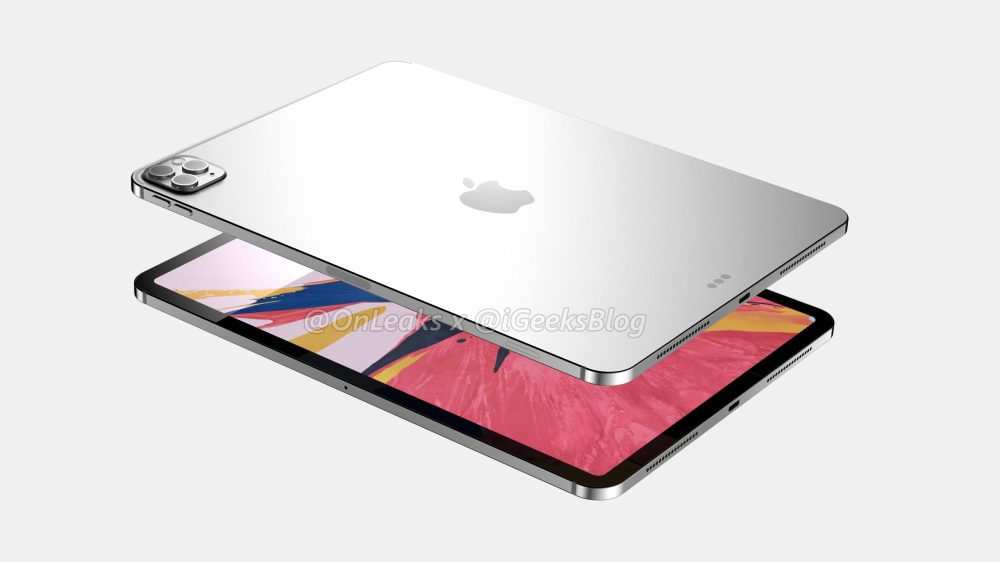
Apple introduced an overhauled iPad Pro lineup in late 2018, bringing Face ID, a new edge-to-edge design, the second-generation Apple Pencil, and more. After that dramatic refresh, attention turned to software in 2019, with Apple introducing the first version of iPadOS.
In 2020, reports indicate that Apple has another iPad Pro hardware refresh on the docket. According to renders from Onleaks, the 2020 iPad Pros will feature the same triple-lens camera setup as the iPhone 11. In addition to the upgrades this will bring to general photography, a triple-lens camera setup will also give the iPad Pro more augmented reality capabilities, reports suggest.
When can you expect Apple’s 2020 iPad Pro lineup to be released? It looks like new iPad hardware could be on the schedule for as early as this spring, perhaps alongside the aforementioned iPhone 9.
One thing to consider: Reports have also said Apple is working on iPad Pro models with mini-LED screen technology. One report said this upgrade would come in early 2021, while another, more recent report moved that timeline up to late 2020, at least for the 12.9-inch model.
If you plan on buying the next-generation iPad, just know that a model with mini LED could be on the horizon as well.
MacBook Air and MacBook Pro
One of Apple’s biggest product announcements in 2019 was the 16-inch MacBook Pro. In addition to the larger display, this update included a much needed updated keyboard design. After multiple attempts to perfect the butterfly keyboard, Apple’s new Magic Keyboard returns to the more traditional scissor switch style for improved reliability, key travel, and durability.
As of right now, the Magic Keyboard is only available in the 16-inch MacBook Pro. That’s expected to change in 2020, however, with Ming-Chi Kuo reporting that Apple will bring the new keyboard to both the 13-inch MacBook Pro and MacBook Air in 2020.

It’s also likely that at least the new 13-inch (or 14-inch?) MacBook Pro will adopt the new thermal design used by the 16-inch MacBook Pro for improved performance under heavy loads. This would tie in nicely with the “Pro Mode” toggle Apple is testing in macOS.
There’s currently no timetable for when Apple plans to introduce the new MacBooks with Magic Keyboards. A new MacBook model did just appear in a European database, suggesting that at least one could be released within the coming months. In the meantime, it’s hard to recommend you buy any MacBook with the butterfly keyboard.
Much like the iPad Pro, the 16-inch MacBook Pro is also reportedly set to switch to mini-LED display technology in late 2020. Additional details on this update are unknown as of right now.
iMac and Mac mini
Less is known about what to expect for the iMac in 2020. The consumer-grade iMac was updated in March 2019 with new 6-core and 8-core Intel CPUs, and you can still upgrade the RAM after the fact. But what about the visual design of the iMac? The iMac has kept the same general design since 2012, so it’s long overdue for a visual refresh.
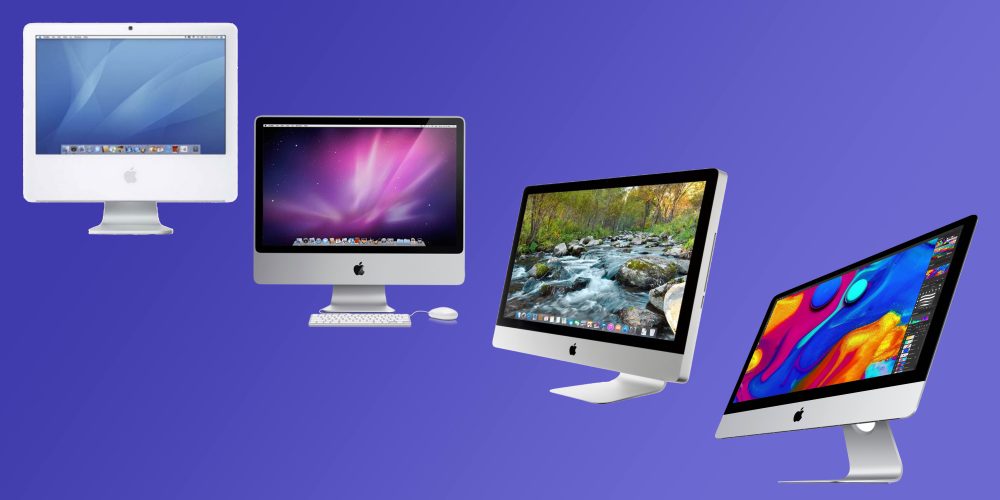
The iMac Pro is going on three years since its introduction, and it’s unknown what Apple’s plans are for that machine. If the iMac Pro is going to receive another upgrade, whether it be a redesign or spec bump, we’d expect it to happen in 2020, but only time will tell.
The same can also be said about the Mac mini, which was last updated in 2018. The Mac mini clearly isn’t the most popular Mac sold by Apple, but it’s possible (not guaranteed) we’ll see some sort of internal spec bump update in 2020.
Apple AirTags
As 9to5Mac has reported several times, Apple is developing a personal item tracker similar to the popular Tile products. What this means is that you’ll be able to attach Apple’s physical item tracker to any belonging, such as your wallet, backpack, keys, and more, and then track those items via the Find My application on Mac and iOS.
Evidence within iOS suggests that these item trackers will be called “AirTags” and integrate with augmented reality features to help users easily find their lost items. For instance, you could hold your iPhone up and see precise directions to find your lost items.

Furthermore, Apple Tag will also be able to leverage the massive iOS user base to ensure that it is always in range of a connected iPhone or other Apple device. Users will also be able to receive notifications when their iPhone gets too far away from the tag.
We initially expected the AirTag accessory to be unveiled in late 2019, but that did not come to fruition. A release in 2020 seems likely, especially given the inclusion of the U1 Ultrawideband location chip in the iPhone 11 and iPhone 11 Pro.
Read everything we know about Apple’s item tracker in our full guide.
Apple Watch
First off, evidence emerged earlier this month suggesting that Apple is working on a PRODUCT(RED) Apple Watch Series 5 that could be released as soon as this spring. This Apple Watch variant would reportedly be made out of an aluminum casing with a red finish. It would mark the first ever PRODUCT(RED) Apple Watch.
Later this year, history indicates that Apple will introduce the Apple Watch Series 6. We still don’t know much about the next-generation Apple Watch, but early reports suggest it will feature faster performance and improved water resistance. Improved performance will make the Apple Watch even more capable of operating independently of the iPhone.
As 2020 progresses, we’ll likely hear more about what to expect from the Apple Watch Series 6. In the meantime, let us know what you’d like to see Apple focus on down in the comments.
iPhone 12 lineup
In addition to the iPhone SE 2/iPhone 9 discussed earlier, Apple is also likely to introduce the iPhone 12 lineup this year. What can we expect from the iPhone 12? Early reports suggest that it will be a busy year.
Ming-Chi Kuo has consistently reported so far that Apple is planning to introduce four new iPhone 12 models in 2020. The difference between all of these models, other than screen sizes, will be camera technology.
According to Kuo, the 5.4-inch OLED iPhone will feature a dual-camera setup on the back. The lower-end 6.1-inch iPhone will feature a similar dual-camera system. The higher-end 6.1-inch model and the 6.7-inch model will include triple-lens camera setups as well as time-of-flight 3D sensing technology.
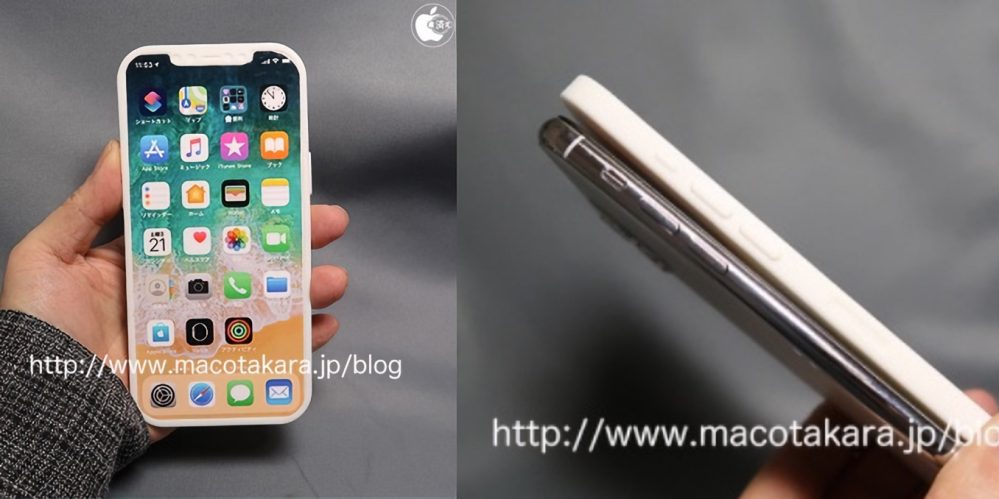
In terms of design, the iPhone 12 is expected to feature a rather significant chassis redesign. Reports indicate that the iPhone 12 will look similar to the iPhone 4 with squared-off edges and an overall boxier design. Since the iPhone 6, iPhones have featured on curved edges that blend into the displays, but it looks like that will change in 2020.
All four of the iPhone 12 models introduce this year are also expected to feature 5G support. This includes both versions of 5G: sub-6 GHz 5G and mmWave 5G. The former offers speeds slightly faster than LTE, but the latter is widely considered to be “true 5G” with speeds that rival home internet.
The iPhone 12 lineup is also expected to feature the next iteration of Apple’s A-series processors, likely called the A14. According to a recent supply chain report, TSMC is on schedule to start the production of the A14 processor using a new 5 nanometer process in Q2. The A13 was produced with a 7 nm processor, so the A14 should be more power-efficient and faster, thanks to the 5 nm process.
As of right now, we expect all four iPhone 12 models to be released in the fall. While this could change, particularly with the uncertainty around 5G, everything appears to be on schedule for now.
Software

Last but not least, Apple will also debut the latest versions of its operating systems in 2020. These are likely to be called iOS 14, iPadOS 14, watchOS 7, tvOS 14, and macOS 10.16.
We don’t yet know what new features Apple plans to focus on this year. A report from Bloomberg, however, recently said that Apple is changing the way it develops new iOS releases to focus on improved stability and beta testing. Apple’s refined beta testing and development process will reportedly make it easier for Apple developers to enable and disable features that aren’t ready for primetime.
The report noted that Apple currently expects iOS 14 to be a feature-packed release, but that it is willing to delay some of those features to iOS 15 for the sake of stability, if necessary.
What are you most excited to see from Apple in 2020? What new software features would you like Apple to focus on? Let us know down in the comments!
>>> Up
* Adecco Raised to Buy at Oddo BHF; PT 71 Swiss francs
* Byggmax Raised to Buy at SEB Equities; PT 35 kronor
* Elisa Oyj Raised to Equal-Weight at Morgan Stanley; PT 52 euros
* Eurazeo SE Raised to Buy at Goldman; PT 76 euros
* Red Electrica Raised to Market Perform at BBVA; PT 17.20 euros
* Safran Raised to Buy at Goldman; PT 169 euros
>>> Down
* Aareal Bank Cut to Hold at Pareto Securities; PT 31 euros
* Aker Solutions Cut to Sell at SEB Equities; PT 20 kroner
* Bossard Cut to Sell at UBS; PT 127 Swiss francs (Earlier)
* Bossard Cut to Reduce at Bank Vontobel; PT 130 Swiss francs
* Fraport Cut to Sell at Bankhaus Metzler; PT 65 euros
* Hella Cut to Hold at MainFirst; PT 48 euros
* Hikma Cut to Neutral at Citi; PT 1,980 pence
* Intertek Cut to Sell at Goldman; PT 5,300 pence
* Kindred GDRs Cut to Hold at SEB Equities; PT 48 kronor
* Netcompany Cut to Sell at ABG; PT 276 kroner
* Ossur HF Cut to Hold at SEB Equities; PT 49 kroner
* Pfeiffer Vacuum Cut to Hold at Bankhaus Lampe
* RBS Cut to Underweight at Barclays
* Salvatore Ferragamo Cut to Hold at MainFirst; PT 19.50 euros
* Sandvik Cut to Hold at Pareto Securities; PT 200 kronor
* SFC Energy Cut to Hold at M.M. Warburg; PT 11 euros (+)
* Shaftesbury Cut to Underperform at Jefferies; PT 790 pence
* Telia Cut to Underweight at Morgan Stanley; PT 38 kronor
>>> Initiation
* Amundi Rated New Buy at Jefferies; PT 85 euros
* Arterra Bioscience Rated New Hold at Banca Profilo (+)
* Brewin Dolphin Rated New Buy at Jefferies; PT 425 pence
* Danone Rated New Buy at Guggenheim; PT 87 euros
* DIC Asset Rated New Buy at M.M. Warburg; PT 19.40 euros (+)
* DWS Rated New Hold at Jefferies; PT 33 euros
* Hargreaves Lansdown Rated New Hold at Berenberg; PT 1,928 pence
* Julius Baer Rated New Buy at Jefferies; PT 66 Swiss francs
* Nestle Rated New Buy at Guggenheim; PT 114 Swiss francs
* OSE Immuno Rated New Corporate at Bryan Garnier; PT 7 euros
* Pets at Home Rated New Hold at Peel Hunt
* Primary Health Cut to Hold at Jefferies; PT 155 pence
* Rathbone Brothers Rated New Underperform at Jefferies
* TalkTalk Rated New Sell at Berenberg; PT 80 pence
>>> Call
* Africa Oil May Rise at Least 15% After Nigeria Deal: SB1 Markets
* Amundi Preferred Over DWS as Jefferies Initiates on Stocks
* Ashmore Shares Will React Positively to 2Q Beat: Morgan Stanley (+)
* Bossard Cut at UBS on Weak Ebit Growth; Vontobel Also Downgrades
* Evotec Biological-Drug Production Step Sensible: Deutsche Bank
* Fraport Double-Downgraded at Metzler On Headwinds from 2021 (+)
Ukraine Airliner Was Hit by a Second Missile Over Iran, Video Shows
Footage raises new questions about how forthcoming Iranian authorities were after admitting they accidentally downed jet
Surveillance video from Iran circulating on social media Tuesday appears to show two missiles hitting the Ukrainian passenger jet downed over Tehran, fired approximately 30 seconds apart, providing new information about the tragedy that killed 176 people on the plane.
The video was verified by Storyful, a social-media-intelligence company owned by News Corp, parent of Wall Street Journal publisher Dow Jones. It raises new questions about how forthcoming Iranian authorities were when, after three days of denial, they admitted they had mistakenly struck the Ukraine International Airlines flight without mentioning a second missile.
It also possibly answers the question of why the Ukrainian airliner’s transponder stopped working before being hit by the missile that apparently brought the jet down last week.
The blurry video shows what appears to be a missile launched from a site near the airport, and hitting an object in the sky, presumably the plane.
About 30 seconds later, a second missile is fired, which hits the plane, this time a little closer to the airport. The jet stays in the air for several minutes and bursts into flames.
The plane appears to circle back toward Tehran’s Imam Khomeini International Airport before crashing roughly 20 miles from it.
A U.S. official identified the weapon used as a Russian-made SA-15 surface-to-air missile system, also known as the Gauntlet.
While Canada and the U.K. said at the time that one missile was fired, U.S. officials told the Journal that the system fired two missiles.
Iran’s Islamic Revolutionary Guard Corps on Saturday admitted it had mistakenly shot the plane down, something Western governments had claimed, taking full responsibility and promising accountability for the perpetrators and compensation for the victims.
The three-day delay in that admission, which Ukrainian officials have said came only after they found evidence of the use of a missile forced Tehran’s hand, fueled anger and protests in the streets of Tehran and other Iranian cities against perceived incompetence and dishonesty by the Iranian leadership.
The revelation that Iran’s military struck a civilian plane not once but twice will likely add fuel to that anger.
Iranian authorities on Tuesday said they had arrested an undisclosed number of suspects in connection with the shooting, with President Hassan Rouhani urging the country’s judiciary to establish a special court to hold to account those responsible for the crash.
“Anyone who should be punished will be punished,” Mr. Rouhani said in a televised speech Tuesday, his first public remarks since the plane was shot down. “The whole world will be watching our trial.”
Bridgewater sees gold rallying as central banks ease
Hedge fund manager Greg Jensen says precious metal could rise 30% above $2,000 an ounce
Greg Jensen, co-chief investment officer of Bridgewater Associates, the world’s largest hedge fund, says gold could surge to a record high above $2,000 an ounce as central banks embrace higher inflation and political uncertainties increase.
Mr Jensen, who helps oversee more than $160bn at the Connecticut-based group, told the Financial Times he believed the Federal Reserve, in particular, would let inflation run hot for awhile and “there will no longer be an attempt by any of the developed world’s major central banks to normalise interest rates. That’s a big deal”.
At the same time, Bridgewater sees political turbulence on multiple fronts as slowing US economic growth exacerbates the divide between rich and poor while tensions rise with China and Iran.
Against that backdrop, Mr Jensen said in a telephone interview that gold prices, now trading at about $1,550 an ounce, could gain 30 per cent and should be considered in investors’ portfolios.
“There is so much boiling conflict, that gold being part of a portfolio makes sense to us,” he said. “People should be prepared for a much wider range of potentially more volatile set of circumstances than we are mostly accustomed to.”
Jay Powell, Federal Reserve chairman, has worried that inflation expectations — predictions among households and businesses of what price increases will be — could continue to drop, dragging down actual inflation. Last month, he said: “In order to move rates up, I would want to see inflation that’s persistent and that’s significant.”
Mr Jensen said even if inflation reaches the central bank’s 2 per cent target, “the Fed won’t be pre-emptive”. That stance, he added, “takes off the table, in the short term, the normal reason cycles end . . . For most of the post-World War II recessions, the Fed dealing with inflation has ended the cycle.”
Fears over a slowing global economy prompted 49 central banks around the world to cut rates 71 times in 2019, according to JPMorgan data. The Fed reduced interest rates three times last year, taking its current target range for short-term borrowing costs to 1.5 per cent to 1.75 per cent.
Mr Jensen said he would not rule out the possibility that the Fed could slash rates to zero this year as it looks to avoid recession as well as disinflationary pressures.
Mr Jensen said gold should rally as central banks allow higher inflation and the US budget and trade deficits balloon. These developments, he added, could eventually threaten the US dollar as the world’s reserve currency.
“That could happen quickly or it could happen a decade from now,” he said. “But it’s definitely in the range of possibilities. And when you look at the geopolitical strife, how many foreign entities really want to hold dollars? And what are they going to hold? Gold stands out because it’s nobody else’s liabilities as a possibility.”
Although US rate cuts have bolstered US equity markets, Mr Jensen said the group was “more cautious” on US stocks, describing them as “frothy”.
He warned that “most of the world is long equity markets in pretty extreme situations”, particularly in the US, raising the appeal of emerging markets.
“A decade-long outperformance of the US is now being extrapolated and so people are generally under geographically diversified,” Mr Jensen said.
US stocks ended 2019 with their best year since 2013, with the benchmark S&P 500 rising nearly 29 per cent.
The group’s flagship Pure Alpha strategy, which bets on macroeconomic trends, was essentially flat in 2019, while its All Weather fund gained 16 per cent for the year.
PSA (PEU TH) +1.2%
Ericsson (ERCB TH) +0.8%
Delivery Hero (DHER TH) -0.8%
Porsche SE (PAH3 TH) -0.8%
Watch Trade-Sensitive Europe Stocks on U.S.-China Tariff Report
Wirecard (WDI TH) -0.9%
Shares gained 4.7% yesterday
Wirecard to Set Balance Threshold for 0.75% Rate: Handelsblatt
RBS (RYS1 TH) -0.9%
Fuchs Petrolub (FPE3 TH) -1.4%
Hella (HLE TH) -2.3%
Hella Cut to Hold at MainFirst; PT 48 euros
Fraport (FRA TH) -2.8%
Fraport Double-Downgraded at Metzler On Headwinds from 2021
EU warned of ‘tectonic’ shift as economy goes green
Citizens unprepared for impact of carbon neutrality drive, says Frans Timmermans
Politicians have done too little to prepare their citizens for the “tectonic” economic shifts that will be propelled by the drive towards carbon neutrality, a senior Brussels policymaker has warned, comparing the impending transformation to the disruptive effects of the industrial revolution.
Frans Timmermans, the European Commission executive vice-president in charge of its green policy, said the EU’s decision to push for carbon neutrality by 2050 would bring opportunities for new jobs and better living conditions — but would be painful for some workers and involve massive public and private investments well beyond the capacities of EU institutions.
“If you say you are moving from an economy entirely based on carbon to an economy that should be weaned of this carbon dependency, that is not a small change of policy, that is a tectonic shift in the way our society is structured,” Mr Timmermans said in an interview with the FT in Strasbourg. “We still have a long way to go before this sinks in everywhere.”
The EU on Tuesday signed off on a €1tn green investment drive as commission president Ursula von der Leyen attempts to convince member states to support tougher climate targets in 2030 as part of a push for carbon neutrality by mid-century.
Close to half of the amount will come from an existing plan to deploy a quarter of the EU’s budget to green causes. Co-financing from member states would add more than €100bn, while EU guarantees would aim to leverage private sector spending of €280bn.
The money is only a fraction of the investment needed, and the European legislation required for the green transition faces a rocky path given the high risk of job losses in carbon-intensive sectors.
In Germany, for example, a government-sanctioned report this week estimated that more than 400,000 jobs could be lost over the next decade in the country as its car industry shifts towards electric vehicles. In December, Poland refused to join European leaders in pledging to meet the 2050 targets because of concerns it will not get enough EU financial support to modernise its energy sector, which is still 80 per cent coal-fired.
Mr Timmermans insisted that while the transition for countries such as Poland that rely heavily on coal would be painful, it could not be avoided and said governments needed to ensure their populations were prepared.
“If governments do not act, it does not mean these changes will not happen,” he warned. “Any industrial revolution leads to a shift in jobs, a shift in institutions. If you only concentrated on the jobs that will disappear and do not have a plan for the jobs that will emerge then you get into trouble.”
He said the car industry was “waking up to the new reality” and could become a “powerful agent of change”.
EU proposals for the green transition include €100bn over the period from 2021 to 2027 to alleviate transition costs in carbon-intensive sectors and regions.
It will comprise €7.5bn of fresh money from the forthcoming EU budget, coupled with support from national budgets, EU regional aid programmes and the European Investment Bank.
A key political question is whether this contains enough new money to win over Warsaw and other capitals which are further behind in the shift towards greener economies. The commission also needs to win member states’ support for a climate law enshrining the new goals. Mr Timmermans said the extent of the “binding elements” of any legislation was still being debated.
Mr Timmermans pledged further reform of the EU’s emissions trading scheme and vowed to protect European industry from countries that did not implement Paris climate change commitments via a carbon border adjustment — a proposed levy on some carbon-intensive imports that is already proving contentious among EU lawmakers and could provoke a backlash from trading partners.
Some sectors were easier than others to bring within the levy, he said, arguing that the measure would be entirely compatible with World Trade Organization rules — a key area of concern among analysts.
If a trading partner was not taking the necessary measures to drive towards carbon neutrality “we will have to protect our industry by introducing correction at the border,” he said.
While Mr Timmermans said he regretted the loss of the UK as an influence on EU climate policy, he hoped that the two sides could remain “as close as possible in terms of policy alignment” in the area. “I think the main parties in the UK will always sign up to a progressive and forward-looking climate policy,” he added.
Fund managers must embrace AI disruption
Choosing the status quo over change will prove fatal
If there is one industry that would greatly benefit from the genuine adoption of artificial intelligence (AI), it is investment management.
Investing, in its simplest form, is about predicting the future — the future value of a company, index, currency, country, or relationship. Investment predictions are made like all predictions: combining information with a model or method. And we assume that we have some advantage, some edge, which allows us to make predictions that are more likely to be right than wrong. Otherwise we could flip a coin.
This edge, which is the source of the ever-elusive alpha, is the result of either superior information or superior decision-making methods.
However, the failure of managers to consistently generate the promised returns reveals that managers generally lack whatever edge they seemed to have had in the past.
This is because active managers generally use the same information (price, economic and financial data) and the same methods (some iteration of multifactorial linear regression laden with a heavy dose of mean variance optimisation) to make their investment decisions.
The homogeneity of data and methods has caused even the historically best active managers such as Warren Buffett to struggle.
Fortunately, there is AI, whose raison d’être is to make predictions by applying powerful computational methods to large, often complex data sets. Advanced AI such as deep learning and deep reinforcement learning has been able to make predictions with superhuman accuracy.
Yet as a recent CFA report showed, only a handful have realised the promise of AI and directly incorporated AI into their investment processes.
While small in number, their influence is great and their adoption is forcing their less innovative peers to publicly claim that they, too, have adopted AI.
However, their claims are disingenuous and typically distil to one of three types of posturing:
Introducing a non-traditional data set (eg, credit card data) into their existing traditional, non-AI investment processes;
Window-dressing their staff by adding a computer scientist or two that they bring out for client meetings;
Simply misappropriating the term “machine learning” to include traditional quantitative processes such as cluster analysis or linear regression.
These pretenders diligently work to lower client expectations of the power and application of AI by asserting, without evidence, that humans “will always be a necessary component in the investment process”.
This anthropogenic requirement not only artificially fixes clients’ expectations; it excludes the use of the equivalent of “Thor’s golden hammer” — deep learning and reinforcement learning — in asset management.
This artificial requirement is debilitating because deep learning and reinforcement learning are precisely more powerful than classical machine learning and, in more and more cases, human intelligence, because they are constructed and provide an output without the use of human data or input.
So if AI could help managers achieve the edge they so desperately need (and with it, the fees and clients they desire), why has the rate of adoption been so slow? And why have managers systematically erected artificial barriers to the use of deep learning and reinforcement learning? Because managers recognise that true adoption requires true disruption.
AI not only fundamentally changes a manager’s investment process and investment worldview, but it also radically transforms the entire business — it requires new talent, new data, a different R&D process, a new management structure, a new brand and, perhaps most importantly, new funds to pay for this multimillion-dollar endeavour. All these changes come with absolutely no certainty of achieving any net benefit or an ROI.
Given these circumstances, too many incumbent managers cleave to the status quo. After all, in spite of mediocre investment performance and misaligned fee structures, many active managers have experienced only modest client redemptions and fee compression, leaving them to enjoy profit margins greater than 30 per cent.
By choosing the status quo over disruption and incrementalism over innovation, managers are placing their commercial and personal interests ahead of their clients’ interests because the status quo simply cannot provide their clients with the investment outcomes they seek.
They make this choice in spite of evidence that the majority of institutional clients consider it critically important or important that managers are already using AI in their investment processes and that they use AI themselves to disintermediate the investment decision-making process.
Consider that the world’s largest pension fund, Japan’s Government Pension Investment Fund, has partnered with Sony Computer Science Laboratories to internally develop and deploy a deep-learning-based manager evaluation application.
Choosing the status quo over disruption will certainly prove fatal for managers; the question is, how long can they live on their current life support systems?
DAX:
- Daimler (DAI TH) -0.3%
- Watch Trade-Sensitive Europe Stocks on U.S.-China Tariff Report
- BASF (BAS TH) -0.4%
- Deutsche Bank (DBK TH) -0.4%
- Wirecard (WDI TH) -1.1%
- Wirecard to Set Balance Threshold for 0.75% Rate: Handelsblatt
MDAX:
- Metro AG (B4B TH) +0.8%
- Metro AG Prelim. 1Q Like-For-Like Sales Up 1%; Confirms FY View
- Fuchs Petrolub (FPE3 TH) -1%
- Aareal Bank (ARL TH) -1.3%
- Aareal Bank Cut to Hold at Pareto Securities; PT 31 euros
- Hella (HLE TH) -1.9%
- Hella Cut to Hold at MainFirst; PT 48 euros
- Fraport (FRA TH) -2.8%
- Fraport Cut to Sell at Bankhaus Metzler; PT 65 euros
SDAX:
- Salzgitter (SZG TH) +0.8%
- Aixtron (AIXA TH) -0.8%
- Nordex (NDX1 TH) -1.5%