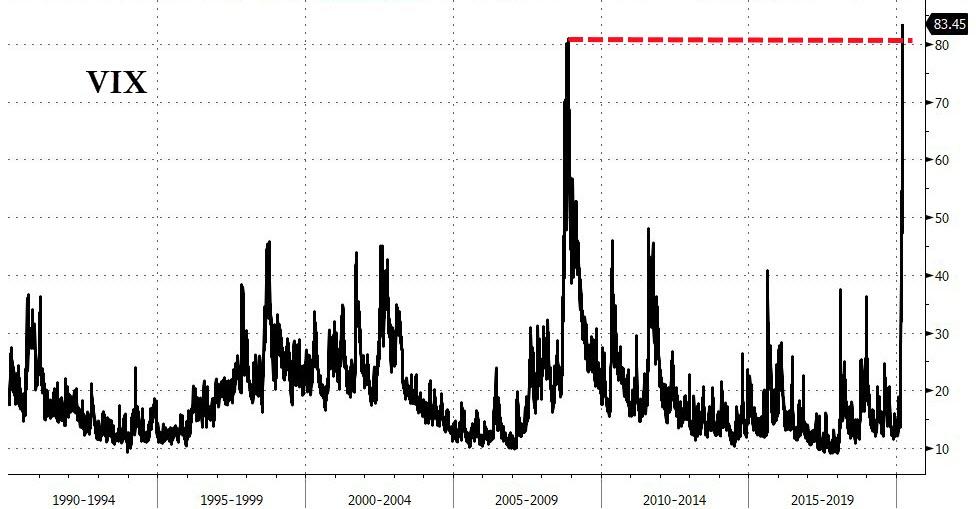
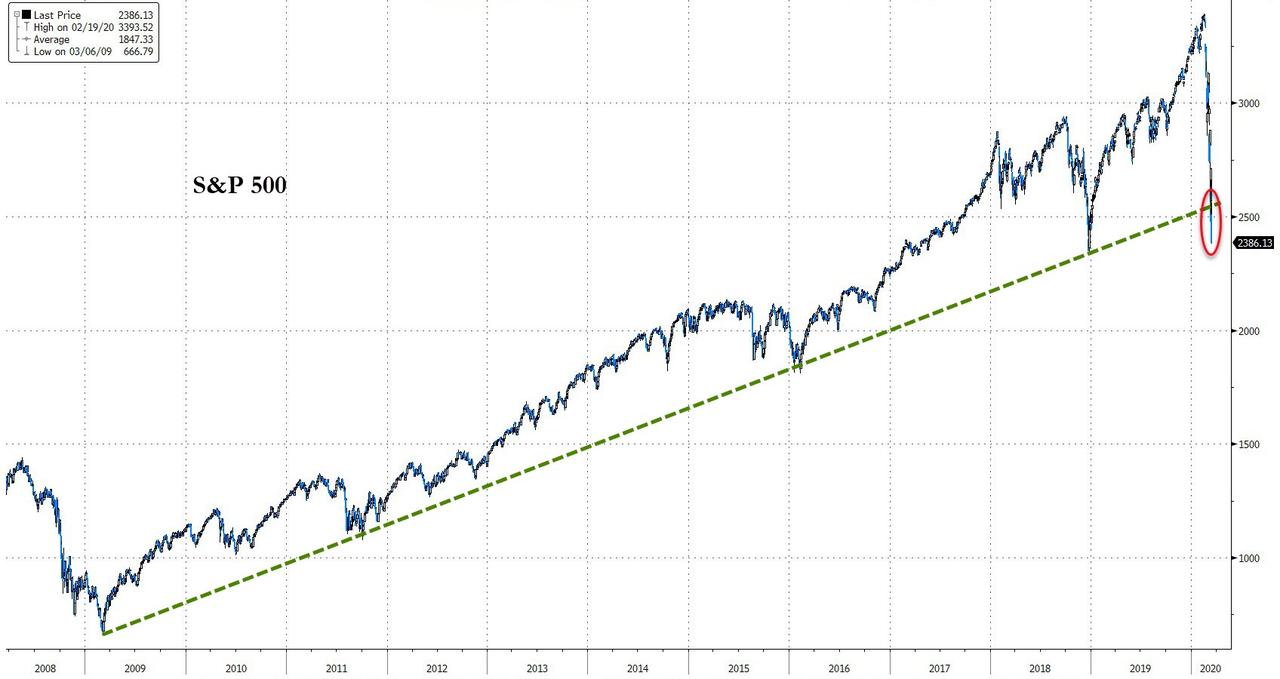
U.S. futures advanced and the yen slid in volatile trading after the biggest plunge in Wall Street stocks since 1987. Asia-Pacific shares ranged from a further drop in South Korea to gains in Australia.
Japan’s share benchmark ended up more than 2% after swinging between gains to losses. A day after a record slump, Australia had its biggest surge since 1997. Hong Kong and China fluctuated. S&P 500 and Nasdaq futures reached their limit-up. Europe futures gained. The S&P 500 Index sank 12% Monday, erasing its gain for 2019, after President Donald Trump warned of a possible recession, with economic disruption from the coronavirus potentially extending into summer. Treasury yields rose after plummeting Monday. Australian bond yields climbed back above 1% as traders continue to rush for cash. Oil traded near $30 a barrel after plunging almost 10% in New York.
US After Hours YY +5%, COUP +2.7% up on earnings; AMZN +3.1% higher on hiring news, AIMT +13.2% (up in sympathy on negative DBVT news), PRVB +7.9% (announces temporary pause in patient randomization in Phase 3 PTOECT study; remains on track to complete rolling BLA submission in Q4), CZR +7.7% (has fully drawn on revolving credit as a precautionary measure), TMO +7% (Mad Money mention), GOL +6.5% (will reduce total flight capacity by 60-70% until mid-June),-ve : BE -23.2% (also to delay its 10-K), HQY -7.1%, ZTO -1.3%,DBVT -57.8% (announces that FDA has identified questions regarding efficacy of Viaskin Peanut),
Nikkei +0.06% Hang VSI -0.65% Seng +0.37% Shanghai -0.48% Shenzen -0.55%
Eur$ 1.1150 CNH 7,0123 CNY 7.0023 JPY 106,61 GBP 1.2223 CHF 0.9496 WTI$ 29.96 +4.46%
S&P +3.86%MIB +3.2% SMI +2.58 Nasdaq +3.60% EuroStoxx +3.15% FTSE +3.80% Dax +3.22%
Macro :
- Bridgewater Builds $14 Billion Short Bet Against European Stocks
Keep an eye on :
- AAQ GY : AAP Implantate to Cut Workforce by About 25% This Year
- AF FP : KLM Seeks Reduction of Working Hours for About 70% of Staff
- AAL LN : Anglo American Temporarily Slows Down Quellaveco Project
- AV/ LN : Aviva Says Too Early to Quantify Potential Impact From Covid-19
- BOTB LN : Best of the Best Says Performance is Ahead of Guidance
- BOCH LN : Bank of Cyprus Expects Additional Provisions of EU75M in 4Q
- BME SM : SIX Sees Spanish Approval of BME Tender Offer Until End of 1H
- CNA LN : Centrica Chairman Charles Berry Steps Down, Wheway to Succeed
- CINE LN : Regal Says All Theatres Will Remain Closed Until Further Notice
- DBV FP : DBV Technologies Says FDA Raised Questions on Peanut Drug BLA --> -52%
- EL FP : EssilorLuxottica to Buy Back Up to 3m Shares Through May 27
- GEA GY : GEA Group Full Year Oper Ebitda Meets Estimates
- HOLX US : Hologic Coronavirus Test Gets FDA Emergency Use Authorization
- ILD Fp : Iliad Names Niel Chairman, Sees Decline in FY Italy Losses
- ILD FP : Iliad’s Fiber Broadband Push Pays Off as Market Recovers
- ELG GY : Elmos Semiconductor Starts EU27m Buyback Offer at EU17.50/Share
- KBC BB : KBC Names Koenraad Debackere Chairman, Succeeding Thomas Leysen
- KOMN SW : Komax Full Year Ebit 3.9% Above Estimates
- MERY FP : Mercialys: Anti-Virus Measures Significantly Affect Activity
- NoVOB DC : Novo Drops Concizumab Trials in Phase 3 After Patient Events
- PNDORA DC : Pandora Cuts Outlook, Suspends Guidance on Virus Uncertainty
- UG FP : Opel Plans Short-Time Work at German Plants: Handelsblatt
- PAH3 GY : Porsche Eyes Deeper Overhaul as Virus Outbreak Shatters Industry
- PGHN SW : Partners Group FY Dividend Per Share CHF25.50 Vs. CHF22 Y/y
- ROG SW : Roche Starts Shipments of Covid-19 Tests to Labs Across U.S.
- ROG W : Roche Virus Test, Actemra May Have Little Effect on Sales: React
- SAN FP : Sanofi, Regeneron Virus Therapy Kevzara Faces Roche Might: React
- SHoT SS : Scandic Hotels to Cancel 2019 Dividend, Delay Financial Reports
- SIE GY : Siemens to List Energy Unit as Planned in Fall: Handelsblatt
- SGRE SM : *SIEMENS GAMESA CFO TO EXIT THE COMPANY THIS WEEK: CONFIDENCIAL
- SIX2 GY : Sixt Prelim FY Oper. Rev About EU2.95 Bln; Suspends 2019 Div.
- SQN SW : Swissquote Full Year Net Revenue CHF230.6 Mln
- TECN SW : Tecan Full Year Ebitda CHF122.8 Mln, +11% Y/y
- VET SW : Vetropack Proposes 1:50 Share Split to Both Categories
- VIFN SW : Vifor Pharma Offering by Holder Prices 2m Shares at CHF96/Share
- VIG AV : Vienna Insurance Full Year Pretax Profit Beats Highest Estimate
- VOLVB SS : Volvo Tries to Clear 2020 Decks With Wide Profit Warning: React
- VOW GY : *VW: 2020 `A VERY DIFFICULT' YEAR, CORONAVIRUS POSES CHALLENGES
- VOW GY : Volkswagen Spain to Suspend 10,500 Workers Due to Coronavirus
- VOW GY : VW Says Virus Outbreak Poses ‘Unknown’ Financial Challenges
- WCH GY : Wacker Chemie Sees Possible >EU100m Hit From Coronavirus