H&M’s Transformation Could Turn Heads as Retailers Battle a Shakeout
Shoppers are stuck at home, stores are shut, and seasonal merchandise is mostly out of season.
In the past three months, more than 30% has been wiped off the stock, which was beginning to enjoy some success from a recovery plan.
The time might be right for investors to pile in. H&M, which is how the company is commonly known, is still pulling the right levers for growth, but now the shares (ticker: HM.B.Sweden) are going cheap at 137.25 Swedish kronor ($13.61). When normality returns, they could soar.
Richard Chamberlain, an analyst at broker RBC Capital Markets, wrote in a March note that “the second quarter looks awful, but any industry shakeout should favour H&M, which we think will emerge as one of the winners from the downturn.” In his April note, he maintains an Outperform rating and estimates the shares to rise 9%, to SEK150, down from SEK210 six weeks ago.
Broker Jefferies predicts a 38% rise to SEK190, and Banco Santander has a price target of SEK163.
The Swedish firm, still controlled by the founding Persson family, fetches 26.8 times this year’s expected earnings, and is valued at a 10% discount to its peers. It has a market value of SEK223 billion and employs 170,000.
The retail giant had mastered lower-cost fashion, which helped propel its shares from SEK106 in 2004 to SEK363 in 2015. But profit declined because H&M was slow to react to the shift to online shopping. Its strategy was focused on bulk orders from Asia and low prices, but rivals tapped into fast-changing trends and purchased smaller production runs made closer to Europe. By January 2019, shares had fallen to SEK134.
A turnaround was started by the founder’s grandson, Karl-Johan Persson. The company now is selling more items online and creating new brands and different store concepts to appeal to a wider variety of customers. In January, he became chairman, and Helena Helmersson became H&M’s first woman CEO .
In February, shares rose to SEK204, and last week H&M posted strong first-quarter sales, up 8%, to SEK54.9 billion, from Dec. 1, 2019, to Feb. 29, 2020. Profit more than doubled to SEK2.5 billion.
“The strong momentum in the first quarter shows that customers appreciate what we do and that our ongoing transformation continues,” Vinge Nils, head of investor relations, tells Barron’s.
“This gives us a better chance to handle the very difficult corona situation in a better way. We are convinced that as a company, once we are through this, we will continue to stand strong.”
H&M was founded in 1947 by Swedish entrepreneur Erling Persson, who opened a womenswear store in Västerås. He called it Hennes, Swedish for “Hers.” In 1968, Hennes acquired hunting-apparel and fishing-equipment retailer Mauritz Widforss, and the name changed to Hennes & Mauritz.
H&M said on April 8 that it signed a new, 12-month, 980 million euro revolving credit facility with a six-month extension option “to further strengthen its liquidity buffer and financial flexibility in response to the Covid-19 situation.”
H&M said that almost all of its stores in China have reopened. RBC’s Chamberlain said the company “was on a strong recovery path prior to the downturn.”
Although H&M said this month that it expects a fiscal-second-quarter loss, the stock is likely to emerge a winner with its relatively flexible cost structure, global brand reach, and potential for growth online and at its stores.
This Market Is Made For Warren Buffett. Why Has He Gone Quiet?
Warren Buffett’s patience is paying off.
The Berkshire Hathaway (ticker: BRK. A) CEO resisted entreaties last year to buy back more stock, pay a dividend, and be more aggressive with investments.
Instead, Buffett let cash build on Berkshire’s balance sheet. With some $128 billion in cash and equivalents on hand, he stood poised to capitalize as the markets imploded in March.
So what has the 89-year-old CEO been up to? It is hard to say because Buffett has been quiet of late. He has yet to make the kind of splashy investment that he did during the financial crisis, when he helped shore up Goldman Sachs Group (GS) and General Electric (GE).
“Two big questions are whether he backed up the truck on the stock, and whether he turned Todd and Ted loose,” says David Rolfe, chief investment officer at Wedgewood Partners. Rolfe is referring to investment lieutenants Todd Combs and Ted Weschler, who each manage about $15 billion of Berkshire’s equity portfolio, with Buffett handling the rest. Combs and Weschler have had better records than Buffett. One of them, for instance, took a well-timed stake in Kroger (KR) in 2019.
Investors may have to wait until Buffett’s appearance at the Berkshire virtual annual meeting on May 2 for some answers.
Fans of Berkshire, meanwhile, view the stock as attractive and are hoping that Buffett scooped up a lot of Berkshire’s own shares as well as distressed stocks during the recent selloff. Its Class A shares, at about $290,500, trade for about 1.2 times our estimate of its current book value of about $240,000 a share. The Class B shares trade at $194.
That valuation is low relative to where Berkshire has traded in recent years. Book value stood at $261,417 at the end of 2019, but has dropped because of the decline in Berkshire’s equity portfolio, which stood at about $250 billion at the end of last year. That portfolio is headed by Apple (AAPL) and includes large holdings of Bank of America (BAC), Coca-Cola (KO), Wells Fargo (WFC), and American Express (AXP).
“Berkshire is very attractive. It’s our largest holding, and we dramatically increased our exposure during March,” says Larry Pitkowsky, manager of the GoodHaven fund. “You’re paying just 1.2 book value, and the investment portfolio is undervalued, and the company has enormous optionality.” (Optionality refers to the ability to deploy the cash successfully.)
Berkshire’s price/earnings ratio of 19, based on estimated 2020 earnings, isn’t cheap, but it overstates the valuation because Berkshire holds so much low-yielding cash and because it counts only dividend income from its equity portfolio.
The stock is down 14.5% this year, about a percentage point worse than the S&P 500. This has been a disappointment, as Berkshire has long been seen as one of the most defensive big-cap stocks, thanks to its cash and diversified stream of operating earnings, which totaled $24 billion last year.
Buffett doesn’t have a great record of late. His big bet on the airline industry has been a disaster. Berkshire owns roughly 10% stakes in Delta Air Lines (DAL), United Airlines Holdings (UAL), Southwest Airlines (LUV), and American Airlines Group (AAL). Its $10 billion preferred stock investment in Occidental Petroleum (OXY) is looking dicey as oil prices and Occidental’s share price slump. And Berkshire holds over 25% of Kraft Heinz (KHC)—the worst performing major food stock in recent years.
Apple is his one big winner, with Berkshire sitting on profits of about $30 billion, or nearly double its cost.
Buffett has made much of his conversion from being a “cigar butt” investor in beaten-down companies to one who appreciates great businesses, saying that he would rather buy a “wonderful business at a fair price, than to buy a fair business at a wonderful price.”
Yet aside from Apple, Berkshire has little exposure to technology, little to health care, and too much to financials.
Still, as investor Bill Ackman recently wrote, “Berkshire will emerge from this crisis as a more valuable enterprise, as the market decline will enable it to invest a substantial portion of its cash in investments that will accelerate its long-term growth in intrinsic value.”
Buffett has been far from perfect in recent years, but he has positioned Berkshire to ride through the current downturn and capitalize on opportunities. The current stock price doesn’t reflect those attributes.
Barron’s Weekend Summary: The coronavirus pandemic is reshaping consumer, corporate, and government behavior, and markets, the economy, and government won’t be the same when it passes.
* Cover story: The coronavirus crisis will eventually pass, but what awaits on the other side will not look like it did before anybody knew what a coronavirus was, and the pandemic is reshaping consumer, corporate, and government behavior; Universal health care and social safety nets—once deemed too radical—are getting more mainstream attention, debt has turned into a curse word, and shortages of crucial ingredients for drugs and medical supplies are testing the long-held merits of global diversification.
* Tech Trader: The TMUS-S merger the government recently approved is a significant event, and will bring meaningful change to the U.S. wireless industry, long after Covid-19 is gone—the loss of a maverick player could hurt competition in the long run, but wireless subscribers should actually benefit over the next few years.
* Trader: No one knows the extent of the damage done to the economy by Covid-19—the recovery could be V-shaped, swoosh-shaped, U-shaped, or L-shaped, in which the economy doesn’t bounce back at all; Brian Rauscher of Fundstrat is bullish about the market—he says there are many technical factors to identify buying opportunities and that some have reached extremes not seen since the financial crisis, and he doesn’t believe that valuations must come down; Thursday’s rally in high-yield bonds could give the impression that the Federal Reserve was considering “buying the whole market,” but the details of the central bank’s intervention may disappoint bulls.
* Features: 1) Cautious on SoftBank: Wall Street applauded the company’s plan to sell $41B in assets, but the move is a concession that chief Masayoshi Son’s bold vision has gone off the rails, and the coronavirus pandemic is likely to spur an additional wave of Vision Fund write-downs—and even some failures—in the weeks and months to come; 2) A coronavirus response plan from the left-leaning Center for American Progress calls for national stay-at-home policies and a ban on all nonessential travel until at least May 20, more or less in line with a proposal from the right-leaning American Enterprise Institute, though its plan doesn’t set a specific timeline; 3) The pandemic seems an ideal opportunity for an investor such as Warren Buffett, but he has remained quiet of late, and has yet to make the kind of splashy investment that he did during the financial crisis, when he helped shore up GS and GE—and it’s likely investors won’t know more until after Berkshire Hathaway’s May 2 annual meeting; 4) Positive on AEP, D, FE, NEE: Utilities offer reliable dividend income, and being regulated means the government will allow a reasonable return on investments—for investors, these four companies have strong fundamental businesses, and their relative outperformance recently should continue; 5) Positive on DIS: The company has taken a hit from the coronavirus, but analysts say it has the financial strength to weather the downturn; In an interview with Barron’s, executive chairman Bob Iger talks about the challenge of the virus, and how it will change the entertainment industry.
* Profile: Bryan Krug, manager of the Artisan High Income fund, says that because his portfolio is far more concentrated than the benchmark high-yield-bond index, he doesn’t need to defend the market as a whole, and his ability to be selective has helped during recent market volatility (top 10 holdings: General Electric, Ardonagh Midco 3, NFP, Vertafore, Charter Communications, TKC Holdings, Acrisure, Realogy Group, Tutor Perini, AssuredPartners).
* European Trader: Positive on Hennes & Mauritz: The world’s second-biggest fashion chain has taken a hit from the coronavirus, with shares down 30 percent during the past three months, but now might be the time for investors to get in—the company is making the right moves for growth, and when normality returns, they could soar.
* Emerging Markets: “Things may not be as bad as they look in India as the nation opens its own Covid-19 chapter, investors say, so plunging stock prices could create bargains in what has been the most expensive big emerging market.”
* Commodities: Some investors see gold as a haven investment while others are in a mad scramble to sell the tangible investment in a bid for cash to cover losses in the stock market, but several big investors think prices will rise, and that an opportunity in the gold-mining space is also developing.
* Streetwise: Before the coronavirus, DIS’ thriving parks division was on its way to becoming the company’s biggest earner, its studio business was shattering box office records, and its ESPN sports network was thriving, but though all three are threatened by the pandemic, JPM analyst Alexia Quadrani calls the company a top pick, and still expects it to turn a profit this year, albeit a lower one.
Confirms the launch of a fully automated serology test to detect antibodies against SARS-CoV-2 in COVID-19 patients by the end of April 2020, allowing identification of immune response development to the virus
DiaSorin (FTSE MIB: DIA) announced today the completion of the studies conducted at the Policlinico San Matteo in Pavia to support the launch of a new serological and high-processing volume test to detect the presence of antibodies in patients infected with the SARS-CoV-2.
The Company is working to obtain the CE mark and the Food and Drug Administration (FDA) Emergency Use Authorization (EUA) by the end of April, 2020.
The new serological test is designed to recognize IgG antibodies directed against the S1 and S2 domains of the SARS-CoV-2 virus spike protein, selected for its ability to provide specificity for SARS-CoV-2 compared to other Coronaviruses. The product has been designed to respond to the need to identify people in the population who have already been infected with the virus, where diagnosis has not been performed with a swab and a molecular diagnostic test.
The test can be performed on the LIAISON® XL platform, which allows fully automated management of the diagnostic process, allowing laboratories to process up to 170 patient sera samples per hour, with a minimum level of intervention required by laboratory operators.
The current install base of LIAISON® XL platforms, approximately 5,000 units worldwide, of which more than 500 in Italy and a similar number in the United States, boasts a widespread geographical presence in primary hospital institutions and commercial laboratories.
The LIAISON® SARS-CoV-2 IgG kit will be made available in the next few days for clinical research and evaluation and will be launched in Europe CE marked and submitted to the FDA under the Emergency Use Authorization process in the following weeks.
"This Should Trouble Us Deeply" - Chilling Documentary Maps Out Likely Origin Of COVID-19
While The Epoch Times began publishing reports of the CCP (Chinese Communist Party) virus on Jan. 2, most outlets had yet to pick up on the story because of the CCP’s lockdown on information. Three months later, over 200 countries and territories have been infected and the CCP virus has caused over 85,000 deaths infecting at least 1.4 million, but information is murkier than ever.
“We’ve pretty much heard every rumor under the sun. We’ve heard every theory, every crazy rumor, we’ve heard all these different narratives,” said Joshua Philipp, award-winning investigative reporter and host of the show “Crossroads.”
The rumors aren’t by accident: The CCP has been actively engaging in a disinformation campaign, and media outlets around the world have parroted the propaganda. As a result, entire nations have been operating under false information as they try to battle the pandemic within their borders.

Screenshot of the documentary “Tracking Down the Origin of Wuhan Coronavirus.” (Courtesy Epoch Times)
Philipp and his colleages at The Epoch Times and NTD Television thought it their responsibility to sift through all the information available, verify it, and put it into one place. The result is the just-premiered documentary “Tracking Down the Origin of the Wuhan Coronavirus,” which is available to watch online. Less than two days after its premiere, the documentary has around 1.6 million views across different platforms.
The film “really tries to sift through all of the rumors, all of the truths, all of the falsehoods, and show people as accurate a picture as possible of what really happened and where this virus actually came from,” Philipp said.
In it, Philipp pieces together the development of the virus and includes interviews that shed light on the Chinese regime’s actions and intentions.
Lives at Stake
It should be very telling that the nine-person panel the CCP created to address the pandemic, once it finally acknowledged the virus in January, is filled with propaganda officials, said China affairs columnist Gordon Chang in the documentary.
Many countries have accepted or bought faulty equipment from China, for example, and “they’re getting duped,” Philipp said.
“And, of course, this is because they don’t understand the Chinese Communist Party, they don’t understand how [the CCP] works, and, even as we speak right now, the Chinese Communist Party is claiming it’s over in China when it’s not.”
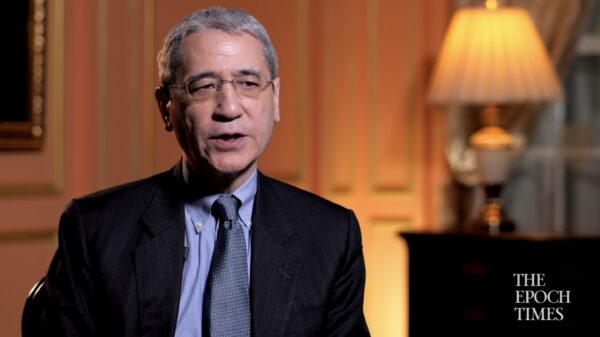
China affairs columnist Gordon Chang. (Courtesy of Epoch Times)
“And what that means is, as they open things up and reopen flights, there’s a major risk to other countries,” Philipp said.“If [these countries] don’t have accurate information, then what can they base their information on?”
As the documentary shows, the CCP’s delay in sharing information about the virus with other countries was not mere oversight. And beyond covering up the epidemic, China’s current actions and disinformation continues to endanger lives around the globe. The CCP has gone from denying the existence of the virus to spreading as many lies as it can to obscure the truth.
“This is an issue of human life,” Philipp said.
Why Would the CCP Lie?
From the beginning, the CCP has not been forthcoming.
“We don’t know what’s there, but the fact that the Communist Party is covering this up should trouble us deeply,” Chang said.
Those unfamiliar with the CCP will likely be shocked to discover the regime’s motives.
Philipp’s investigation of the CCP virus in this documentary goes back to the outbreak of SARS nearly two decades ago. The CCP tried to cover up the SARS outbreak as well, and The Epoch Times was one of the few media to expose this. There is precedent of the regime being untrustworthy in the event of an epidemic.
Philipp has been researching the CCP since 2008, and gave an example of its military approach to shed light on how the CCP can profit off this pandemic most consider a tragedy.
“One important thing to understand is they talk about war without morals. They talk about ‘unrestricted warfare’: war that does not take into account any concept of human rights, human dignity, human life. It is victory by any means. There is nothing they will not do, and we see the same thing in many parts of their system, including the medical system where altering the human genome is not a big deal to them,” Philipp said.
The documentary’s experts remind us: this is a nation that currently holds at least 1 million of its own people in concentration camps.
“They don’t care about human life when it comes to this regime—we’ve seen that in their human rights abuses,” Philipp said.
Epoch Times investigative journalist Joshua Philipp. (Courtesy of Epoch Times)
The documentary shows another link to SARS, and how one of China’s top virus experts’ study of SARS at the Wuhan Institute of Virology led to breakthroughs in creating a coronavirus to infect humans. But to what end?
“The Chinese Communist Party has been very open about its biological warfare ambitions, they don’t even try to hide it. And it’s been a huge injustice that people have not held them to stronger account than they should have, because the Chinese Communist Party is able to act with impunity and nobody criticizes what they do,” Philipp said.
The documentary is a comprehensive look at what the virus is and what has happened, and Philipp hopes it can allow nations to make better-informed decisions.
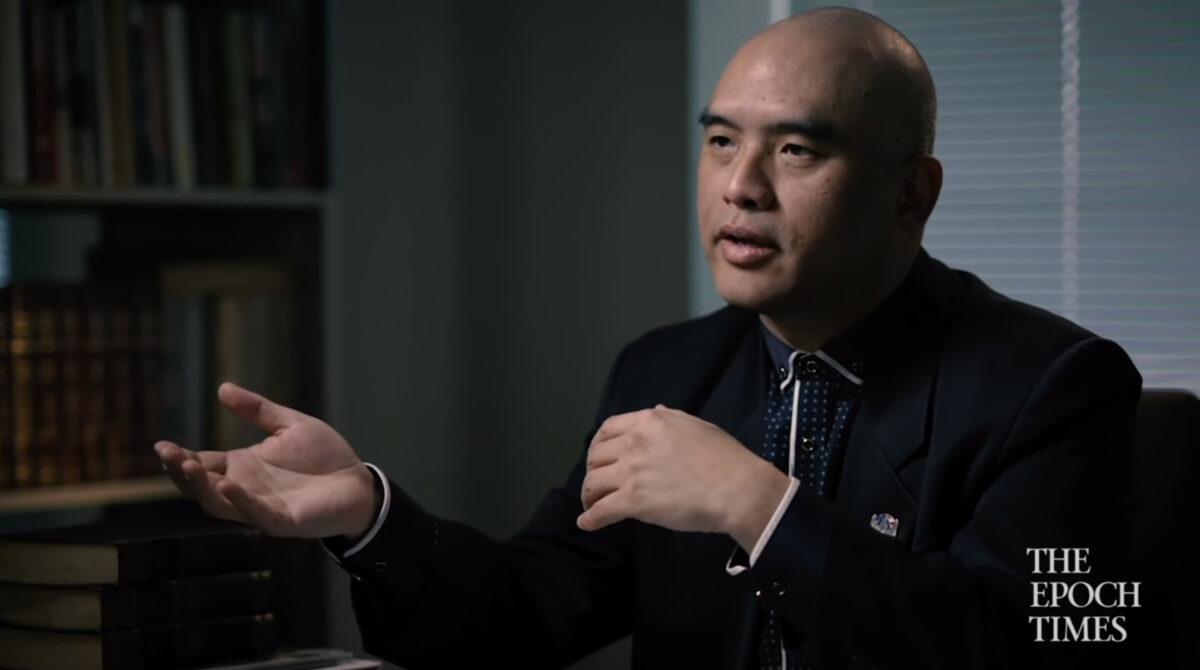
Dr. Sean Lin, former lab director of the viral disease branch at Walter Reed Army Institute of Research. (Courtesy of Epoch Times)
“At the very least, we can provide this as a package of information that will inform the entire world exactly where this virus came from, and exactly what needs to be done going forward,” he said.“And at the very least, they will be more cautious when dealing with the Chinese Communist Party, especially at this time.”“People’s lives are at stake and we find it very necessary to do this kind of work,” he said.
Talking Points
The information is perhaps more vital than ever, because while countries are turning to the World Health Organization for information, WHO is turning to the CCP.
General Robert Spalding, senior fellow at the Hudson Institute and former National Security Council senior strategy director, was in China when SARS broke out; he was evacuated, but he knows what a cover-up looks like. How the CCP handled the SARS cover-up is exactly how they have handled this one. He is among several experts who say the CCP clearly has no intention of ending the epidemic or curing the virus.

Senior investigative Epoch Times reporter Joshua Philipp in New York City. (Courtesy of Epoch Times)
“You can see that the WHO is essentially following the Chinese Communist Party’s guidelines,” Spalding said.
The WHO isn’t the only organization doing so; international organizations to individual academic institutions around the world are afraid to say something that may anger the CCP. In recent weeks, Philipp had reached out many well-known scientists who once suggested the virus causing this mysterious COVID-19 disease was created in a lab, but they no longer wanted to talk.
From the beginning, the CCP prevented organizations like the Centers for Disease Control and Prevention from studying the origin of COVID-19, Gordon Chang said.
The CCP’s actions speak to a problem deeper than the virus.
“Every country has diseases, but in China they become national emergencies and global emergencies, because the real disease here is communism,” Chang said.
* * *
Watch the complete documentary below:
Watch the complete documentary below:
Italy’s Camera della Moda, Fashion Associations Urge End of Lockdown
The lockdown in the country has been extended to May 3, which puts the industry and jobs at risk.
MILAN – On Friday evening, Italy’s Prime Minister Giuseppe Conte extended the country’s lockdown to May 3, which was largely expected. The lockdown to fight the coronavirus outbreak was first enforced on March 9 and was meant to be lifted on April 13. Italy has been heavily impacted by the COVID-19 outbreak and, despite an improvement in the curve of contagions, as of April 10, at least 147,577 citizens have been infected, and of these, 18,849 have died, according to the Civil Protection.
Conte said that only stationery shops, book stores and stores that cater to infants and children will be free to open on April 14, as well as professional studios, and allowed a number of industries to restart, including forestry and components. Fashion was not included and, on Saturday, Italy’s daily La Repubblica published a paid ad by the country’s Camera della Moda, signed by its chairman Carlo Capasa. In it, he references how together with luxury goods association Altagamma and Confindustria Moda, the associations have put together their expertise to offer to the government a number of measures that will hopefully be “quickly and easily implemented.”
In the open letter, Capasa underscored how fashion’s production cycles are long and, while it was only right to comply with the lockdown, closing until May 3 could “risk destroying” the sector. “If we don’t reopen by April 20, we will not have the technical time to deliver the fall/winter collections that need to be shipped around the world by July. We will not be able to produce the spring/summer 2021 collections for the sales campaign that take place in June, which [this year] will be done remotely,” Capasa stated. This is an obligatory step to allow production, followed by the delivery to stores globally by December and January. The stop will also not allow companies to have the collections ready for the shows in September. “The question at this point is: Are we ready to lose the industry that is our symbol? To lose the role of world leadership?”
In the first part of the letter, Capasa noted that fashion remains largely an unknown world for those that live outside of it and are not aware of its “real values and real mechanisms.”
Pointing out how Italy is the first country in Europe in terms of textile, fashion and accessories production, accounting for 41 percent of manufacturing in the continent, he characterized this as a “an outstanding record as no other industry has that advantage on other countries” in the region, highlighting how Italy is the first producer of luxury fashion in the world, and an “ambassador” of the country’s positive values. “Now is the moment to preserve our industry and to be more than ever proud of it.”
Warning against the loss of hundreds of thousands of specialized and qualified jobs, Capasa said the associations are aware of the caution needed to balance health and the economy, but said that the industry’s companies have been setting up regulations and safety protections. He also reminded how part of the supply chain was converted “in record time” to produce masks and medical overalls, “with passion and generosity.”
However, “if we want to continue to have a fashion industry in Italy, we must restart fashion’s production immediately with the pride of doing it not only for us but also for the future generations of this wonderful country.”
As reported, over the past month several fashion associations and retailers have expressed their concerns with the lockdown. Last month, the Camera della Moda submitted a document detailing a number of proposals for action in support of the fashion industry to the government, which ranged from cuts in fiscal and social security charges to contain labor costs for companies affected by the crisis, to tax incentives and direct aids to small and medium enterprises, including artisans, to avoid crushing Italy’s typical structure, to name a few.
Clare Waight Keller is departing Givenchy after an eventful three-year stint as its artistic director, WWD has learned.
The British designer, who catapulted Givenchy’s international prominence — and her own — by dressing Meghan Markle for her royal nuptials in 2018, departs the French brand at the end of her initial contract.
Her last collection was the fall 2020 women’s ready-to-wear, paraded on March 1 during Paris Fashion Week.
The development underscores a trend for shorter tenures at heritage brands, and sets the stage for yet another reinvention at the storied couture house, controlled by luxury giant LVMH Moët Hennessy Louis Vuitton since 1998.
“Focusing on a world based on haute couture has been one of the highlights of my professional journey,” Waight Keller said in a statement shared first with WWD.
“I have shared so many incredible moments with the brilliant Givenchy ateliers and design teams: Your exceptional talent and dedication will forever remain in my memories. My heartfelt thanks go out to each of the unsung heroes and heroines behind the scenes, for their contribution from product to communications and retail, and every global team member, partner and supplier in between.”
Givenchy said it would announce a new “creative organization” at a later date.
Given the absence of an artistic director, and factory shutdowns amid the coronavirus outbreak, Givenchy has canceled its women’s pre-spring collection, and it will not produce a fall 2020 couture collection. It plans to prepare a big men’s collection — combining pre-spring and runway — for sale in its showrooms in June.