Third Point (Dan Loeb) discloses updated portfolio positions in 13F filing: New ETRN JD GPS positions
Highlights from 2020 Q2 filing as compared to Q1 2020:
- New positions in: ETRN (~10 mln shares), JD (~3.25 mln), GPS (~3 mln), BABA (~2 mln), EVRG (~1.5 mln), NKE (~1.25 mln), ATVI (~1.13 mln), FB (~0.85 mln)
- Increased positions in: IAA (to ~10.59 mln shares from ~6.5 mln shares), DIS (to ~5.5 mln from ~1.43 mln), RTX (to ~5.27 mln from ~4 mln), FIS (to ~3.2 mln from ~2.35 mln), CHTR (to ~0.75 mln from ~0.3 mln) BURL (to ~1.4 mln from ~1.13 mln),
- Maintained positions in: FPAC (~15.69 mln shares), RACE (~1.09 mln shares), SPGI (~0.78 mln shares), ADBE (~0.67 mln shares), AMZN (~0.21 mln shares)
- Closed positions in: CNC (from ~6.52 mln shares), AVTR (from ~5 mln) SERV (from ~3.1 mln), SNE (from ~0.68 mln)
- Decreased positions in: BAX (to ~4 mln shares from ~11.58 mln shares), KDMN (to ~7.6 mln from ~9.41 mln), BMY.RT (to ~6 mln from ~7 mln), DHR (to ~3 mln from ~3.57 mln), V (to ~1.25 mln from ~1.4 mln), CRM (to ~1.43 mln from ~1.53 mln)
FT : CureVac vows ‘ethical margin’ on price of Covid-19 vaccine
Pharma group plans to make mRNA-based inoculation in Germany and ship it worldwide
CureVac, one of the pharmaceutical groups developing a potential vaccine for Covid-19, has ruled out selling its inoculation at cost, arguing instead for an “ethical margin” for shareholders.
The German company raised $213m in a US stock market listing on Friday and will put the money towards conducting trials for the vaccine.
CureVac’s approach uses messenger RNA technology, which aims to transcribe some of the pathogen’s genetic code into human cells in order to help them detect it. No mRNA vaccine has been approved by regulators, though rivals Moderna and Pfizer, along with the latter’s German partner BioNTech, are betting on it. CureVac says its jab could require lower doses.
“That would allow us to give a competitive price while still preserving some ethical margin,” said Pierre Kemula, the company’s chief financial officer, in an interview with the Financial Times.
“We can’t do it at cost. We have investors putting money for 10 years into the company so there should be a little return for [them],” he said. Mr Kemula declined to say what the margin would be, although he said prices would be dose-dependent and not cost-related.
Drugmakers have been under pressure to lower costs for Covid-related drugs or vaccines. Supply deals in recent weeks have laid bare significant price differentials in what drugmakers have been able to obtain from governments, which have been scrambling to secure early access to potential inoculations.
Prices range from about $3 to $4 a dose for the vaccine developed by AstraZeneca and the University of Oxford, to $10 a dose for the Johnson & Johnson jab candidate. Moderna has priced some of its jabs at $74 a course. AstraZeneca and J&J have said they would not seek to profit from their vaccines, at least during the pandemic.
“Some [rivals] are injecting 100 micrograms [of active ingredient] for Covid,” added Mr Kemula. “We are testing 2, 4, 6, 8, micrograms for shots.”
He said this would enable the vaccine maker — 10 per cent of which was recently acquired by GlaxoSmithKline — to do more with less.
CureVac was rumoured to have attracted the interest of the Trump administration earlier this year. But Berlin moved to block any foreign takeover attempts by investing €300m in the company, acquiring a stake of 23 per cent. The executive reported to have been involved in those talks no longer works at CureVac.
The group, which plans to manufacture its vaccine in Germany and then ship it worldwide, is in talks with governments around the world and regulators including the US Food and Drug Administration, Mr Kemula said, with a focus on Europe.
“It’s all happening now in terms of governments trying to secure volumes for tomorrow,” he said. “Europe is a bit late securing volume, so there is a bit more urgency for Europe.”
A person familiar with talks between the EU and the vaccine maker confirmed the two were in active discussions, with CureVac not seeking to price its vaccine at cost.
The drugmaker is conducting phase one trials on 168 people. Messenger RNA competitors Moderna and Pfizer have already moved to phase three — the last step before regulatory approval.
CureVac is also working with Tesla Grohmann Automation, a unit of the Californian automaker it acquired three years ago, to develop RNA printers that could help manufacture the vaccine.
There are eight prototypes of the printer, which can produce about half a gramme of the vaccine each week, which Mr Kemula said could amount to a significant amount were large numbers of printers produced.
The work with Tesla could lead to “a spin-off, an affiliate, a joint venture,” Mr Kemula said.
He defended the company’s pricing strategy.
“You’ve very far from the classic high-margin business that rare diseases can be,” he said. Rare diseases are sometimes protected under orphan-drug laws that encourage research and development by cutting tax and creating lengthy monopolies.
“Mobilising the company around the cause is great, but it precludes the company from doing other things,” Mr Kemula said. “Having a small margin is fair.”
>>> Up
* Aareal Bank Raised to Add at AlphaValue
* Burberry Raised to Hold at Jefferies; PT 1,400 pence
* DWS Raised to Buy at Grupo Santander; PT 40.43 euros (+)
* Hella PT Raised to 49 euros from 42 euros at Jefferies
* LVMH Raised to Buy at Jefferies; PT 455 euros
* Pernod Ricard Raised to Overweight at Barclays; PT 174 euros
* Persimmon Raised to Neutral at Davy (+)
* Qiagen Raised to Buy at Berenberg; PT 50 euros
* SThree Raised to Buy at HSBC; PT 315 pence (+)
* Synthomer PT Raised to 370 pence from 330 pence at Berenberg
>>> Down
* Kojamo Cut to Hold at Nordea (+)
* Remedy Entertainment Cut to Sell at SEB Equities (+)
* Rovio Entertainment Cut to Sell at SEB Equities; PT 5.50 euros
* Schouw Cut to Hold at SEB Equities; PT 600 kroner
* SGL Cut to Hold at HSBC; PT 3.50 euros (+)
>>> Initiation
* Mercell Holding Rated New Buy at Pareto Securities (+)
>>> Call
* BAT Shares to React Positively to South African Ban Reversal: MS (+)
* Goldman Boosts S&P 500 Target by 20% as Strategists Catch Up
* Big Luxury Players to Keep Winning, LVMH Up to Buy: Jefferies
* Larger Caterers Better Placed, Sodexo Now Top Pick at Berenberg
* G5 Entertainment, Embracer PTs Raised at Handelsbanken
* Pernod Ricard Upgraded at Barclays on FY21 Growth Prospects (+)
* Persimmon Shares Upgraded at Davy Ahead of Interim Results (+)
* Qiagen Standalone Prospects Strong, Raised to Buy: Berenberg (+)
* Synthomer EPS Outlook Up After Earnings Defied Bears: Berenberg
* TUI Faces ‘Substantial’ Equity Issue on Rising Debt, Citi Says (+)
* Unibail Raising Equity Is Option Worth Considering: Berenberg (+)
California Set To Pass The Nation's First Wealth Tax Targeting The Ultra Rich
It was about about nine years ago when consulting company BCG first suggested that in a time of out of control spending and soaring debt loads, the only fiscally sustainable "solution" was to implement a wealth tax (see "There May Be Only Painful Ways Out Of The Crisis").
While the idea was well ahead of its time in 2011, and was quickly shut down in the court of public opinion, several years later none other than the IMF resurrected the idea of a wealth tax, which has only gained momentum in recent months, and despite widespread grassroots pushback, the concept of a "wealth tax" has moved front and center and most recently the chairman of Capital Economics, Roger Bootle, said that the world’s wealthiest could be subjected to higher tax rates as governments scramble to fund spending and repair their economies amid the coronavirus crisis.
Fast forward to today when the ultra-liberal state of California is now ready to take this "socialist" idea from concept to the implementation phase, with the SF Chronicle reporting that a group of CA state lawmakers on Thursday proposed a first-in-the-nation state wealth tax that would hit about 30,400 California residents and raise an estimated $7.5 billion for the general fund.
The proposed tax rate would be 0.4% of net worth (most likely ended up far higher), excluding directly held real estate, that exceeds $30 million for single and joint filers and $15 million for married filing separately.
Oakland Democrat Rob Bonta, who is the lead author of the wealth tax proposal AB2008, justified the wealth expropriation by saying that California is facing a big budget deficit because of the health and economic crisis brought on by the coronavirus, and "we can’t simply rely on austerity measures," to close it. It wasn't immediately clear why austerity doesn't work considering that California has never actually tried it, but in any case the Democrat's proposal was clear: "We must consider revenue generation."
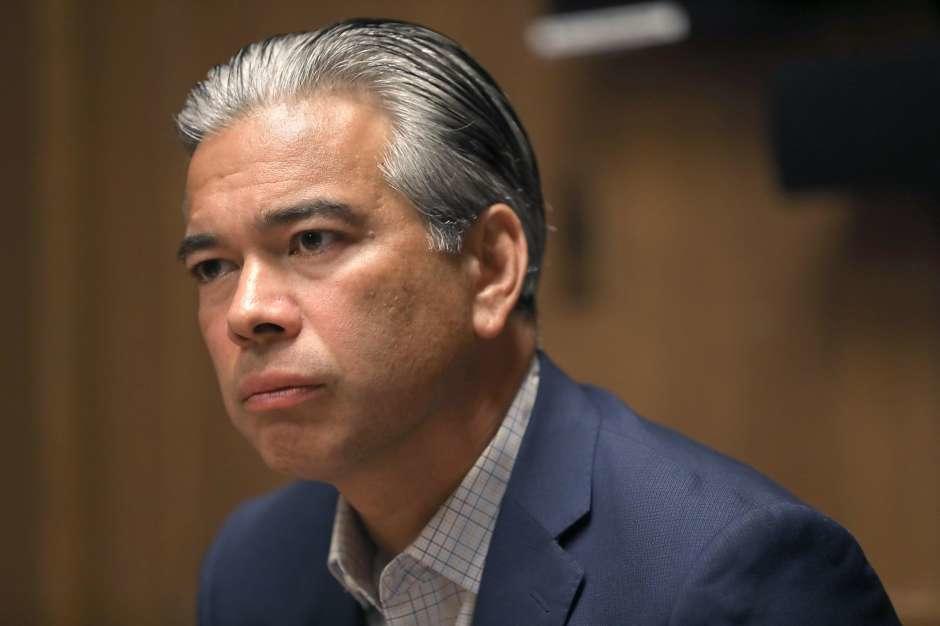
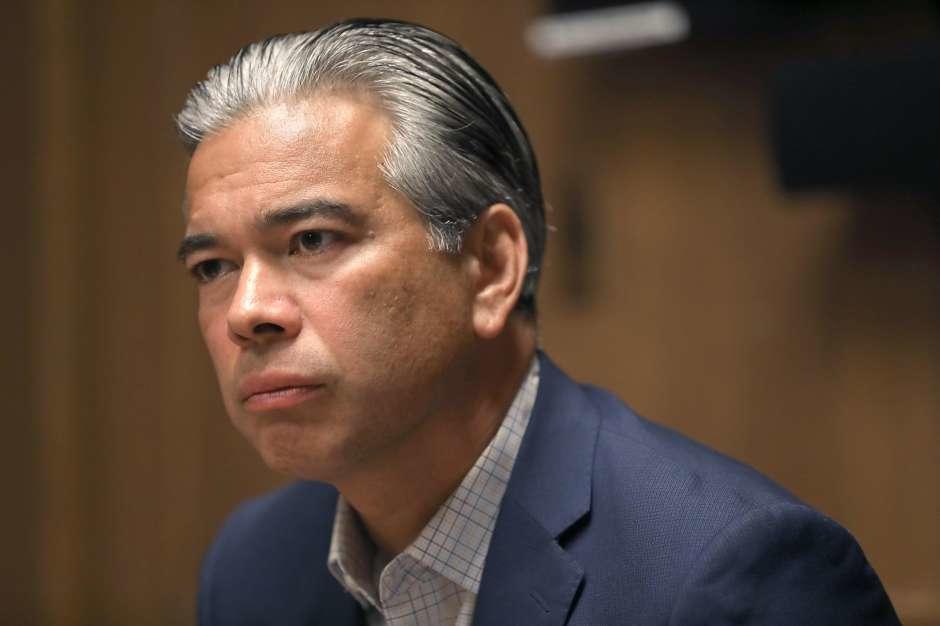
California State assembly member Rob Bonta, D-Oakland, is the lead author of AB 2088, which would create a first-in-the-nation wealth tax
And in doing that, California will trigger an exodus of billionaires who will be the first to realize which way the wind is blowing, and end up hurting the state far more than helping it as hundreds of ultra wealthy taxpayers leave for places like Florida or - for that matter - any other place in the world.
Bonta said that the union-sponsored bill will not be heard before the Legislature adjourns Aug. 31, but “it can be reintroduced on day one of the next session.”
Now what most normal Americans (i.e. those not living in California) may not know, is that this would be the second wealth tax set to pass in California. Bonta said he would like to see a wealth tax passed in addition to the “millionaires tax” proposed in a bill introduced in late July. AB1253 would add surcharges of 1% to incomes (joint or single) between roughly $1 million and $2 million, 3% on income between $2 million and $5 million, and 3.5% on income greater than $5 million, bringing the top rate to 16.8%.
California’s top rate today, at 13.3%, is already the highest in the nation, and it's only going higher.
The millionaires (and soon to be hundred thousandaires, then ten-thousandaires and so on) subject to the wealth tax would report it to the Franchise Tax Board along with their income taxes. They would have to report all assets including stock in publicly and privately traded corporations; interests in partnerships, private equity or hedge funds; cash, bonds and savings accounts; mutual funds, futures and options; art and collectibles; offshore financial assets, pension funds, non-mortgage debt, real property and mortgage debt. Which of course is idiotic because some of that wealth is extremely illiquid and evaluating it will not only take material time and effort, but also result in drastic costs. Furthermore, just how will the government confirm that whatever wealth is reported represents reality. But such is life in a half-baked socialist utopia where every idea is for lack of a better word, idiotic.
There was some good news: "Directly held real property, and mortgages and other liabilities secured by directly held real property,” must be reported, but would not be considered in calculating the taxpayer’s worldwide net worth, the bill said. How wonderful... oh wait, someone realized that this would simply be double taxing the same assets: "Real estate would be exempt from the wealth tax because it’s already subject to property tax, at a higher rate", Bonta said.
Among those handful of rational voices who call out this sheer idiocy for what it is was Jared Walczak, a vice president with the Tax Foundation, a think tank, who said that “it is far easier to call for a state-level wealth tax than it is to actually design an enforceable one." Maybe that’s why no state has imposed one.
However now that California is on the verge of passing a wealth tax, every other insolvent state will follow suit, staring with New York.
“Some New York legislators are floating the idea, but Governor Cuomo has poured cold water on the notion, rightly concerned that it would lead to an exodus of high net worth individuals from the state,” Walczak said via email. Somehow California believes it is exempt from such an exodus. Spoiler alert: it isn't, and the state's wealthiest residents won't think twice to up root and move their tax residence to a state which treats their wealth with respect.
There is of course the possibility that this idiotic idea will somehow die before it is enacted. Walczak said that implementing a wealth tax at the state level “would be extremely complex, with questions of how to value illiquid assets and whether residents’ out-of-state wealth — including their investment holdings — can be taxed.” He added that "any tax that is actually effective at taxing wealth, however, would be equally effective at driving wealth out of state."
Emmanuel Saez, a UC Berkeley economics professor, i.e., a socialist, said income tax is not an effective way to tax the ultra-wealthy, because they can avoid the income tax as long as they don’t cash in their investments. Facebook CEO Mark Zuckerberg could avoid the income tax as long as he doesn’t sell his Facebook stock, and if he moved to Florida before realizing his gains, he may never owe tax to California, Saez said during a call announcing the bill.
Saez, like any other socialist who has a terminal inability of grasping who the world really works and that every idiotic action by the state will have an appropriate reaction by the population, said the bill would not deter startups because it would let entrepreneurs defer the wealth tax for a period of time. Brilliant.
"Liquidity-constrained taxpayers with ownership interests in hard-to-value assets and business entities, such as startup businesses, shall be able to elect for an unliquidated and deferred tax liability to be attached to these assets instead of the net value of these assets being assessed at the end of a tax year.” The taxpayer would have to sign a contract with the state specifying when the tax would be paid.
Well, Emmanuel, instead of signing a "contract" with the state when the tax will be paid, all those entrepreneurs that keep the state afloat will simply... leave. And guess what happens to the already dismal tax collections then.
None of this matters to the Berkeley socialist, and instead he pointed to a paper he co-authored, saying that California has 12% of the U.S. population but 17% of all U.S. millionaires and 25% of its billionaires. In 2011, California had only 15.5% of the nation’s millionaires and 21% of billionaires. The wealth tax, he said, would hit about 0.15% of California tax filers.
We can't wait for the paper's second edition published in 2025 when the "professor" finds that California has none of the US' billionaires.
Until then, the rare voices of reason such as that of Robert Gutierres, president of the California Taxpayers Association, will become increasingly rare:
“The state approved $9.2 billion in business tax increases in the new budget, but Sacramento politicians and special interests continue to seek income tax increases, property tax increases, a ‘headcount tax’ on in-state employees, and this new annual tax on money that was left over after all the other taxes were paid,” Gutierrez said, adding that "a very small number of Californians pay the vast majority of state income taxes. When the constant drumbeat for outrageous tax hikes drives them away, who will pick up the tab?"
Why, the Fed of course.
49 People Shot In Last 72 Hours In New York As City Hits Its "Expiration Date"
The gentrified New York City that made the Big Apple the envy of billionaires, oligarchs, child molesters and money laundering criminals from around the world is no more, and in its place is the hellish New York from the 1970s.
According to Gothamist, between Thursday and Saturday, 49 people were shot in the largest city in the United States, as the uptick in gun violence continues this summer and is rushing to catch up with that other progressive paradise, Chicago.
Putting the surge in context, the number of people shot over the three days is five times more than the eight who were shot during the same days last year according to the Washington Examiner. While most of the shooting victims were merely wounded, at least six people were killed by gunshot wounds over the 3-day interval, compared to three homicides that took place during the same time last year.
Year to date, there have been 1,087 shooting victims so far in 888 different incidents throughout the city, roughly double the crime observed in 2019. Last year at this time, there had been 577 shooting victims in 488 incidents in New York City.
Among those murdered was an off-duty corrections officer who worked at Rikers Island. John Jeff, 28, had just left a party in Queens at 3 a.m. on Saturday morning when he was shot in the head and chest.
"Early this morning, the Correction Officers' Benevolent Association was notified that New York City Correction Officer John Jeff, assigned to the Anna M. Kross Center on Rikers Island, was found dead in South Jamaica Queens. He sustained multiple gunshot wounds. He was 28 years old and was on the job for just over two years with his whole life and career ahead of him. He was well-liked and highly regarded by his fellow officers,” Correction Officers Benevolent Association President Benny Boscio Jr. said in a statement.
Neighbors reported hearing multiple gunshots outside their homes, and sources told ABC 7 the killing appeared to be planned.
“I heard nine shots,” resident Raymond Leslie said. “You really don’t want to come out on these streets at night because it’s getting increasingly dangerous.”
Mayor Bill de Blasio, whose actions - or lack thereof - have been blamed by many for triggering a historic exodus among New York residents, denounced the shooting tweeting, "This is a tragedy.”
"Chirlane and I are keeping this young man’s family, loved ones and brothers and sisters in @CorrectionNYC in our hearts today. An investigation into this cowardly attack is ongoing. If you have any information please contact the NYPD,” the mayor tweeted.
The scale of New York's shooting problem becomes apparent when one considers that just the start of this month marked more shootings in New York City so far this year than in all of 2019, a continuation of the violent protests, rioting and looting that was unleashed in New York in recent months.
As the Washington Examiner notes, "protests, riots, and vandalism sparked by the death of George Floyd have increased the anti-police sentiment in the city at a time when de Blasio has pledged to strip $1 billion from the city's police budget and disbanded the plainclothes anti-crime unit. Hundreds of police officers have filed their retirement papers in recent weeks as tensions between the force and the public become more strained by the increase in crime."
Meanwhile, as we reported last week, Thousands of New Yorkers have been fleeing the city in recent weeks, citing the uptick in violence as well as coronavirus restrictions.
"We reached our New York expiration date,” one New York City mother recently told the New York Post. “Things weren’t heading in the right direction. What we’re seeing now isn’t at all surprising.”
Meanwhile, as people packed their bags one last time for New Jersey, the Hamptons, and other local areas, Democratic Gov. Andrew Cuomo pleaded that they return to the city, even offering to cook them dinner.
“I literally talk to people all day long who are now in their Hamptons house who also lived here, or in their Hudson Valley house or in their Connecticut weekend house, and I say, ‘You got to come back, when are you coming back?’” Cuomo said earlier this month. "'We'll go to dinner, I'll buy you a drink, come over, I’ll cook.'”
Unfortunately, since he can no longer even assure them that they won't be murdered in broad daylight, we doubt anyone will care much for Cuomo's desperate platitudes.
- AstraZeneca (ZEG TH) +2.7%
- Sanofi to Buy U.S. Autoimmune Drugmaker in $3.4 Billion Deal (1)
- Glaxo (GS7 TH) +2.6%
- BAT (BMT TH) +2.1%
- Evotec SE (EVT TH) +1.9%
- Sartorius Stedim (56S1 TH) +1.6%
- OMV (OMV TH) +1.5%
- AMS (DQW1 TH) +1.5%
- Siemens Gamesa (GTQ1 TH) +1.4%
- Scor (SDRC TH) +1.2%
-
Kering (PPX TH) +0.9%
- Big Luxury Players to Keep Winning, LVMH Up to Buy: Jefferies
- Volvo (VOL1 TH) -1.3%
- Engie (GZF TH) -1.4%
- Commerzbank (CBK TH) -1.4%
- Ryanair (RY4C TH) -1.6%
- Germany Declares Spain Excl. Canary Islands Risk Area: Spiegel
- ProSieben (PSM TH) -1.6%
- Airbus (AIR TH) -1.8%
- EasyJet (EJT1 TH) -2%
- Carnival Plc (POH1 TH) -2.4%
- Lufthansa (LHA TH) -3.2%
- TUI (TUI1 TH) -5%
- Germany Declares Spain Excl. Canary Islands Risk Area: Spiegel
This British Defense Contractor Is Powering Through the Pandemic. Here’s How That Offers Investors Security.
Defense-technology firm QinetiQ’s shares have increased 14% over the past year, thanks to long-term government contracts that have helped insulate the company from the pandemic’s fallout.
London-listed QinetiQ (QQ:UK) employs scientists and engineers to create cutting-edge technology to defend countries. From gadgets to help soldiers’ vision in the dark to protective bomb suits, parallels are often drawn between the company and the fictional Q division in James Bond movies that invented exploding pens and wristwatches fitted with garrote wire.
However, QinetiQ is very real and has powered through the crisis, armed with contracts that were little affected by coronavirus. Over the past 12 months it has secured its largest level of orders in nine years but the real growth will come from international sales, which is forecast to comprise 50% of sales by 2024.
It has also been on a recent acquisition spree, which analysts predict will boost earnings by widening its geographic footprint in America and Australia.
Shares are trading at about 314 pence ($4.09), and broker Numis estimates the price will increase 17.4%, to 370 pence.
Annabel Hewson, an analyst at broker Stifel, wrote in a July note that “QinetiQ’s management of the day-to-day challenges presented by the Covid-19 global pandemic has been pretty strong to date.
“A pivot in focus toward intelligence-driven, technology-heavy, capital-light solutions all fall under QinetiQ’s area of expertise,” she said. Her target price is 343 pence.
QinetiQ has a £1.7 billion ($2.2 billion) market value and employs 6,787. It fetches 16.3 times this year’s expected earnings and is valued at a 10% premium to its peers. In May it posted flat pretax profit of £123.1 million for the year to March 31 on sales of £1.1 billion. In its first-quarter update in July, QinetiQ said delays to customer trials and training activity due to Covid-19 was beginning to tail off. Shares are down 12% so far this year, and guidance remains withdrawn.
Chief Executive Steve Wadey told Barron’s that “with growing uncertainty globally and an increasingly complex threat environment, we believe our strategy of mission-led innovation is increasingly relevant to our customers.”
The company last year bought Manufacturing Techniques MTEQ, a Virginia-based manufacturer of night-vision technology, for $105 million. Wadey said the acquisition more than doubles the size of QinetiQ’s business in the U.S.
Last month, the company spent £25 million on Manchester-based Naimuri, which uses DevOps, a way of working that helps firms enhance systems and software to fast track the development of apps and services.
In 2001, Britain’s Ministry of Defence broke up its Defence Evaluation and Research Agency, with the bulk renamed QinetiQ and privatized, and the U.K. government retaining a veto over any sale.
The company signed a 25-year agreement with the agency to provide testing and evaluation of military and civil platforms, which will offer long-term stability. But growth is not just coming from existing contracts (some of which have fixed-profit formulas because government clients are not tendering to rival companies due to the nature of the work). The company also saw a 25% increase in orders over the past financial year.
“Looking forward, very strong order intake and the full-year contribution of three acquisitions should boost earnings performance,” Stifel’s Hewson said.
Investors will never really know the specifics of what QinetiQ is developing for governments, but as geopolitical tensions worsen an investment may offer some security.
Twitter Tries to Tackle a TikTok Tie-Up
All camera eyes are on Twitter.
It was reported last week that Twitter (ticker: TWTR) was in talks to acquire TikTok’s U.S. operations—a move that appeared baffling at first blush. Twitter has a market cap of $30 billion, roughly equal to what potential rival bidder Microsoft (MSFT) could pay for TikTok
But underlying that skepticism about Twitter pursuing an acquisition was the idea that the social-media company—while popular—lags behind peers such as Snap (SNAP) and Facebook (FB), which also owns Instagram. Twitter, which reached an agreement
Jack Dorsey Stays Twitter CEO After Company Reaches Agreement With Elliott Management
Just one week after it emerged that activist hedge fund Elliott Management was looking to oust Twitter’s controversial chief executive, the two parties reached an agreement.
Continue reading with activist investor Elliott Management earlier this year, is surely facing pressure to improve profitability and broaden its reach.
Snatching up TikTok could certainly be one way to do so. It would capture the short-form video platform’s 100 million U.S. users, and give Twitter a chance to capitalize on lessons it learned with the demise of Vine, Twitter’s short-form video-hosting service that it shuttered in 2016. The question of financing becomes somewhat less onerous considering that Twitter has investors such at Elliott and private-equity giant Silver Lake.
Another idea, floated by Baird analyst Colin Sebastian, would see Microsoft creating a “digital media trifecta” by buying TikTok and Twitter and doing more with its Bing search engine. With its $136 billion cash position, Microsoft could certainly afford both.
But even if deals don’t happen, Twitter knows it’s under pressure.
Luckily, a contentious election cycle and the eventual return of live events should see Twitter capture eyeballs and thumbs, if not hearts and minds.
DAX:
- Deutsche Wohnen (DWNI TH) +1.2%
- Covestro (1COV TH) -0.8%
- Daimler (DAI TH) -1%
- Wirecard (WDI TH) -5.8%
MDAX:
- Evotec SE (EVT TH) +1.8%
- K+S (SDF TH) +1.2%
- Varta (VAR1 TH) +1.1%
- Delivery Hero (DHER TH) +1.1%
- Lanxess (LXS TH) -1.2%
- Commerzbank (CBK TH) -1.4%
- ProSieben (PSM TH) -1.5%
- Lufthansa (LHA TH) -3.5%
- Germany Declares Spain Excl. Canary Islands Risk Area: Spiegel
- Lufthansa Cabin Crew Vote in Favor of Collective Agreements
SDAX:
- Corestate (CCAP TH) +2.9%
- Hamborner REIT (HAB TH) +1.4%
- Steinhoff (SNH TH) -1.5%
- Takkt (TTK TH) -2.6%
- Bilfinger (GBF TH) -2.8%
Farfetch’s José Neves Watching Amazon, but Looking Forward
The ceo of the e-commerce platform said Amazon is not yet getting traction with the luxury crowd.
José Neves knows Amazon is there, lurking, but the founder, chairman and chief executive officer of luxury platform Farfetch seems more watchful than worried.
“Never underestimate Amazon, it’s such a successful business,” Neves said during interview with WWD when asked about Amazon’s still behind-the-scenes preparations for a luxury platform.
“Our data and our conversations with brands indicate they are still far away from getting traction from the industry,” Neves said. “But we’ll keep a watchful eye.”
And along with that watchful eye, he plans on keeping his foot on the accelerator.
“We believe that the focus has to be on continuing to add value,” he said. “We had 100 percent retention of our top brands and top 100 retailers” over the past three years.
Farfetch might have shaken investor confidence last year, in part by getting into the production side of fashion by buying Off-White licensee New Guards Group, but it seems to be proving its mettle in the crisis, adding more than 500,000 new customers in the second quarter.
Revenues for the three months ended June 30 rose 74.3 percent to $364.7 million. And adjusted losses before interest, taxes, depreciation and amortization tallied $25 million, better than year earlier and sufficient for Farfetch to say it was progressing toward its target of full-year profitability under the measure in 2021.
Oliver Chen, an analyst at Cowen, called Farfetch the “luxury platform of choice,” pointing to its “impressive new customer acquisitions with less promotional activity.”
“We are encouraged by substantial growth at Farfetch versus other traditional luxury peers and believe Farfetch is gaining market share from both e-commerce and brick-and-mortar competitors,” Chen said.
The analyst pointed the New Guards division, which also includes brands such as Palm Angels and Ambush, as well as exclusives from major brands, as important advantages.
“Outside of New Guards Group, Farfetch has been building on its brand relationships to secure exclusivity for drop or capsule collections,” Chen said. “For example, Farfetch offered Gucci’s Off the Grid, Burberry’s Summer Monogram Capsule and Marni’s homeware collection,” he said. “Further, Farfetch will be the sole multibrand online channel for Fenty Beauty by Rihanna.”
Investors certainly liked what they saw in the quarter and can divine for the future, pushing shares of Farfetch up 10 percent to $29 in midday trading Friday, giving the firm a market capitalization of nearly $10 billion.
Neves painted Farfetch as something of a savior for fashion in the midst of the coronavirus crisis, helping customers find brands and brands and retailers find customers.
He also sees the ever-more digital world coming toward Farfetch’s positioning at an even faster pace and described it as a “sustained paradigm shift” on both the parts of shoppers and brands.
The new customers pouring into Farfetch come from across the spectrum, he said, pointing to surveys the company has conducted.
“The vast majority of responses say they are increasing their online shopping for luxury because it’s more convenient and they can find a range they cannot find in stores,” he said.
The average Farfetch customer is around 34 years old, which Neves called the “sweet spot for luxury growth.”
And as Neves chases that growth, he’ll be doing so with some fresh eyes.
Farfetch made sweeping changes to its board on Thursday, with five members stepped down, including co-chair Natalie Massenet, in what Neves described as a long-planned evolution.