>>> Europe : Brokers Upgrades & Downgrades - 3rd of February 2021 V2(+)

>>> Up
* Adevinta Raised to Overweight at Morgan Stanley; PT 160 kroner
* Alphabet PT Raised to $2,200 from $2,050 at Morgan Stanley
* Amazon PT Raised to $4,200 from $3,900 at Morgan Stanley
* Avanza Raised to Buy at DNB Markets; PT 300 kronor
* Aviva Raised to Overweight at Morgan Stanley; PT 425 pence
* Bucher PT Raised to 530 Swiss francs at Berenberg
* Detection Tech Oy Raised to Buy at Nordea; PT 30 euros (+)
* Electrolux Raised to Buy at Pareto Securities; PT 230 kronor
* Electrolux Raised to Buy at DNB Markets; PT 240 kronor (+)
* Elkem Raised to Buy at Nordea; PT 32 kroner (+)
* Ferrari Cut to Sell at Citi; PT 160 euros
* Fresenius Medical Cut to Hold at LBBW; PT 60 euros
* Lenzing PT Raised to 145 euros from 94 euros at Deutsche Bank
* Norsk Hydro Raised to Buy at Norne Securities; PT 45 kroner (+)
* Novozymes Raised to Hold at Berenberg; PT 370 kroner
* Persimmon Raised to Overweight at Barclays; PT 3,000 pence
* Polypipe PT Raised to 667 pence from 639 pence at Jefferies
* Prudential Raised to Hold at SocGen; PT 1,250 pence
* Rieter Raised to Buy at Stifel; PT 145 Swiss francs
* Safilo Raised to Buy at UBI Banca; PT 1.05 euros (+)
* Schibsted Raised to Buy at SEB Equities; PT 365 kroner
* SSP Raised to Buy at Berenberg; PT 335 pence
* Taylor Wimpey Raised to Overweight at Barclays; PT 170 pence

>>> Down
* Air France-KLM Cut to Underperform at Oddo BHF; PT 4.50 euros
* Barratt Cut to Equal-Weight at Barclays; PT 725 pence
* CCC Raised to Buy at HSBC; PT 100 zloty
* Crest Nicholson Cut to Equal-Weight at Barclays; PT 335 pence
* Holmen Cut to Sell at SEB Equities; PT 340 kronor
* Lundin Energy Raised to Outperform at RBC; PT 260 kronor
* Mycronic Cut to Sell at Handelsbanken; PT 200 kronor
* Orange Belgium Cut to Neutral at Oddo BHF; PT 22 euros
* Sainsbury Cut to Hold at SocGen; PT 247 pence
* Scatec ASA Cut to Neutral at Clarksons Platou; PT 300 kroner
* Unite Group Cut to Underweight at Barclays; PT 850 pence

>>> Initiation
* Agilyx Rated New Buy at Fearnley; PT 70 kroner (+)
* Diageo ADRs Rated New Overweight at Morgan Stanley; PT $192
* Solaria Energia Rated New Buy at Berenberg; PT 26 euros
* Wincanton Rated New Buy at Peel Hunt; PT 385 pence

>>> Call
* Adevinta Share Drop Provides Attractive Entry Point, MS Says
* Aviva Upgraded at Morgan Stanley, Disposals Bring Optionality
* Danone Losing ‘Material Amounts’ of Share in U.S.: Bernstein (+)
* Handelsbanken Shares Seen Muted After 4Q, Morgan Stanley Says (+)
* Solaria a Buy at Berenberg But Needs to Deliver on Targets
* SSP Group Share Weakness Brings Buying Opportunity: Berenberg
(ZH) Reddit Trader DeepFuc*ingValue Loses $19 Million In Two Days As He Holds On

Reddit Trader DeepFuc*ingValue Loses $19 Million In Two Days As He Holds On To Gamestop Stock

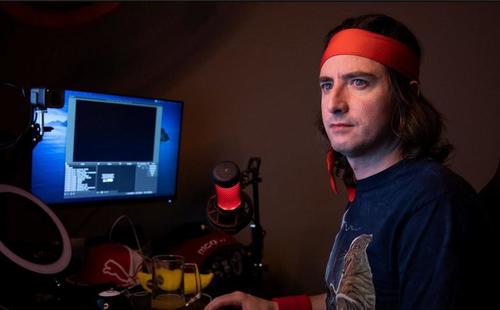
Earlier this week, one of the most notorious and popular WallStreetBets traders, best known by his alias DeepFnckingValue, by his YouTube username Roaring Kitty, and perhaps best known as the mastermind behind the Gamestop short squeeze, revealed himself to the world in concurrent articles from both Reuters and the WSJ (where he was also interviewed). His real name: Keith Patrick Gill, CFA, a title which the 34-year-old used while working in marketing for Mass Mutual, which he joined in 2019. The title then became worthless to Gill after he recently quit the life insurer to focus on just one thing: trading and spreading the gospel about Gamestop stock out of a basement of the home he rents in Wilmington, Mass... and boy was he successful.
Regular readers know the story: through frequent posts on Reddit’s WallStreetBets thread, Gill became the Pied Piper of GameStop, sharing screenshots of his portfolio which inspired thousands of amateur retail investors to follow him into the ailing retailer too, while orchestrating the biggest short squeeze ever.
Keith Gill, also known as u/DeepFnckingValue.
Gill began sharing his bets with the group in September 2019, posting a portfolio screenshot indicating he had invested $53,000 in the company and had already netted a $46,000 profit. By last Wednesday, Gill was up over 4000% on stock and options investments in the company, with his GME position plus cash worth nearly $48 million (the value of his GME investments was $34 million), according to his Reddit posts.
Sadly for Gill, after his account peaked in the middle of last week, it's all been downhill, and the money that took Gill over a year to accumulate he lost more than half in just two days: on Feb 1, DFV was down $5.2 million to $35.8 million including the cash, or $22 million in GME securities...
... followed by a record drawdown earlier today, when he lost a record $13.6 million bringing the value of his GME securities to just $8.4 million.
While for a hedge fund this sum is pocket change, for a trader who started off with $50,000 and worked diligently for nearly two years to build up a loyal following, the amount means months of hard work flushed down the drain. For most Americans, it's an amount they can only dream of.
And just like that, easy come, easy go: in the span of a few days, the value of Gill's GME stock and call has plunged by 75%.
Of course, with $22 million still in the account (thanks to $14 million in cash), Gill remains a winner although should GME stock continue to drop - and it most likely will not that the short interest has collapsed - his victory will get smaller... but at least he'll hold.
“Your steady hand convinced many of us to not only buy, but hold. Your example has literally changed the lives of thousands of ordinary normal people. Seriously thank you. You deserve every penny,” one Reddit user, reality_czech, responded to one of DFV's famous P&L screengrabs.
We are confident that Gill will have lots of pennies left over long after the GME short squeeze is forgotten, but to all those who followed in his footsteps and bought the stock on the furious momentum scramble higher over the past two weeks - all of whom are now underwater if they too held without selling since Jan 26 - and who plan on holding until the bitter end, they may not be so lucky.

FT : Under Armour to end licensing contract with National Football League

Under Armour to end licensing contract with National Football League
Exclusive: move marks latest marketing retreat as sportswear maker undergoes restructuring

Under Armour is ending its on-field licensing contract with the National Football League, the company said, in the US sportswear brand’s latest retreat from its marketing commitments and a move that reduces its presence in America’s most popular sport.

The decision will effectively restrict accessory products bearing the Under Armour logo from being worn or displayed on the field during games, limiting the endorsement impact for individual star athletes such as Tampa Bay Buccaneers quarterback Tom Brady. 

It is the latest marketing retrenchment by Under Armour, which last year moved to cancel two outfitting contracts with the university sports programmes at the University of California, Los Angeles and the University of California, Berkeley, together worth more than $300m. 

Sean Eggert, senior vice-president of global sports marketing at Under Armour, said in a statement to the Financial Times that “we are in active conversations with the NFL to determine alternative opportunities that best serve athletes moving forward and to ensure the best [return on investment] for Under Armour”. 

A spokeswoman for the company declined to specify when the NFL contract would expire. A person familiar with the discussions between the league and the company said the contract would end this year and that football players with individual contracts with Under Armour were re-evaluating their marketing prospects for the new season beginning in autumn.

The NFL did not have an immediate comment. Representatives for Mr Brady did not respond to requests for comment.

The financial value of an on-field licensing agreement is estimated at between $10m and $15m per year, according to a person familiar with such contracts. According to its most recent annual filing, Under Armour had more than $679m in total sponsorship obligations at the end of 2019.

The on-field rights primarily affect accessory products, such as gloves, as well as apparel worn by athletes at the NFL Combine, a scouting event for new players. 

The sportswear company is in the midst of a multiyear restructuring, which preceded the onset of the coronavirus pandemic, and its chief executive of just over one year, Patrik Frisk, has pledged a more disciplined approach for the Baltimore-based brand. 

In October, Mr Frisk announced Under Armour was effectively winding down its connected fitness business, a category that founder and former chief executive Kevin Plank pledged almost $1bn towards in an effort to more effectively sell products directly to consumers. 

Last year, Nike took over the rights to supply Major League Baseball uniforms after Under Armour retreated from a commitment made in 2016 to do so. Nike is the official uniform supplier to three of the top four American professional sports leagues — the NFL, MLB and the National Basketball Association — while Adidas supplies the National Hockey League.

>>> Stoxx 600 Pre-Market Indications

  • Freenet (FNTN TH) +8%
    • Freenet to Buy Back Up to EU135 Million Shares This Year
  • Publicis (PU4 TH) +4%
    • Publicis Sees Return to Growth Powered by Digital Investments
  • Intesa Sanpaolo (IES TH) +2.6%
    • Watch Italian Stocks as Draghi Approached to Form New Government
  • UniCredit (CRIN TH) +2%
  • Leonardo (FMNB TH) +1.9%
  • Siemens (SIE TH) +1.8%
    • Siemens Raises Guidance as China Recovery Bolsters Profits
  • BAT (BMT TH) +1.8%
  • Glaxo (GS7 TH) +1.7%
    • GSK, CureVac Aim to Develop mRNA Covid-19 Vaccines for Variants
  • Enel (ENL TH) +1.7%
  • Varta (VAR1 TH) +1.6%
  • Carrefour (CAR TH) -0.4%
  • Siemens Healthineers (SHL TH) -0.4%
  • Qiagen (QIA TH) -0.5%
  • Nokia (NOA3 TH) -1.1%
  • Banco Santander (BSD2 TH) -1.1%
    • Santander Takes $1.4 Billion Profit Hit on Spain Job Cuts
  • Nemetschek (NEM TH) -1.1%
    • Nemetschek FY Ebitda Meets Estimates
  • Scatec ASA (66T TH) -2.2%
    • Scatec ASA Cut to Neutral at Clarksons Platou; PT 300 kroner

FT : Jane Austen plot unfolds in the high-yield debt market

Jane Austen plot unfolds in the high-yield debt market
Shotgun marriage between credit investors and companies to be tested amid recovery from pandemic

The story of the high-yield bond market in 2020 was a marriage plot. For those of you unfamiliar with this literary device, Jane Austen perfected, if not invented, it with her well-known novels, all of which end with happily-ever-after weddings.

But as the many “smug marrieds” who subsequently divorce can attest, the real story is what comes after the sassy but ultimately proper protagonist makes a good match. The marriage plot can thicken when the reality of life with your spouse sets in. In the same way, investors in the bonds of some pandemic-pummelled companies may find that the happy ending of high coupons was in fact the beginning of a long, troubled union to leveraged balance sheets.

Take Macy’s, the beleaguered department store chain. Macy’s found its Mr Darcy in US Federal Reserve chairman Jay Powell last year, when the central bank rolled out its unprecedented fallen angel facility to buy bonds of companies downgraded to junk because of coronavirus concerns. The Fed’s liquidity could not save JC Penney and Neiman, both of which defaulted last year. But thanks to the appetite it kindled for yield, Macy’s was able to raise $1.3bn in secured debt to pay down a revolving credit facility, a line of funding that can be drawn on when needed.

The replacement of the revolver, which is generally viewed as short-term financing, with a five-year bond was effectively a shotgun wedding, like the one in Bridgerton necessitated by a compromising kiss between Daphne and Simon. The chief financial officer of Macy’s doubtless breathed a sigh of relief — without bank lenders agitating for their money back, the company has time to build its way back to the “normalised” cash flow. Happily ever after, indeed.

Yet for Macy’s and a host of other high-yield bond issuers, the marriage plot of 2020 is only the beginning of the story. Some sectors, like casinos and cruise lines, are likely to see an eventual rebound to 2019 levels of cash flow. If you got back on a Royal Caribbean ship after the 2019 norovirus outbreak, it seems likely that you will set sail again when you can. The timing is uncertain, which means that credit analysts’ primary job for the next year is liquidity analysis. Will RCL be back in business before its $4bn in cash runs out? At its current burn rate, that time would be in 12 to 18 months.

But the bigger story for RCL is what happens to the almost-$8bn of new debt that piled up on its balance sheet in 2020. The company used every crayon in the credit box to build up its resources — revolver facilities, term loans, UK commercial paper, export credit facilities, secured bonds, unsecured bonds and convertible bonds.

Three-quarters of its debt matures in the next five years. Even if cash flow rebounds to 2019 levels by the end of 2021, the ratio of RCL’s debt to earnings before interest, tax, depreciation and amortisation will be close to six times — almost twice as high as at the end of 2019. With much of its free cash flow spoken for to build new ships, RCL appears to be stuck in an unhappy marriage to a highly-levered balance sheet for years to come.

And, even so, it might be in a better boat than Macy’s. The pandemic fractured retail spending habits, pulling forward a decade’s worth of change in a couple of quarters.

Forces before the pandemic — an onslaught of online competition, brand dilution and changing wardrobe habits from “casualisation” of clothes to “rent the runway” — have intensified. And with Amazon muscling into clothing (puffer jacket, anyone?), profit margins seem likely to compress even further. Putting all of this together, forecasting a return to 2019’s level of cash flow would be imprudent — yet Macy’s has another $1.3bn in debt to service.

The happy ending for Macy’s is not doomed. Thanks to years of cyber investment, it was able to keep up with consumer demand on its website during store closures. The pandemic also allowed management to commit to a pre-existing cost reduction programme. The sharp shift to the web provided a unique, if hard-earned, insight into how best to serve its multichannel customers. And the failures of other shopping-centre anchors might bolster market share. Meanwhile, Macy’s is sitting on $1.6bn in cash (against $700m at the end of 2019), which gives it some flexibility to pay down debt.

So Macy’s investors may yet live happily ever after. But it is inevitable that some of the companies that issued bonds in 2020, and the investors who bought them, will need couples’ therapy. The big story in 2021’s high-yield market may be the unravelling of last year’s marriage plots — and the ensuing plot twist of Chapter 11.

>>> TradeGate Pre-Market Indications

DAX:
  • Siemens (SIE TH) +2.1%
    • Siemens Raises Guidance as China Recovery Bolsters Profits (1)
  • Infineon (IFX TH) +1.4%
  • Daimler (DAI TH) +1.2%
    • Daimler Is Said to Near Decision to Examine IPO of Truck Unit
  • VW (VOW3 TH) +1.1%
  • Fresenius SE (FRE TH) +0.9%
MDAX:
  • Freenet (FNTN TH) +7.5%
    • Freenet to Buy Back Up to EU135 Million Shares This Year
  • Varta (VAR1 TH) +2.3%
  • Metro AG (B4B TH) +1.6%
  • Siemens Energy (ENR TH) +1.5%
  • HelloFresh (HFG TH) +1.4%
  • Nemetschek (NEM TH) -0.5%
    • Nemetschek FY Ebitda Meets Estimates
  • Shop Apotheke (SAE TH) -0.7%
SDAX:
  • flatexDEGIRO (FTK TH) +2.6%
  • ElringKlinger (ZIL2 TH) +2%
  • Home24 (H24 TH) +1.3%
  • Jenoptik (JEN TH) +1.2%
  • Kloeckner (KCO TH) +1%
  • Fielmann (FIE TH) -0.8%

FT : Siemens chief praises activists behind break-up of German groups

Siemens chief praises activists behind break-up of German groups
Joe Kaeser says investors were right to insist on dismantling bloated conglomerates

Siemens boss Joe Kaeser has praised activist investors as he prepares to step down from the slimmed-down industrial group with its shares trading at all-time highs.

His stance is unusual in Germany, where investors seeking to break up conglomerates were once pilloried as “locusts”. But Mr Kaeser said the prospect of activists demanding change at Siemens had acted as a catalyst for his own restructuring.

“Many people, especially in Germany, say ‘Oh my God, there are those activists, they are bad people’,” he told the Financial Times, “and I always say, well they are just people who believe they can do better than management . . . and I think they are well advised to listen to them.”

After 40 years at the industrial group, seven as chief executive, Mr Kaeser’s final act will be to chair the virtual annual meeting on Wednesday, where, in a stark contrast to last year’s event, he will be praised by asset managers.

Shareholders say Mr Kaeser’s transformation of the 170-year-old company has done more than create an attractive asset for capital markets. It has proven that large, sclerotic German companies can be restructured.

“Nobody else in Germany ever tried to do something like this,” said Ingo Speich, a portfolio manager at Deka, a top-10 Siemens investor. “It was high risk and it is a big achievement.”

Speaking via video call from his Munich office, Mr Kaeser lauded investors for their persistence. “They should [push for restructuring] because they own the company,” he said.

The Siemens lifer also believes shareholders who once called for his ousting will help keep the company on course — and keep his chosen successor Roland Busch in check.


“Should things go wrong because management gets slower or have second thoughts about the journey, then there will be investors, you know, telling them how to continue,” said the 63-year-old. “There is an insurance.”

Mr Kaeser’s strategy appears to be paying off with his plan to transform the German group into an agile “fleet of ships” bearing fruit after the spin-off of Siemens' healthcare and energy divisions.

The spin-off of Siemens Healthineers has led to a standalone company worth more than BMW, while the September flotation of Siemens’ energy unit is expected to further benefit the group.

Siemens’ share price has also risen 140 per cent to €132 from its March lows, making up roughly half of the 40 per cent “conglomerate discount”, where Mr Kaeser insisted the company once languished, despite trading at lower multiples to rivals such as ABB, Schneider Electric and Rockwell Automation.

The success is a stark contrast to the chaos that has accompanied the break-up of Germany’s other industrial giant Thyssenkrupp, which was forced to sell its prize asset, a lifts division, after years of mismanagement.

But Mr Kaeser learnt from watching Thyssenkrupp become the target of activist investors such as Elliott and Cevian, and “started the approach to split the company up”, said Mr Speich.

While Mr Kaeser admits that the job at Siemens is only half done, the man who became the de facto ambassador for German industry in his seven years at the helm has no misgivings about the timing of his departure.

“If people believe they are perfect already, they should go immediately,” he said.

“Should I have done more? Well, sometimes I think I should have,” he said. “On the other hand, I needed to balance the do-able and the desirable and it doesn't do me any good if the unions go on strike in my automation division just because I do more restructuring on infrastructure.”


He claims to have few regrets, but he does bear some grievances, particularly with Brussels.

A proud European who often wades into political debates on his Twitter feed, the executive was disappointed by the EU’s decision in 2019 to block a tie-up of Siemens’ train division with French rival Alstom.

“Competition doesn’t stop at the borders of the EU,” said Mr Kaeser, who had argued that the deal was necessary to stave off Chinese rivals. 

If Europe fails to make it easier for homegrown companies, the continent will become a “museum where Asian countries come to see how it used to work in the past”, he said.

Mr Kaeser’s next act is to take the helm of the Siemens Energy supervisory board, where he will face the ire of unions and environmental activists once again. 

Last year, amid a backlash against Siemens’ contract to service a new coal mine in Australia, he offered 23-year-old climate campaigner Luisa Neubauer a seat on the new energy company’s supervisory board, which she dismissed as a stunt.

But while he said he would continue to engage with protesters, Mr Kaeser was critical of their methods. “Activism is a business model,” he said. “If they start engaging in solutions, they lose the business model of activism.”

WSJ : Alibaba Plans Up to $5 Billion Bond Sale

Alibaba Plans Up to $5 Billion Bond Sale
Deal would follow multibillion-dollar debt issuance in 2014 and 2017

Alibaba Group Holding Ltd. BABA -3.85% plans to sell billions of dollars of bonds, in what will be a test of investor appetite after the e-commerce giant’s recent run-ins with Chinese authorities.

In a brief statement late Tuesday, Alibaba said it planned to issue dollar debt, including some bonds to fund sustainability-related projects, subject to market conditions. It said the deal’s total size hadn’t been fixed, nor had the bonds’ maturities, interest rates or other terms.


The deal could total up to $5 billion and include bonds with maturities as long as 40 years, according to a notice sent to investors by one of the banks handling the sale. The message was sent on Wednesday morning Hong Kong time and was seen by The Wall Street Journal.

Alibaba shares have swung sharply in recent months, after a speech in October by founder Jack Ma prompted Chinese President Xi Jinping to call off the blockbuster listing of Ant Group Co., the company’s financial-technology affiliate.

In December, Chinese authorities launched an antitrust probe into Alibaba and fined it and rivals for product pricing that misled consumers. Mr. Ma has largely vanished from public life, but resurfaced briefly in January in a video appearance, helping boost Alibaba’s stock.

On Tuesday, Alibaba reported forecast-beating quarterly results, with earnings rising 52% to the equivalent of $12.3 billion, as sales surged 37%. Chief Executive Daniel Zhang told investors that Alibaba has set up a task force to review some of its businesses in response to the antitrust probe, and said it was ready to take on more social responsibility.


Alibaba has borrowed substantially from international bond markets. It sold $8 billion of dollar bonds in 2014, the same year it went public on the New York Stock Exchange, and another $7 billion of dollar-denominated debt in 2017.

In recent years, Alibaba’s bonds have generally risen in price as part of a wider market rally, pushing down yields and effectively reducing the cost of any new borrowing for Alibaba.

However, yields have risen somewhat in recent months as rates on benchmark Treasury bonds have increased, and as Alibaba has faced other challenges. Yields on Alibaba’s 2027 bonds fell to a low of slightly more than 1.3% in August, before rising to nearly 2.1% in January. They yielded 1.73% Tuesday, according to Refinitiv.

Alibaba has solid investment-grade credit ratings, with an A1 rating from Moody’s Investors Service and similar A+ grades from Fitch Ratings and S&P Global Ratings.

Units of Citigroup, Credit Suisse, Morgan Stanley, JPMorgan and China International Capital Corp. are bookrunners for the bond sale.

WSJ : Publicis Attributes U.S. Growth to Data Business

Publicis Attributes U.S. Growth to Data Business
But the pandemic continues to complicate predictions for 2021

Ad conglomerate Publicis Groupe SA ended 2020 with revenue only slightly below its level in the previous year, as a degree of marketer spending returned to the U.S. later in the year and clients invested in data management services, the company said.

But the uncertainty of the continuing pandemic and the resulting lockdowns make it hard for the company to make projections about spending in the year ahead, according to the company.

“Although we’re very confident in our model, we stay cautious on the future, with the world being what it is right now,” said Arthur Sadoun, chief executive officer of Paris-based Publicis Groupe, which owns agencies such as Spark Foundry, Saatchi & Saatchi and Leo Burnett.

The company said it is nonetheless restoring salaries that it cut earlier in the pandemic and setting aside a higher bonus pool.

Publicis’ net revenue declined nearly 1% in 2020 to €9.71 billion, equivalent to $11.7 billion, compared with 2019. Revenue decreased 6.3% on an organic basis, a common measure that strips out currency effects, acquisitions and disposals. Analysts expected organic revenue to decrease 6.96% for the year, according to FactSet.

Organic revenue in the fourth quarter decreased 3.9% from the year-earlier quarter. Net income for 2020 declined 13% to €1 billion compared with 2019. And diluted earnings per share were €4.27, down 14.9% from the year earlier.

Organic revenue at Publicis fell 2.4% in North America for the year, but rose slightly in the fourth quarter. International regions were hit harder in the fourth quarter, with organic revenue declining 9.1% in Europe, 10.8% in Latin America and 12.1% in the Middle East and Africa.

Organic revenue gains in the U.S. were driven in part by data business Epsilon, which grew revenue 5.5% in the region, as well as an increase in digital-media spending and projects returning to its digital marketing and technology group Publicis Sapient, Mr. Sadoun said.

Publicis acquired Epsilon in 2019 for $4.4 billion.

Epsilon’s growth under Publicis comes as it also settles a fraud case with the Justice Department.

Epsilon recently agreed to pay $150 million to put to bed a years-old criminal case related to consumer information it sold that was used in fraud schemes, the Justice Department said.

Alliance Data Systems Corp. , the company that owned Epsilon at the time, agreed to indemnify Publicis against losses related to the case.

“It has nothing to do with us,” said Mr. Sadoun. “Everyone involved at the time is already gone.”

Privacy rules as an opportunity

Publicis is focused on helping clients navigate new privacy rules and data-management challenges, according to Mr. Sadoun.

Google plans to remove third-party cookies, tracking technology that help advertisers send targeted ads, from its Chrome browser. That means advertisers will need to use their first-party data such as email addresses, as well as new advertising technology, to continue to do targeted advertising.

Mr. Sadoun called the change a “marketing revolution” akin to the emergence of automated digital advertising.

“It’s definitely an opportunity for us,” Mr. Sadoun said.