After Hours Summary: Pretty quiet after hours; XONE -11.7%, DM -10.6%, TLS -4.7%, GOEV -3.3% fall on earningsAfter Hours Gainers:
Companies trading higher in after hours in reaction to earnings/guidance: None
Companies trading higher in after hours in reaction to news: ULBI +30.8% (awarded US Army contract for Conformable Wearable Battries), AMC +8.3% (moving higher, perhaps on AMZN headline), CNCE +6.7% (announces sale of VX-561 milestones to VRTX for $32 mln), TRIT +4.5% (to acquire Invoice Bazaar), AON +2.3% (Berkshire Hathaway (Warren Buffett) discloses new AON position), SPRO +1.9% (announces funding award from NIAID for the development of SPR206), HT +1.7% (provides operational updates), CP +1.5% (issues statement in response to STB decision), OUST +1.2% (signs strategic customer agreement with Balyo), NSIT +1.2% (ValueAct Capital discloses 6.5% stake; ValueAct also discloses it has had discussions about the business), KR +1% (Berkshire Hathaway (Warren Buffett) discloses increased position in KR), SRPT +0.5% (to host call to share expression and safety results from Study 103), TWLO +0.3% (to acquire Zipwhip for $850 mln; reaffirms Q2 rev guidance), FTI +0.3% (awarded significant EPCI contract for Ithaca Energy), IPI +0.3% (increases Trio prices by $20/ton on all product grades; increased potash price by $20/ton last week), CHK +0.3% (files for $1.5 bln mixed securities shelf offering; also files for offering by selling shareholders), EBAY +0.1% (names Steve Priest as CFO), AMZN +0.1% (considering deal to acquire MGM (the film/TV company, not the casino) according to TheInformation)
After Hours Losers:
Companies trading lower in after hours in reaction to earnings/guidance: XONE -11.7%, DM -10.6% (also aquires Adaptive3D), TLS -4.7%, GOEV -3.3%, XL -3.1% (also acquires World Energy Efficiency for $16 mln), FSR -2.7%, DNMR -2.5%, GAN -0.4% (also announces multi-year agreement with Ainsworth Game Tech), TME -0.4% (also announces multi-year extension for digital distribution agreement with Sony Music), PRCH -0.3%
Companies trading lower in after hours in reaction to news: EVFM -19.5% (stock offering), SNCY -6.9% (stock offering), CLVS -3.7% ($75 mln at-the-market equity offering program), COIN -3% (convertible notes offering), CENX -2.5% (CEO to retire), TSLA -0.8% (California DMV is reviewing Tesla self-driving claims, according to LA Times), CPA -0.2% (reports April traffic stats), BRO -0.1% (acquries assets of Piper Jordan), BAC -0.1% (joins Paxos network to settle stock trades using blockchain, according to Bloomberg)
DoorDash job postings reveal plan to launch in Germany
Leading US food delivery app readies expansion in Berlin as European competition hots up
Food delivery app DoorDash is preparing to launch in Germany, in what will be the US market leader’s first foray into the rapidly crowded European delivery app market.
The company shared 15 job postings on Monday seeking to fill management, strategy and recruitment positions in Berlin. It is not yet clear when it plans to launch.
The move will follow Uber, which in April told the Financial Times that it would bring its food service Uber Eats to Germany in a “few weeks”, beginning in Berlin.
Earlier this month, Delivery Hero, which had sold its German business to Just Eat Takeaway in 2018, said it would re-enter the country under its Foodpanda brand. Finland’s Wolt has also recently entered the market.
The new players threaten to disrupt the historical dominance of Just Eat Takeaway, which had the German market almost to itself for the past two years.
“Competition makes us stronger,” said Jitse Groen, Just Eat Takeaway’s chief executive, in a tweet last week reacting to the news of Delivery Hero’s return.
DoorDash declined to comment on the job postings or the company’s expansion plans in Germany. “We continually assess expansion opportunities as we aim to further build our international presence,” it said.
DoorDash has been expected to mount a broader push into Europe, including the UK. The FT has previously reported the company was looking at acquisition targets in Europe, while the job posting for Germany’s general manager asks for someone who can “develop a playbook” for “faster” entry into other markets.
It is not clear which employment model DoorDash would seek to use in Germany, where stricter employment laws means the gig worker set-up it uses in the US would not be permitted.
One of the positions advertised, for a head of policy and government relations, asks for a person familiar with the “political and regulatory environment in Germany and at the EU-level”.
Last month, Uber told the FT its food couriers in Berlin would be employed by fleet management companies, similar to minicab groups, who are contracted by Uber and get paid per order. It is then up to the fleet managers to decide how to retain and pay workers.
DoorDash is the largest US food delivery app market, with about 55 per cent of the market nationally, according to data from Edison Trends based on sales during the last week of April. Uber Eats has 31 per cent, while Grubhub, soon to be owned by Just Eat Takeaway, pending shareholder approval, has 13 per cent.
DoorDash is also increasingly delivering other types of goods. Last week, it said about 7 per cent of its total orders were now for convenience items such as toiletries, flowers or alcohol. As well as picking up from existing stores, such as 7-Eleven, it also runs a network of more than 25 “Dashmarts”, warehouses from which couriers can pick up items for quick delivery.
If it seeks to emulate this model in the German market, it will be competing against the likes of Gorillas and Flink, two rapid delivery apps based in Berlin. Istanbul’s Getir, a similar app, is planning to launch in Berlin soon.
Eastman Kodak says New York preparing insider-trading lawsuit
The New York attorney general’s office is preparing an insider-trading lawsuit against Eastman Kodak Co (KODK.N) and its top executive, focusing on stock purchases that preceded an ill-fated deal with the Trump administration to finance a pharmaceutical venture during the COVID-19 pandemic, according to the company and people familiar with the matter.
The emerging civil case centers on Executive Chairman Jim Continenza’s June 23, 2020, purchase of nearly 47,000 Kodak shares, Kodak said in a quarterly Securities and Exchange Commission filing on Monday. Continenza, the company chairman starting in September 2013 and executive chairman since February 2019, took on the additional role of CEO in July 2020.
The trades occurred weeks before the Trump administration unveiled a tentative agreement to lend the company $765 million backing production of pharmaceutical components for help fighting the pandemic. Kodak’s stock experienced a roller coaster following the late-July announcement, skyrocketing more than 1,000% before falling.
A spokesman for New York Attorney General Letitia James had no immediate comment.
The investigators are seizing on Continenza’s alleged knowledge of material nonpublic information surrounding negotiations for the government loan when he purchased Kodak shares, according to the company and people familiar with the matter.
In a statement provided to Reuters, Kodak said Continenza did not possess material nonpublic information when he purchased his shares and "did not engage in insider trading." Kodak declined to make Continenza available for comment.
Kodak pointed to an investigation conducted by its outside law firm, which found Continenza’s purchases were approved by the company's general counsel. The purchases, made at a weighted average price of $2.22 per share, were in compliance with Kodak’s insider-trading policies and did not violate securities regulations or other relevant laws, the review found.
Continenza has also regularly purchased stock during internally approved time windows, which included the June 2020 trades, and has never sold his shares, the company said.
STOCK SOARS
Kodak, a former blue-chip photography pioneer that failed to keep pace with the digital revolution, emerged from bankruptcy proceedings in 2013 and has faced financial challenges.
Its shares closed around $2.62 July 27, the day before the government announced it had signed a letter of interest to provide the loan. By July 29, they had soared as high as $60 before closing at $33.20. Investigations from congressional committees and securities regulators ensued.
The company's stock tumbled over the next several days and the Trump administration halted Kodak’s loan application process amid the frenzy. Kodak has since said it does not expect the loan.
The investigation conducted by the outside law firm, Akin Gump Strauss Hauer & Feld LLP, found Continenza viewed Kodak’s chances of receiving the loan as uncertain when he bought shares.
Kodak's general counsel, Roger Byrd, shared that view and believed market reaction to the company taking on such a large amount of debt was difficult to predict, leading him to conclude Continenza did not possess material nonpublic information, the Akin Gump review found. Kodak declined to make Byrd available for comment.
Investigators have built their case under the Martin Act, Kodak's filing said. The state law empowers the attorney general to investigate and bring financial fraud cases without proving intent or knowledge of wrongdoing.
Officials in the New York attorney general’s office have emphasized that legal leeway in their probe, the company said. Kodak views legal precedents as requiring a breach of fiduciary duty to prove insider trading, which can’t exist without intent or knowledge of wrongdoing on the trader’s part.
Kodak, in its statement, called the attorney general’s approach a "novel application of insider trading law that seeks to impose liability in the absence of evidence of intent." The Rochester, New York-based company said the contemplated lawsuit would discourage executives from investing in good faith alongside other shareholders due to fear that trades approved by internal lawyers could be second-guessed as unlawful.
In April 2020, Kodak held an initial discussion with White House officials including trade adviser Peter Navarro about leveraging its longstanding and lesser-known chemicals business to produce pharmaceutical ingredients that can be sold to drugmakers.
In May 2020, then-President Donald Trump signed an executive order authorizing the U.S. International Development Finance Corporation (DFC) under the Defense Production Act to lend money supporting domestic production and supply chains to help combat the pandemic.
Kodak was soon steered to the DFC, an agency that typically provides money to the developing world. But the Akin Gump review found that Kodak executives, including Continenza, became pessimistic about obtaining financing when a follow-up call with Navarro was canceled and a less senior DFC official became Kodak's main contact.
Nevertheless, the DFC, after some due diligence, decided to enter into a nonbinding letter of interest with the company regarding the loan, which it announced the morning of July 28. Kodak’s stock rose. Trump called the tentative deal a "breakthrough" that evening, and Kodak’s shares soared the following day.
The DFC halted the loan application process amid scrutiny of trading surrounding the announcement.
«Derrière le soutien de l'extrême gauche au peuple palestinien se cache un antisémitisme latent»
FIGAROVOX/TRIBUNE - La préfecture de Police a annulé une manifestation de soutien à la Palestine samedi 15 mai. Pour Benjamin Sire, l'indignation sélective de ces mobilisations ciblant Israël plutôt que des régimes autoritaires dissimule un antisémitisme latent.
Par Benjamin Sire
Benjamin Sire est compositeur et journaliste.
Comme lors de chaque rebond du conflit israélo-palestinien (et celui du moment est de taille), les rues de France bruissent de plusieurs manifestations en soutien d'une pacifique Palestine croulant sous les bombes de l'ogre israélien, selon le storytelling habituel d'une certaine gauche et de mouvements se réclamant de «l'antisionisme», plus soucieux des graves agissements du gouvernement israélien que de ceux des terroristes du Hamas, passés maîtres dans la guerre des images et de la communication, à plus forte raison depuis que Twitter est devenu l'épicentre des stratégies d'influence. Dans ce contexte, le rassemblement prévu à Paris dans l'après-midi de ce samedi 15 mai a été interdit par des autorités craignant de nombreux débordements, sans pourtant ignorer que des attroupements braveraient ladite interdiction et provoqueraient des violences.
Ce manège bien rodé depuis des années et qui avait connu son acmé lors des manifestations contre l'offensive israélienne de 2014, illustre à merveille la formule «no jews, no news», voulant que les guerres, attentats et régimes autoritaires ne suscitent pas de grande émotion chez certains activistes quand le petit Israël ou les Juifs ne sont pas en question, ce qui laisse à penser que le sujet principal n'est pas tant un conflit meurtrier au Proche-Orient, qu'un antisémitisme qui ne cesse de croître sur notre territoire, mais également dans tout l'Occident.
Pour nous en persuader, il suffit de faire un petit tour du monde à la rencontre des violences et indices démocratiques qui s'y expriment. Un tel voyage n'a pas pour autant vocation à dédouaner un gouvernement israélien qui, depuis Begin en 1977, mais encore davantage avec Netanyahou, a joué les apprentis sorciers en acceptant le secours d'ultras religieux juifs qui l'a pris en otage, pas davantage que la gauche israélienne, cornerisée par la radicalité de sa minorité et les scandales qui ont décrédibilisé son versant plus social démocrate (pour résumer à très gros traits).
Actuellement, selon les reconnaissances officielles de l'ONU, notre petite planète compte 195 pays indépendants, dont seulement deux ne sont pas membres de l'organisation internationale, mais simples observateurs, à savoir, le Vatican et... la Palestine.
Dans cet ensemble il existe actuellement 38 conflits d'intensités diverses, mettant aux prises des belligérants de plusieurs pays ou des factions armées s'affrontant dans le cadre de guerres civiles. Parmi ces conflits, 12 peuvent être considérés comme majeurs à raison du nombre de morts qu'ils font annuellement, tels ceux en Syrie ou au Yémen, celui opposant plusieurs nations africaines à la secte islamiste Boko Haram, ou celui qui ne cesse de secouer l'Afghanistan, et a pris une nouvelle tournure depuis 2015 etc. Nulle trace parmi eux du conflit israélo-palestinien, qui est pourtant celui qui fait le plus de vagues.
Notre mémoire est peut-être courte et sélective, mais tandis que le cauchemar syrien continue de se produire dans l'indifférence générale, nous n'avons pas le souvenir de manifestations de masse dans nos quartiers pour dénoncer les abominations commises par Boko Haram, ni celles pouvant être mises au crédit des talibans, la plupart frappant pourtant des musulmans. Il en est de même de l'atroce situation des Ouïgours, eux aussi musulmans, et pourtant plus nombreux à eux seuls que l'ensemble des populations israéliennes et gazaouites, incapable de troubler le sommeil d'un militant pro-palestinien ou de l'extrême gauche française. «No jews, no news», on vous dit.
Concernant la situation des régimes présidant à la destinée de l'ensemble des nations formant notre terre géopolitique, et selon l'indice mis en place par The Economist Group depuis 2006, il existerait 4 types de gouvernances allant de la plus démocratique à la plus autoritaire : les démocraties pleines, les démocraties imparfaites, les régimes hybrides et les régimes autoritaires. Dans ce corpus se fondant sur une soixantaine de critères et ne se focalisant que sur 167 pays parmi les 195 mentionnés plus haut, Israël, au même titre que les États-Unis et la France, appartiennent à la catégorie dite des démocraties imparfaites, prenant les 27, 25 et 24ème places respectives du classement.
Pendant ce temps, sur le terrain de la politique française, le Rassemblement national compte les points, et, parti originellement antisémite, se délecte d'être aujourd'hui la formation à recevoir la plus grande part d'intentions de vote de nos concitoyens de confession juive
Le rangement de ces trois pays que nous envisageons, vus d'ici, comme de véritables démocraties, dans une catégorie ayant besoin de progresser en termes de libertés et de considération du peuple est finalement un bien plus grand camouflet pour notre République et pour le géant d'Outre-Atlantique que pour nos amis israéliens, qui ne s'en sortent pas si mal pour un pays sans cesse renvoyé sur le banc des accusés de la géopolitique mondiale.
Parmi les démocraties pleines, on retrouve sans surprise les pays scandinaves qui trustent les premières places, mais également le Canada et les démocraties océaniennes, mais aussi Taiwan, le Costa Rica, le Japon et une dizaine d'autres parmi lesquels nombre de pays européens... à l'exception de la France donc, mais aussi de la Belgique, de l'Italie, de la Grèce ou du Portugal, qui restent pourtant assez éloignés de dictatures au sens où nous l'entendons le plus souvent.
Ces différences entre démocraties pleines et imparfaites restent cependant assez nébuleuses et peuvent laisser supposer que l'indice britannique est discutable et surtout marqué du sceau d'une considération très anglo-saxonne et libérale de la démocratie. Mais c'est une autre histoire.
Toujours est-il qu'à ce petit jeu, le régime israélien, en dépit de ses errances discontinues, reste assez éloigné de ceux qui mériteraient le plus de voir nos rues hexagonales remplies de manifestants outrés, prêts à en découdre avec des forces de l'ordre ne prenant pourtant pas leurs ordres du côté de Jérusalem.
Parmi ceux-là, les plus autoritaires, la Corée du Nord obtient année après année la palme d'or, suivie par plusieurs nations africaines, la République démocratique du Congo en tête, et de nombreux pays musulmans parmi lesquels le Yémen, l'Arabie saoudite, l'Iran, le Qatar ou encore l'Égypte, frontalière d'Israël, mais aussi bien entendu, la Chine et la Russie, tandis que la Turquie bénéficie du statut de régime hybride. Là encore, de mémoire (très imparfaite) de journaliste, le souvenir d'embrasements parisiens en soutien des peuples nord-coréens, saoudiens ou chinois est, pour tout dire, à peu près nul. «No jews, no news», là encore.
Tout cela étant dit, les images des enfants massacrés de Gaza (servant le plus souvent de boucliers humains aux cyniques communicants de guerre du Hamas), tout autant que celles des pluies de missiles survolant le territoire israélien et heureusement le plus souvent interceptées, évitant de véritables carnages, sont insupportables aux yeux de tout être humain normalement constitué. Mais qu'en est-il alors de celles de ces dizaines de fillettes tout juste assassinées par la folie des talibans en Afghanistan, qu'en est-il des horreurs absolues perpétrées par l'ensemble des mouvances islamistes ces derniers temps, là encore le plus souvent à l'encontre d'enfants ayant commis pour seul crime que de vouloir s'éduquer, au Pakistan, au Kenya en passant par le Burkina Faso ou le Nigeria ? Elles sont abominables, apocalyptiques, parce que toujours l'enfance visée sciemment est le reflet de l'absence d'humanité de ceux qui commettent ces actes. Mais ces derniers n'auront jamais le droit à la contestation de leurs actes par les masses rassemblées en nos rues. Parce qu'au jeu de la concurrence victimaire, ce sont toujours les mêmes qui gagnent. Non parce qu'ils sont réellement plus soucieux de leurs morts que de ceux des autres. Non, des victimes du camp qu'ils défendent ils ne voient que la morbide utilité pour, encore une fois, alimenter leur antisémitisme à l'heure du «no jews, no news», allant jusqu'à employer, dans un sommet d'indécence, le terme «génocide», qui caracole en tête des tendances Twitter depuis deux jours. Pendant ce temps, sur le terrain de la politique française, le Rassemblement national compte les points, et, parti originellement antisémite, se délecte d'être aujourd'hui la formation à recevoir la plus grande part d'intentions de vote de nos concitoyens de confession juive. Un véritable tour de force qui doit tant, tout à la fois au Hamas qu'à l'extrême gauche française et à ses soutiens islamistes...
Saudi Crown Prince’s Crackdown Spurs New Generation of Activists
Arrests in Saudi Arabia swell the ranks of public critics of Crown Prince Mohammed bin Salman
Public pressure from the family of a Saudi women’s rights activist who was jailed is emboldening the relatives of other detainees to speak out, swelling the ranks of critics of Crown Prince Mohammed bin Salman’s crackdown on perceived opponents.
In 2018, Loujain al-Hathloul, who campaigned on women’s issues and had fought Saudi Arabia’s ban on women driving, was arrested. It came just months before the curb was lifted as part of social reforms implemented by Prince Mohammed, known as MBS.
Ms. Hathloul’s family initially stayed quiet after her arrest, hoping for a private resolution. But in 2019 they began speaking out, after she told them she had been tortured in a secret prison by a royal adviser and only escaped rape because one captor intervened.
A Saudi official dismissed allegations that Ms. Hathloul and other detainees had been tortured, cut off from their families or held without trial.
“The judiciary in the Kingdom is independent and any person who violates the law will be held accountable and will be provided with their full rights,” the official said.
Cable television appearances by Ms. Hathloul’s family and opinion pieces in American and British newspapers elevated her profile; President Biden praised her release on parole in February. Her siblings said that pledges she had to sign before leaving prison had muzzled her, but that they were maintaining pressure from overseas.
They are a core part of a new group of activists who are leveraging international media and lobbying Western governments to try to influence policy in Riyadh. Many were previously apolitical, but no longer see value in navigating government backchannels to extricate loved ones. Since 2017, at least 10 people who have had family members detained have become activists, according to a Wall Street Journal tally. Most of the new activists live in relative safety abroad.
“When we realized that our silence led nowhere, we decided to speak, louder and louder every day,” said Ms. Hathloul’s brother, Walid al-Hathloul, who lives in Toronto.
After entering the line of succession six years ago, MBS suppressed outspoken voices in local newspapers and on social media. Starting in 2017, he launched waves of arrests targeting conservative clerics, women’s rights activists and intellectuals who criticized economic or foreign policy.
Activists say he closed off traditional avenues for negotiating detainees’ releases. The 2018 killing of former royal insider Jamal Khashoggi, who lambasted the prince in Washington Post columns, invigorated Saudis previously cowed into silence. A U.S. intelligence report implicated MBS, who has denied he ordered the killing but said he took ultimate responsibility as the kingdom’s de facto leader.
After steadfast support from the Trump administration, Mr. Biden has set about revamping policy toward Saudi Arabia, though MBS has said there is agreement “on more than 90%” of bilateral issues. Mr. Biden has ordered a review of relations with the kingdom that includes arms sales, the Saudi-led military campaign in Yemen and an assessment of whether the U.S. has done enough to hold Saudi officials responsible for the Khashoggi killing.
The Saudi Specialized Criminal Court released Ms. Hathloul weeks into the Biden administration, after convicting her in December on terrorism-related charges in a closed-door trial. These days, her siblings face online harassment, including misogynistic and racist attacks.
The siblings continue to speak out on behalf of Ms. Hathloul and other detainees, like Abdulrahman al-Sadhan, a U.S.-educated aid worker snatched by unidentified men from his Riyadh office in 2018. It took his family weeks to confirm that security forces were holding him. They later received reports of torture from relatives of detainees held with him.
After a year’s silence, Mr. Sadhan’s sister, Areej al-Sadhan, living in California, spoke to a British newspaper. She said the decision to go public was precipitated by Mr. Khashoggi’s killing and the torture allegations presented by Ms. Hathloul’s family.
“All the doors were closing in our faces,” she said.
A year after Ms. Sadhan spoke to the newspaper, her brother called home for the first time. He was sentenced in April to 20 years in prison, plus a further 20-year travel bank.
The only evidence presented in his closed-door trial, Mr. Sadhan said, according to his sister, was tweets critical of the government that he allegedly published from an account satirizing Islamist extremists.
A court document seen by the Journal showed he was convicted of terrorist financing, supporting Islamic State and inciting violence against foreign soldiers.
The Saudi official said Mr. Sadhan had admitted in court that he believed in the ideas outlined on his Twitter account, and had confessed to supporting terrorism. The official said Mr. Sadhan had been allowed family visits and phone calls since his arrest, but refused to communicate with them until recently “on the pretext that he did not want them to know that he was arrested for a terrorism-related case.”
Ms. Sadhan said her family was told previously that her brother wasn’t allowed calls or visits while under investigation. She denied the accusations against him, saying the court had ignored his rebuttals and legal defense, and accused the government of using terrorism as a catchall accusation for any public criticism.
After she began speaking publicly, other Saudis sought her help getting their own relatives out of prison. She is considering a new career in human rights law to try to press changes to Saudi Arabia’s legal system.
Her apparent success in securing a phone call from her brother is what pushed Malik al-Dweish to discuss his father’s case with the Journal from inside Saudi Arabia, despite the risk of retribution.
“I see the result of silence and the result of speaking,” said Mr. Dweish. “When someone gets attention, it scares them.”
His father, a Muslim cleric called Suleiman al-Dweish, had links to MBS’s predecessor, former Crown Prince Mohammed bin Nayef, who was ousted in 2017 and detained last year for allegedly plotting a coup.
Malik al-Dweish said his father was taken from a Mecca hotel in 2016 after tweeting a sermon that appeared to insult MBS with an allegory of an insolent child spoiled by his father.
The younger Mr. Dweish said he pursued the case through high-level security and royal family contacts, without success. The authorities told him his father had gone to Syria to join Islamic State. He said he was unconvinced as his father’s passport remained in his possession.
After seeing how the cases of Ms. Hathloul and Mr. Sadhan progressed following media coverage, Mr. Dweish decided to break his silence too. He recounted how government contacts and families of other detainees said his father had been imprisoned in a palace dungeon and beaten on the orders of the prince.
The Saudi official said claims about the older Mr. Dweish’s detention were baseless and that unnamed intelligence sources indicated he had been smuggled out of the country illegally: “His whereabouts are currently unknown and available information indicates he joined an extremist group in Syria.”
Like Malik al-Dweish, Abdulhakim al-Dukheil was motivated by the public stances struck by other relatives of detainees to speak out. His father, a former senior finance ministry official called Abdulaziz al-Dukheil, was arrested last year after tweeting condolences for a deceased human rights activist.
Abdulhakim al-Dukheil, who lives in France, wrote in USA Today in March that he stayed silent for months believing it would expedite his father’s release, but that the time had come for him to join other Saudis calling for their relatives’ freedom. He has since established an organization in the U.S. to help finance legal costs for detainees’ families.
The Saudi official said the older Mr. Dukheil was arrested for committing an unspecified crime and sentenced to 14 months in prison, but could be released within a month. He said the younger Mr. Dukheil was “an imposter…who is posing” as the former finance ministry official’s son.
Abdulhakim al-Dukheil said he was the only son of Abdulaziz al-Dukheil’s second wife. Other family members couldn't be reached.
WarnerMedia-Discovery Merger Sets Up Rivals for Big Decisions
Deal to combine media businesses comes as competitors race to bulk up streaming content to lure viewers fleeing pay TV
AT&T Inc.’s T -2.70% WarnerMedia and Discovery Inc. DISCB 13.83% decided they needed each other to compete in the streaming-driven entertainment world. Now, industry rivals must decide whether they should do the same.
AT&T said Monday that it was spinning off WarnerMedia—home to HBO, TNT and the Warner Bros. studio, among other assets—into a new venture being formed with Discovery.
It is a marriage of two media companies seeking to protect themselves from the decline of traditional pay-TV and bulk up the content libraries for their streaming-video services.
Other media companies face similar pressures. “I think this will set something off in the media landscape,” said Neil Begley, an analyst at Moody’s Investors Service, about the merger agreement. “There’s companies out there without a dance partner and don’t have enough scale.”
The transaction turns a spotlight on Comcast Corp. and ViacomCBS Inc.
Comcast’s NBCUniversal—owner of the NBC network, Universal studio and a collection of cable channels—viewed WarnerMedia as a possible target, should its assets come on the market, people familiar with the matter said. NBCUniversal saw potential to pitch WarnerMedia’s HBO Max streaming service as a subscription offering and its own Peacock streaming service as a mostly ad-supported one, one of the people said.
ViacomCBS, owner of the CBS network and Paramount studio, is seen as a potential alternative, although it has a larger stable of small, low-rated cable networks, this person said.
Traditionally, media executives have worried that any such deal bringing two broadcast networks—in this case NBC and CBS—under one roof might run into problems with antitrust enforcers, the people said. But there could be an appetite to test that idea in a modern entertainment industry where streaming giants like Netflix now have more market power than broadcasters.
Robust original programming and deep libraries of TV shows and movies have been key to hooking customers on streaming services. Netflix began spending more on original content as rival media companies reeled titles in for their own streaming platforms—such as NBCUniversal’s pulling “The Office” off of Netflix for use on Peacock earlier this year.
Discovery Chief Executive David Zaslav —who will lead the new, publicly traded company that emerges from the deal with WarnerMedia—touted the two businesses’ content offerings Monday, voicing confidence that their combined library could face off against competitors. He noted that the two entities together will spend $20 billion on content this year, topping Netflix’s previously projected $17 billion content budget in the same period.
Media mogul and longtime deal maker John Malone said he had anticipated AT&T’s decision to unwind its media assets, a move that comes less than three years after the telecom giant bet big on entertainment.
“I knew AT&T was going to have to do something,” Mr. Malone, a cable-industry pioneer who owns a significant stake in Discovery, said of the move. “This is all about economics and scale and globality.”
When cable TV and movie giant Viacom Inc. merged with broadcaster CBS Corp. in 2019, media analysts and executives believed the combined company would need to do further deals to attain the scale needed for a successful streaming future. At the time, analysts contemplated potential targets for ViacomCBS including Discovery, Hollywood studio MGM, AMC Networks Inc. and Lions Gate Entertainment Corp. , which owns premium network Starz.
The new Discovery-WarnerMedia entity, which is still unnamed, could also be up for grabs in the coming years as a potentially attractive target for Comcast or a rival looking to beef up its content offering, Moody’s analyst Mr. Begley said.
Under the terms of the transaction, AT&T shareholders will hold a 71% stake in the new company, while Discovery shareholders will take a 29% stake. Following the merger, the voting rights of key Discovery shareholders—including media-asset holding company Advance/Newhouse along with Mr. Malone—will be reduced, making a potential takeover easier, Mr. Begley said.
Mr. Malone said, “It may well be that there are going to be three, perhaps four global-scale direct-to-consumer companies, and there’ll be a whole bunch of niches.”
“You’re going through a restructuring of the industry for sure,” he added, "but I wouldn’t count out the ultimate value of a single guy with a creative idea.”
Megadrought Nightmare: No Water For Crops, Horrific Wildfires, Colossal Dust Storms And Draconian Water Restrictions
The megadrought that has almost the entire western half of the country in a death grip is starting to become extremely painful. In some areas, irrigation water is being totally cut off for farmers, and that is going to result in a totally lost year for many of them. Without water, you simply cannot grow crops, and irrigation water is the difference between success and failure for multitudes of western farmers. Scientists are also warning that this upcoming wildfire season could be even worse than last year due to the bone dry conditions. For me, it is difficult to imagine a wildfire season that is any worse than what we experienced in 2021. But this is what they are telling us. This megadrought has already been going on for many years, and experts are giving us very little hope that things will improve any time in the foreseeable future. In fact, CBS News is reporting that this current drought is in danger of evolving into a “permanent drought”…
Extreme drought across the Western U.S. has become as reliable as a summer afternoon thunderstorm in Florida. And news headlines about drought in the West can seem a bit like a broken record, with some scientists saying the region is on the precipice of permanent drought.
Even during the “Dust Bowl” of the 1930s, there was always hope that the drought would end and normal conditions would return.
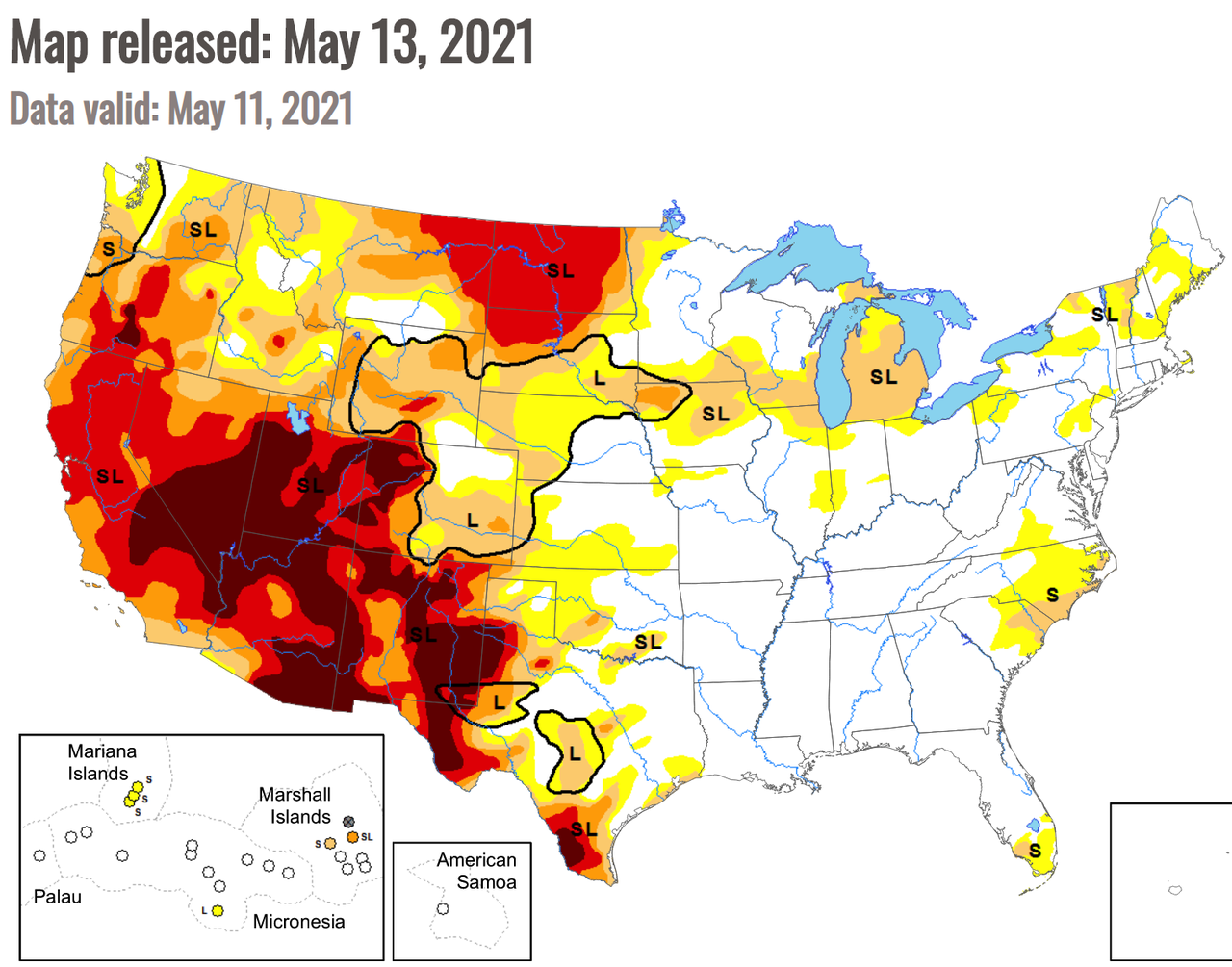
But now we are being told that this is the new normal.
The western half of the country desperately needed a healthy level of precipitation during last winter’s “wet season”, but instead conditions were much drier than usual…
Consequently, this past winter’s wet season was not very wet at all. In fact, it just added insult to injury, with only 25 to 50% of normal rainfall falling across much of the Southwest and California. This followed one of the driest and hottest summers in modern times, with two historic heat waves, a summer monsoon cycle that simply did not even show up and the worst fire season in modern times.
Now we are moving into “the dry season”, and there simply is not enough water for everyone.
Along the California-Oregon border, things just went from bad to worse. Farmers in the region already knew that they would be getting much less water this year, but now federal officials have decided to completely shut the water off for most farmers…
The water crisis along the California-Oregon border went from dire to catastrophic this week as federal regulators shut off irrigation water to farmers from a critical reservoir and said they would not send extra water to dying salmon downstream or to a half-dozen wildlife refuges that harbor millions of migrating birds each year.In what is shaping up to be the worst water crisis in generations, the U.S. Bureau of Reclamation said it will not release water this season into the main canal that feeds the bulk of the massive Klamath Reclamation Project, marking a first for the 114-year-old irrigation system. The agency announced last month that hundreds of irrigators would get dramatically less water than usual, but a worsening drought picture means water will be completely shut off instead.
Needless to say, for many of them no water will mean no crops.
Oregon Governor Kate Brown has already declared a drought emergency.
So has California Governor Gavin Newsom.
The state of California grows more of our vegetables than anyone else does, and this growing water crisis is forcing many farmers in the state to make some heartbreaking decisions…
With the uncertainty of water, some Central Valley farmers are destroying their crops ahead of the summer season in order to survive. It’s impacting jobs and soon possibly the grocery shelves.
In many instances, farmers are destroying some of their crops in order to give other crops half a chance of making it.
For example, farmer Joe Del Bosque just destroyed all of the asparagus he was growing in order to use water elsewhere…
“There’s been a blade that’s cut underneath and these here, they are green still but they are going to die,” explained Del Bosque.The loss of asparagus means 50-60 farmworkers are out of a job next year.If more crops are lost, jobs will follow.
This is already a major national crisis, and it is getting worse with each passing month.
According to the NOAA, the soil moisture content in our southwestern states is now the lowest it has been “in at least 120 years”…
Kelsey Satalino, the Digital Communications Coordinator from NOAA’s National Integrated Drought Information System, says that during the past few months, several states including Nevada, Arizona, New Mexico and Utah experienced their most intense period of drought since the Drought Monitor began back in 2000. As a result, soil moisture content is at its lowest levels in at least 120 years.
That means that things weren’t even this bad during the Dust Bowl days of the 1930s.
As I have discussed in previous articles, colossal dust storms are now regularly happening in the western half of the country.
In fact, some of them are so large you can see them from space.
In addition to being extremely unpleasant, these dust storms can also spread fungal spores that cause Valley fever. The following comes from NASA…
Valley fever is a dangerous threat to human health – and cases are on the rise in the arid southwestern United States, as wind from increasing dust storms can transport the fungal spores that cause the disease. Valley fever is caused by the Coccidioides fungus, which grows in dirt and fields and can cause fever, rash and coughing. Using NASA research and satellite data, the World Meteorological Organization is refining its Sand and Dust Storm Warning Advisory and Assessment System to help forecast where dust risk is greatest.
In my most recent book, I warned that “record drought” was coming, and now it is here.
Sadly, extremely dry conditions create an ideal environment for wildfires.
Last year’s wildfire season was a complete and utter nightmare, but now officials are warning that 2021 could be even worse.
Could that be possible?
It is hard to imagine anything worse than what we witnessed in California last year, but it appears that things are off to an even earlier start this year.
At this moment, an absolutely massive fire is burning out of control in Los Angeles County…
Los Angeles County authorities looked Sunday for a potential arsonist who might have set off a brush fire that forced the mandatory evacuation of about 1,000 people in the exclusive Pacific Palisades area near Topanga Canyon.Cool and wet conditions overnight helped prevent the Palisades Fire from spreading beyond the 750 acres it had reached Saturday, but the LA Fire Department said in an update Sunday morning that warming weather and afternoon winds may push the blaze northwest – threatening homes – as it rips through dense mountain vegetation that “is very dry and has not burned in 50+ years.’’
It almost seems like the west coast is under some sort of a curse.
Whenever it seems like things couldn’t get any worse, somehow they do.
Scientists tell us that another very dry summer is looming, and that is extremely bad news for the entire region.
Dust Bowl conditions have returned, and it appears that they will be with us for a long time to come.
Gates And Epstein Traded Advice On Bill's 'Toxic' Marriage, Jeff's Pedo Image Rehab During Secretive "Men's Club" Gatherings
A former Jeffrey Epstein insider claims that Bill Gates was a regular at the notorious pedophile's $77 million Manhattan townhouse, where Epstein held "men's club" - type gatherings for his closest pals (documented by his home's alleged network of spy cameras, we're sure).

For Gates, "Going to Jeffrey’s was a respite from his marriage. It was a way of getting away from Melinda" according to one of two insiders, who came forward to the Daily Beast to break what we're guessing is the first rule of elite pedo-lair club.
According to the report, Gates and Epstein traded advice over their respective problems, while Gates " met a rotating cast of bold-faced names and discussed worldly issues in between rounds of jokes and gossip—a “men’s club” atmosphere that irritated Melinda."
Gates used the gatherings at Epstein’s $77 million New York townhouse as an escape from what he told Epstein was a “toxic” marriage, a topic both men found humorous, a person who attended the meetings told The Daily Beast.The billionaire met Epstein dozens of times starting in 2011 and continuing through to 2014 mostly at the financier’s Manhattan home—a substantially higher number than has been previously reported. Their conversations took place years before Bill and Melinda Gates announced this month that they were splitting up.Gates, in turn, encouraged Epstein to rehabilitate his image in the media following his 2008 guilty plea for soliciting a minor for prostitution, and discussed Epstein becoming involved with the Bill and Melinda Gates Foundation. -Daily Beast
According to one of the insiders, Epstein and Gates "were very close."
A spokesperson for Gates (fleet of attorneys) told the Beast "Your characterization of his meetings with Epstein and others about philanthropy is inaccurate, including who participated. Similarly, any claim that Gates spoke of his marriage or Melinda in a disparaging manner is false."
"Bill never received or solicited personal advice of any kind from Epstein— on marriage or anything else. Bill never complained about Melinda or his marriage to Epstein," the rep continued.
According to the Beast, "Melinda Gates was furious over Bill’s relationship with Epstein, and was put off by the creepy financier upon meeting him in September 2013, after the couple accepted an award at a New York City hotel. Melinda’s anger, people familiar with the matter said, eventually led to the demise of Bill and Epstein’s friendship."
Meanwhile, the Wall Street Journal just reported that Melinda began consulting divorce attorneys in October, 2019 - right around the time it was revealed that Bill and Epstein were pals. What's more, Microsoft board members wanted Bill gone in late 2019 after an internal investigation revealed that Gates had an inappropriate sexual relationship with a female Microsoft employee.
Bill and Melinda Gates announced earlier this month that they were ending their 27-year marriage because, according to Melinda, the marriage was "irretrievably broken." She had been working with attorneys since at least 2019 to end it according to the Journal. And while the couple hasn't revealed what prompted the split, the Journal also reported that Bill's dealings with Epstein was a 'source of concern.'
The Daily Beast continues:
People close to Bill Gates told The Daily Beast that the deterioration of their relationship could be seen in Bill and Melinda’s body language. The couple used to interact with “more laughter and ease,” said one friend of Bill, who added that eventually, “being around them was like arriving at a summit.”“It wasn’t like arriving at a dinner with a couple or something; it was more like two heads of state,” the friend added. “So that’s why Epstein could have been a factor [in their split], but was it the factor? That I fundamentally don’t believe.”The friend said the couple’s strictly regimented existence as billionaire philanthropists supplanted the more normal life and levity they enjoyed in younger years. “Bill is far less comfortable being out in the world,” the person said. “For Bill, it was just so rare he was allowed to do normal things, which I think he really craved.”To Bill, such “normal” things included meeting new people over dinner at Epstein’s home—a break from the tech mogul’s tightly choreographed schedule of events where he’d be seated at the head table with the most prominent guests.
"He likes nothing better than to get together and debate or lecture people, or tell everyone what he’s doing with the polio vaccine. He has an ability, unlike any other person I’ve ever met, to lecture to a table of people without stopping for an hour," said one insider. "Anyone that gave him a stage for a performance and said, ‘Bill, come talk to us about what you’re passionate about,’ that would be something he would enjoy."
Meanwhile, we'd still like to know how Gates adviser Boris Nikolic (pictured below), was named as a fallback executor in an will Epstein amended days before his August 10 death in a Manhattan jail cell
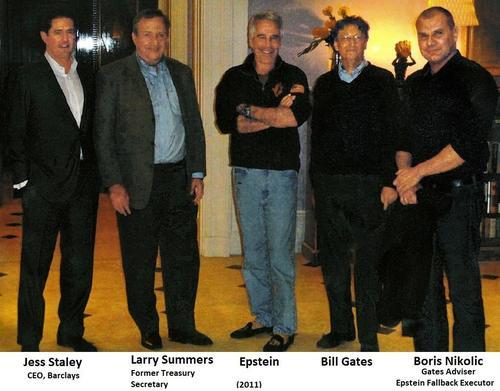
Come to think of it, maybe someone should ask Larry Summers if he was ever in Epstein's "men's club" at the pedo lair.
Lumbear Market
While some commodities have successfully halted last week's post China-crackdown rout, such as copper and Iron Ore...

... others have been less lucky, most notably lumber which until last week had become the posted child of the current inflationary euphoria when something snapped, and after six consecutive days of declines, Lumber is now in a (Lum)bear market, down 23% in one week from its May 10 record high of $1,733.50 when it almost caught up to an ounce of gold, but not quite.

And if Capital Economics' lumber price forecast is correct, it's about to get much worse.
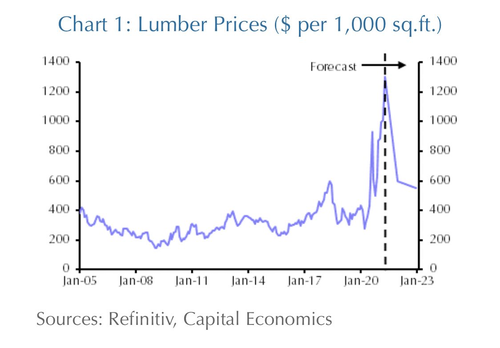
Alternatively, this could be just the pause that refreshes, because as the WSJ reported this morning, even though North America’s sawmills can’t keep up with demand - which has sent wood prices soaring - don’t expect new mills to start popping up though.
Why? Because "executives in the cyclical business of sawing logs into lumber said they are content to rake in cash while lumber prices are sky-high and aren’t racing out to build new mills, which can cost hundreds of millions dollars and take two years to build from the ground up. In doing so they are breaking with conventional wisdom in the commodities business, which states that the cure for high prices is high prices. Usually when prices for raw materials rise, refineries and smelters ramp up, farmers plant larger crops, wells are drilled, mines dug. New supplies flood into the market and prices retreat."
And while traditionally lack of demand would act as a natural brake to soaring prices, this time is different:
Home buyers and do-it-yourself-ers, who are paying more than four times the normal price for lumber, would like for that to happen. But they are flush thanks to historically low borrowing costs, rising home values and government stimulus. Demand has been unbowed by escalating prices.
Yet even if this is the beginning of the end for lumber, don't cry for the lumber longs: on an indexes basis, Lumber is generously outperforming even such stellar assets as bitcoin.