FT : BMW and Daimler pledge to keep prices high when chip crisis ends


Carmakers Daimler and BMW plan to limit the volume of premium models they ship even once the industry-wide chip shortage eases, in a bid to lock in the hefty price increases they have achieved during the pandemic.

A chronic shortage of semiconductors, which cars rely on for everything from electronic windows to driver assistance systems, has hobbled the supply of vehicles just as consumer demand rebounds from repeated lockdowns.

Although the luxury German carmakers were already shifting away from a volume-based approach before Covid-19, customers’ willingness to pay higher prices during the pandemic has emboldened them to go further.

“We will consciously undersupply demand level[s],” Harald Wilhelm, Daimler’s chief financial officer told the Financial Times, “and at the same time we [will] shift gears towards the higher, the luxury end.”

BMW had “seen a significant improvement in pricing power in the last 24 months,” said chief financial officer Nicolas Peter. The Munich-based carmaker’s plan was “clearly to maintain . . . the way we manage supply to maintain our pricing power on today’s level,” he added.

Industry executives, car dealers and analysts say that the chip shortage, which has its roots in a competition between the auto and consumer electronic industries for a limited supply of semiconductors, will herald a new approach in pricing and selling premium models.

“The pandemic has really opened everyone’s eyes — that a different paradigm is possible,” said Arndt Ellinghorst, an analyst at Bernstein. “Everyone loves it, including dealers.”

Discounts typically offered to customers at dealerships — usually around 15 per cent in mature markets — have been slashed, with some models being sold above sticker price.

A one percentage point decrease in the average discount would release $20bn in extra profits for car manufacturers, according to Ellinghorst, and discounts in Europe and the US have dropped by at least double that amount from their pre-pandemic peak.

BMW’s Peter said that the group’s US dealers, “always claimed . . . well we need the cars in the showroom, the customer is expecting to pop in on Saturday morning, 10am, and he wants to leave with everything done, fixed number plates on the car at 1pm latest.”

Now, however, they say “customers are ready to wait three to four months, and this is helping our pricing power,” he added. “Of course the waiting time must not be too long, but if you buy a premium car like a BMW, it’s an emotional decision . . . to have a short waiting time is something, I believe, which makes the customer experience even greater and better.”

The increased pricing power has already fed through to the bottom lines for BMW and Daimler. Mercedes achieved a 12.2 per cent return on sales in the last reported quarter, up from 8.4 per cent in the same period in 2018 — the last measure not affected by the pandemic or diesel emissions litigation costs. BMW’s margin reached almost 16 per cent, up from 8.6 per cent.

Daimler’s Wilhelm said that while the chips shortage has artificially lifted prices, “one day or another the semis issue will be gone and we will carry on with the price, and the margin, and the mix focus”.

Signs that pricing power is proving sticky for luxury carmakers comes as central banks remain alert for signs of inflation as the global economy rebounds.

The European Central Bank this week raised its inflation forecast for this year to 2.2 per cent, but predicted it would fall back below its 2 per cent target next year and remain at only 1.5 per cent in 2023.

FT : After seven years, an Apple car is still on the horizon

After seven years, an Apple car is still on the horizon
Project Titan may have lost another executive, but tech company promises no lay-offs in drive for autonomous vehicle

Minutes after the news broke this week that Doug Field, the former Tesla executive who led Apple’s car project, was defecting to Ford, the Cupertino company’s venture called an all-hands meeting.

Field, who explained he was joining the Detroit carmaker for the chance “to try to make a difference”, was the latest in a long line of exits from Project Titan, Apple’s secretive plan to build a self-driving car.

He was the fourth head of the project to depart in seven years, and the team has bled three other senior executives in the past few months. Staff were jittery as the media speculated that Apple might pull the plug on the car.

But in a half-hour briefing, Apple executives said there would be a reorganisation, but no lay-offs, according to two people present. By Thursday, Bloomberg reported that Kevin Lynch, who has been leading Apple’s Watch and health projects, would take over at Project Titan. The car was still on the road.

Despite the turbulence, it was too early to call time on Apple’s seven-year effort to build a car, said Laurie Yoler, a founding board director at Tesla and a former board member at Zoox.

“I know many people who have gone there just in the last few months,” she said. “Not a huge number, a dozen or so, but they’ve all gone recently. They are from the likes of Waymo, Zoox and Airbus. These are really senior folks.”

Car testing falls
Nevertheless, after all these years, Apple seems no closer to launching a car. The company has never admitted to Project Titan’s existence, even though it has to file reports on how many miles its test cars drive in California.

These prototypes, usually white Lexus models with an array of sensors on the roof, drive frequently enough for Jean Bai, an architectural design photographer, to sit outside Apple facilities in and around Cupertino and snap photos of them.

But the 19,000 “autonomous miles” that Apple’s cars drove last year is just a fraction of the 630,000 miles completed by Alphabet’s Waymo car project in California. The number is also shrinking; it is just a quarter of the total in 2018. Waymo also states its vehicles travelled approximately 30,000 miles on average between interventions by its test drivers, compared to 145 miles for Apple.

The early optimism of Apple’s project was clear in 2015, when Tim Cook, chief executive, told a Wall Street Journal conference that he wanted people to have “an iPhone experience in their car”. He added: “That’s all about trying to make your life outside the car and your life inside the car be seamless.” At the time, the smartphone market looked saturated and revenues were falling. Apple needed a new product.

But the iPhone maker is not the only company whose early vision proved more ambitious than realistic. Larry Page of Google said that robotaxis could be “bigger than Google”. In 2016, Elon Musk of Tesla called self-driving cars “basically a solved problem” and predicted “complete autonomy . . . in less than two years”.

By 2017, Sheryl Sandberg, Facebook operations chief, charmed a German car show with this opening line: “I come with very good news: we’re the only company in Silicon Valley that’s not building a car.”

Apple’s advantage is unclear
But the promise of the autonomous vehicle was premature. The leaders who have spent billions of dollars building the tech aren’t close to recouping their investments. Some have failed prominently: Uber and Lyft each hived off their projects in the past year.

“In 2010 when all these programmes got started in robotaxis by the tech companies, there was tons of hubris,” said Angus Pacala, chief executive of digital lidar group Ouster. “They were like, ‘We’re gonna steamroll the auto industry just like Nokia and BlackBerry’. And it couldn’t be further from the truth.”

Today the revolution looks increasingly distant, while Apple’s advantages in the market are hard to discern.

“I just don’t see where Apple will have a technology edge,” said Arndt Ellinghorst, analyst at Bernstein. “It can only be in autonomous, which the world is chasing. Not having an edge in a market where it’s insanely hard to make money isn’t a great proposition.”

Apple has supply chain expertise, a desirable brand, and arguably the world’s foremost ability to combine hardware with software and services. Still, very little about its product portfolio indicates that it could surpass Tesla on battery performance or beat Mercedes and BMW when it comes to designing an interior or manufacturing at scale.

Recent patent grants give some hints that the team is now working on all aspects of the rider experience, not necessarily the car itself.

Last month alone Apple was granted patents for exterior lighting technology capable of displaying text, speed and light warnings; another for a safety system involving airbags that deploy from the vehicle’s roof and the passenger’s safety belt.

Another was for sleek in-vehicle illumination guiding the passenger to charge an iPhone or put their coffee down in the dark. Other patents granted last month concern visual sensors for autonomous driving, suspension systems, and traffic notifications.

‘No way that Apple is building a car’
For Manuela Papadopol, a car industry veteran and chief executive of Designated Driver, a start-up focused on operating cars remotely, all indications are that Apple is paring down its ambitions from the vehicle to enhancing the digital cockpit and redefining elements of the passenger experience.

“There’s no way on Earth that Apple is building a car,” she said.

“Don’t get me wrong: I think the opportunity for Apple is incredible in automotive — not in building cars, but in the interior space. They could project augmented and virtual reality into the windows. That’s where the opportunity lies.”

Meanwhile, several people who have departed Project Titan said it has not yet chosen a clear path forward. Incumbent carmakers rarely sound intimidated by the iPhone maker invading their turf.

“I don’t really get the sense anyone fears Apple in the [car] industry,” said Sasha Ostojic, operating partner at venture capital group Playground Global and a former engineer at Cruise, GM’s autonomous unit.

“When I ran engineering at Cruise I interviewed a bunch of people from Apple’s special products group” — where Titan is housed — “and most of them were disillusioned and said, ‘well, most of the research is directionless and we don’t really know where it’s headed. We’d rather work on a serious programme.’”

>>> Barron’s Weekend Summary: These new homesteaders are relocating to growing m

Barron’s Weekend Summary: These new homesteaders are relocating to growing midtier cities across the country, contributing to a perfect storm of high demand and low supply

Cover Story:
For the professionals who showed they can succeed at remote work, the pandemic ignited a newfound flexibility that drove many to leave their daily commutes and relocate to farther-flung locales. “They can live and work anywhere, and that’s what they’re doing,” says Mark Zandi, chief economist at Moody’s Analytics. These new homesteaders are relocating to growing midtier cities across the country, contributing to a perfect storm of high demand and low supply that was already under way before the pandemic. The result is a surge in prices, delaying home purchases and sending rents higher. The median home in Boise sold for $469,100 in the second quarter, a 41% jump from a year earlier. Economists expect home purchases to remain strong and supply to increase with new construction. Still, the affordability issue isn’t about to go away.

Interview:
-Economist Laurence Kotlikoff thinks that most financial planners go about it wrong. Rather than helping clients amass wealth for a retirement-income target, the Boston University professor says the emphasis should be on smoothing and protecting spending throughout a person’s life and then saving toward that goal. Kotlikoff advises most retirees to wait as long as possible to claim Social Security to get the biggest possible benefit—even if it means spending down their savings. Kotlikoff founded a company 28 years ago to put his ideas into action. He sells software for both professional planners and households that uses an economist’s perspective to determine saving and spending. He sells separate software on how to maximize Social Security benefits.

Tech Trader:
Cisco has rallied 34% year to date. But the stock was down 2% in 2020 while the Nasdaq Composite surged 43%. The networking giant’s sales suffered last year as companies cut information technology spending early in the pandemic. But the trend has reversed in Cisco’s favor. For the fiscal fourth quarter ended in July, Cisco posted 8% revenue growth and better-than-expected profits. Cisco sees revenue growth of 5% to 7% for its July 2022 fiscal year, up from just 1% in fiscal 2021.

The Trader:
The hard-seltzer market has lost its fizz—and so have shares of Boston Beer. With the stock now worth less than half what it was at its peak, it might be time to take a sip. That might seem like the kind of idea someone who’s had too much beer might come up with. After all, the company’s stock, which peaked in April at $1,306.45, has tumbled 60% to a recent $527.25 in less than five months. The decline has been driven by the same thing that drove shares higher—hard seltzer. When sales were booming, so did Boston Beer’s stock (SAM). But now sales are slowing, the company has too much inventory, and growth is fading. On Wednesday, the company removed its earnings guidance of $18 to $22 a share for 2021, noting only that it would be lower.

-A rocky week in the markets has traders, investors, and strategists at ‘Defcon 2,’ peering into the horizon for the enemy—a stock market correction. But while there are some troubling signals, corrections—drops of 10% from recent highs—don’t just happen, just like bull markets don’t die of old age. There has to be a reason.
The Defcon level, however, can rise even without a reason. Time and valuation both have merit as signals, though neither can tip the market into correction on their own and neither is flashing Defcon 1, the highest level of concern. There is still time to prep for any selloff, even as trading gets rockier.

-Everything is coming up aces for Rocket Lab USA. It’s time to think about taking some profits. The space-launch and satellite-services company reported strong first-half 2021 sales this past Wednesday, its first quarterly report as a publicly traded company. It announced a big new business award too. The next day, Rocket Lab (RKLB) picked up its first Buy rating from Wall Street. All the good news has sent shares, well, skyrocketing, with the stock gaining 37% in one day. It’s now gained 77% over the past month, closing Friday at $18.69, while the S&P 500 is up about 0.5% and the Dow Jones Industrial Average is down about 2% over the same span. That has left even the most bullish investors wondering what to do next. Should they sell and risk losing their position in an exciting new business they believe in, or hang on for the long run? Fortunately, investors can do both.

Features:
-While 9/11 was a national tragedy, the day has a special significance for many of New York City’s financial firms, many of which were based downtown. Over the last 20 years, the financial industry has transformed itself. The attacks made for a challenging legacy for Wall Street firms, many of which were faced with the difficult choice of whether to close or rebuild. Those that chose to rebuild encountered an unreserved bout of camaraderie and support among financial firms in what is a notoriously competitive business. Two of the companies most severely affected were boutique investment firms Keefe Bruyette & Woods and Cantor Fitzgerald. They also have events planned to mark the anniversary of their more personal losses.
“The spirit after 9/11 was remarkable. We had competitors calling and offering to help. Our clients were amazing,” Tom Michaud, chief executive officer at KBW told Barron’s. “Our firm needed that reservoir of good will to help boost our morale and get us jumpstarted. Thankfully, it was full.”
-The World Trade Center towers collapsed on a Tuesday. Six days later, attention shifted a few blocks to the south of Ground Zero, to the New York Stock Exchange, where an aftershock was expected."All eyes will be on the market Monday morning,” Andrew Bary wrote in The Trader column of the Sept. 17, 2001, issue of Barron’s, its first after the terrorist attacks of 9/11. US trading had been halted from Tuesday—the first plane struck the North Tower at 8:46 a.m., less than an hour before the opening bell—through Friday, the longest closure since World War I. But markets in Europe and Asia remained open and had plunged. Would things play out the same in the US? The 9/11 terrorist attacks had changed everything, from the Manhattan skyline to the global political order to the price of nearly every asset in the world. What was true in the morning before the suicide jet strikes no longer held by afternoon. It was a new reality.

Europe:
-Media group Future has transformed itself from a print-magazine owner worth just 30 million pounds sterling ($41 million) in 2014 to a digital-content giant with a market value that has jumped to £4.6 billion. The transition is reflected in the stock price. In the past 12 months, shares (FUTR.U.K.) in the company that owns Marie Claire, Mac Life, Music Week, and Wallpaper jumped 151% to £38.22. The highly acquisitive Bath, UK–based company boosts its new brands’ earnings through e-commerce, the clever use of customer data, and expansion into new markets. The possibility of more acquisitions and Future’s focus on the US market means the stock still has momentum.
-The European Central Bank said it would slow down the pace of the bond-buying program it launched in March 2020 to counter the coronavirus pandemic’s effects, but confirmed its long-running stance that monetary policy would remain on the dovish side for months to come. The Eurozone central bank said after a meeting of its policy-setting governing council that the monthly purchases of bonds on the market would be conducted at a “moderately lower pace” than in the last two quarters.The expected decision comes as inflation has picked up in the Eurozone to a 3% annual rhythm, and the economy is expected to recover faster than expected this year.

Emerging Markets:
-In Thailand tourism remains a painful microcosm for the hopes of recovery that the Delta variant has delayed, if not dashed, especially across the Southeast Asian growth belt. Thailand’s neighbor Indonesia is nursing its own wounds from the empty beaches of Bali. A recent stock bounce—the iShares MSCI Thailand exchange-traded fund (ticker: THD) is up 8% in the past month, and Indonesian equities have climbed 7%—looks more dead-cat than sustainable rally. “There has been some rotation from China into the ASEAN markets, but fundamentally not much upside,” says Arthur Budaghyan, chief emerging markets strategist at BCA Research. Thailand’s Eden-esque coastline and fascinating historic sites lured 39 million foreign visitors in the pre-pandemic year of 2019, accounting for up to 20% of the nation’s gross domestic product. Any rebound will be gradual, even with the welcome sign back out.
-Ford Motor announced Thursday that it would cease to make vehicles in India. But Ford is not abandoning the country, choosing instead to focus its Indian operations on engineering, technology and business operation functions. Ford makes the Figo, Aspire, Freestyle, EcoSport and Endeavour in India. Restructuring operations always result in charges against income. Investors, very likely, don’t care so much about the charges as much as they do about progress new management is making toward improving profit margins for the long haul. Still, Ford shares were down about 1.3%, while the S&P 500 and Dow Jones Industrial Average were both little changed.

* Commodities:
-Nuclear energy has moved back into the spotlight, with climate change an increasing worry for a world ravaged by floods, droughts, and extreme weather events. “As there is growing momentum to achieve net zero [carbon emissions], governments will soon realize that nuclear is currently overlooked,” says Bruno Brunetti, head of Global Power Planning Analytics, S&P Global Platts. China stepped up its efforts, with the nation accounting for over 60% of the new plants commissioned over the past decade, he says. The World Nuclear Association said the globe’s roughly 440 nuclear reactors require some 79,500 metric tons of uranium oxide concentrate each year and in a 2019 report, it forecast a 26% increase in uranium demand from 2020 to 2030.

* Streetwise:
-S&P 500 index funds will tumble by Christmas, one Wall Street strategist predicts. Not necessarily, says another—but they’ll lose money over the next decade. I can’t decide whether to panic or just sulk. The index decides the fate of more than $5 trillion in linked investor assets. My only exposure is in my retirement, joint, college, healthcare, and, come to think of it, all other investment accounts. I don’t think my Chipotle Rewards account is affected, but I haven’t read the small print. The concern, of course, is that S&P 500 trackers have had it too good for too long. The index has returned 376% over the past decade, or close to 17% a year, compounded. Among active managers tasked with beating the index, four out of five failed during the 10 years through 2020.

FT : Satellites/insurance: space junk funk

Satellites/insurance: space junk funk
Constellations of satellites in low-earth orbit increase collision risks

The more satellites there are flying around in low-earth orbit, the more likely they are to collide, fragment and spawn an escalating series of collisions. The space industry and its regulators need to disprove that theory — known as the Kessler Effect — to keep insurance costs down and investment plentiful.

Space is certainly getting busier. The number of working and defunct satellites within low-earth orbit has increased by half in the past two years. Starlink, the satellite broadband network planned by Elon Musk’s SpaceX, already has permission for 30,000 satellites.

That is more than the total number of orbiting objects currently being tracked by US authorities. Much of the latter is debris left over from decades of space exploration.


Space junk poses a serious risk to satellites but collisions of the kind shown in the sci-fi movie Gravity have so far been rare. The most severe crash on record was that of active communications satellite Iridium 33 with the derelict Russian military satellite Kosmos-2251 in 2009. The increase in debris can be seen on the chart above. The bigger jump resulted from China testing an anti-satellite missile in 2007. 

Constellations of satellites in low-earth orbit increase collision risks. Once fully deployed, Starlink might be “deorbiting” about 300 out-of-date satellites at any time.


Untracked debris poses the biggest unknown. Researchers put the chances of a single piece of junk hitting one of Starlink’s satellites in the 550km orbit at 0.3 per cent annually. That risk rises exponentially with the number of objects. Fortunately, most untracked debris is small and advances in tracking are bringing more of it on the radar and out of the way of satellites.

For the moment, failed launches are the biggest danger for space companies of the kind set up by Musk and rival tycoons Jeff Bezos and Richard Branson. UK-backed satellite company OneWeb recently announced it had arranged $1bn of insurance cover with broker Marsh to help mitigate this risk.

Total satellite insurance exposure remains relatively modest at just $25bn of which $4bn covers satellites in low-earth orbit, thinks David Wade at underwriter Atrium. Expect that total to rise, even as countries increase co-operation to stop the Kessler Effect becoming a reality.

(ZH) Mysterious Radio Signals From The Center Of The Milky Way Detected

Mysterious Radio Signals From The Center Of The Milky Way Detected

The nature of the emitting object is not known, since it does not coincide with anything known...
We have much more to know!
If something has become clear in recent years, it is that we are largely ignorant of what happens outside the Earth (also within it). Millionaires embody a battle to reach the Moon, Mars and the ends of the galaxy, but there are countless unknowns.
Such is the case with a mysterious new radio signals coming from the center of the Milky Way.
The technical name of the waves is ASKAP J173608.2-321635 .
Scientists have not yet been able to know what it could be. The signal has been detected six times between January and September 2020, then reappeared until February 7 of this year.
In a study on the finding, which has not yet been published in The Astrophysical Journal , but can be consulted on the arXiv server, the researchers explain that it is "a highly polarized, variable and steep spectrum radio strong" .
" ASKAP J173608.2-321635 , could be part of a new class of objects that are being discovered through radio imaging studies," the authors write.
How did they discover the signs?
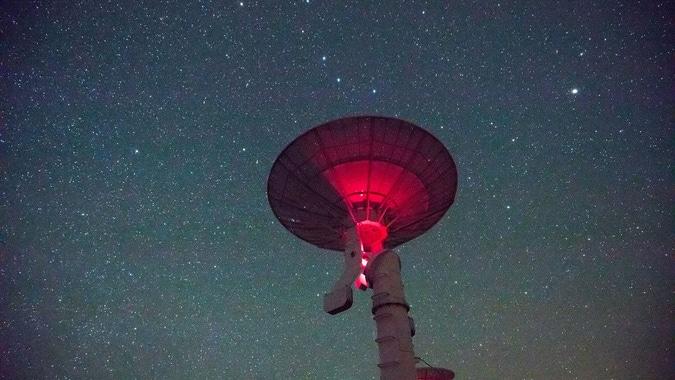
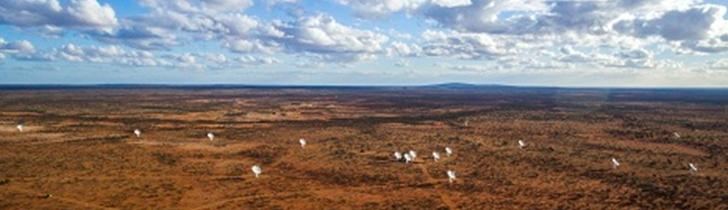
Thanks to the Australian Square Kilometer Array Pathfinder (ASKAP) , a radio telescope. A set of 36 antennas of 12 meters in diameter, which function as one and make it one of the most sensitive in the world. It is designed to analyze cosmic magnetism, identify black holes, and explore the origin of galaxies.
The signal is unknown, several types of stars have been ruled out. But it does share some properties with the Galactic Center Radio Transients (GCRT), another mysterious signal discovered in 2000, which is also emitted from the center of the Milky Way.
To find out what it is, researchers need to observe radio signals longer. In this way, certain patterns that have not been seen before could be established. "We will be able to understand how unique ASKAP J173608.2-321635 truly is and if it is related to the galactic plane, which should ultimately help us deduce its nature."

(ZH) China Reveals Flight Control System To Land Hypersonic Drone

China Reveals Flight Control System To Land Hypersonic Drone
BY TYLER DURDEN
FRIDAY, SEP 10, 2021 - 11:20 PM
Hong Kong's South China Morning Post revealed Tuesday that Chinese military researchers have reportedly found a way to land hypersonic drones on standard runways safely. If reports are correct, this would be a monumental step for Chinese aerospace and put the country lightyears ahead of the US.
A peer-reviewed study released in the defense journal Tactical Missile Technology on Sept.1 described how Dai Fei of Beihang University in Beijing and his team worked with the People's Liberation Army Air Force to refine the technology behind hypersonic drone landings.
They determined an "unpowered return guidance scheme" for the drones traveling at Mach 5 (3,836 mph) was sufficient. At those super-fast speeds, at an altitude of 19 miles, the onboard computer would shut off the drone's engine 125 miles before landing.
Dubbed the "automatic landing interface," the software prediction computer, similar to what is on commercial and military planes, would make micro-adjustments to the plane's trajectory based on a multitude of variables, such as air pressure and altitude. The researchers said the new and improved software provides "possible landing scenarios" for the drone.
Researchers also said the drone would perform a series of subtle S turns to slow down ahead of landing. Shutting down the engines more than a hundred miles before landing adds to the complexity of the landing as hypersonic aircraft engines are more difficult to restart.
The new paper may confirm China's hypersonic drone called the Wuzhen 8 appeared in Beijing's military parade two years ago. It is unclear whether Dai's team has successfully tested the new software in the field.
If China pursues hypersonic drones, it could provide an umbrella of defense around the South China Sea, Taiwan Strait, and other hostile areas against US stealth fighters.
On a commercial aspect, the technology could improve future hypersonic aircraft landings. These fast planes could whisk people around the world in an hour and take to the skies as early as 2035.
There's no doubt in our mind that a rapidly advancing China challenges American airpower in the 21st century.

WSJ : Apple Judge’s Warning Suggests App Store Fight Is Far From Over

Apple Judge’s Warning Suggests App Store Fight Is Far From Over
A ruling seen as a partial victory for the iPhone maker describes it as being on the brink of having monopoly power

Apple Inc. AAPL -3.31% scored a partial victory Friday in a landmark antitrust case, but its fight with opponents of the App Store is far from over.

While U.S. District Judge Yvonne Gonzalez Rogers left in place many of Apple’s restrictions for third-party software, she raised the specter of the tech company nearing a point where it could be deemed a monopoly in the mobile videogame market.

The warning was tucked inside her 180-page ruling Friday, which was broadly greeted by Apple as a resounding victory. Still, the judge’s findings included criticism of its business as well as requirements that it stop prohibiting software developers from informing users of alternative payment methods outside their apps.

Her decision will be scrutinized by lawmakers, regulators and rivals around the world as they look at ways to rein in the power held by Big Tech and protect digital marketplaces.

Rivals pointed to the decision as proof that antitrust laws need to be updated for a new era. “What today’s ruling…makes clear is that antiquated antitrust laws cannot solely be fixed by the courts,” said Match Group Inc., the online dating company.

Lawmakers in Congress and Europe have been working on legislation that would have ramifications for Apple’s business. South Korean legislators recently passed a law that would prohibit Apple’s in-app payment system, which was at the heart of the complaint from Epic Games Inc., the maker of the “Fortnite” videogame.

The Justice Department has also been looking at Apple’s App Store, but legal scholars have been saying it would be hard to move ahead with any possible case if a strong ruling by a powerful judge endorsed Apple’s practices.

When the trial in Oakland, Calif., began in May, the first big challenge for Epic was to define the market in question. In a blow to the company, the judge ultimately rejected its claim that Apple improperly controlled distribution of apps onto the iPhone and forced use of its in-app payment system.

Instead, she zeroed in on the power Apple holds over the mobile game market, cautioning that a market share of more than 55% wasn’t yet high enough to sustain a monopoly case.

“The court cannot conclude that Apple’s market power reaches the status of monopoly power in the mobile gaming market,” she wrote. “That said, the evidence does suggest that Apple is near the precipice of substantial market power, or monopoly power, with its considerable market share.”

That language was seen by some legal observers as a yellow flag of caution to Apple.

“I think the battle continues for Apple,” said Sam Weinstein, a law professor at Cardozo School of Law at Yeshiva University and a former antitrust lawyer for the Justice Department who has been following legal challenges to how Apple runs its business.

The judge’s language, he said, suggests that “on another day with more facts, a couple of years down the line, maybe Apple loses.”

Nick Rodelli, head of CFRA’s Legal Edge Research, said in a note to clients that Apple still faces risk, adding that the ruling provided road maps for a Federal Trade Commission unfair-business-practices case and potentially other developer lawsuits.

Shares of Apple fell 3.3% on Friday.

The Epic lawsuit threatened a key component of Chief Executive Officer Tim Cook’s strategy for expanding revenue beyond the sale of iPhones and other pieces of hardware. The App Store has grown to be a significant part of the company’s profit engine. The judge said game revenue generated by less than 10% of the programs in the App Store account for 70% of its revenue. Most apps are free.

The judge concluded that Apple was saved by the fact that its market share wasn’t higher, that rivals had been making inroads into the mobile game space and that Epic hadn’t focused on the topic with its case.

“While the court finds that Apple enjoys considerable market share of over 55% and extraordinarily high profit margins, these factors alone do not show antitrust conduct,” the judge wrote. “Success is not illegal.”

Apple General Counsel Katherine Adams told reporters shortly after the verdict: “This is a resounding victory and underscores the merit of our business both as an economic and competitive engine.” She added that the company was still reviewing the results.

Early in the case, the judge acknowledged that no matter how she ruled, the decision would likely be appealed in a process that could likely take years to resolve. On Friday, both companies were coy about their future plans, though Tim Sweeney, co-founder and chief executive of Epic, seemed eager to continue his battle. In a tweet, he wrote, “We will fight on.”

One area for possible appeal by Apple involves how the judge arrived at her decision to loosen some restrictions on the App Store. She ruled that Apple was violating California law by prohibiting developers from telling users that they could go outside the app to make purchases, possibly saving money. She ordered that Apple stop that practice nationwide in 90 days.

“A nationwide injunction of this scope raises difficult questions and is ripe for appeal, particularly on the heels of so much analysis vindicating Apple’s business model,” said Paul Swanson, a Denver-based antitrust lawyer at Holland & Hart LLP who followed the case.

Some think the judge’s use of California’s Unfair Competition Law, which is a broader statute than traditional antitrust approaches, to penalize the company could have expansive impacts on Apple, opening it up to further challenges.

“We see the use of UCL against Apple bolstering the FTC’s stated objective of reinterpreting its own comparable statute—the prohibition on ‘unfair methods of competition,’” Robert Kaminski, who heads the telecommunications, media and technology policy research practice at Capital Alpha Partners LLC, an investor-focused policy-research firm, wrote in a note.

Even before Friday’s injunction against Apple’s so-called antisteering provision, the company had been loosening rules around the matter to resolve other legal battles it faced.

It is unclear how Apple’s revenue might be affected if users can more easily access apps’ websites for payments to get around the iPhone maker’s collection of as much as 30% of what is spent.