U.S. Intercepts Cruise Missile Attack on Its Warship in Red Sea
Navy destroyer targeted days after American-led strikes on Iran-backed Houthi rebels in Yemen
The U.S. military said its forces shot down a cruise missile fired from Houthi rebel areas toward an American Navy destroyer in the Red Sea, days after the U.S. led air and naval strikes against the Iran-backed militants in Yemen.
The Houthis, who haven’t commented on the Sunday afternoon launch, have vowed to continue their campaign against U.S. and international targets in the region in response to Israel’s actions in Gaza, despite last week’s U.S.-led strikes against dozens of Houthi targets that were designed to prevent further attacks.
The Houthi actions in the Red Sea, initially directed against Israeli-linked vessels, have become increasingly indiscriminate, rattled global markets and upended international shipping routes. As Western powers have retaliated, the Red Sea has become a new flashpoint between the U.S. and Iran-backed allies lined up around the region.
“The American strikes threaten the militarization of the Red Sea,” Abdulmalik Al-Ajri, a member of the Houthi political bureau, told The Wall Street Journal. He warned that the escalation would pose a danger to ships unrelated to the conflict in Israel. The U.S. and its allies say the strikes were intended to reduce the Houthis’ capacity to attack ships transiting the Red Sea.
The Houthis have launched dozens of missile and drone attacks in the Red Sea, mostly against commercial ships, since the Oct. 7 attacks by Hamas and other militants from Gaza that prompted Israel to respond with an air and ground campaign in the Palestinian enclave.
The economic effects of the Houthi attacks are slowly growing and, for now, mainly affecting Europe. Danish shipper A.P. Moller-Maersk has already rerouted its ships and Tesla said Friday it would halt production at its Berlin factory for two weeks as the Red Sea violence has hit its supply chains.
Qatar, which has acted as a mediator for the Houthis in the past, is the latest to pause the use of the Red Sea route for its liquefied-natural-gas exports for fear of being caught in the conflict, according to a Qatari energy official and shipping trackers. Officials in the Qatari Foreign Ministry and at state-run LNG producer Qatar Energy didn’t return requests for comment.
Tanker owners said after the U.S.-led strikes that a number of captains of chartered vessels heading for Europe via the Suez Canal refused to enter the Red Sea, forcing them to sail a lengthy route around Southern Africa. The Singapore ship registry and Intertanko, an industry lobby group, said that the waterway should be avoided.
“The shipping industry involves such a maze of stakeholders it’s difficult to assign a single nationality to a vessel,” said Ami Daniel, chief executive of shipping intelligence provider Windward.
The missile launched toward the USS Laboon on Sunday afternoon was shot down in the vicinity of the coast of Hudaydah by U.S. fighter aircraft, said U.S. Central Command, which oversees U.S. military operations in the Middle East. There were no injuries or damage reported, Centcom said.
The Houthis have said their action will only stop if Israel ends its military campaign in Gaza.
Strikes last week conducted by U.S. and British forces and supported by Australia, Bahrain, Canada and the Netherlands targeted radar and air-defense systems as well as storage and launch sites for the Houthis’ cruise and ballistic missiles, according to Centcom. The Houthis have used their arsenal, with the assistance of Iranian intelligence, to launch successive attacks on Red Sea shipping lanes.
Germany was world’s worst-performing major economy last year
Rising rates and high energy costs contributed to 0.3% contraction that points to fourth-quarter decline in eurozone
German output contracted 0.3 per cent last year as high inflation, rising interest rates and elevated energy costs made Europe’s largest economy one of the weakest performers in the world, according to an initial estimate released on Monday.
The decline of the German economy in 2023 compounds what has been a gloomy start to the year for the country, which has been hit by nationwide train strikes over working hours and disruptive protests by farmers against cuts to fuel subsidies.
“Overall economic development faltered in Germany in 2023 in an environment that continues to be marked by multiple crises,” said Ruth Brand, president of the statistics office.
The federal statistics office said gross domestic product was still above pre-pandemic levels, after last year’s contraction followed two years of rebounding output and left it up 0.7 per cent from 2019.
Coupled with separate data published on Monday showing eurozone industrial production fell for the third month in a row in November, economists said the German figures pointed to a likely contraction in the wider single currency bloc in the fourth quarter.
Melanie Debono, an economist at consultants Pantheon Macroeconomics, said the risks to her forecast for a 0.1 per cent contraction of the eurozone economy in the final quarter of last year were “squarely to the downside”.
Germany was the worst-performing major economy in the world last year, according to the IMF, which recently forecast that advanced economies would on average grow 1.5 per cent in 2023, while emerging market and developing economies expanded 4 per cent.
A fall in German and Italian factory output contributed to a 0.3 per cent decline in eurozone industrial production in November from a month earlier, according to EU data released on Monday, taking the annual decline to 6.8 per cent.
German GDP declined 0.3 per cent in the final three months of last year from the previous quarter, when output stagnated, the statistical office said. But it added that because “the data basis of this estimate is less complete than that of the regular quarterly calculation, there is a higher degree of uncertainty”.
German retail sales, exports and industrial production all fell last year. Households were hit by the biggest surge in the cost of living for a generation while the country’s sprawling manufacturing sector suffered from high energy costs, weak global demand and rising financing costs.
Household consumption fell 0.8 per cent last year, taking it 1.5 per cent below pre-pandemic levels, the statistics office said. The gross value added of industry, excluding construction, contracted 2 per cent last year. Government spending declined 1.7 per cent as pandemic-related measures were phased out.
Growth in the country is expected to pick up to 0.6 per cent this year, according to the OECD, which would still make it one of the world’s weakest large economies. Several analysts have cut their forecasts since the government slashed spending plans to address a €60bn hole in its budget left by a constitutional court ruling against off-balance sheet funds.
“The recessionary conditions which have been dragging on since the end of 2022 look set to continue this year,” said Andrew Kenningham, an economist at consultants Capital Economics, predicting zero growth for German GDP in 2024.
Economists expect consumer spending to rally in Germany this year as household purchasing power recovers, thanks to continued strong growth in wages and slower rates of inflation.
German inflation fell from above 11 per cent in late 2022 to as low as 2.3 per cent last November. However, consumer prices are still more than 20 per cent higher than they were before the pandemic and inflation picked up to 3.8 per cent in December after the government phased out energy subsidies.
“Despite recent price declines, prices remained high at all stages in the economic process and put a damper on economic growth,” said Brand.
An increase in borrowing costs to their highest level for more than a decade — after the European Central Bank raised its deposit rate to 4 per cent to tackle inflation — has stymied demand for industry and triggered a 10 per cent fall in German house prices.
“Unfavourable financing conditions due to rising interest rates and weaker domestic and foreign demand also took their toll,” Brand said.
There was better news from eurozone trade data for November, showing exports from the bloc rose 1 per cent from the previous month, while imports dipped 0.6 per cent. However, compared to a year earlier, eurozone exports were still down 4.7 per cent, while imports fell 16.7 per cent, reflecting drops in the price of energy and food imports.
Atos shares tumble as free cash flow expected to miss target
French tech group replaces chief Yves Bernaert after 3 months amid struggle to restructure and cut debt
Shares in indebted French IT group Atos fell as much as 16 per cent on Monday after the company said it expected to miss its target on free cash flow for the year.
Atos said its cash flow situation had deteriorated and free cash flow would come in about €100mn below the previous target, but reaffirmed it would meet its other financial benchmarks amid growing concerns about the group’s liquidity.
It also announced that chief financial officer Paul Saleh had been promoted to chief executive, replacing Yves Bernaert after only three months in the job as the group struggles to restructure and cut its debt.
On Sunday French newspaper Le Figaro reported that Atos had asked a French commercial court to appoint an agent to oversee negotiations with its creditors. The company on Monday said it had not filed a request, but that it could use such legal mechanisms in future.
Atos shares have lost more than 94 per cent of their value in the past three years as the business has struggled amid a rapid churn of executives and difficulty defining and executing a strategy to improve performance and cut debt. Standard & Poor’s downgraded the company’s credit rating in November citing growing liquidity risks.
The company had previously forecast negative free cash flow of €1bn. Shares fell to slightly more than €4 in early trading.
Recently appointed chair and former UniCredit chief executive Jean Pierre Mustier is working to salvage a deal to split the business while negotiating to secure financing from its creditors ahead of €2.25bn in debt coming due in 2025.
Under the current plan, Atos is supposed to sell its lossmaking legacy business dubbed Tech Foundations to Czech billionaire Daniel Křetínský. However, that deal proved contentious with shareholders, who thought Křetínský was getting overly favourable terms, as well as with some French politicians due to the militarily sensitive nature of some of Atos’s programmes.
But talks to renegotiate terms with Křetínský have dragged on longer than expected and “were not guaranteed to end in an agreement”, the company has acknowledged in recent weeks. Atos said it would consider additional asset sales in order to meet its obligations, as well as a back-up measure should the deal with Křetínský fall apart.
Earlier this month, Airbus announced it had entered due diligence for an offer worth up to €1.8bn for Atos’s prized big data and cyber security unit, called BDS. The negotiations to sell BDS mark a change in strategic direction under Mustier, as his predecessor Bertrand Meunier had resisted selling the group off in parts.
The talks are not yet exclusive and could become competitive, according to people with knowledge of the process. Atos said it had received two expressions of interest for BDS, one of which concerned only part of the division, without disclosing the name of the other party.
French defence electronics group Thales, which has jet-fighter maker Dassault Aviation as a big shareholder, has been interested in BDS in the past as part of its effort to expand its cyber security business. Thales has been considering its options in recent weeks, one person briefed on the situation said.
Thales did not confirm or deny its interest in BDS earlier this month, but said it was focused on strengthening its core business areas of “aerospace, defence, and security and digital identity”.
Europe’s Growth Engine Is Broken
Germany’s economy shrank last year and new challenges point to more pain ahead
Germany is stuck in a rut, and there is no quick way out.
The European powerhouse’s economy, the largest on the continent and the world’s fourth biggest, shrank last year, extending a six-year slump that is raising fears of deindustrialization and sapping support for governments across the region.
Output in the country likely shrank by 0.3% in the three months through December from the previous quarter, the German federal statistics agency said Monday. For 2023 as a whole, it contracted by 0.3%, leaving it only 0.7% larger than in 2019, before the Covid-19 pandemic, the agency said. Other large eurozone economies likely grew last year, including France, Italy and Spain, according to European Union estimates.
The downturn reflects a confluence of headwinds that are upending the country’s export-focused business model, from slower growth in China to higher energy prices and interest rates, mounting tensions around global trade, and a tricky transition to green energy. And with no sign that any of these cyclical and structural factors are about to improve, Germany’s prospects aren’t looking good.
“I’ve never been so worried about the medium-term outlook for Germany,” said Dirk Schumacher, an economist with Natixis in Frankfurt who has been tracking the German economy for decades.
The country’s gross domestic product is only 1% larger than it was at the end of 2017 after adjusting for inflation. By contrast, the U.S. economy has grown by an inflation-adjusted 13% over the same period, according to data from Eurostat and the Bureau of Economic Analysis.
This year, Germany faces new economic threats, from a collapsing real-estate market to conflict in the Middle East that is disrupting the Asia-Europe trade route. Despite an uptick in unemployment and record immigration, businesses complain of labor shortages. The government’s spending plans have been thrown into disarray by a constitutional court ruling limiting the use of off-budget funds.
The malaise is feeding broader resentment. Farmers blockaded roads in Berlin on Monday to protest subsidy cuts. Polls suggest that the far-right Alternative for Germany could emerge as Germany’s biggest political force in European Parliament elections in June and at state elections later this year.
All that is reviving the “sick man of Europe” label that was attached to the country in the late 1990s and early 2000s as it lost competitiveness in the aftermath of reunification between East and West Germany.
“The threat of deindustrialization is real,” said Max Jankowsky, chief executive of GL Giesserei Lössnitz, a 175-year-old foundry in the east German state of Saxony.
The company sits at the heart of Germany’s flagship auto industry, which employs around 800,000 people and exports about three-quarters of what it produces. Its clients include BMW, Daimler and Volkswagen.
While energy prices have come down, Jankowsky says he is still paying three or four times as much for electricity than before Russia invaded Ukraine—and more than five times what American competitors pay. “We still don’t see a full strategy” from the government to address the issue, he said.
Jankowsky plans to invest €10 million, equivalent to around $10.9 million, to build an electric-powered furnace that will replace his large coal-burning furnace, which is being squeezed by higher carbon taxes. But with electricity prices so high, and no clear plan from the government to reduce them, the new furnace won’t be competitive, he said.
“We can’t pass higher costs to car manufacturers, they say they will move to Turkey or China,” Jankowsky said.
Germany’s storied auto industry is struggling with competition from Tesla and upstart Chinese rivals, which are ramping up electric-vehicle sales in Europe. Car production in Germany is more than 25% below its mid-2010s level, according to the German Association of the Automotive Industry, a lobby group. German manufacturing output as a whole is smaller than in 2019 and shrinking, according to the Organization for Economic Cooperation and Development, a club of mainly rich countries.
Now, the conflict in the Red Sea is disrupting shipping and raising the specter of a new supply-chain crisis for European manufacturers. Tesla said Friday that it would stop nearly all production at its biggest factory in Europe, just outside Berlin, from Jan. 29 to Feb. 12 because of a lack of components.
Some economists are sanguine, pointing to Germany’s still-low unemployment rate and low government debt.
Germany might already have adjusted to higher energy costs and slower growth in China and could receive a disproportionate boost when global trade recovers, said Holger Schmieding, chief economist at Berenberg Bank.
Still, a recent German Chamber of Industry and Commerce poll asking more than 2,200 German industrial companies to assess business conditions posted its worst result since the survey started in 2008.
“Germany is rapidly becoming less attractive for industry and its partner sectors. The result is that necessary investments are not made or are made at other locations,” said the chamber’s general manager, Martin Wansleben.
The Bank of America last week cut its growth forecasts for Germany and the eurozone and now expects Germany’s economy to shrink by 0.1% this year, having previously forecast growth of 0.3%.
The pains aren’t contained to the economy. Only 19% of voters are satisfied with Chancellor Olaf Scholz—the lowest figure for any chancellor since 1997—according to an Infratest dimap poll for the ARD public-sector broadcaster published this month. Gripes range from the government’s decision to speed up its green transition agenda to its failure to curb a sharp rise in illegal immigration.
Ratings for Scholz’s coalition partners have also collapsed. Earlier this month, members of the pro-business FDP, the smallest party in the ruling alliance, forced a ballot about whether it should exit the government, with a slim majority of 52% deciding that it should remain.
“The wind is blowing in our faces,” said Ralph Wiechers, chief economist at the German Mechanical Engineering Industry Association. Orders in the mechanical engineering sector—which employs more than a million people in Germany—declined by 13% in November year over year after adjusting for inflation, according to the lobby group.
“We are living on order backlogs and they are disappearing,” Wiechers said. “We haven’t hit the bottom.”
It isn’t just manufacturing. Investment and private consumption have also fallen below 2019 levels and are badly lagging behind growth in other major European countries, including France and Spain, according to data from Natixis. Germany’s labor market is starting to crack too. Unemployment rose to 5.9% last month from a 5% low in 2022.
“German customers are spending less, you feel it,” said Joern Brinkmann, owner of the Staendige Vertretung, a restaurant and tourist spot in central Berlin.
Value-added tax on restaurant meals this month increased to 19% from 7% when a pandemic-era cut expired. That is likely to reduce demand further, Brinkmann said. To save money, he is buying energy in the spot market, and the only reason he hasn’t raised prices yet to reflect higher VAT is the high cost of reprinting menus.
Several high-street retailers have recently filed for insolvency including Galeria Karstadt Kaufhof, a chain of department stores with over 15,000 employees.
“It’s one crisis after another…Consumer sentiment is falling again at the start of the year because everything is so uncertain,” said Alexander Grosse, the managing director of Wiederholdt, an office and school-supply store with 18 employees in the university city of Göttingen.
The Christmas trading season was disappointing, Grosse said, with revenue down from the previous year after adjusting for inflation.
The last time Germany’s economy was in a protracted downturn, in the late 1990s and early 2000s, the government enacted unpopular labor-law overhauls, helping businesses cut costs and restore competitiveness. This time, it isn’t clear how Germany can emerge, said Natixis’s Schumacher.
China, which helped to pull Germany out of past recessions, is growing too weakly right now and its companies are increasingly competing with German manufacturers.
Back in Berlin, the combination of higher costs, fewer business travelers and a poor economic outlook is encouraging many restaurant owners to sell up, said Brinkmann. He said he plans to join the farmers’ protests on Monday alongside hundreds of other restaurant workers.
French Navy Plows Through Million Dollar Missiles To Defeat Cheap Houthi Drones
A key reason that Yemen's Houthis are unlikely to halt their attacks on Red Sea shipping as well as Western warships parked there is because immense pressure on the global transit waterway can be kept up, while it costs little to persist with such launches.
Many of the Houthis drones which are capable of reaching vessels far off the Yemeni coast have been estimated at not more than $20,000. Some of them are as low as a few thousand dollars to build. They can easily be intercepted by US and UK coalition warships, but at an immense cost for these Western militaries.
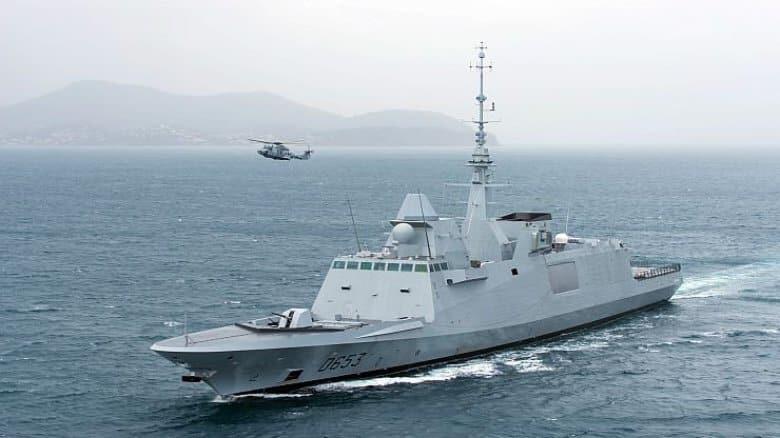
French Navy frigate
Anti-air missiles fired from coalition ships are commonly estimated at over $1 million each. This means the Houthis can keep the attacks coming, and on the cheap while watching Western warships blow through expensive arsenals.
This trend has been highlighted in a recent DefenseNews report which explored the high cost to the French navy of defeating the low-tech Houthi drones:
France’s maritime commander for the Indian Ocean defended the use of million-euro missiles to down drones used by Yemen’s Houthi rebels to attack shipping in the Red Sea, citing the value of the lives and assets protected, and the sophistication of the threat.The Languedoc frigate patrolling in the southern Red Sea in December shot down multiple drones using Aster 15 missiles, at a cost that defense analysts estimate at around €1 million (U.S. $1.1 million) per missile. The British Royal Navy’s HMS Diamond has also used the missiles to fend of drone attacks in the area.
The report further underscored that "The economic calculus of ultra-capable interceptors, designed to counter expensive expensive anti-ship missiles or manned aircraft, quickly loses its appeal against drones costing thousands of dollars, analysts have warned."
Still, commanders in the coalition are defending using these ultra-expensive missiles, saying all of this should be weighed in light of the necessary act of protecting valuable shipping lanes for Western economies.
Likely, the more sophisticated drones within the Houthi arsenal come directly from Iran. Tehran also has an interest in seeing Western navies bogged down in the Red Sea, and all the while they can use proxies to do it.
US officials have lately accused the Iranians of directly assisting the Houthis with targeting in the Red Sea. There's at least one Iranian surveillance ship believed to be patrolling these waters at the moment. The situation is a 'win-win' for both the Houthis and Iranians, even after the recent rounds of Western airstrikes on Yemen.
Two Navy Seals Missing Off Somali Coast After Nighttime Boarding Mission
There has been more bad news to come out of the already chaotic waters of the Middle East region, as over the weekend it's been widely reported that two US Navy Seals have gone missing off the cost of Somalia in the Gulf of Aden.
The missing Seals "fell into the water during a nighttime boarding mission" on Thursday, according to US military officials, with the incident only being disclosed this weekend after the search and rescue mission has yielded no results. The fact that they went overboard in the dark would make it very hard for rescuers to immediately locate them.
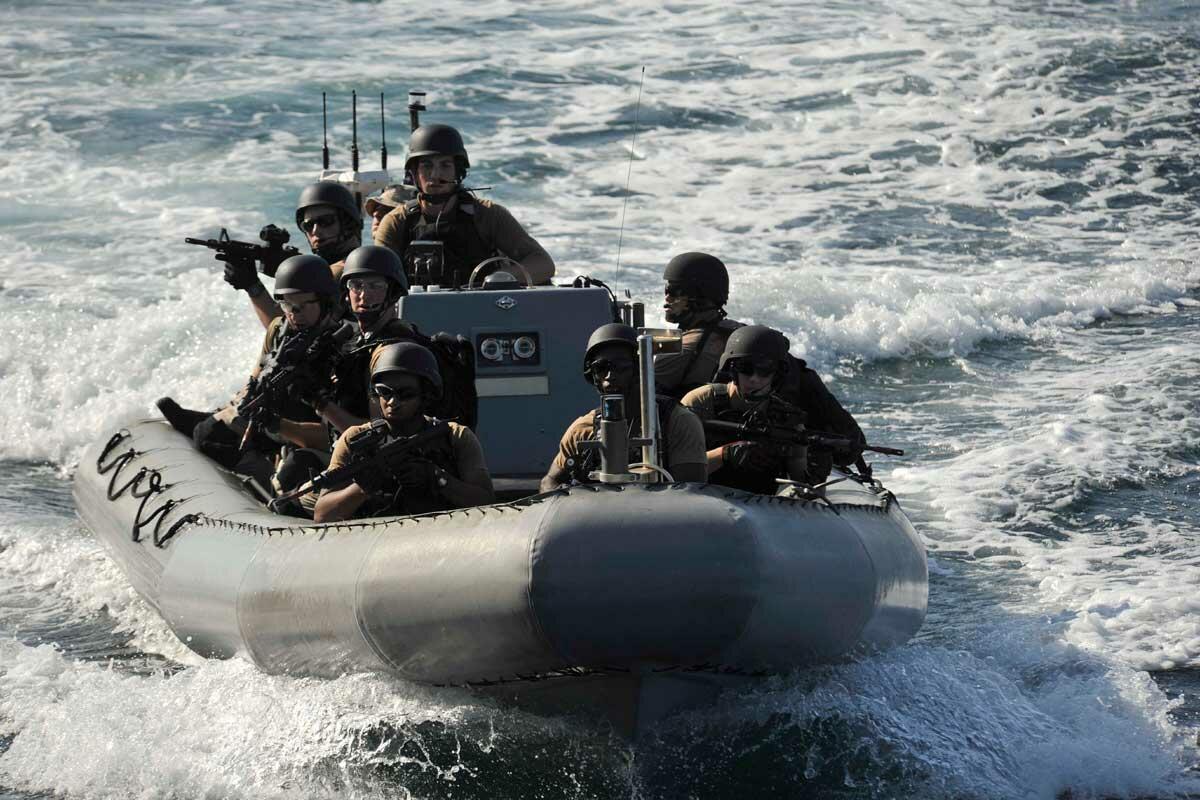

Illustrative: US Navy/Military.com
The search and rescue mission is said to be ongoing, but given the vastness of these waters, each day that passes makes it less likely that they survived.
According to military statements printed in The Associated Press:
A U.S. official, who spoke on the condition of anonymity to discuss details that have not yet been made public, told the Associated Press the missing SEALs were on a mission not related to Operation Prosperity Guardian, the U.S. and international mission to provide protection to vessels in the Red Sea.The SEALs were on an interdiction mission, the official said, when one of them fell off a ship after high waves hit the vessel, prompting another SEAL to go after him to attempt a rescue.
The Seal boat had reportedly been headed toward a suspicious vessel off the Somali coast when the elite operators went overboard.
The Gulf of Aden has become dangerous for commercial vessels and tankers due to Somali piracy, which in the last couple decades has remained a significant problem and danger.
The New York Times issued further details as follows:
Navy ships and aircraft were immediately dispatched to the scene, where search and recovery efforts have been underway, the officials said. The military’s Central Command noted the rescue operations in a statement on Friday, but made no mention of the sailors being members of a SEAL team or any details of the incident.Military officials have started the process of notifying the families of the commandos involved in the episode, a former official said.
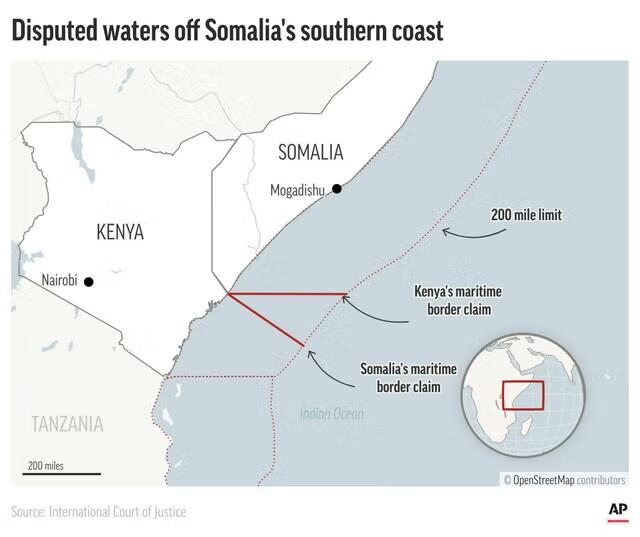
Somali militants have long threatened these waters, but given that the bulk of diverted Red Sea traffic must now travel via the Cape of Good Hope around Africa due to ongoing Houthi attacks, this could result in an increase of maritime traffic nearer the Somali coast, leading to more 'opportunity' and ample potential targets for piracy.
German Beauty Retailer Douglas Sees Sales Grow to $1.7B in First Quarter
The company said it is on-track to hit $5.5 billion in net sales in 2026 despite the tough economic climate in Europe.
German beauty retailer Douglas said Monday its first quarter sales rose to €1.56 billion ($1.71 billion), up just over 8 percent from the same period a year earlier, preliminary figures show.
E-commerce sales for the period, which covers Oct. to Dec. 2023, increased 10.7 percent, while in-store sales rose 7.1 percent.
Chief executive officer Sander van der Laan said the company is still on track to realise its goal of €5 billion in net sales in 2026 despite the tough economic climate in Europe.
Douglas operates over 1,800 stores across Europe and stocks a mixture of mass, prestige and luxury brands including Kylie Cosmetics, Lancôme and La Mer, as well as buzzy brands such as Naturium and Sol de Janiero, in addition to an in-house line offering skin care, nail care and cosmetics.